
The complete guide
How To Choose A Camping Cookware Set That You Will Actually Use
The problem with camp cooking
Most people do not stop camping because of the tent. They stop because dinner became a chore. You arrive late, it is getting dark, and the pot you brought is a heavy saucepan from the kitchen with a handle that gets too hot to hold. There is no lid, so the water takes forever. Food sticks to the base. Washing up in cold water with a scrubber takes twenty minutes you do not have, and the next night you decide a servo pie will do.
A dedicated camping cookware set fixes that chain of small annoyances. It is not about gourmet cooking in the bush. It is about getting hot food on a plate in fifteen minutes with gear that packs away clean and small.
What this set actually does
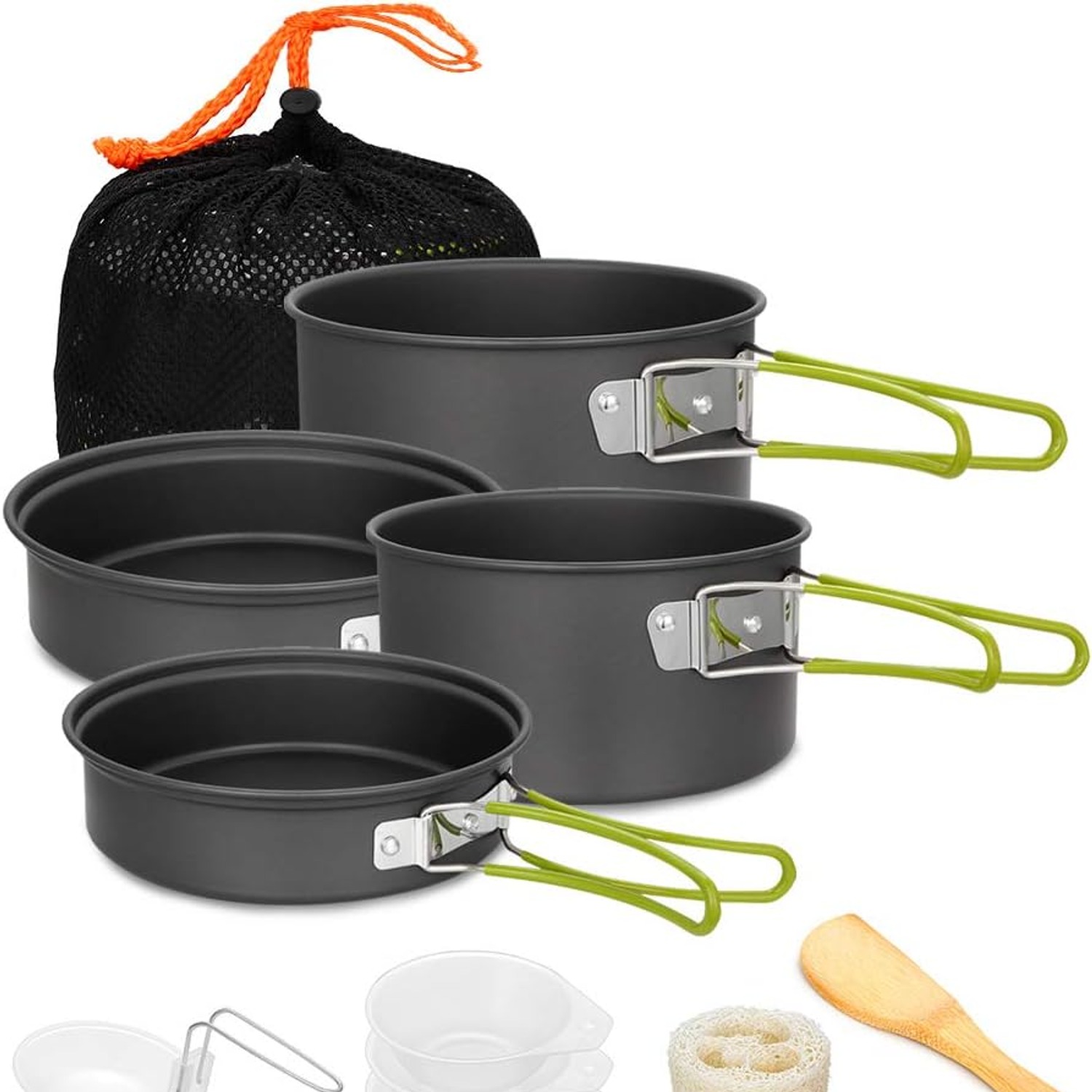
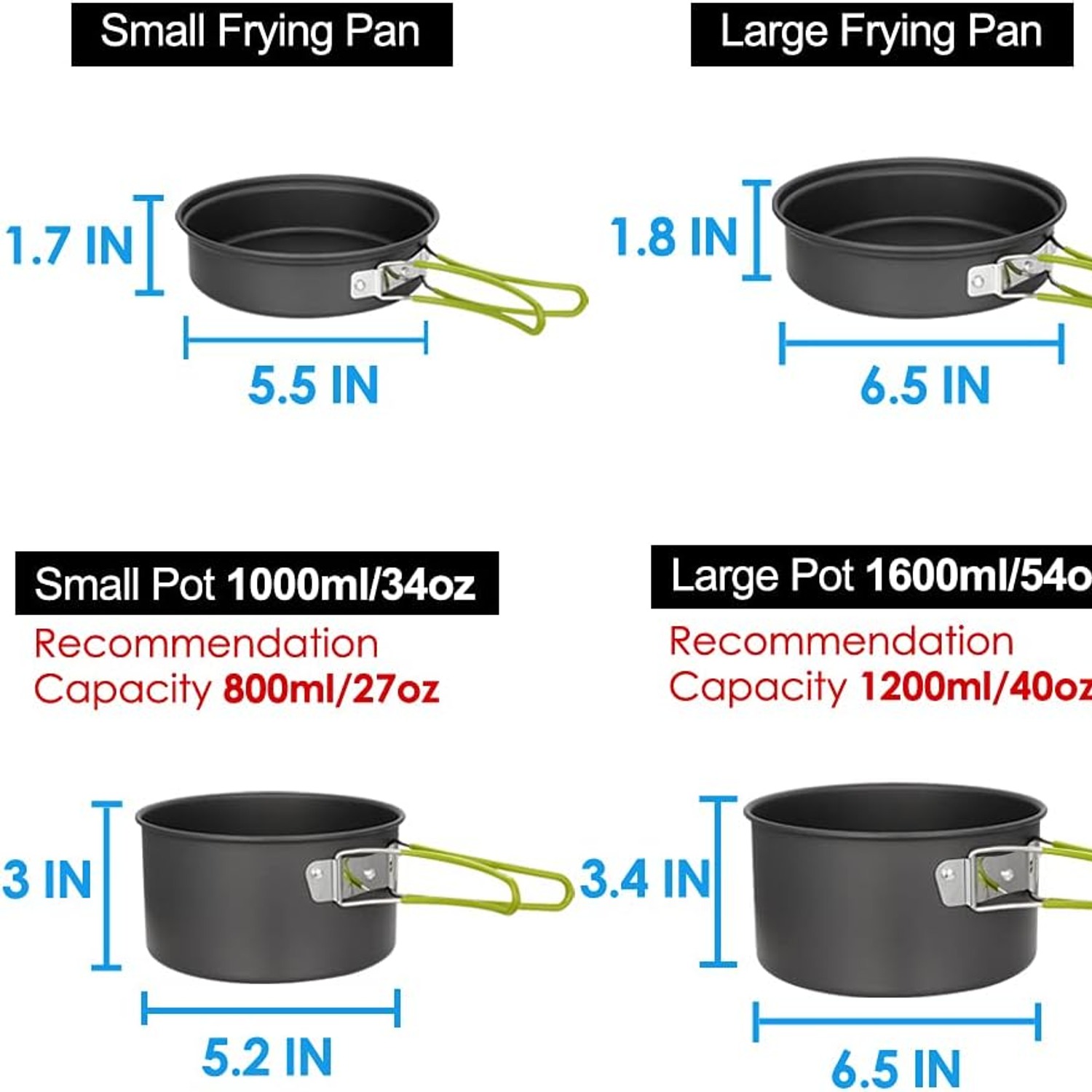
This is an eleven piece kit for two people. You get a large pot of about 1.8 litres, a small pot of about 1 litre, a large pan, a small pan, three bowls, a soup spoon, a bamboo spoon, a cleaning sponge and a nylon carry bag.
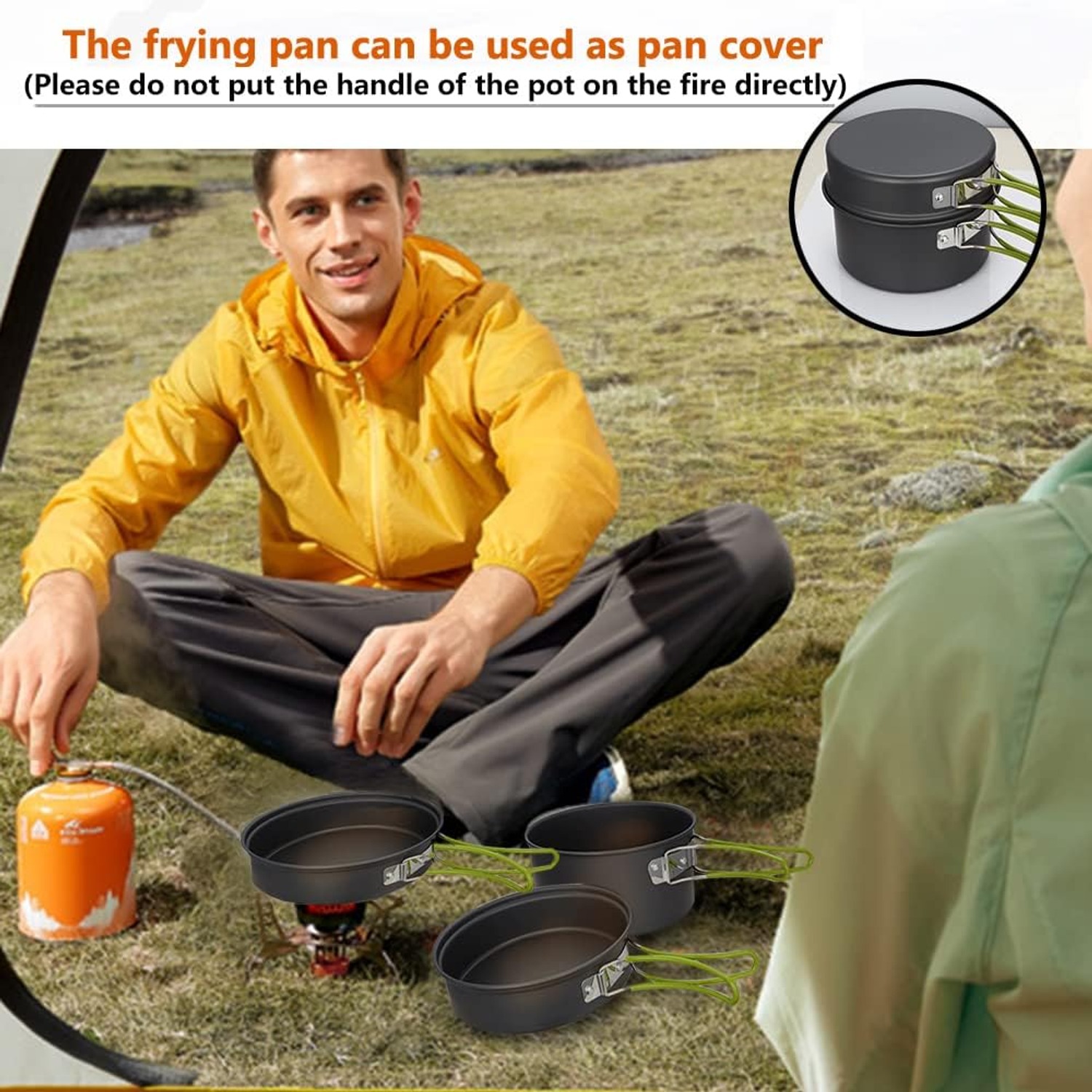
The logic behind those numbers is simple. The big pot handles the main job, so pasta, rice, noodles, soup or a stew. The small pot runs alongside for a sauce, for boiling water for coffee, or for heating something while the main dish rests. The pans fry and also sit on top of the pots as covers, so you save the weight and space of separate lids. Covered pots boil faster and burn less fuel, which matters when you are rationing a gas canister.
The pots and pans are aluminium with a non stick cooking surface. Aluminium is the standard choice in camp cookware for one reason. It carries heat fast. On a small burner where you are not getting a lot of energy into the base, that speed is the difference between a quick meal and standing around waiting. The non stick face is what makes cleanup bearable. Eggs lift, rice does not weld, and a wipe with the included sponge usually finishes the job.
Weight and packed size
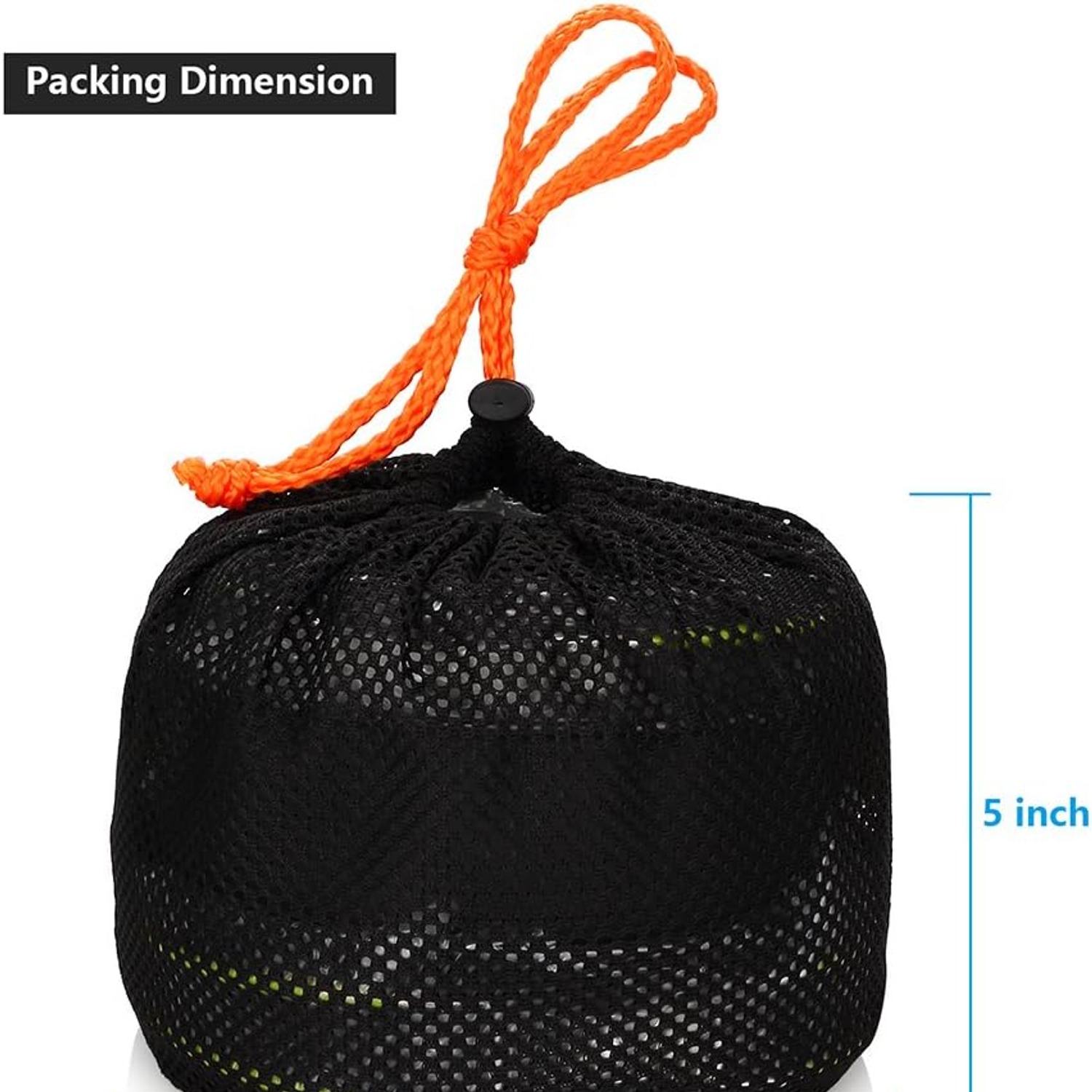
The whole kit comes in at about 1 kg and stacks down to roughly 6.75 inches at its longest dimension. That is the headline figure to keep in mind when you compare the best camping cookware set options.
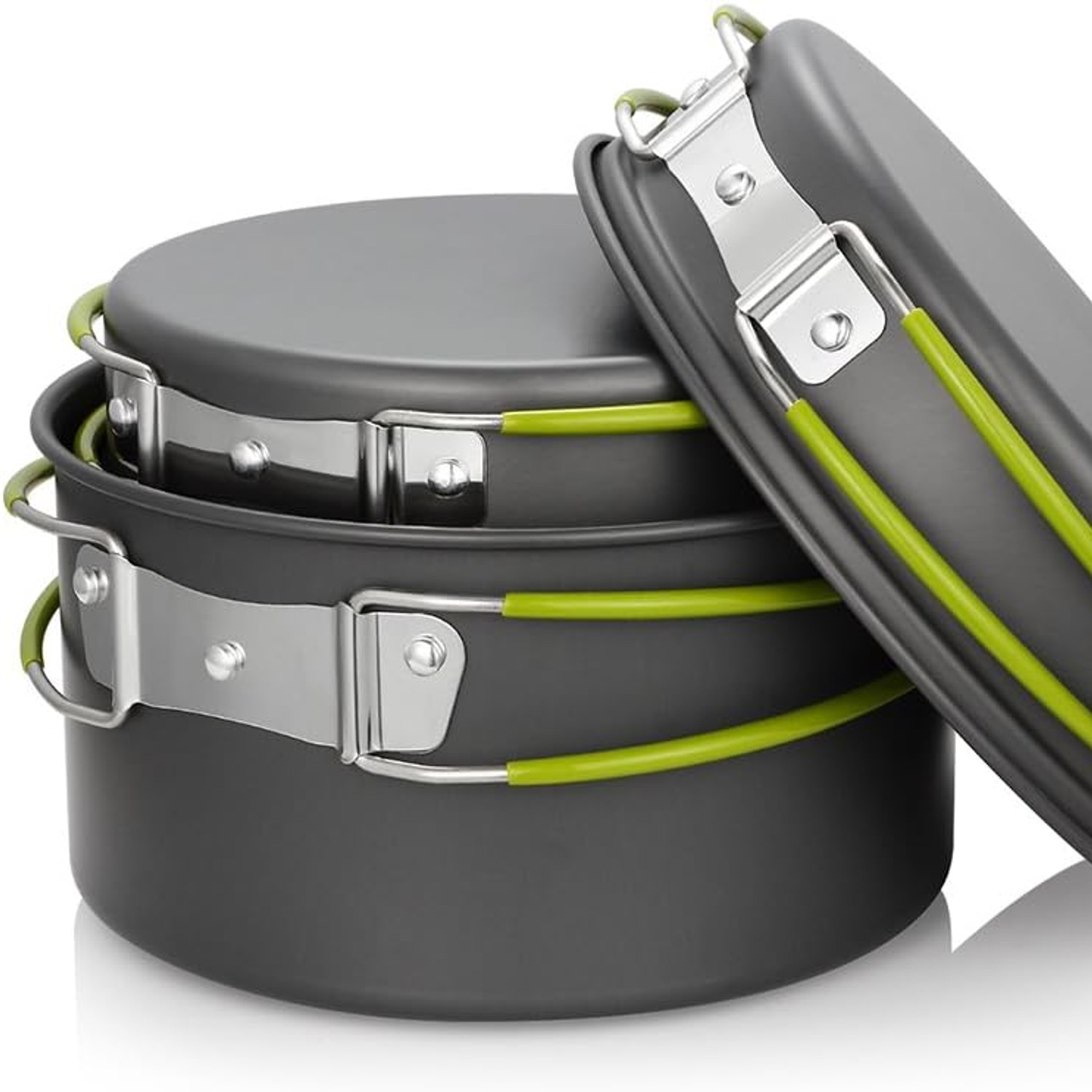
Here is how that works in practice. The handles fold flat against the sides of each pot and pan rather than sticking out. The small pot nests inside the large pot. The pans sit over the top. The bowls and spoons tuck into the gaps. Then everything drops into the mesh bag as one unit. You pick up one bag, not seven separate items.
For two hikers sharing the load, half a kilo each is reasonable for a complete cook kit. For car camping, caravanning or a festival, the weight is irrelevant and the compact size is what you will appreciate when you are packing a boot that is already full.
Who it suits
It fits a few different types of camper.
Couples and pairs of hiking mates are the obvious match. Two pots and two pans mean you can run a main and a side, or cook and boil water at the same time instead of queuing.
Solo campers on longer trips often pick a two person kit on purpose. The extra pot gives you options, and the spare bowls are useful for prep. The weight penalty is small.
Families of three or four can use it for simple meals, though you may want a second pot for anything involved. For reheating, boiling and one pot dinners it still works.
It is also a sensible first cook set. If someone is new to camping and does not yet know what they need, a complete kit removes the guesswork. There is nothing missing on the first trip.
How to choose between cook sets
A few things separate a kit you keep from one that ends up in the shed.
Count the real pieces. Some sets pad the piece count with carabiners and spare clips. Here the count includes the bag, the sponge and the utensils, which is fair enough, but the cooking hardware is two pots and two pans. That is what determines what you can actually make.
Check whether the pans double as lids. This is a quiet detail that saves real bulk. A set with separate lids packs larger and weighs more for the same cooking capacity.
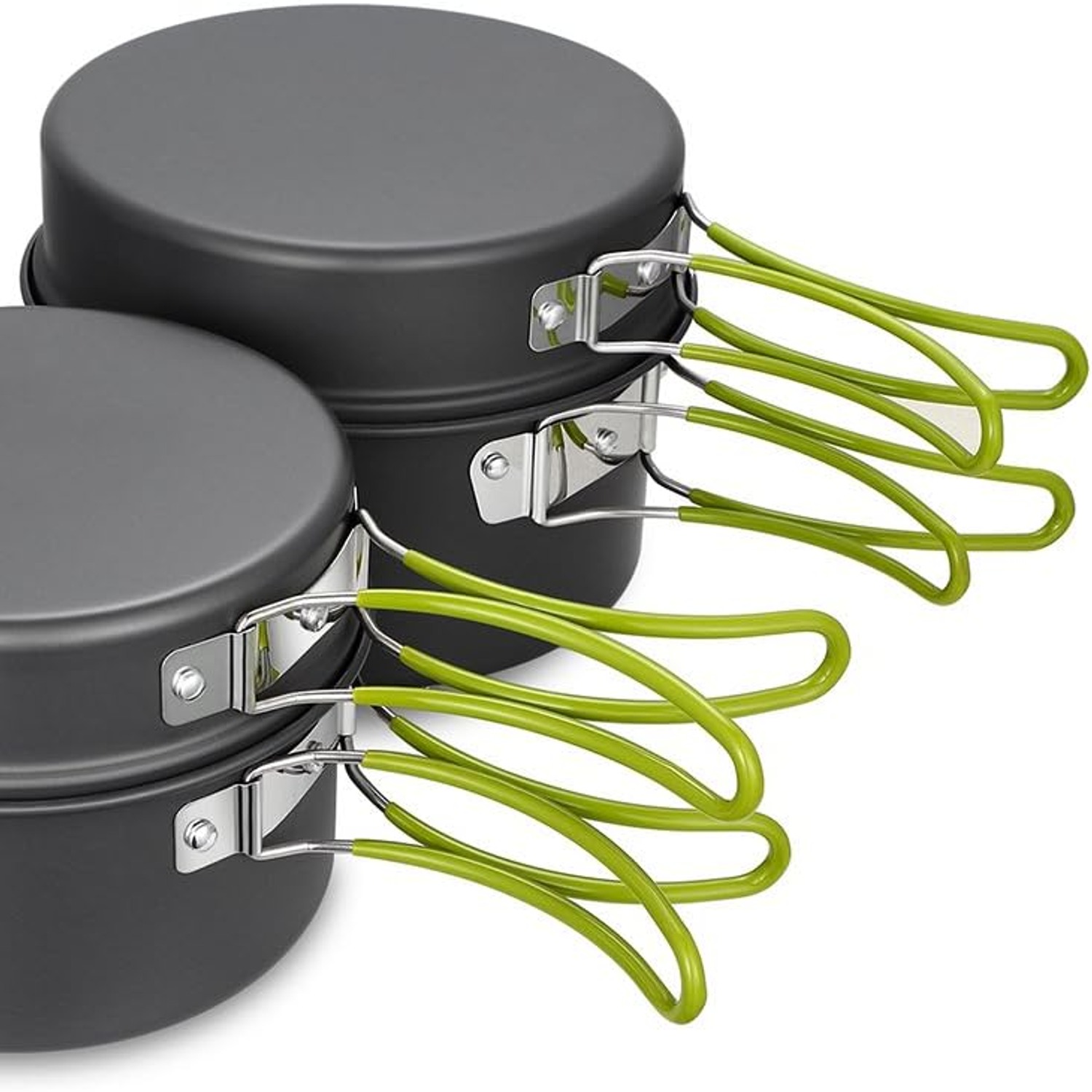
Look at the handles. Folding handles are the whole reason a set nests properly. Fixed handles mean everything has to lie side by side in your pack. Silicone covers over the metal also keep your fingers safer while you cook.
Think about the surface. Non stick suits camp cooking because water is scarce and scrubbing is unpleasant. Bare aluminium or steel is tougher but demands more effort to clean. If you want the best non stick camping pan experience, you accept a slightly gentler cooking style in exchange for easier cleanup.
Match capacity to your group. A 1.8 litre pot is roughly right for two serves of pasta with room to stir. If you regularly cook for four, step up a size or bring a second pot.
Looking after it
Non stick cookware lasts a long time if you treat it with a bit of sense, and almost no time if you do not. The rules are short.
Before the first cook, hand wash the pans, dry them, then rub a thin film of cooking oil across the non stick surface. That conditions the coating.
Cook at low to moderate heat. Aluminium does not need high heat, and high heat is the fastest way to damage a coating. If something is browning too quickly, lift the pot rather than turning the burner down and hoping.
Use wood, silicone or smooth plastic utensils. The bamboo spoon and soup spoon in the box are both safe. Keep metal forks, knives and steel wool away from the cooking face.
Keep the handles off the flame. They resist heat and have silicone sleeves, but sustained direct fire can damage them. Centre the pot over the burner and the problem does not arise.
Wash by hand with warm water, a mild detergent and the soft sponge supplied. Skip the dishwasher. Dry everything fully before you nest the pieces, because trapped moisture inside a stacked set leaves marks and smells by the next trip.
Small habits that make camp cooking better
A windbreak around your stove does more for boil times than any pot design. Even a pack propped on the windward side helps.
Prep at home. Chop onions, measure rice, portion spices into small bags. Then camp cooking becomes assembly rather than work.
Boil the water for washing up while you eat. Hot water and the sponge will clear the pans in a couple of minutes while they are still warm, and warm food residue lifts far more easily than cold.
Pack a tea towel inside the stack. It stops any rattle and dries the pieces before they go back in the bag.
The short version
This is a complete two person cook kit that weighs about 1 kg and packs into a bundle under 7 inches long. Two pots, two pans that double as lids, three bowls, two spoons, a sponge and a carry bag. Aluminium for quick heating, a non stick surface for easy cleanup, and folding handles so the whole thing nests.
If you want hot food on a trip without carrying heavy gear or scrubbing pans in the dark, that is the job this set is built for. Cook at moderate heat, use soft utensils, wash by hand and dry it properly, and it will come on a lot of trips with you.