
The complete guide
Soft Ground Anchoring, A Practical Guide to Sand and Snow Tent Stakes
The problem nobody warns you about
You arrive at the beach, set up the shade, push in the pegs that came in the bag, and twenty minutes later one corner is flapping. Or you pitch on snow, feel pleased with yourself, and wake at two in the morning to a sagging fly and a guy line lying slack on the surface.
It is not bad luck and it is usually not a bad tent. It is the wrong anchor for the ground.
A standard tent peg is a thin spike. It works because the soil it goes into grips the shaft along its whole length. Push a peg into firm earth, and the dirt presses in on all sides. Pull on the guy line, and you are fighting that friction plus the weight of the soil above.
Now take that same peg to a dry beach. Sand does not grip. It flows around anything you push into it and settles back with almost no pressure on the shaft. The peg is sitting in a hole, not held by the ground. One solid gust and it lifts straight out. Snow behaves differently but ends up in the same place: loose snow compresses rather than grips, so the peg carves a slot and the line pulls through.
How a wide stake changes the maths
The fix is to stop relying on friction and start relying on mass.
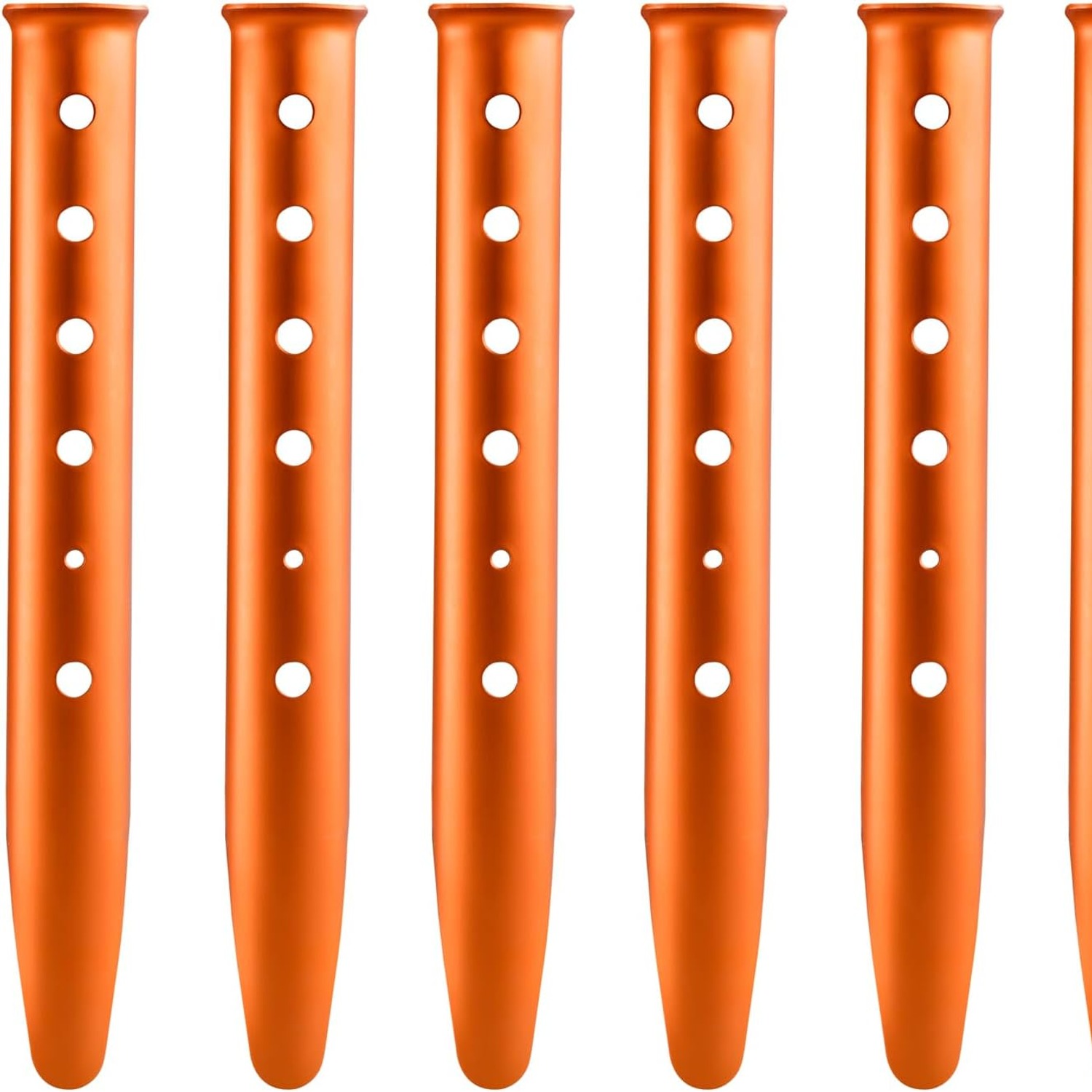
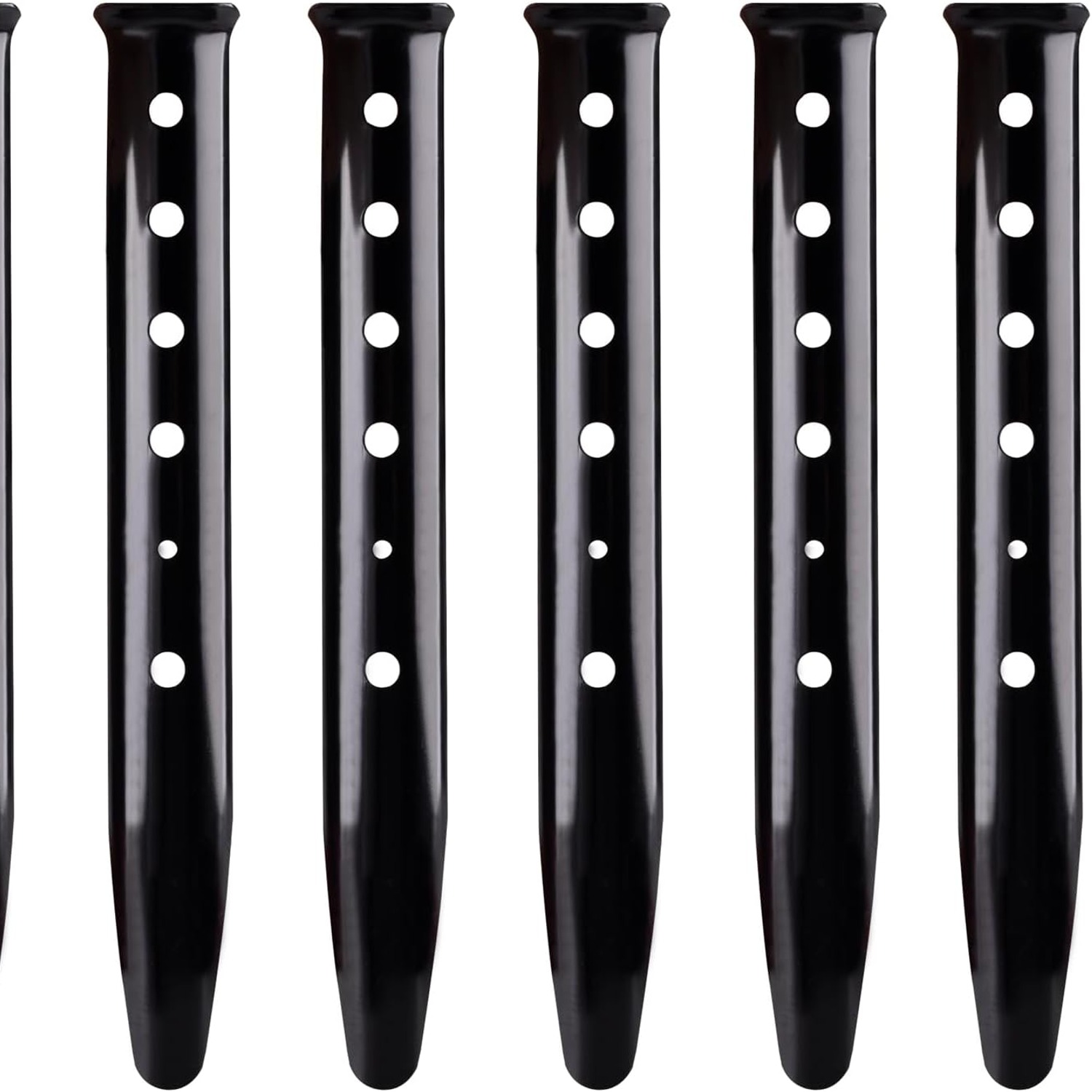
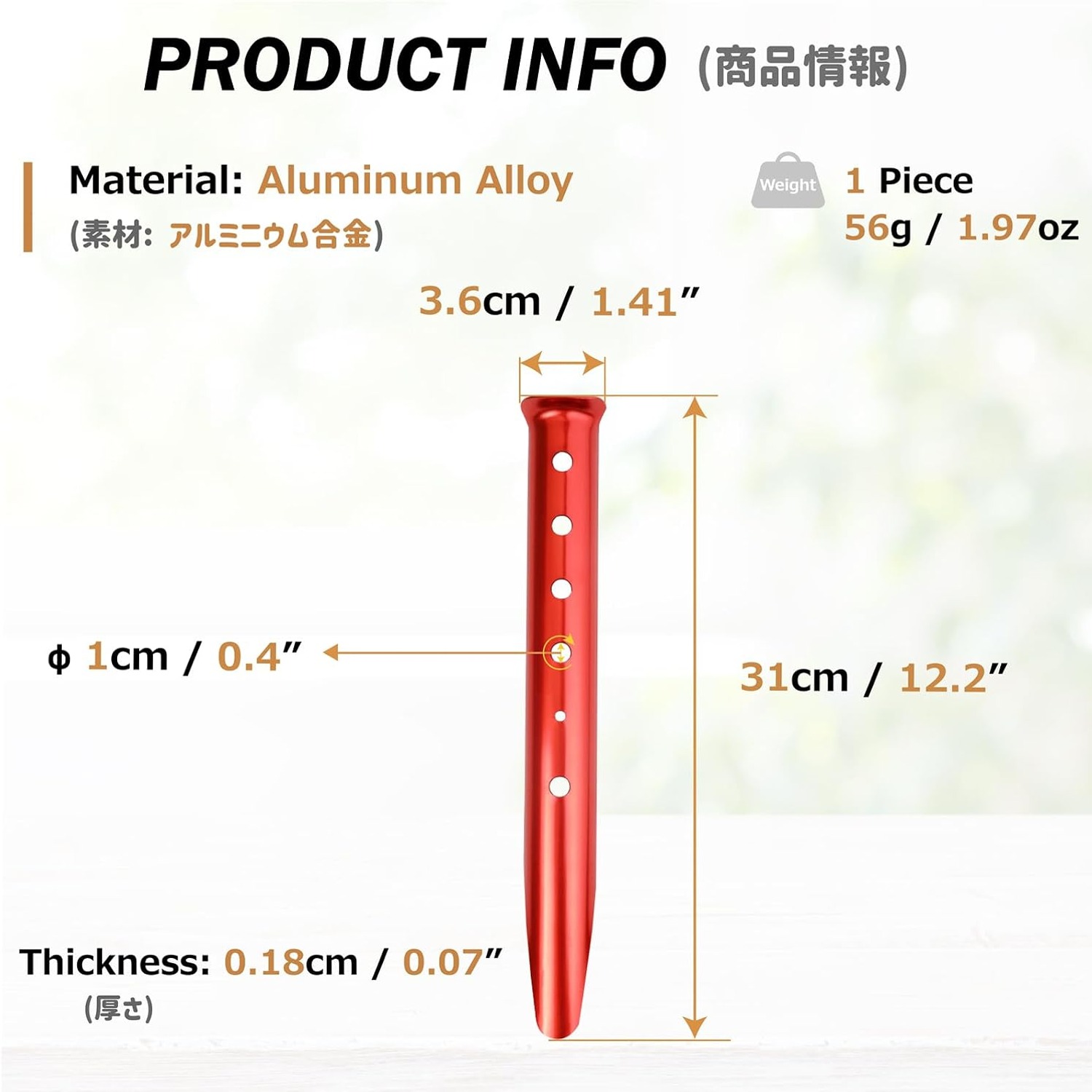
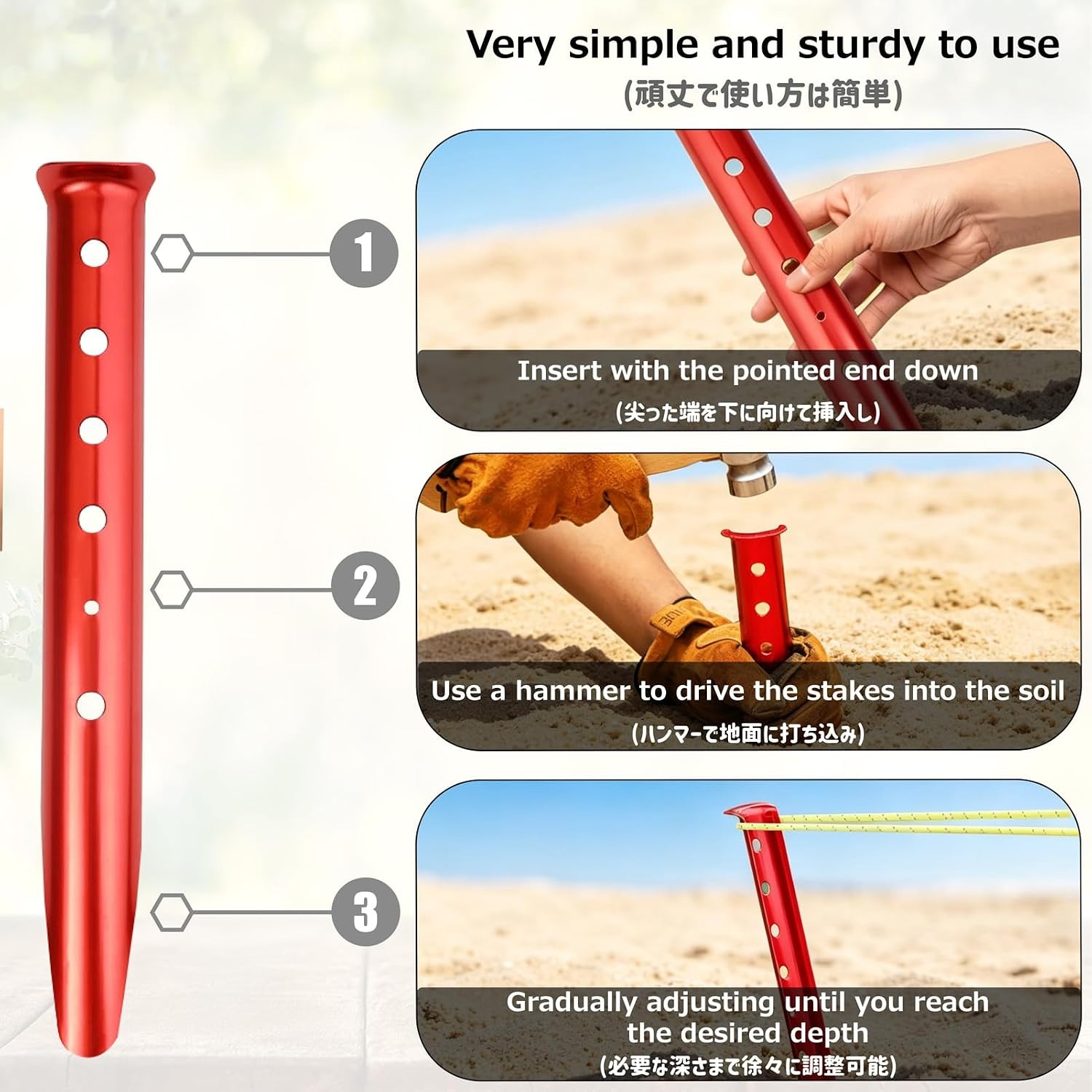
A wide blade stake works by pushing against a large column of material. These stakes are 3.6cm wide and 31cm long. When you bury one properly and pack sand or snow back over the top, the load on the guy line has to lift all of that packed material before the stake moves. That is a completely different job to sliding a thin shaft out of a loose hole.
The width matters more than most people expect. Double the width and you roughly double the face area pressing against the ground. The 31cm length matters too, because depth gives you more material sitting on top of the stake.
This is also why burial technique counts for so much. A wide stake pushed in halfway and left with the top sticking out is not doing its job. It needs to go under, with material packed firmly back over it. Done properly, these anchors hold surprisingly hard in material you would swear could not hold anything.
Where they belong and where they do not
Be honest about your ground before you buy.
These stakes are made for beaches, dunes, soft ground and snow. That covers coastal camping, beach shades, sun canopies over picnic spots, snow camping and shoulder-season trips where the ground is wet and soft.
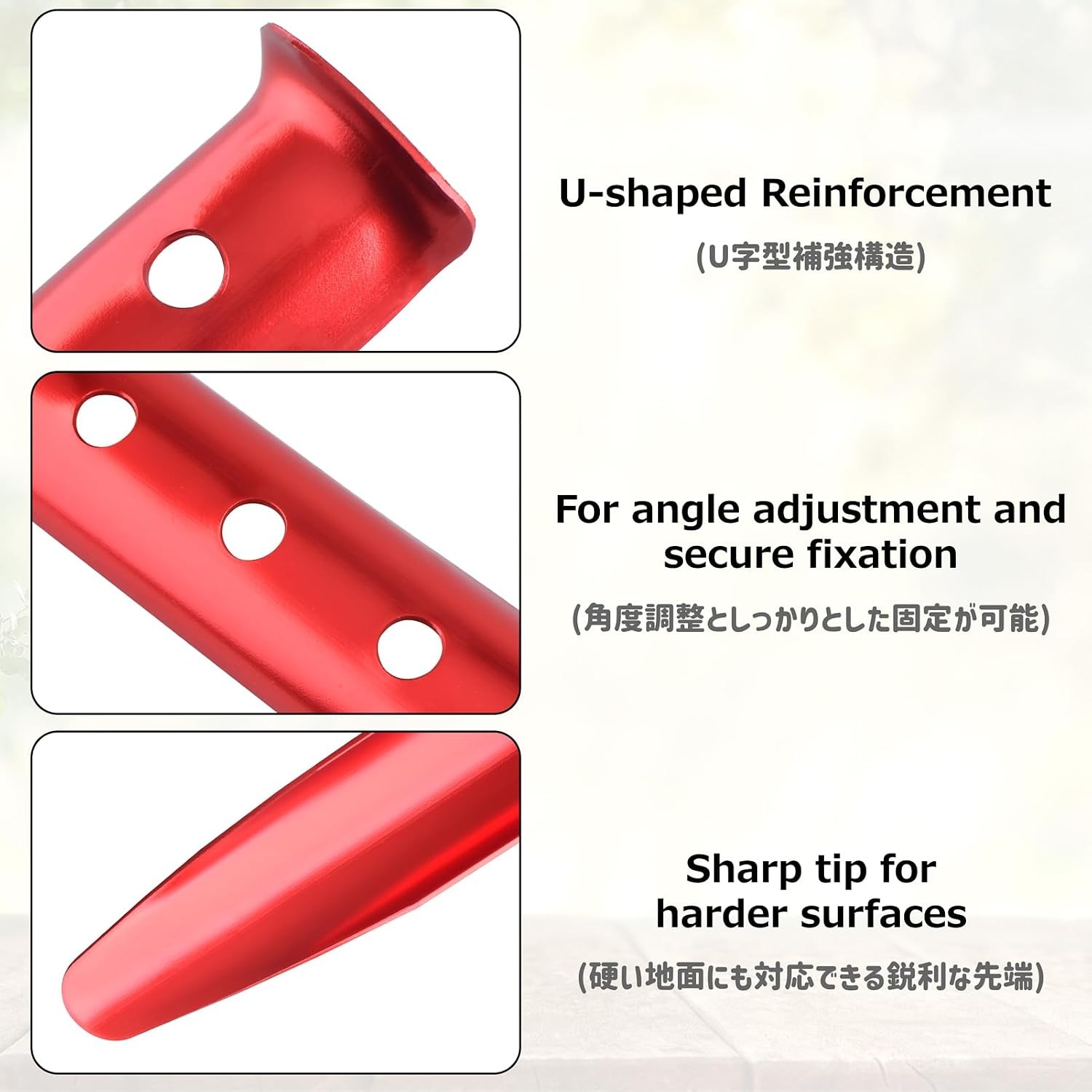
They are not made for hard packed earth, compacted campground sites or anything stony. Driving a wide aluminium blade into gravel will bend it, and it will not go deep enough to be useful anyway. For those sites, a steel pin peg or a Y-beam peg is the right tool and nothing here changes that.
There is also a fit note worth checking before you order. Tents that use small needle loops at the four corners will not take these stakes, because the head will not pass through a tiny loop. If your shelter uses webbing tabs, standard peg loops or proper guy lines, you are fine.
Plenty of campers carry both types. Four conventional pegs and four of these in the same pouch covers almost any site you are likely to pitch on, and the decision takes ten seconds once you kick at the ground on arrival.
Weight, and why aluminium wins here
Soft ground anchoring has historically meant a weight penalty. Plastic sand anchors are bulky and awkward to pack. Steel versions hold well but you feel every one in a pack.
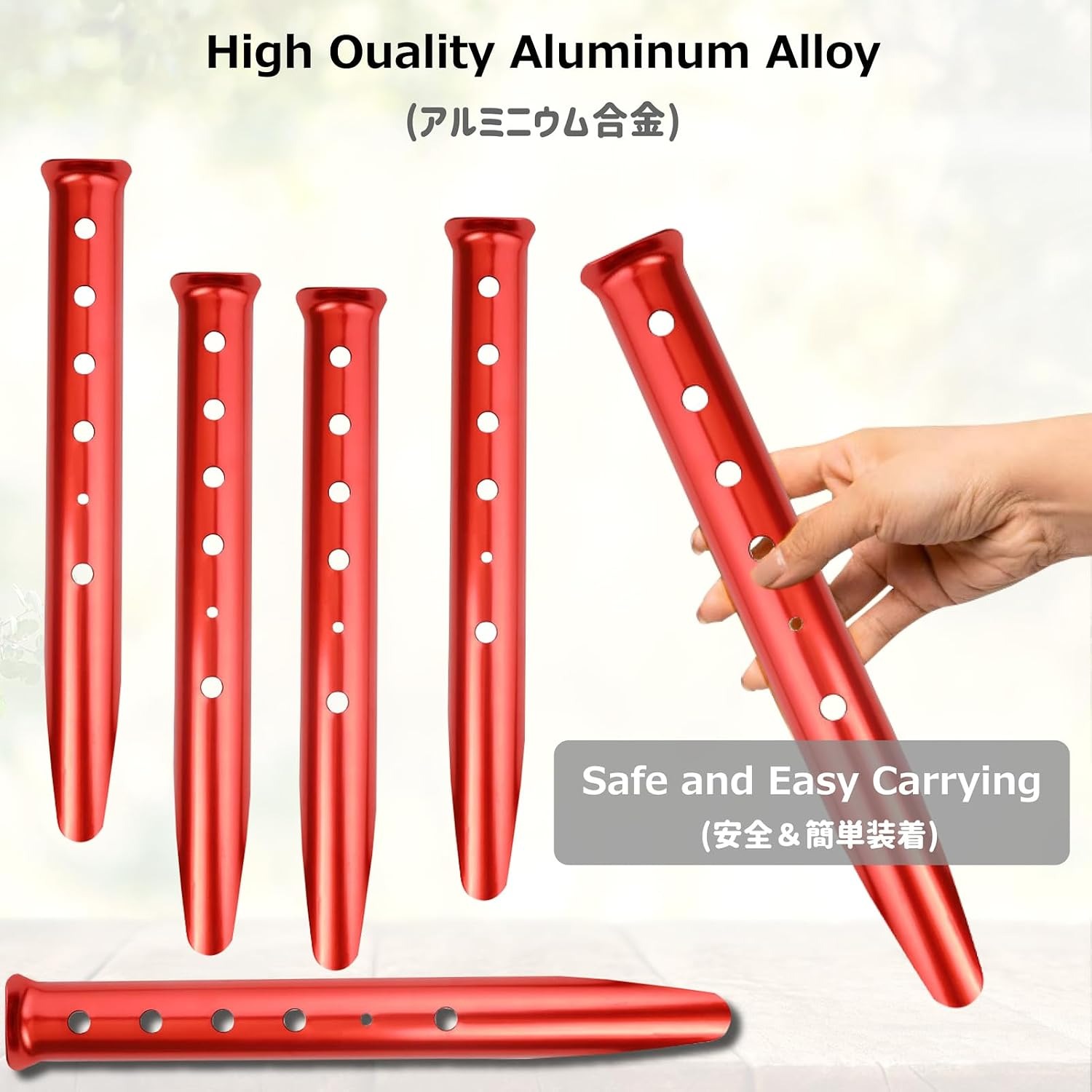
Aluminium sits in the useful middle. Each of these stakes weighs about 52g, so all six come to roughly 310g. That is light enough that a hiker heading for a coastal site or a snow camp can justify carrying them, and light enough that leaving a set permanently in the car boot with the beach gear costs nothing.
If you are looking for the best lightweight tent pegs for soft ground specifically, aluminium is almost always the answer. It gives you the blade width you need without the mass of steel.
The finish, and why orange is not just styling
These stakes are anodised. That is an electrochemical treatment that hardens the outer surface of the aluminium and bonds colour into it rather than painting over the top. Two practical results follow.
First, the surface resists scratching from grit better than bare metal. Sand is abrasive, and gear that lives in sand gets scuffed. A harder surface holds up longer.
Second, the colour stays bright. And on a beach, colour is a genuine feature. A silver or black peg dropped on pale sand is effectively invisible. People lose pegs constantly this way, pack up, drive home and discover they are two short. Bright orange means you can scan the site in a few seconds and find everything. The same logic applies on snow, where anything dark gets trodden under and anything silver blends with the glare.
Getting the most out of them on the beach
Pick your spot with a bit of thought. Damp sand holds far better than bone-dry surface sand, so if you can site your shelter where the sand underneath still has some moisture, you are already ahead.
Dig or push the stake down so the entire blade is below the surface. Run the guy line out at a sensible angle, roughly opposite the direction of pull, then fill the hole and stamp the sand down hard with your heel. Wet the packed sand if you can. Damp sand sets tighter than dry.
Check your lines once after setup and again after an hour. Sand settles, and a quick retension early saves a scramble later.
If the wind is up, go deeper and consider doubling up on the most exposed corner. Two stakes in line on a single guy point share the load and give you a margin.
Getting the most out of them in snow
Snow rewards patience. Bury the stake, pack the snow back over it, and then leave it alone for five or ten minutes. Snow sinters, meaning the crystals bond together when they are compressed and left, and the anchor gets noticeably stronger as it sets.
The deadman technique is worth learning and these stakes suit it well. Tie your guy line around the middle of the stake, dig a short trench at a right angle to the direction of pull, lay the stake flat in the trench, and bury it. Horizontal burial gives you an enormous amount of holding power because the line has to drag the whole stake upward through packed snow.
When you break camp in the morning, a buried stake in set snow can be stubborn. Do not yank the guy line, which can damage the tent attachment point. Dig around the stake instead, or pour a little warm water over it.
Looking after them
This is a simple one. Rinse them in fresh water after a beach trip so salt does not sit on the finish. Wipe off the grit and let them dry completely before they go back in the bag, because damp stakes in a closed pouch are how other gear ends up marked.
Keep them in a sleeve rather than rattling loose. The edges are the useful part of the stake, and they are also what catches on tent fabric.
If one picks up a slight bend, straighten it gently by hand. Do not hammer it flat on a rock, which stresses the metal.
Choosing how many you need
Six covers a small tent or a basic beach shade. A larger shade canopy, a family tent with a full fly, or a tarp setup with multiple guy points will usually want eight to twelve anchors, so two sets is a reasonable buy.
If you only ever pitch one small shelter, one set is plenty. If you run a beach shade for the family and a tent on the same trip, buy two and stop thinking about it.
The short version
If you camp on sand or snow, thin pegs will let you down and no amount of pushing harder will fix it. Wide stakes solve it by anchoring against buried material rather than surface friction.
These are 31cm long, 3.6cm wide, 52g each, six in a set, anodised aluminium in orange. They belong on beaches, dunes, soft ground and snow. They do not belong in rocky or hard packed sites, and they will not fit tents with small needle corner loops.
Bury them properly, pack the material back hard, and your shelter stays where you put it.