



The complete guide
How To Choose A Camping Air Mattress That Actually Lets You Sleep
The problem with sleeping on the ground
Most people who give up on camping do not give up because of the weather. They give up because they slept badly. The ground pulls heat out of you, every stone finds your hip, and a rolled-up jumper is a poor excuse for a pillow. By the second morning you are stiff, cold and wondering why you drove two hours for this.
A good sleeping mat fixes almost all of that in one go. It lifts you off the cold ground, spreads your weight, and gives your shoulders and hips somewhere to settle. The jump in comfort between a thin foam mat and a proper 10 cm air mat is bigger than most newcomers expect.
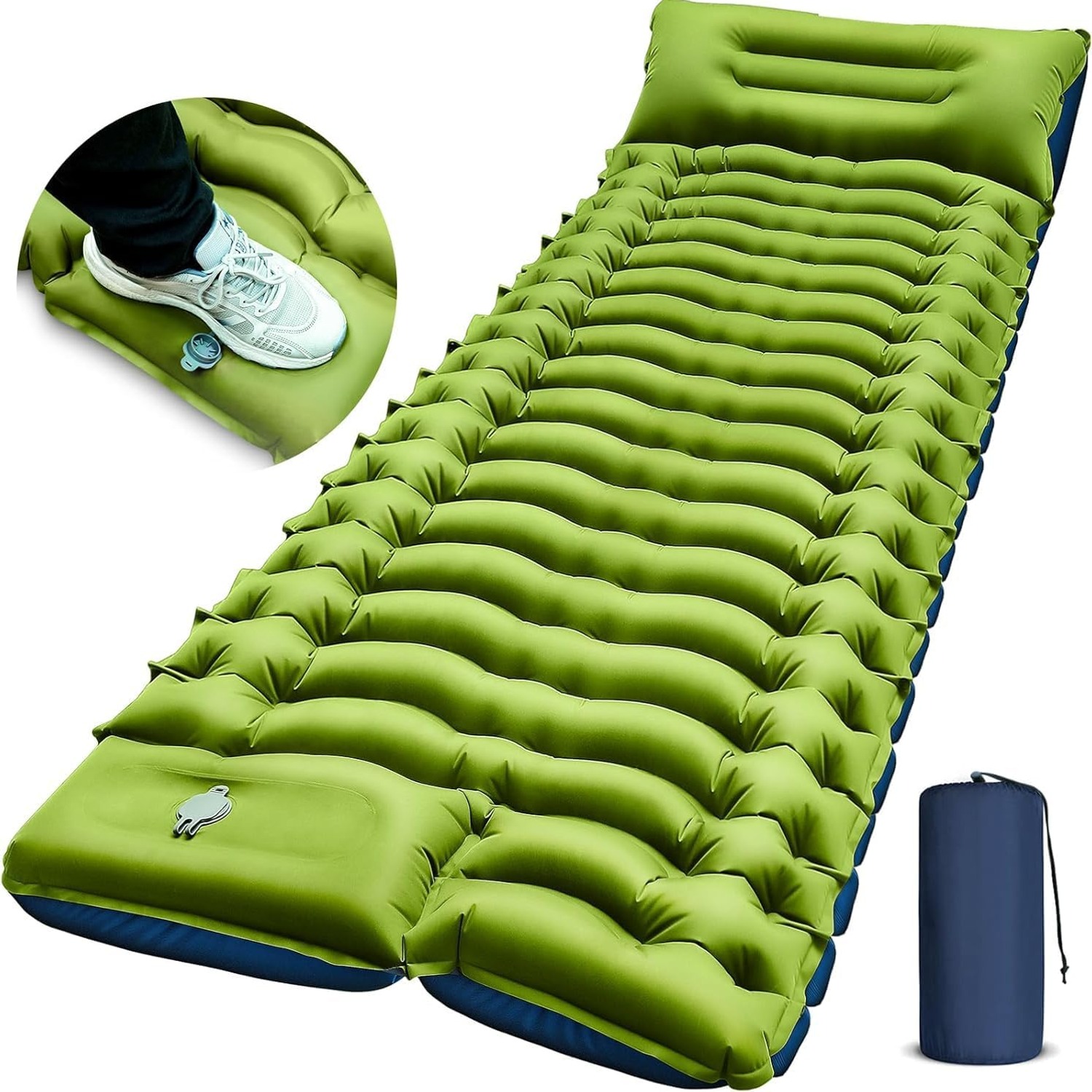
This guide walks through what matters when you choose one, using this foot pump camping air mattress as the working example.
How a foot pump air mat works
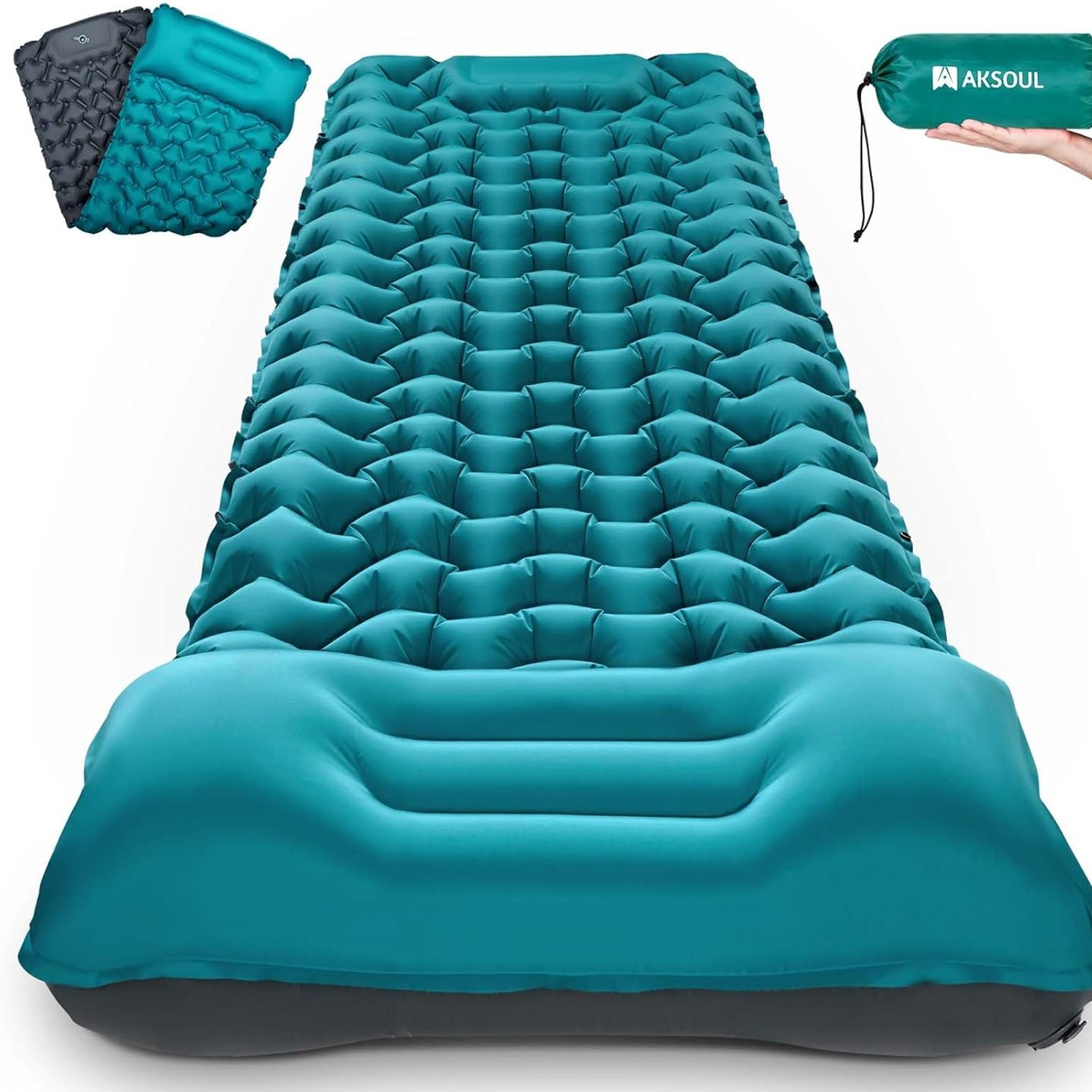
An inflatable mat is a sealed fabric shell with internal structure that holds its shape when filled with air. On this mat the structure is a strip-shaped air cell design, which means the air is divided across the surface rather than sloshing about in one big bag. That is what stops you bottoming out when you roll onto your side.
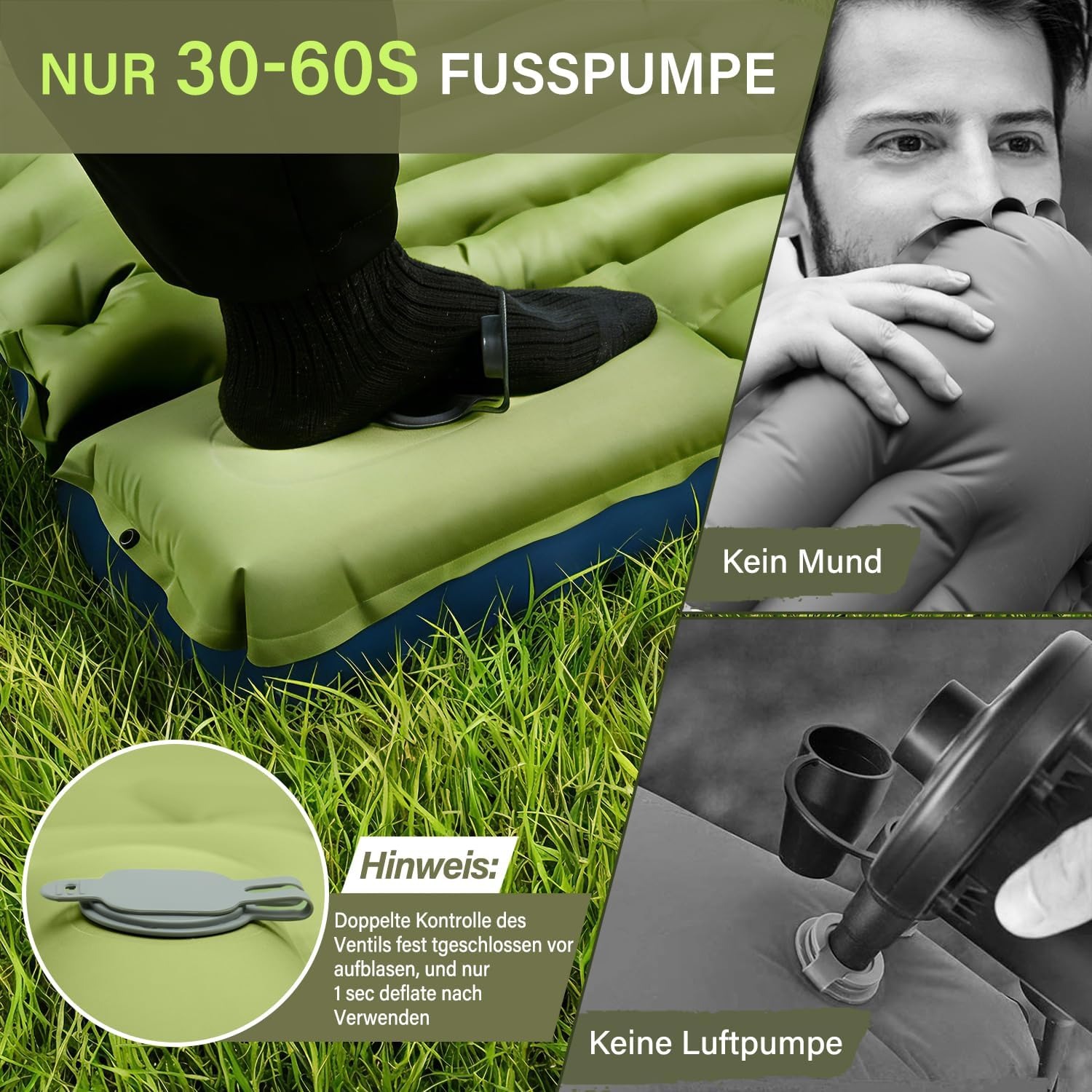
The foot pump is built into the mat itself. You unroll the mat, open the valve, and pedal the pump with your foot. About 30 to 60 seconds of steady pumping gets it to full. It is a small design decision that solves two problems at once. You are not carrying a separate pump, and you are not forcing moist breath into the mat, which is the usual cause of mildew inside cheap inflatables.
Deflation runs the other way. The valve opens wide and empties the mat in roughly a second. Roll from the foot end towards the valve and the last of the air pushes straight out.
Thickness is the other half of the story. At 10 cm, there is enough air under you that the ground profile mostly disappears. That is the main reason side sleepers find air mats so much kinder than foam. Your shoulder sinks a little without hitting anything solid.
Who this suits
Car campers get the most obvious benefit. You have the space, you want comfort, and a mat like this turns a tent floor into something you will happily sleep on for a week.
Hikers and backpackers should think about the trade. The mat packs into its own storage bag and is built to be compact, which is the point of an air mat over foam. If you count every gram, compare it against your current kit before you commit. The record here does not list a packed weight, so judge it on bulk and comfort rather than a number.
Festival goers tend to love the fast setup. You arrive late, you are tired, and you want a bed in under a minute. The built-in pillow helps here too, because festival packing is always a battle for space.
There is also a solid home use case. Plenty of these mats spend most of the year in a cupboard as a spare bed. A single adult fits comfortably at 195 x 68 cm, and a visitor gets a real night's sleep rather than a sofa cushion arrangement.
How to choose
Thickness and width
Thickness decides whether you feel the ground. Anything under about 5 cm and side sleepers will notice pressure. 10 cm is a comfortable place to land for most body types. Width matters almost as much, and 68 cm gives you room to move without edging off. Narrow mats force you to sleep in one position, which is its own kind of tiring.
Inflation method
Your options are mouth, hand pump, electric pump, or an integrated pump like this one. Mouth inflation is free but slow and bad for the mat's insides. A separate pump is one more thing to pack and lose. A built-in foot pump is the practical middle ground, which is why it is a good shortlist feature when you are hunting for the best camping air mattress for regular use.
Pillow
Separate camp pillows slide off in the night, which is why an integrated cushion is worth having. On this mat the pillow forms part of the head end, so it stays where you put it. One fewer item in the bag, one fewer thing to hunt for in the dark.
Firmness
Firmness on an air mat is set by you. Pump less for a softer surface, pump more for a flatter and firmer one. Side sleepers usually prefer a little less air. Back sleepers often want it firmer. Try both on the first night and you will quickly know which you prefer.
Joining two mats
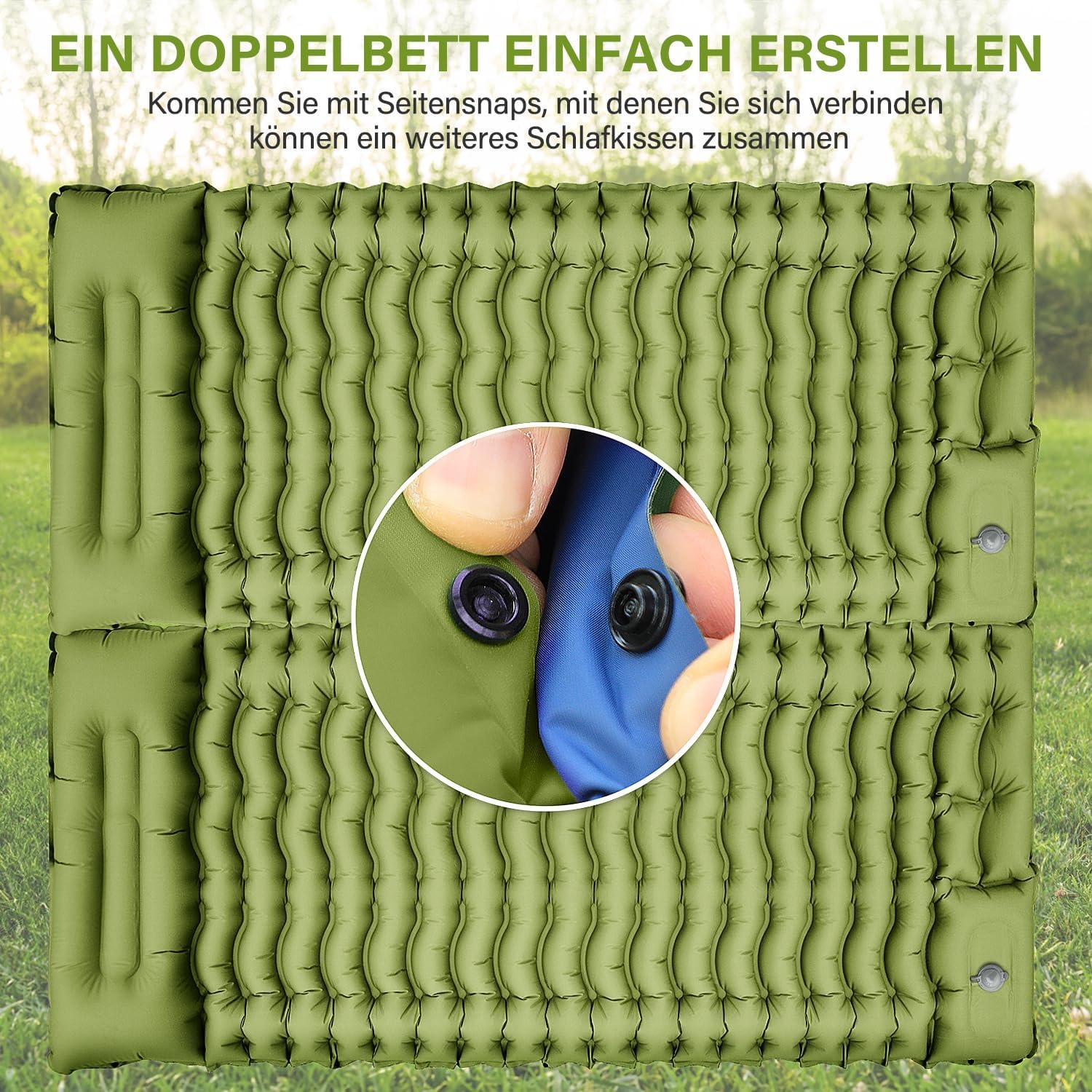
If you camp as a couple or a family, check whether mats can be connected. This one has buttons along the side so two mats clip into a double. That stops the midnight gap that opens up between two separate mats and keeps everyone on the same level.
Materials and water resistance
Nylon is the standard outdoor shell fabric because it resists abrasion and dries fast. This mat uses nylon for the cover and top, and the water resistance level is listed as waterproof. That is what lets you wipe it clean and not worry about damp grass under the tent.
Weight capacity
The stated maximum is 250 lb, about 113 kg. Capacity figures protect the seams and valve, so take them seriously. If two adults are sharing, join two mats rather than putting both people on one.
Setting it up well
Clear the pitch first. Thirty seconds spent kicking away stones and sticks does more for the life of an inflatable than any amount of careful handling later. Put a groundsheet or your tent floor between the mat and the earth.
Inflate until it feels firm, then lie on it and let a little air out until your hip sinks slightly without touching the ground. That is usually the sweet spot. Cold nights drop the internal air pressure, so if the mat feels softer at 2am, a few extra pumps bring it back.
Keep it well away from campfires and camp stoves. Sparks are the number one killer of air mats.
Looking after it
Care is simple. Spot clean it or wipe it with a damp cloth and a little mild soap. Do not machine wash it, tumble dry it, iron it or dry clean it. After a wet trip, open it out at home and let it dry completely before it goes away, because trapped moisture is what causes smells.
Store it loosely rolled or lying flat with the valve open. Avoid leaving it tightly compressed in a hot car for weeks at a time. A standard inflatable repair patch kit, bought separately, handles the occasional puncture, and it is worth tucking one into your camping box before you need it.
The short version
This is a 195 x 68 x 10 cm single camping air mattress in green, with a nylon shell, an air cell structure, an integrated pillow and a built-in foot pump that fills it in 30 to 60 seconds. It deflates in about a second, holds up to 250 lb, is listed as waterproof, and two mats button together into a double.
If you want camp sleep that feels closer to a bed than a floor, and you would rather not carry a pump, this is a sensible place to start.