
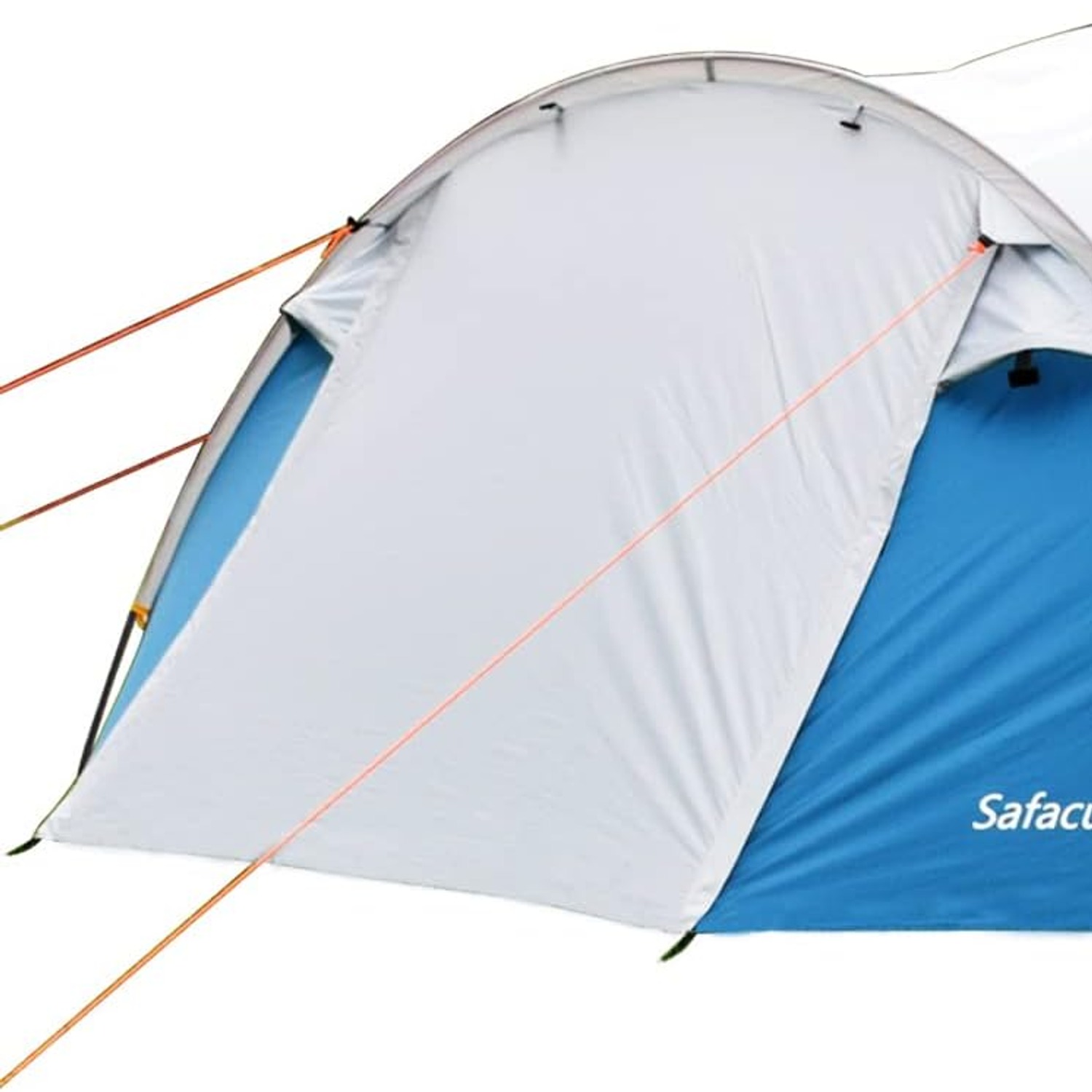
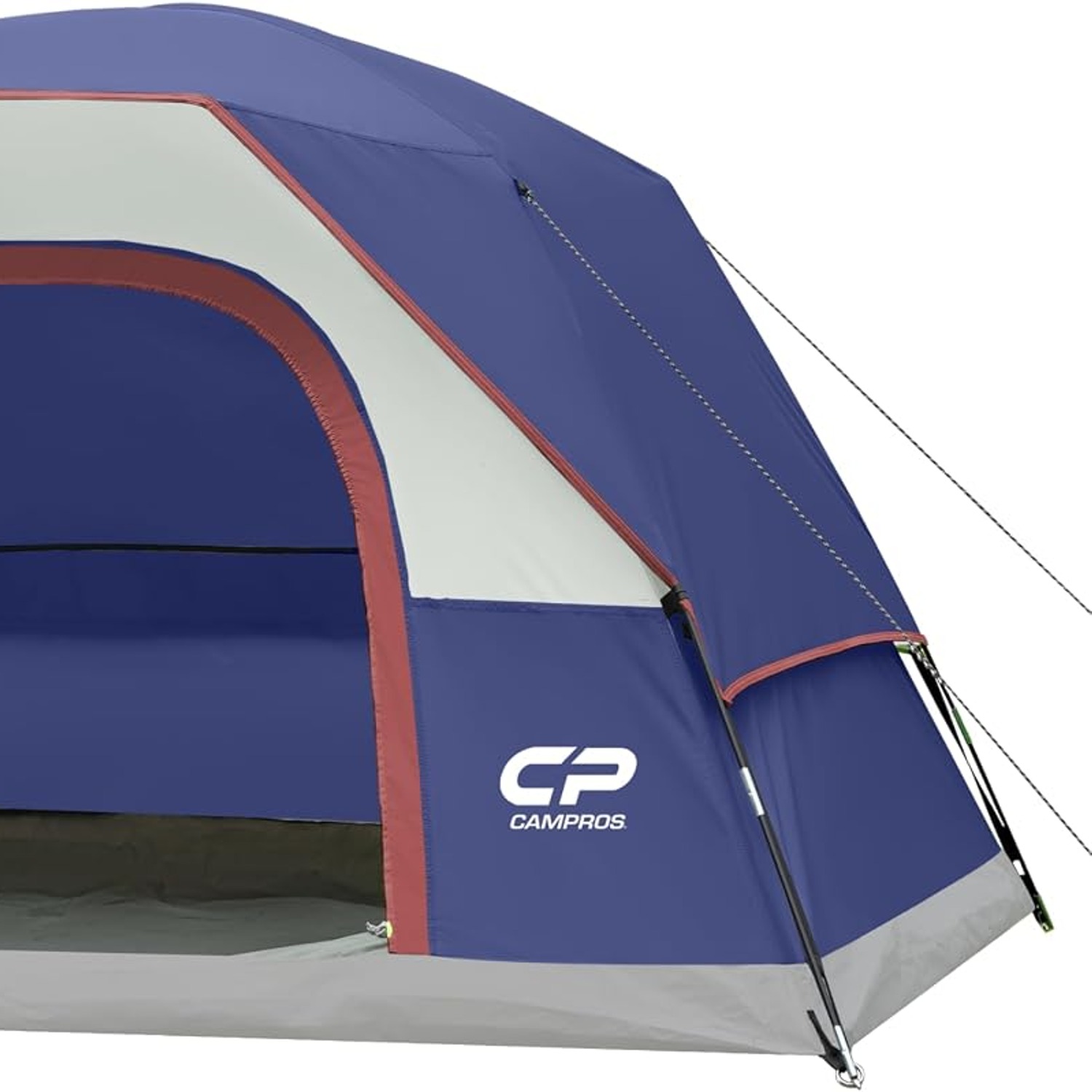
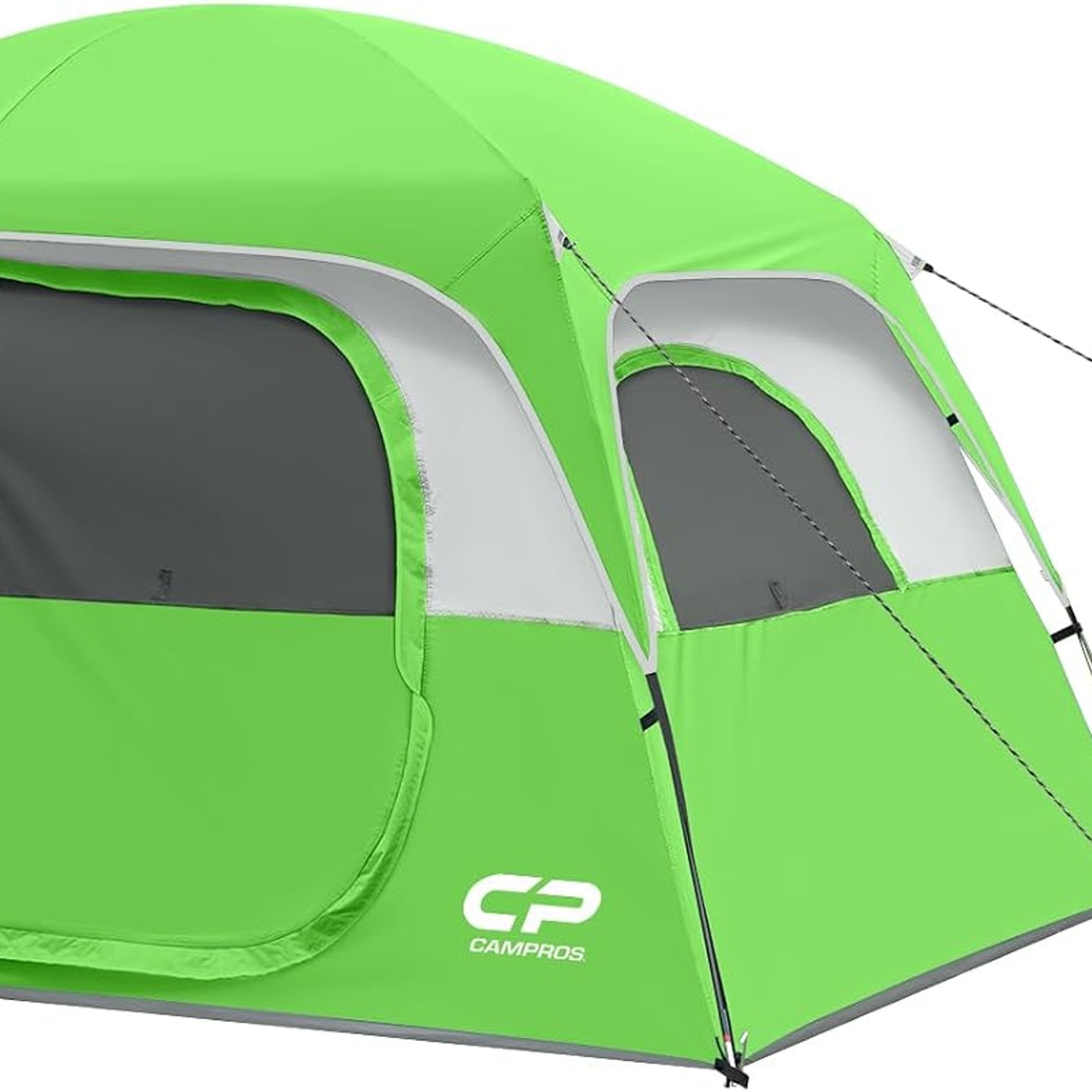
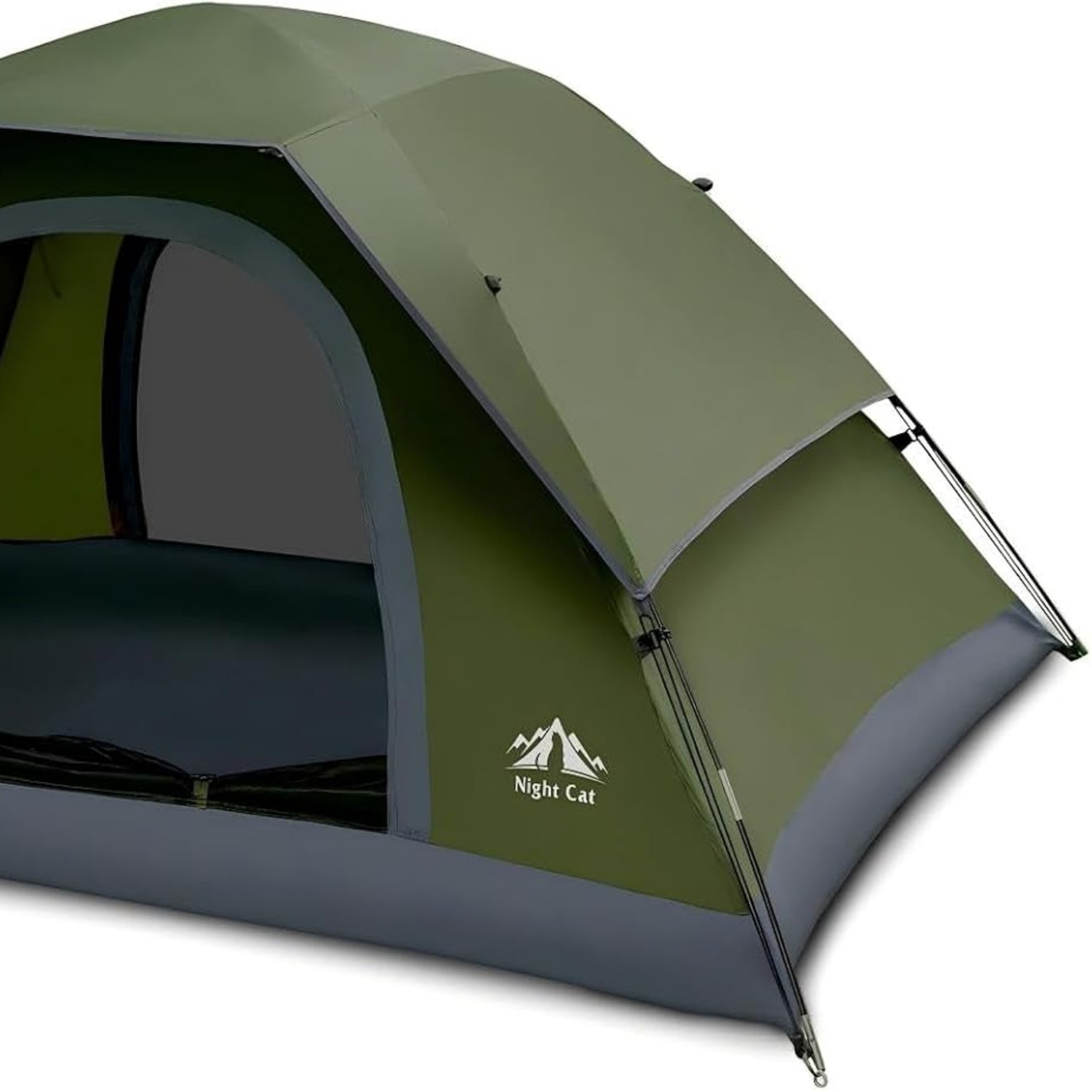
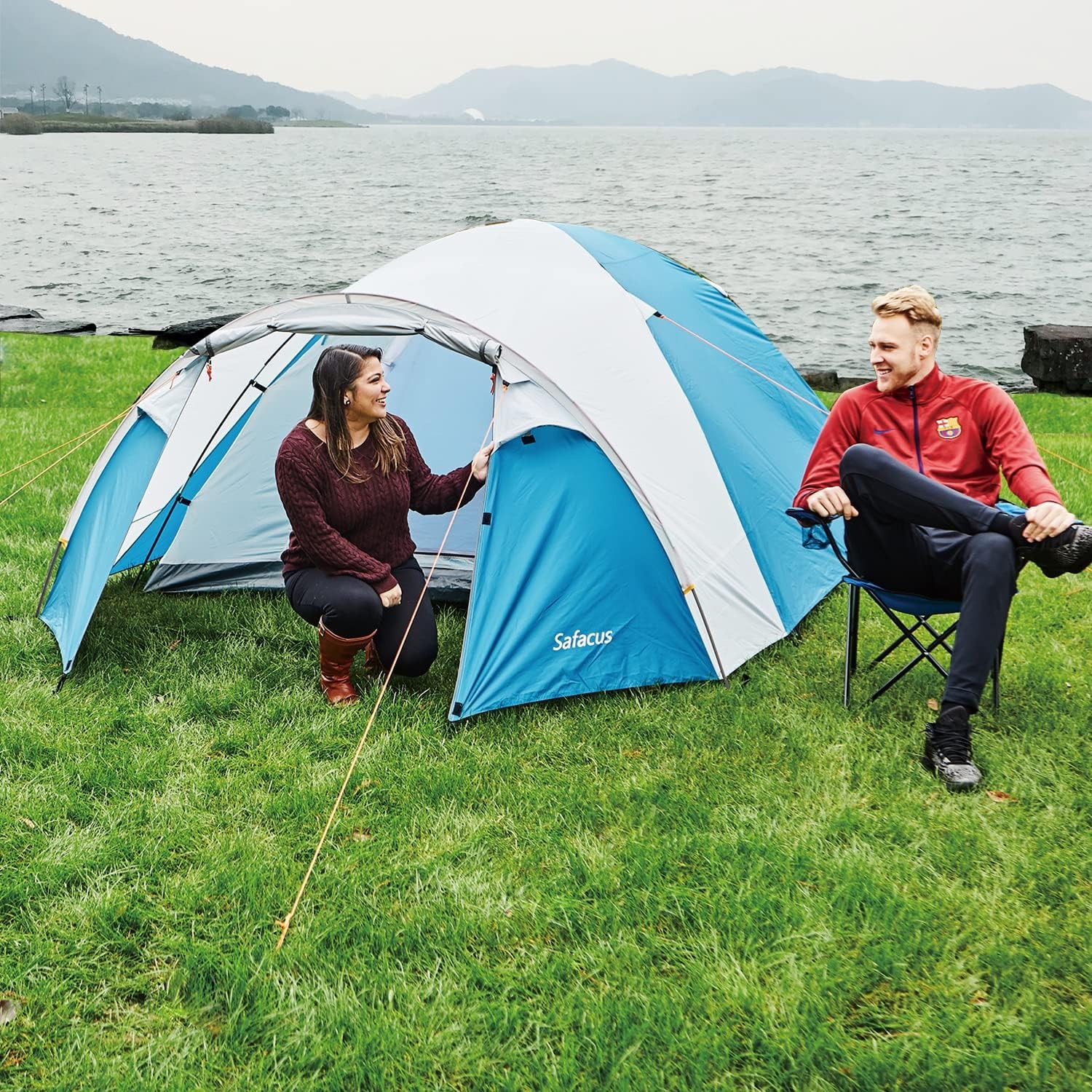
The complete guide
Choosing a 4 Person Dome Tent, A Practical Buyer's Guide
The problem with most first tents
There is a moment on almost every camping trip where the plan starts slipping. You hit traffic, you stop for food, and by the time you reach the site the light has gone soft and orange. That is exactly when a complicated tent punishes you. Sleeves to thread, poles that only fit one way, instructions printed on a tag you cut off at home.
A dome tent solves most of that. Two poles cross at the top, the inner tent clips on underneath, and a rainfly drops over the whole frame. There is almost nothing to get wrong. That is why dome tents still make up so much of the camping market decades after they first appeared, and why a 4 person dome camping tent is the shape most families land on.
This guide walks through how a tent like this works, who it suits, what to check before you buy, and how to make it last more than a couple of seasons.
How a double layer tent actually works
Single layer tents are cheaper and lighter. They are also damp. If you have ever woken up with the roof of a tent stuck to your face, dripping, you have met the limits of a single skin. The fabric that keeps rain out also stops moisture getting out, so your breath condenses on the inside and rains back down on you.
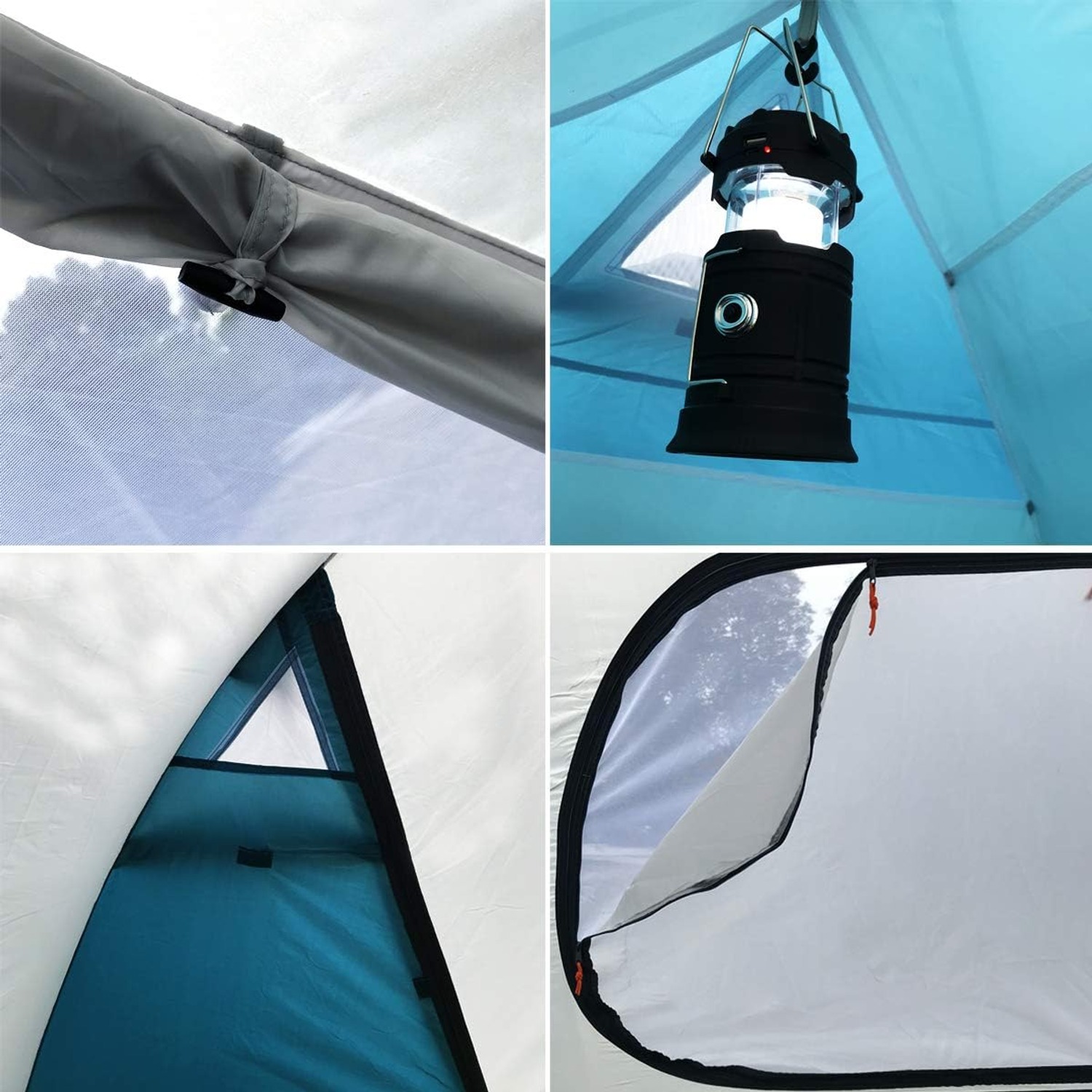
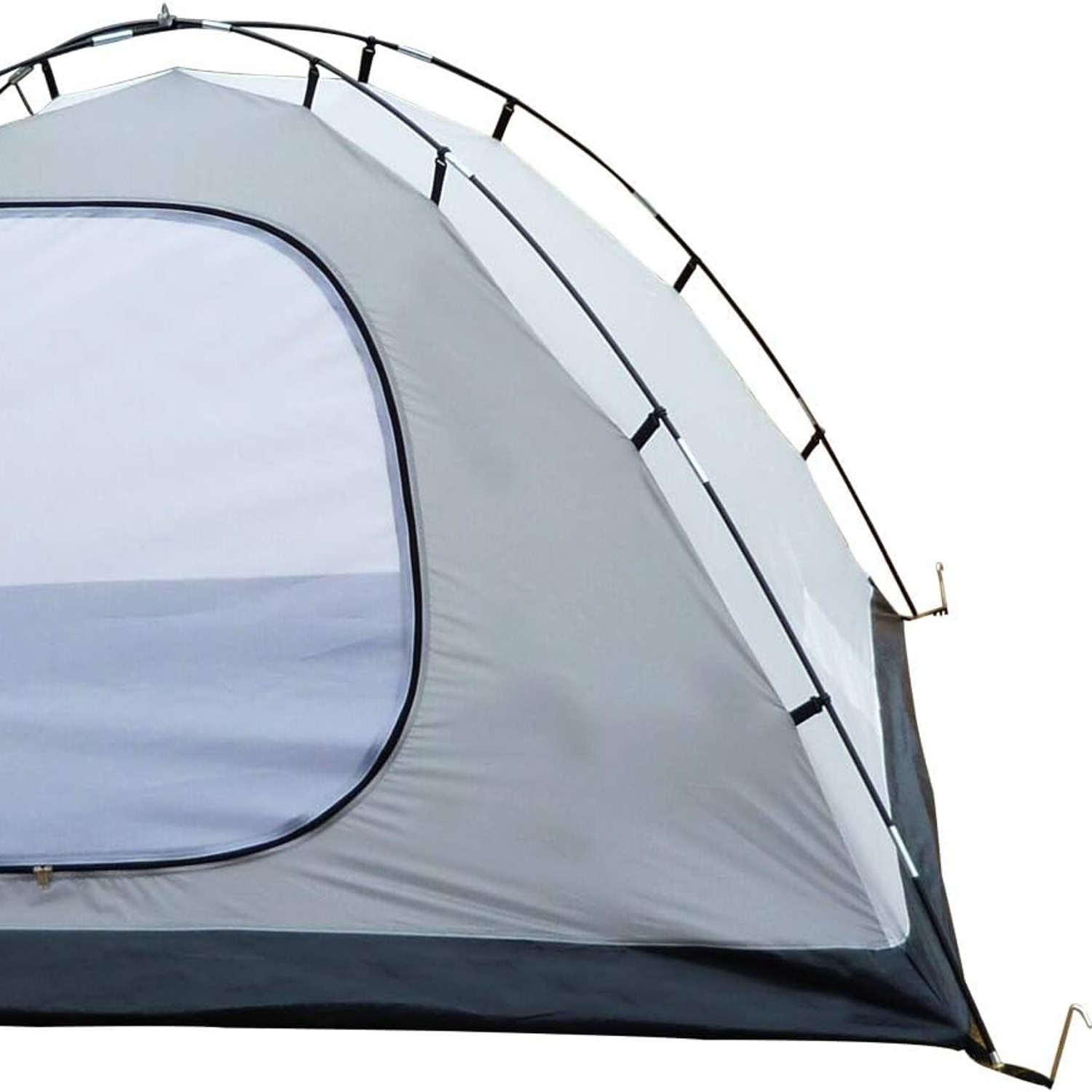
A double layer tent splits the job in two. The inner tent is breathable. It lets water vapour from your breath and your body pass through. The rainfly sits above it on the same pole frame, with an air gap in between, and that is the layer doing the waterproofing. Moisture passes out through the inner, hits the cooler fly, and runs down the outside of the inner tent instead of onto you.
On this tent the fly and inner are polyester, and the floor is polyester with a polyurethane coating. The PU coating is what blocks ground moisture from wicking up into the base. The record lists the water resistance technology as polyurethane and the tent as waterproof, though it does not give a hydrostatic head figure.
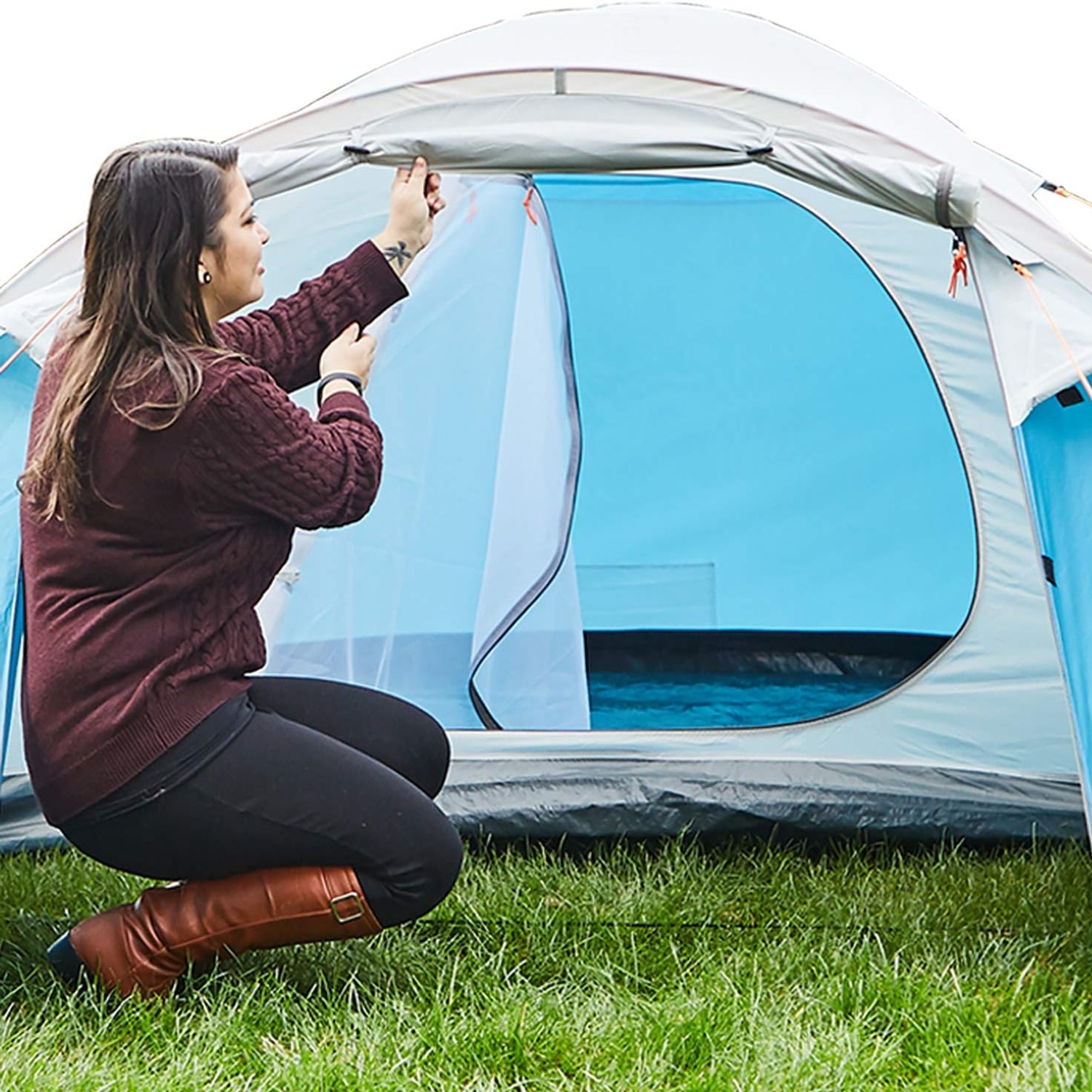
The frame is two fibreglass poles with clip attachment. Clips matter more than people realise. Threading a pole through a long sleeve in the dark, in the rain, with cold fingers, is a genuinely miserable job. Clipping an inner tent onto an already-standing frame takes seconds and you can do it from the outside.
Who this tent suits
The listed uses are beach, camping and hiking, fishing and travelling, and that is a fair description. This is a general-purpose tent rather than a specialist one.
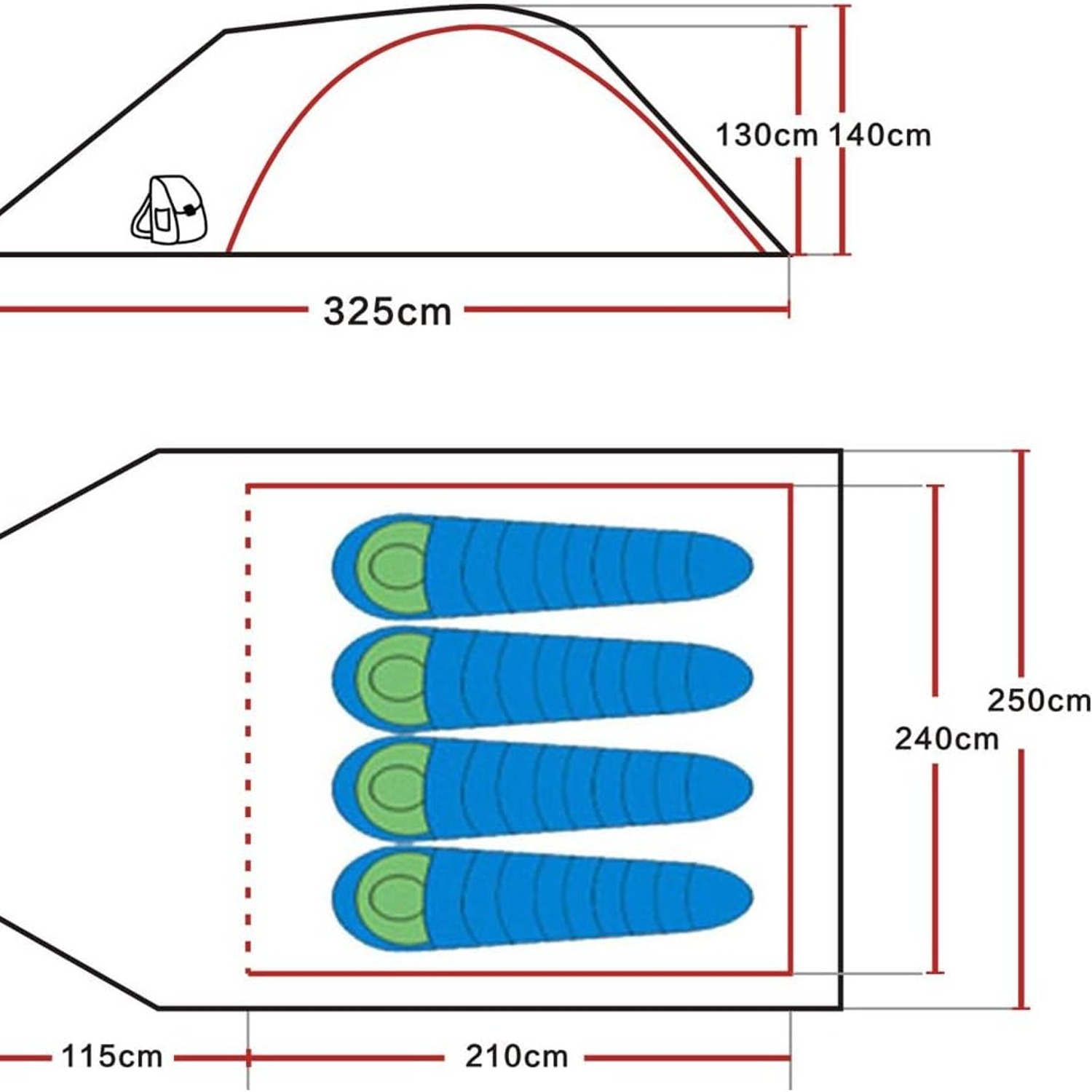
It works well for a family of four on a car camping weekend, where the car park is near the pitch and you are not walking far. It works for two couples sharing on a festival weekend. It works for two people who want a lot of room, which honestly is where a tent like this feels best. Four adults in a 325 cm floor is shoulder to shoulder. Three adults is relaxed. Two people with all their gear inside is luxurious.
It also suits anyone buying a spare tent. Plenty of households end up with a big family tent for the main trip and something lighter for the kids, for guests, or for a last-minute night away.
Where it is less suited: serious backpacking over multiple days, and anywhere you expect heavy snow loading. At 4.8 kg packed it is light for its size, but a dedicated hiking tent for the same number of people will be lighter again. And a low dome with fibreglass poles is a wind-shedding shape, not a snow-shedding one.
Reading the numbers before you buy
Tent specs can be confusing because manufacturers measure different things. Here is how to read the ones that matter.
Floor size. This one is listed with a floor length of 325 cm and a floor area of 81,250 square centimetres. Compare that to the length of your sleeping mats. A standard adult mat is around 180 to 200 cm long and 50 to 65 cm wide. Lay four of those out on your living room floor and you will know immediately whether four people works for your group.
Peak height. 140 cm here. That is the height at the very centre of the dome, directly under the pole crossing point. Everywhere else is lower. Sitting up is fine. Standing is not. If standing room is a dealbreaker, a cabin-style tent is the alternative, but you trade away wind performance to get it.
Packed weight. 4.8 kg, listed as both the total and the minimum trail weight. Think of this in terms of how far you are carrying it. Fifty metres from a car park is nothing. Two kilometres across a festival field in the sun is a different story, though still manageable split between two people.
Pole count and material. Two fibreglass poles. Fewer poles means faster setup. Fibreglass is heavier than aluminium but flexes well and costs less, which is why it turns up in almost every best value dome tent on the shelf. The one habit worth learning is to never whip the poles out of their sleeve by one end, as that stresses the shock cord and the joints.
Guylines. Four. Use them. The single most common mistake with a new tent is pitching it with the pegs in and the guylines coiled up in a bag. Guylines are what keep the fly tensioned away from the inner, and a slack fly touching the inner tent is how water finds its way through.
Pitching it well
Pick the spot first and spend a minute on it. Flat ground beats a nice view. Check for a slight slope and sleep with your head uphill. Clear away stones and sticks, because they will find your floor fabric overnight.
Lay the tent out and work out which way the door faces before you peg anything. Point the door away from the wind. Peg the floor corners out so the base is taut but not stretched tight. Slot the poles together, let the shock cord seat each section properly rather than forcing them, then bend them into place and clip the inner tent on.
Throw the fly over, line up the corners, and clip or peg it. Then do the guylines. Angle them out at roughly forty-five degrees from the tent and tension them so the fly is pulled clear of the inner on every side. This is the five minutes that separates a dry night from a damp one.
Inside, keep wet boots and jackets in the porch area or in a bag rather than loose. Damp gear in a sealed tent is the biggest source of condensation after breathing.
Keeping it alive
Tents rarely fail. They get killed by storage. The single biggest cause of a ruined tent is packing it away damp and leaving it that way.
If you pack up in rain, that is fine, just pitch it again at home within a day or two. Drape it over a washing line, open the door, let it dry fully. Even fabric that feels dry can hold enough moisture to grow mould in a sealed bag over a fortnight.
Clean it gently. A soft brush for dirt and sand, cool water and mild soap for marks. No washing machine, no bleach, no solvents, no tumble dryer. All of those strip the coating off the fabric, and once the PU coating goes, the waterproofing goes with it.
Store poles and pegs in their own bag. Loose pegs rolling around against folded fabric will eventually wear a hole. Store the tent loosely rather than crushed into a tiny stuff sack, and keep it somewhere cool and dry rather than a hot roof space.
Sand and salt deserve a special mention. After a beach trip, rinse everything, including the zip. Salt crystals in a zipper track will grind it to a halt faster than anything else.
The short version
This is a straightforward 4 person camping tent that does the basics well. Double layer construction for dry nights, fibreglass poles with clips for a fast pitch, a waterproof rainfly and PU-coated floor, four guylines and a 4.8 kg packed weight.
It is best thought of as a comfortable two or three person tent that can take four at a push. Set it up once in the garden before your first trip, use all four guylines, and dry it properly before it goes back in the cupboard. Do those three things and it will see you through plenty of weekends.