
The complete guide
How To Choose A Rechargeable Camping Lantern
The problem with camp light
Most people start out with a torch. It works until you try to cook with it. You end up holding it in your teeth, or balancing it on a gas bottle pointing at the ceiling, or asking someone to stand there and aim it at the pan. A torch puts light in one narrow place, and campsites need light everywhere at once.
The other classic answer is a fuel lantern. Those give beautiful light, and they also give you a hot glass chimney, a mantle that breaks if you breathe on it, fumes you cannot have in a tent, and a fuel bottle rattling around in the boot. Lovely on a still night at a big site. Not great at 11pm in a two-person tent in the rain.
A rechargeable LED lantern sits between the two. It spreads light the way a fuel lamp does, but it runs cold, charges from the same cable as your phone, and does not care if it gets knocked over.
How this one works
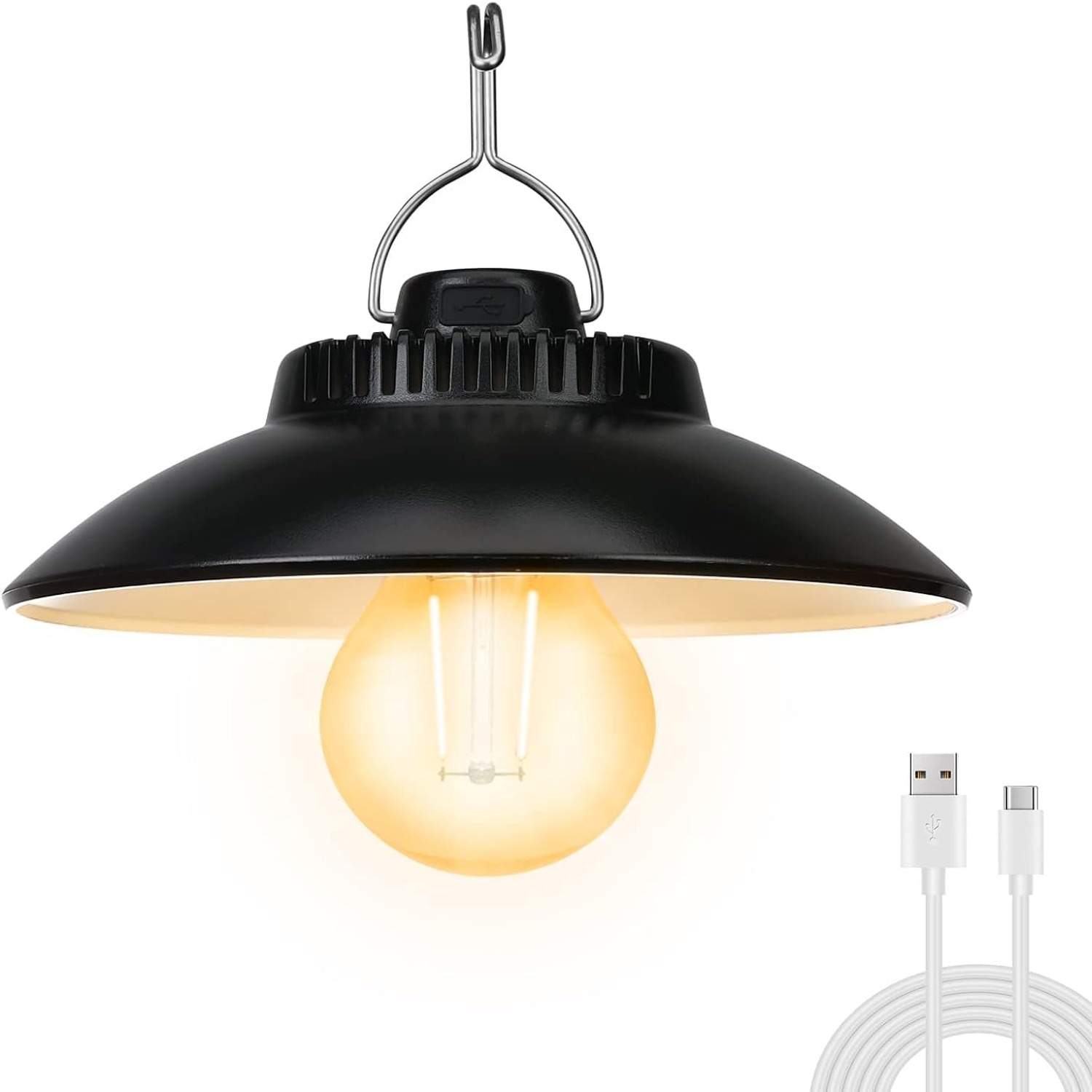
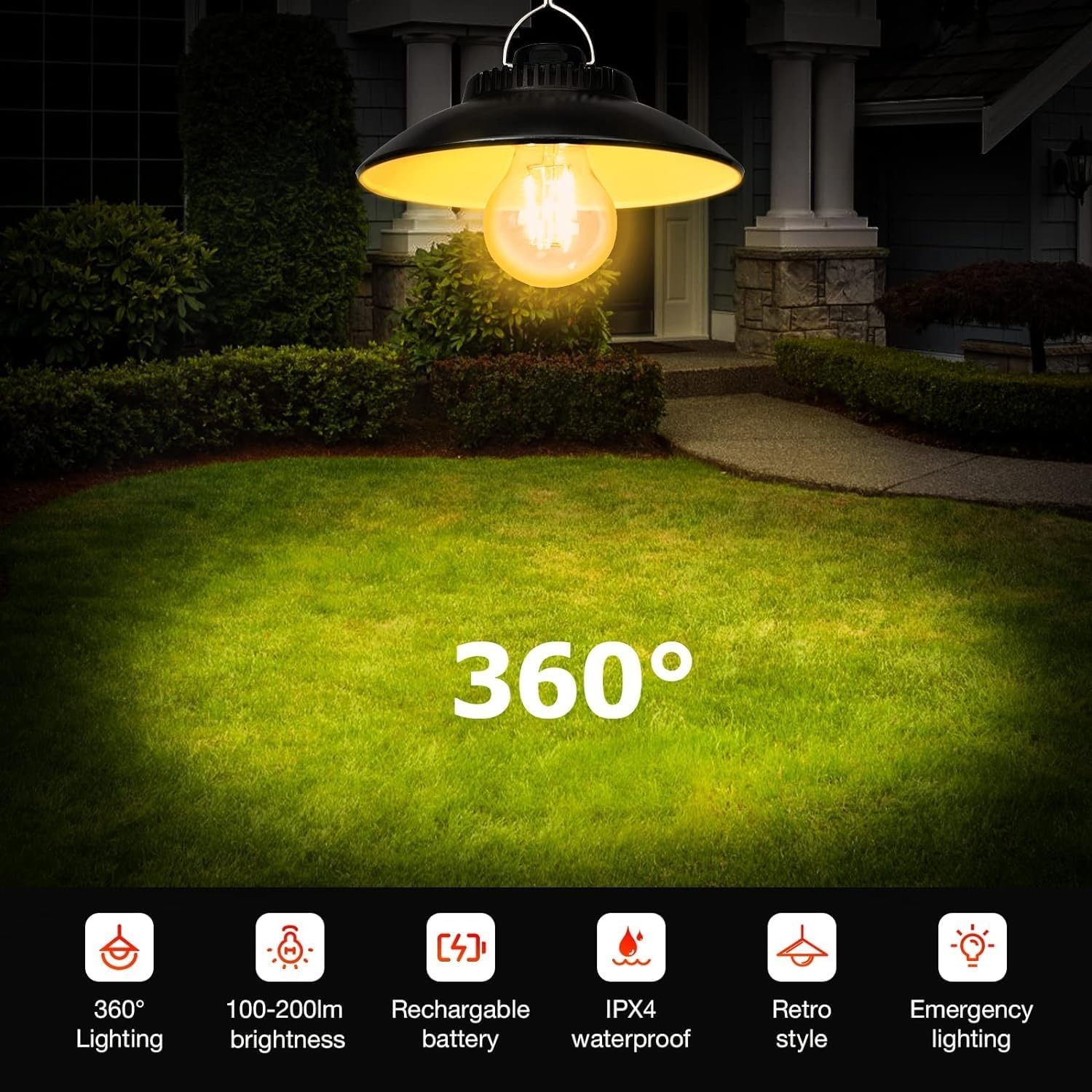
The design here is deliberately old-fashioned on the outside and modern on the inside. You get the familiar hurricane lantern silhouette, a wide base, a cage around the middle and a loop on top, but the light comes from a single LED rated at 5 watts.
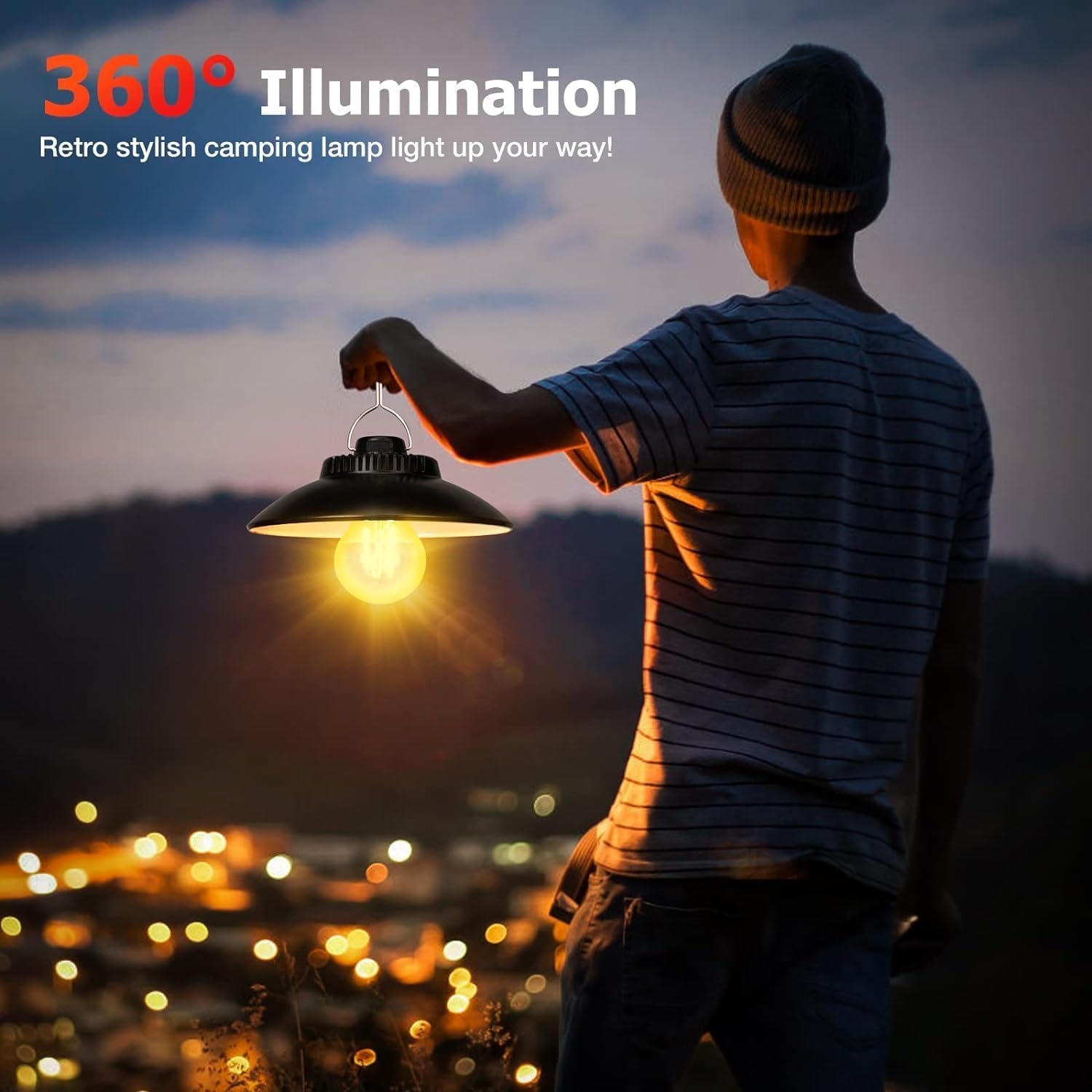
That LED throws across a full 360 degrees. This is the part that makes a lantern a lantern. Hang it from a tent ridge and the whole inside glows softly, with no hard shadow behind the gear pile. Put it in the middle of a table and everyone around it can see their plate. Compare that to a head torch, where whoever is wearing it keeps blinding the person opposite.
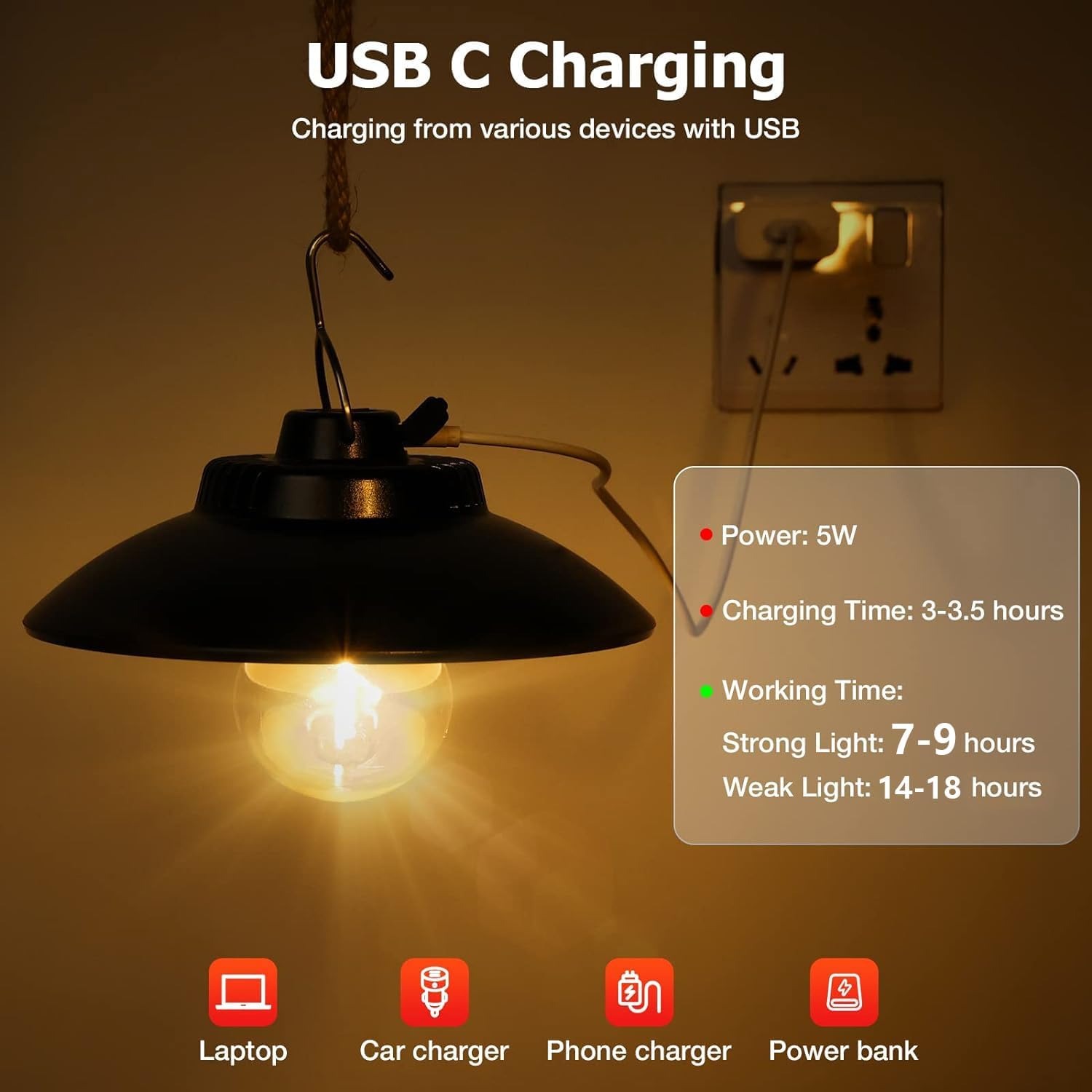
Power comes from a 2600 mAh lithium battery built into the body. You top it up through a USB-C port rated at 5V and 1 amp, which is about as universal as charging gets. Phone charger, laptop brick, car socket, power bank, they all work. Rated battery life is 7.75 hours.
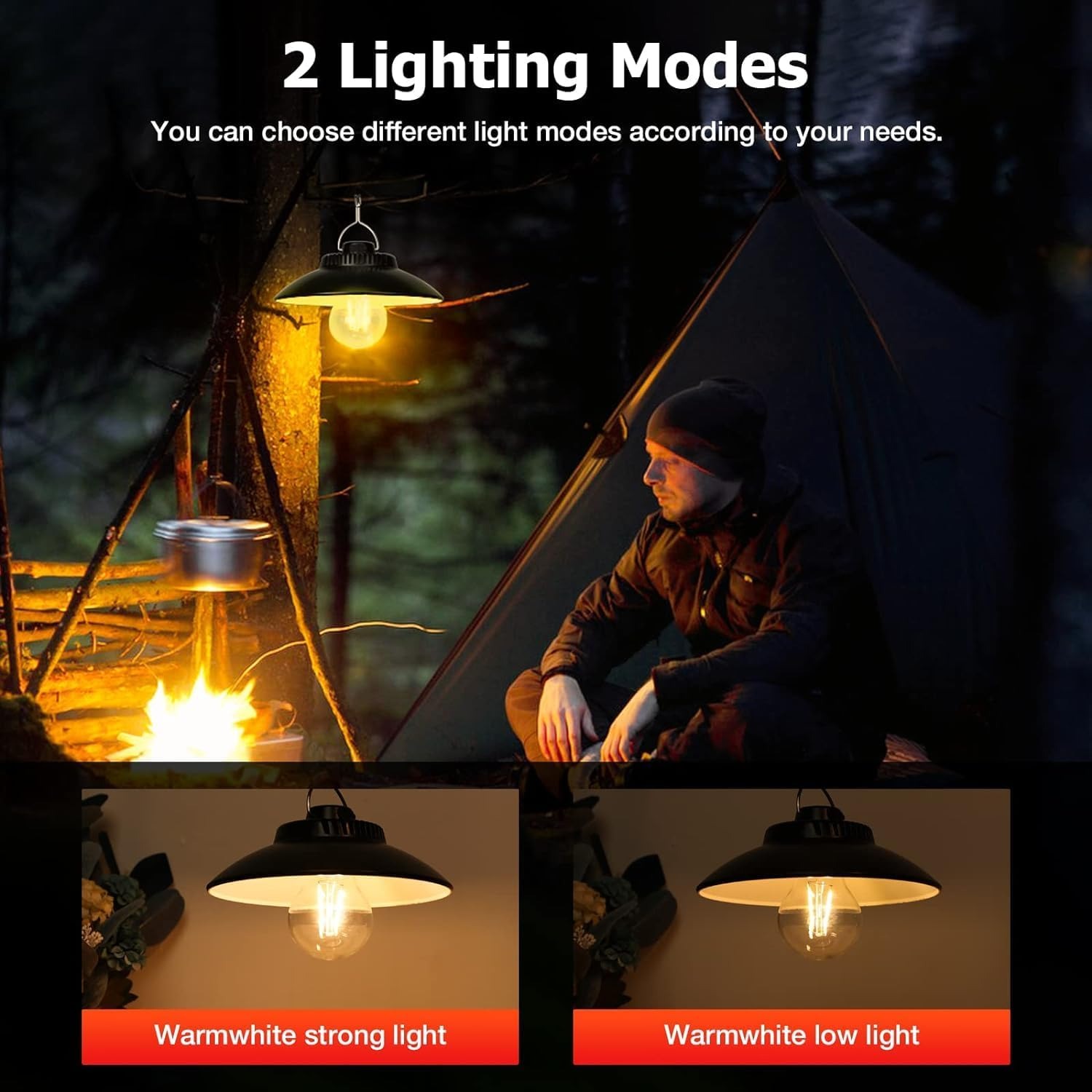
There are two brightness settings, high and low. That is a genuinely useful pair rather than a gimmick. High for setting up camp, cooking and finding things. Low for reading, chatting and leaving on in a kid's tent so nobody panics at 2am. Low also draws less power, so if you are away from a charging point for a few days it is the setting that keeps you going.
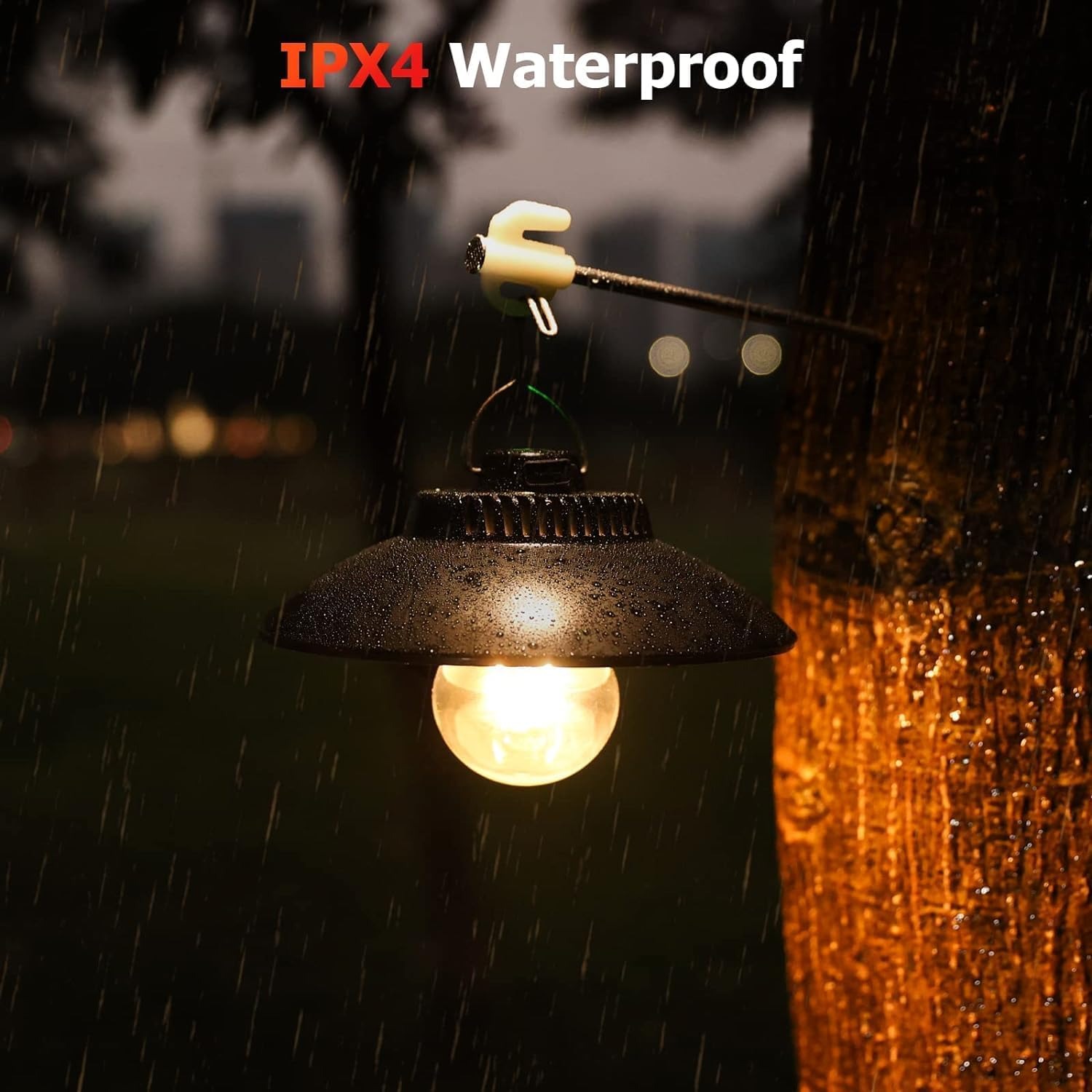
The body is ABS plastic with a powder coated black finish, and it is listed as water resistant. ABS is the same family of plastic used in a lot of tool cases and outdoor housings. It takes knocks without cracking and it does not corrode. Overall size is 14.5 x 11 x 18.5 cm.
Who it suits
Tent campers get the most out of it. The hook was clearly designed with tent loops in mind, and hanging the light high is how you light a small space properly. Anyone who has tried to read in a tent by torchlight will understand the difference straight away.
Caravanners and campervan owners tend to use a lantern like this as an outside light. You have 12V lighting inside already, but you need something for the awning, the table and the trip to the amenities block. Something portable that can be hung from an awning rail and then carried off is more useful than another fixed fitting.
Anglers and anyone else who works outdoors after dark do well with the 360 degree output too. Tying a hook or sorting tackle is easier under a hanging lamp than under a beam that moves every time you turn your head.
Then there is the home crowd. A lot of people buy the best lantern for power outages they can find and never take it camping at all. It lives in a cupboard, charged, waiting. When the power goes, a lantern on the kitchen bench lets the whole family get on with the evening. Those who live where storms regularly take out the lines will know this is not an exotic concern.
Balconies, back decks, sheds, garages and the odd power cut at work all count as well. It is a flexible thing.
How to choose
Start with the space you want to light. A tent, a table or a single room is lantern territory, where a wide 360 degree spread matters more than raw output. If you are trying to floodlight a whole group campsite, you want something larger or several lights spread around rather than one bright source that makes everyone squint.
Then think about power. Built-in rechargeable batteries are the easier choice for most people. There is nothing to buy, nothing to carry and nothing to leak in your pack. The trade off is that once the charge runs out, it runs out, so on long trips without power you either carry a power bank or run mostly on low. Disposable battery lanterns solve that differently, at the cost of a steady stream of alkalines.
Charging standard is worth checking. USB-C is what most phones, tablets and power banks use now, so a lantern with a USB-C port means one less odd cable in the bag.
Consider mounting. A hook sounds minor until you are standing in a tent with nowhere to put a light down. Being able to hang it, then unhook it and carry it, covers almost every camp situation.
Water rating is the last one. Water resistant is the right level for most campers. It handles dew, spray and a shower, which is what actually happens on a trip. Fully waterproof matters if you are on a boat, wading, or expecting the lantern to live outdoors permanently.
Looking after it
LED lanterns are low maintenance, but a few habits keep them going for years.
Recharge before the battery sits flat for a long time. Lithium cells do not like being left empty in a cupboard for six months. If the light has been stored over winter, give it a top up before the first trip of the season.
Keep the charging port clean. Sand and grit in a USB-C socket cause more failures than anything else in camping gear. Give it a puff of air or a careful wipe before plugging in, and keep any port cover closed when you are outdoors.
Wipe the body with a damp cloth and dry it before packing. Salt, sunscreen and smoke all build up on a lantern that lives outside. Do not submerge it, and do not store it somewhere hot or damp, like a sealed car boot in summer or a leaky shed.
Pack it where it will not be crushed. ABS is tough, but it is still plastic, and a lantern at the bottom of a loaded camp box under a cast iron pot is asking for trouble.
The short version
This is a retro camping lantern with modern guts. The 360 degree LED lights a space evenly instead of poking a beam at it, the 2600 mAh battery charges over USB-C, and the two brightness settings let you decide between a bright camp kitchen and a long, gentle burn. Rated battery life is 7.75 hours. It hangs or it stands, it is water resistant, and it fits in a camp box at 14.5 x 11 x 18.5 cm.
If you camp in a tent, run an awning, fish after dark or live somewhere the power drops out, it earns its space. Charge it, hang it, forget about it until you need it.