
The complete guide
How To Choose An Adjustable Camping Table That Actually Gets Used
The problem with nowhere to put anything
Camping gear tends to solve the big problems first. You sort out the tent, the sleeping setup, the chairs and the cooler. Then you arrive, make a cup of tea and realise there is nowhere to put it down.
This is not a small annoyance. Without a flat surface, food prep happens on your knees or on the tailgate. Drinks tip over in the grass. Phones, keys and torches vanish into the dirt and turn up two days later. Kids end up eating off their laps. A table is the piece of kit people skip first and miss most.
The catch is that a lot of camping tables are too big to bother with. A full trestle is great until you have to fit it in a hatchback with four bags and a dog. So it stays in the garage, and you go back to balancing plates on chair arms.
That is the gap a small folding camp table fills. Small enough that packing it is never a decision, big enough that it genuinely helps.
How this table works
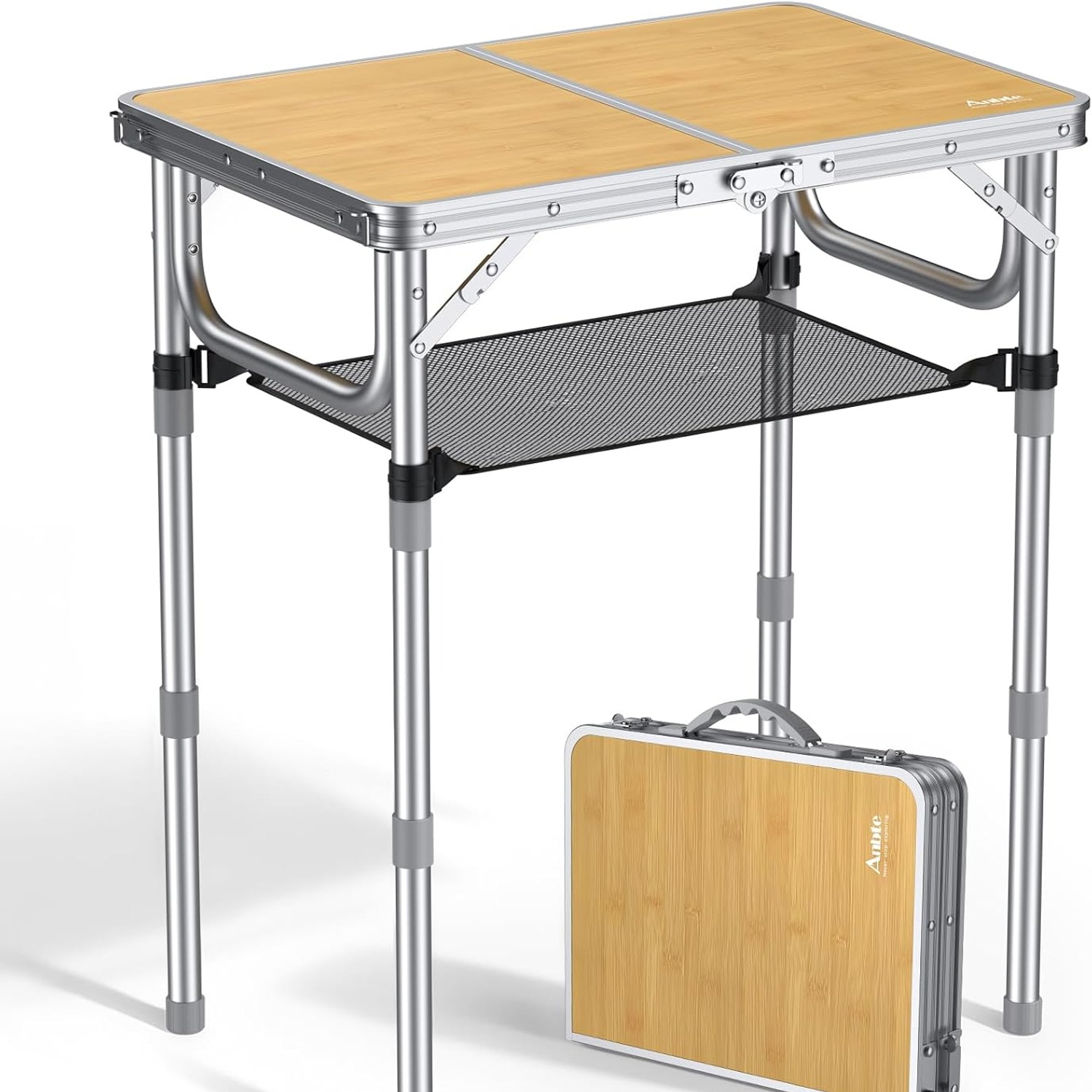
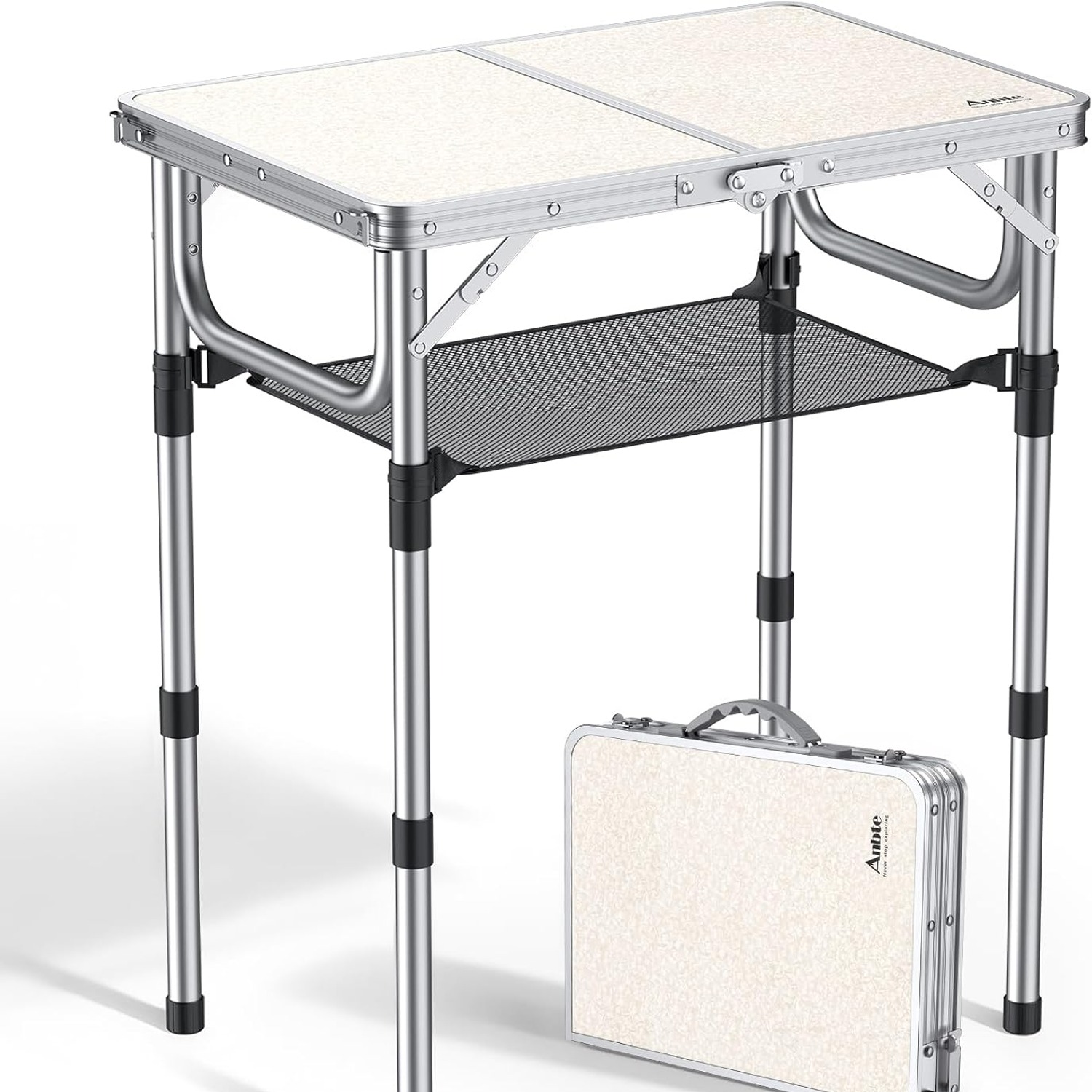
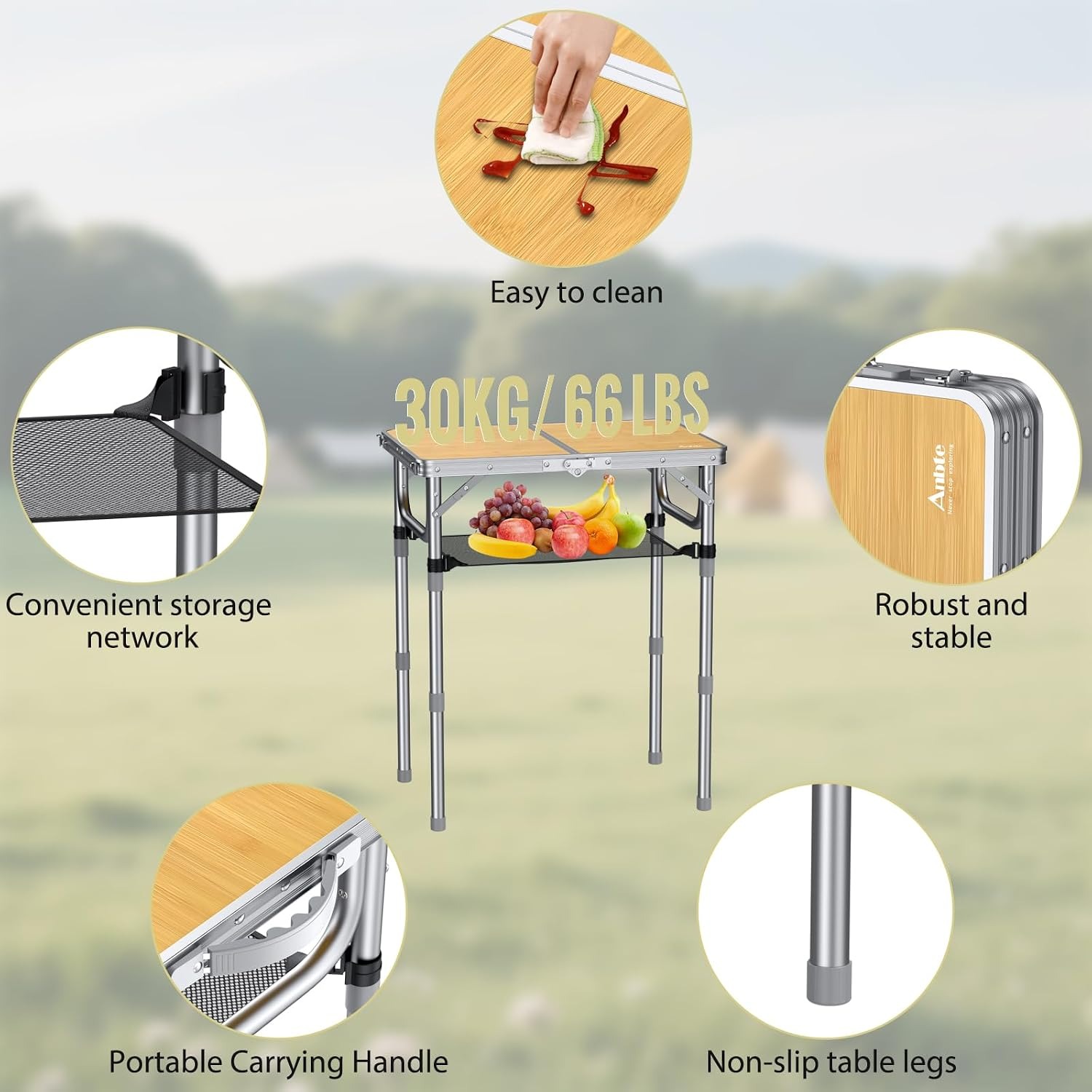
The structure is aluminium tube. That is what keeps the whole thing at 2.235 kg, which is light enough to carry in one hand while you are also holding a chair. Aluminium also handles damp air better than untreated steel, which matters for something that lives in a boot.
On top sits an engineered wood panel, MDF, with a painted finish in yellow. It is flat, smooth and listed as stain resistant, so the usual camping mess of sauce, coffee and sunscreen wipes off rather than soaking in. A fabric top would sag under a stove. A hard panel does not.
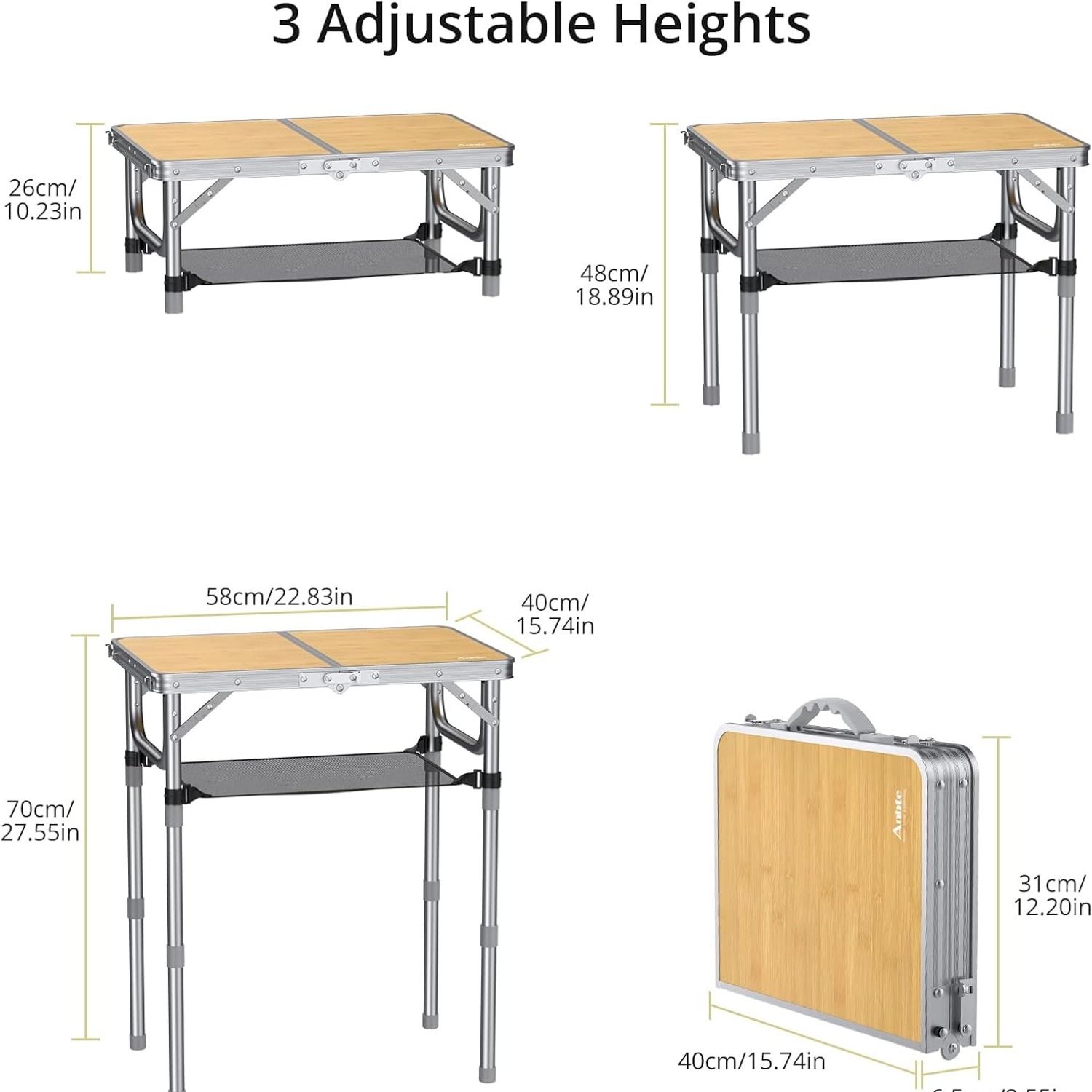
Set up at its tallest, the table measures 57.9 cm wide, 39.9 cm deep and 69.9 cm high. The load rating is 30 kg spread across the top, which is more than it sounds. A twin-burner stove, a water container, plates and a few bags of food comfortably sit under that.
The legs are the interesting part. Instead of one fixed height, they lock at three. The lowest setting turns it into a ground table for picnic rugs and beach mats. The middle setting suits low camp chairs and children. The tallest brings it up to normal dining height so adults can sit at it in a regular chair without hunching. You change the setting by swapping leg sections rather than wrestling with a clamp, which means it holds its height and does not creep down under load.
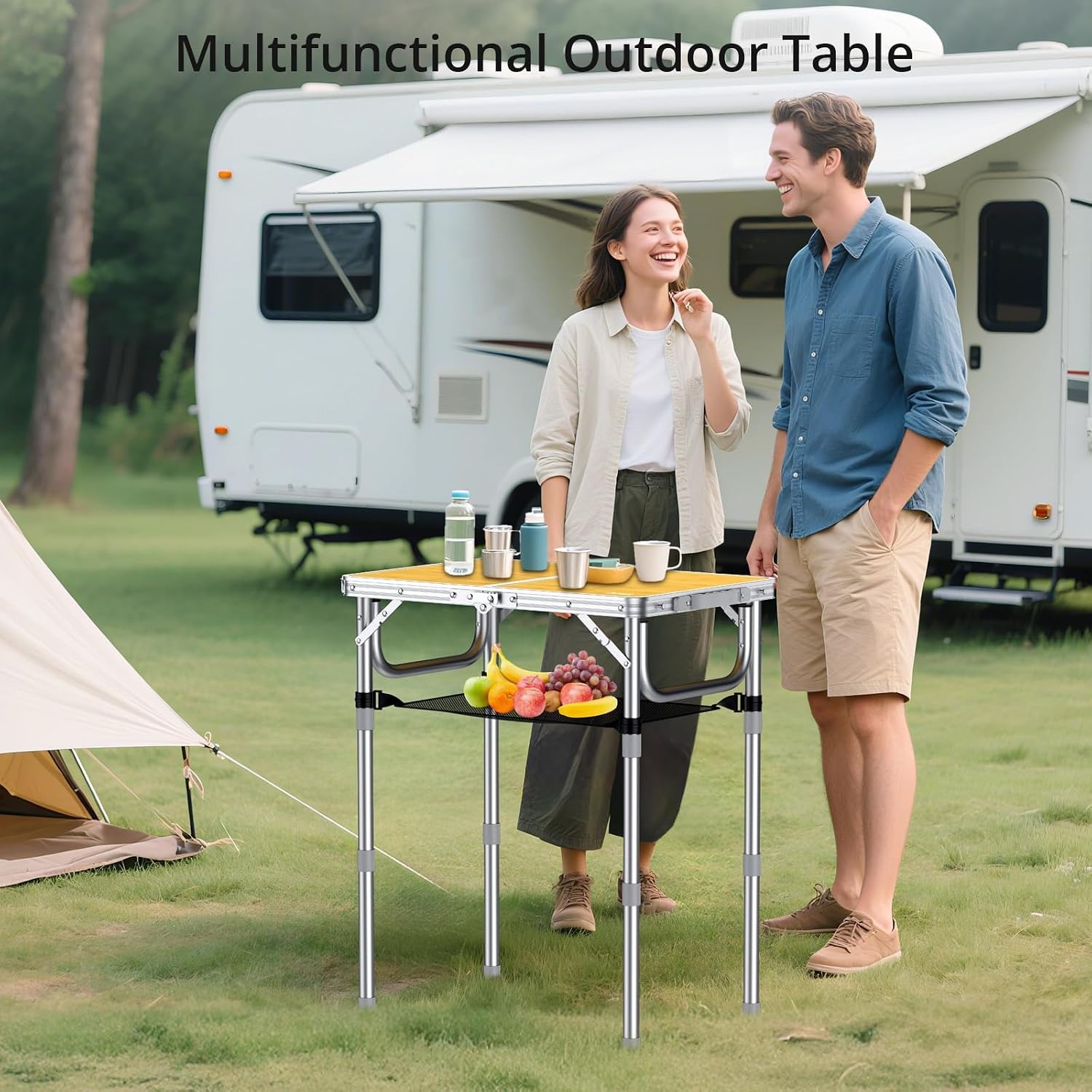
Underneath there is a mesh net that clips in. It is for small, light things, not for storage of heavy gear. Keys, cutlery, a head torch, a pack of cards, the sunscreen everyone keeps losing. On a windy day it is also somewhere to stash napkins so they do not blow across the site.
Who it suits
Car campers get the most out of it. It takes up almost no room, so it travels every trip rather than only the big ones.
Caravan and motorhome owners find it handy for a different reason. Built-in tables are fine inside, but having a second surface outside under the awning changes how you use the space. Something that folds into a locker without eating your storage is the best caravan folding table for that job.
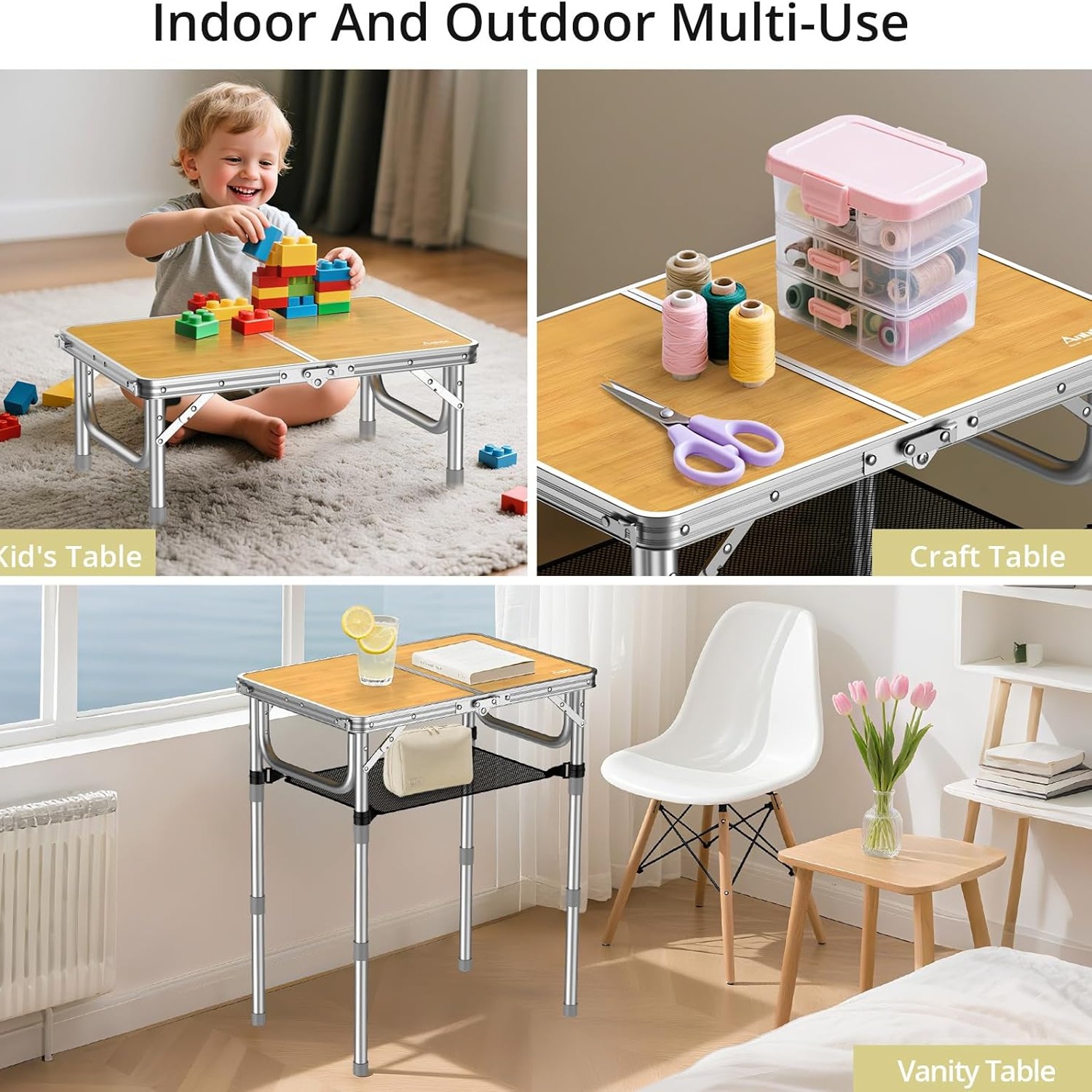
Picnic and beach users want the low setting. Sitting on a rug with a proper flat surface in the middle, rather than everything slowly sliding off the blanket, makes a real difference with kids around.
It also works for people who are not camping at all. Festival goers use it in front of the tent. Anglers use it for bait and a thermos. People in small flats use it as a fold-away desk or craft table and then put it behind a door. One of the quieter uses is as the best camping side table next to a BBQ, holding tongs, plates and marinade while the grill does its job.
Who it does not suit: anyone feeding six people a hot dinner every night. The surface area is sized for two to four, and the 30 kg limit rules out using it as a gear stand or a step. If you need a full outdoor kitchen bench, buy that instead and keep this as a second table.
How to choose
Start with your pack space, not your table size. Measure the gap you actually have. Behind the seats, in a caravan locker, in the side of a boot. If the folded table does not fit there, you will not take it. A folding table that lives at home is worth nothing.
Then think about weight. Anything over about four kilos starts to feel like a chore on a longer walk from the car park. At 2.235 kg, this one does not register.
Next, consider height. This is where a lot of people get caught out. Single-height tables either force you onto the ground or sit too tall for a camp chair. Three settings covers both, plus a middle option for kids. If you camp in different styles, from beach days to caravan parks, adjustability is the feature that matters most.
Check the top material. Fabric tops roll up small but sag. Slatted aluminium tops are tough but have gaps that swallow cutlery and crumbs. A solid engineered wood panel gives you a continuous surface that wipes clean, which is why it is the common choice for the best portable picnic table in this size range.
Finally, be honest about load. A 30 kg rating is plenty for food, drinks and a stove. It is not for standing on, sitting on or stacking firewood. Match the table to the job.
Looking after it
Folding furniture almost never dies from use. It dies from grit and damp.
Brush sand and dirt out of the leg joints before you fold it. Sand is the number one killer of telescoping and sectional legs, because it grinds the surfaces every time you slide them together. Thirty seconds with your hand or a brush adds years.
Wipe the top with a damp cloth after each use and dry it straight away. The painted finish handles spills well, but standing water on an engineered wood edge will eventually swell it. Skip harsh solvents and scouring pads, which will dull the finish faster than any amount of normal use.
Keep it away from fire and very hot items. Use a trivet or heat mat under a stove or a hot pot. This is standard for any table with a wood-based top, and it is the single easiest way to avoid a permanent scorch mark.
Store it folded, dry and flat, ideally in its bag. Do not leave it set up outside between trips. Sun and rain will fade the paint and work on the top long before the frame gives up.
The short version
This is a 2.235 kg aluminium-framed folding table with an engineered wood top, three fixed leg heights and a 30 kg load rating. Set up it is 57.9 by 39.9 cm with a top height of 69.9 cm, and it folds flat with a carry handle.
Choose it if you want a flat surface that travels without argument, from a picnic rug to a camp chair to the side of a BBQ. Skip it if you need a full-size kitchen bench or a table that will live outdoors permanently.
For most people, the best adjustable camping table is simply the one small enough that packing it never becomes a decision. This one clears that bar.