
The complete guide
How to Choose a Roll Top Camping Table (and Actually Use It Well)
The problem with camp surfaces
Anyone who has cooked outdoors knows the moment. The stove is lit, the onions are going, and there is nowhere to put the chopping board, the tongs, the plate of raw meat or the beer. So things end up balanced on an esky lid, on a chair, on the ground. Then the dog walks past, or the wind gets up, or someone kicks the plate.
A camp table is not a luxury item. It is the piece of gear that makes everything else work. The trouble is most of them are either too big to pack, too flimsy to load, or both. Plastic trestle tables are bulky and warp. Thin fold-in-half tables flex under a full pot. A good roll top camping table solves the packing problem without giving up the load rating.
How a roll top table works
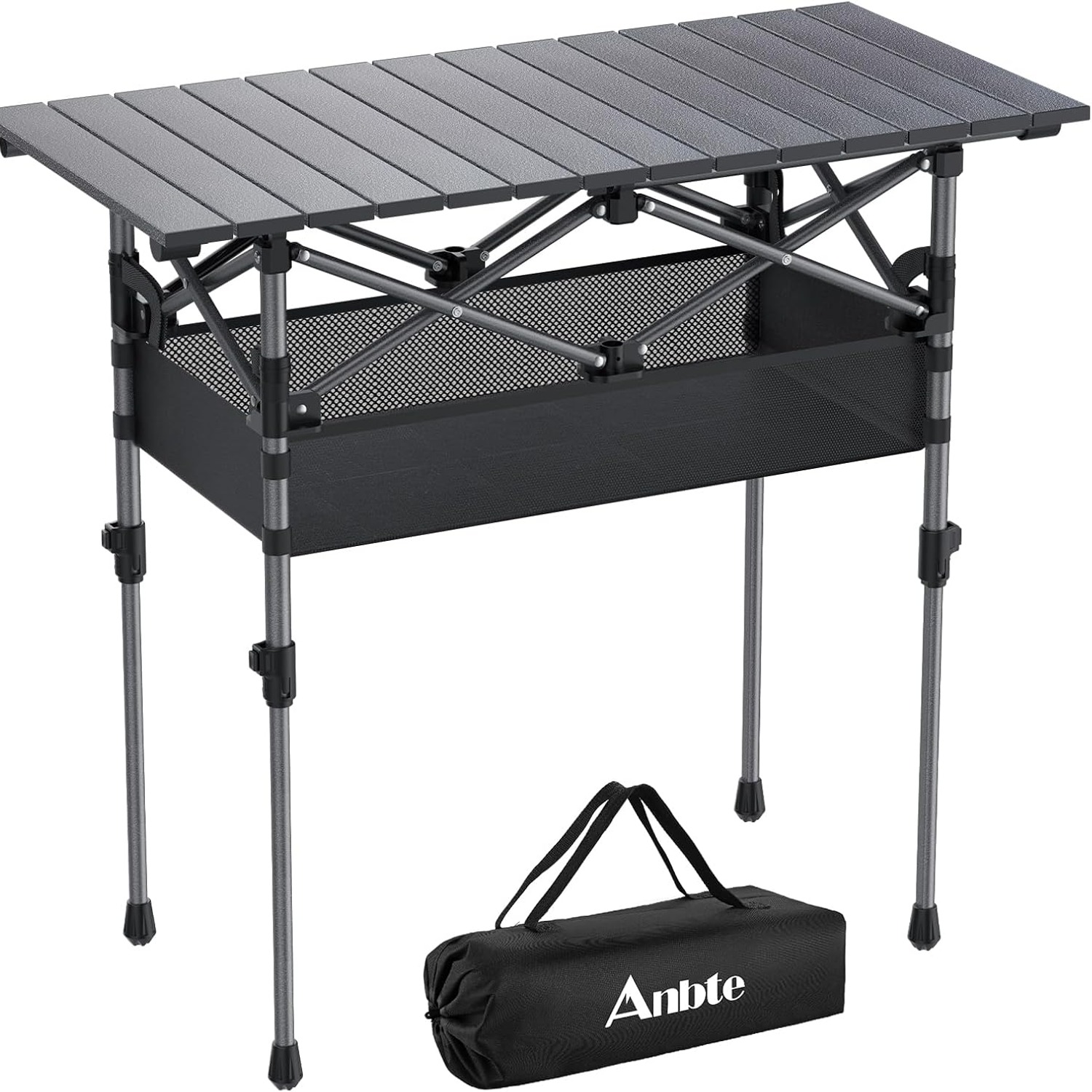
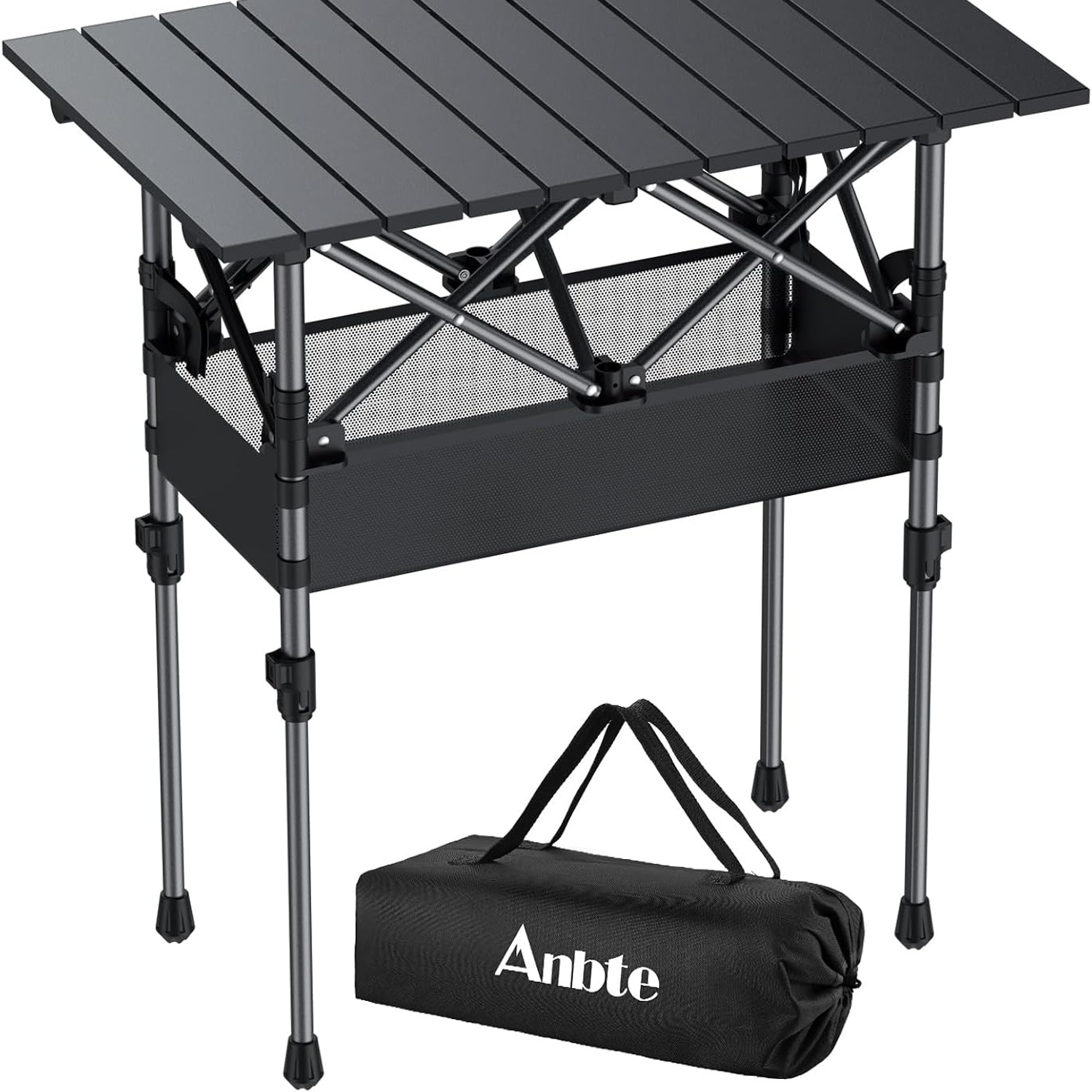
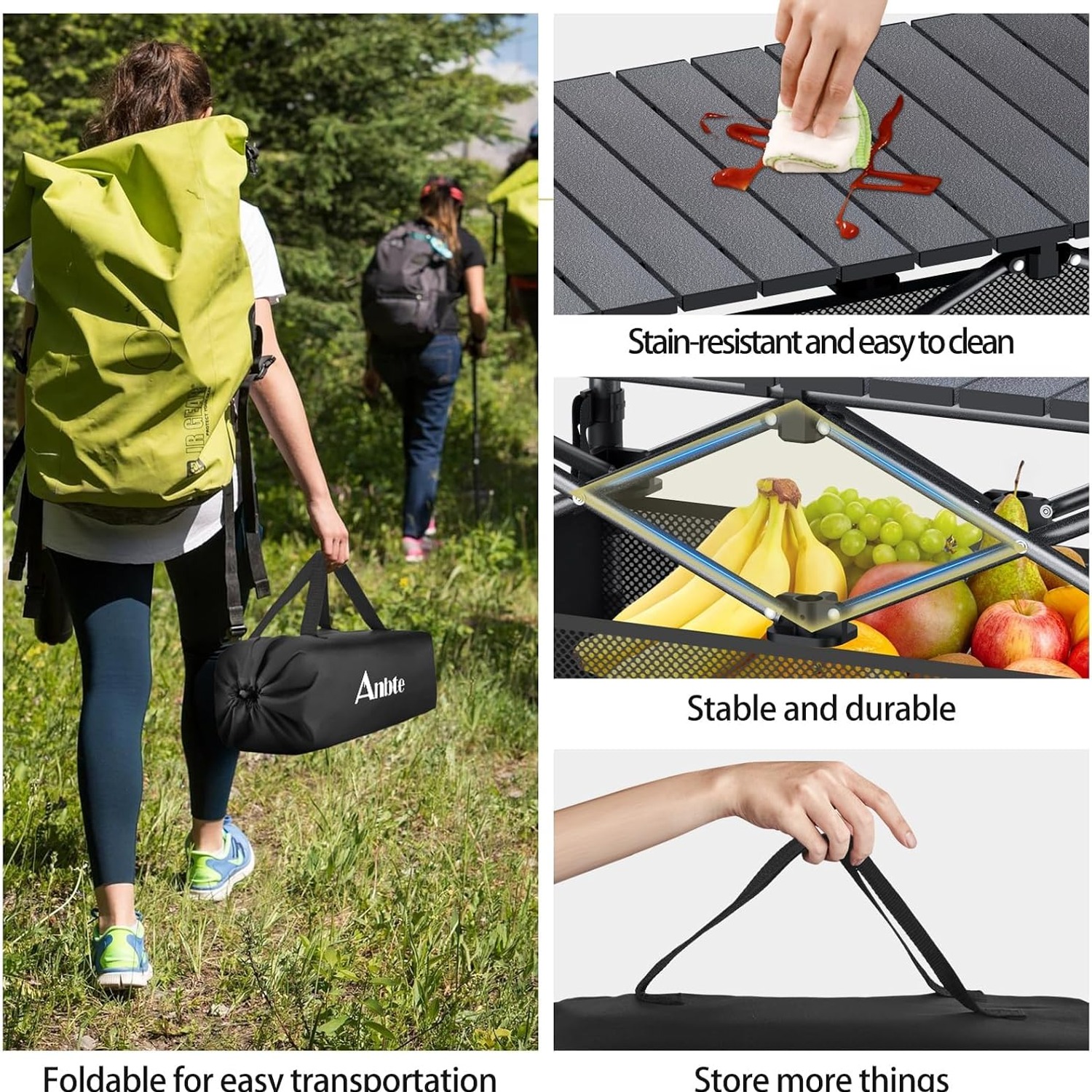
The top is not one solid panel. It is a row of thin aluminium slats held together by webbing, so the whole surface rolls into a bundle, like rolling up a reed mat. That bundle is what goes in the carry bag.
To set it up you open the frame, fit the legs, unroll the top across it, and slide two lateral rods through the sides. Those rods pull the slats together and lock them into a flat, firm deck. The tension is what makes the difference. A properly tensioned roll top feels close to a solid table under your hands, not a bouncy hammock.
Underneath, an X-shaped brace ties the four legs together. That triangulation is why this table takes 45 kg rather than the much lower limits you see on fold-flat picnic tables. The legs here are steel, which adds stiffness exactly where the load goes down.
The whole thing weighs 4.2 kg. For context, that is less than a full 4 kg gas bottle, and it is the main reason people pick a best aluminium camping table over a timber or plastic one.
Two heights, two jobs
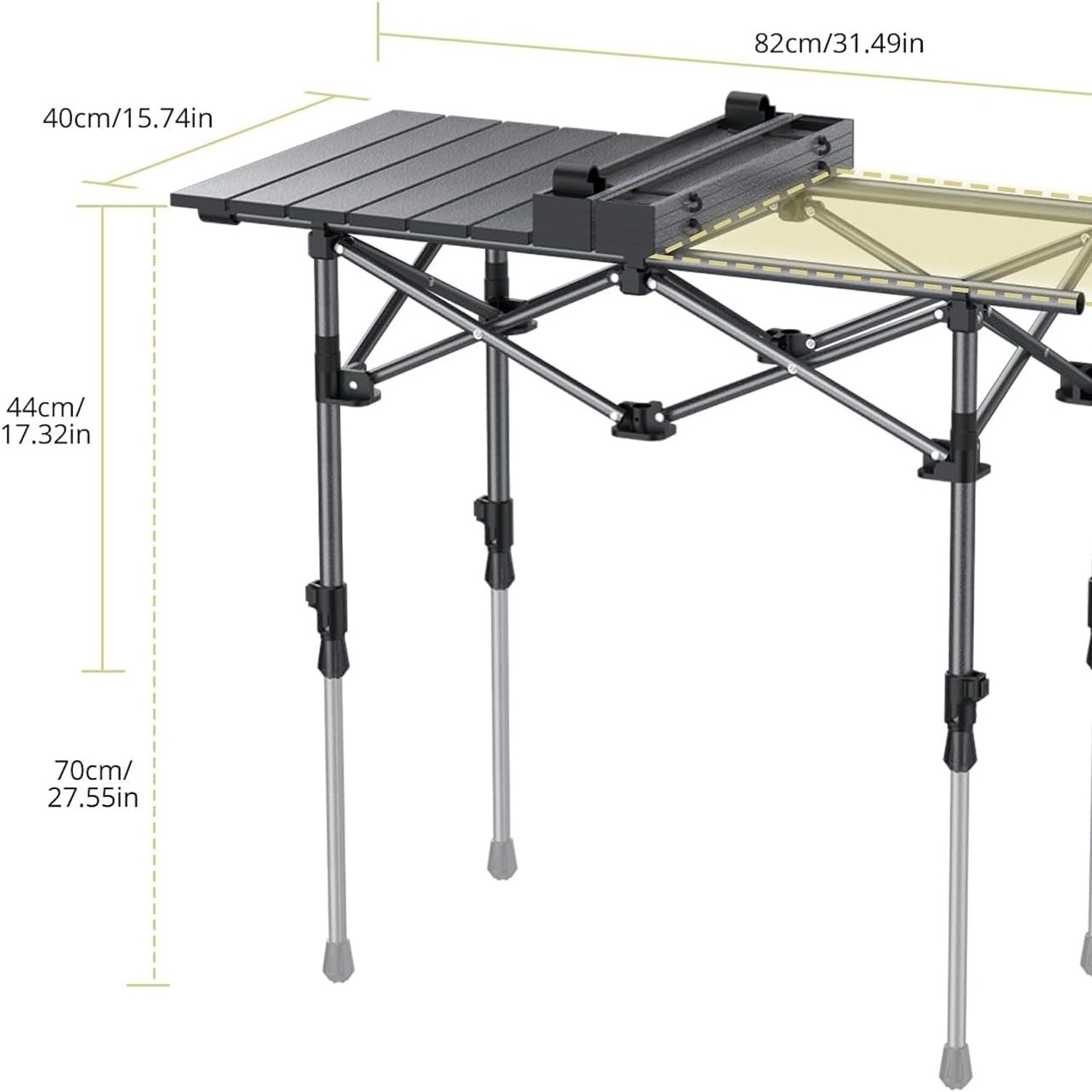
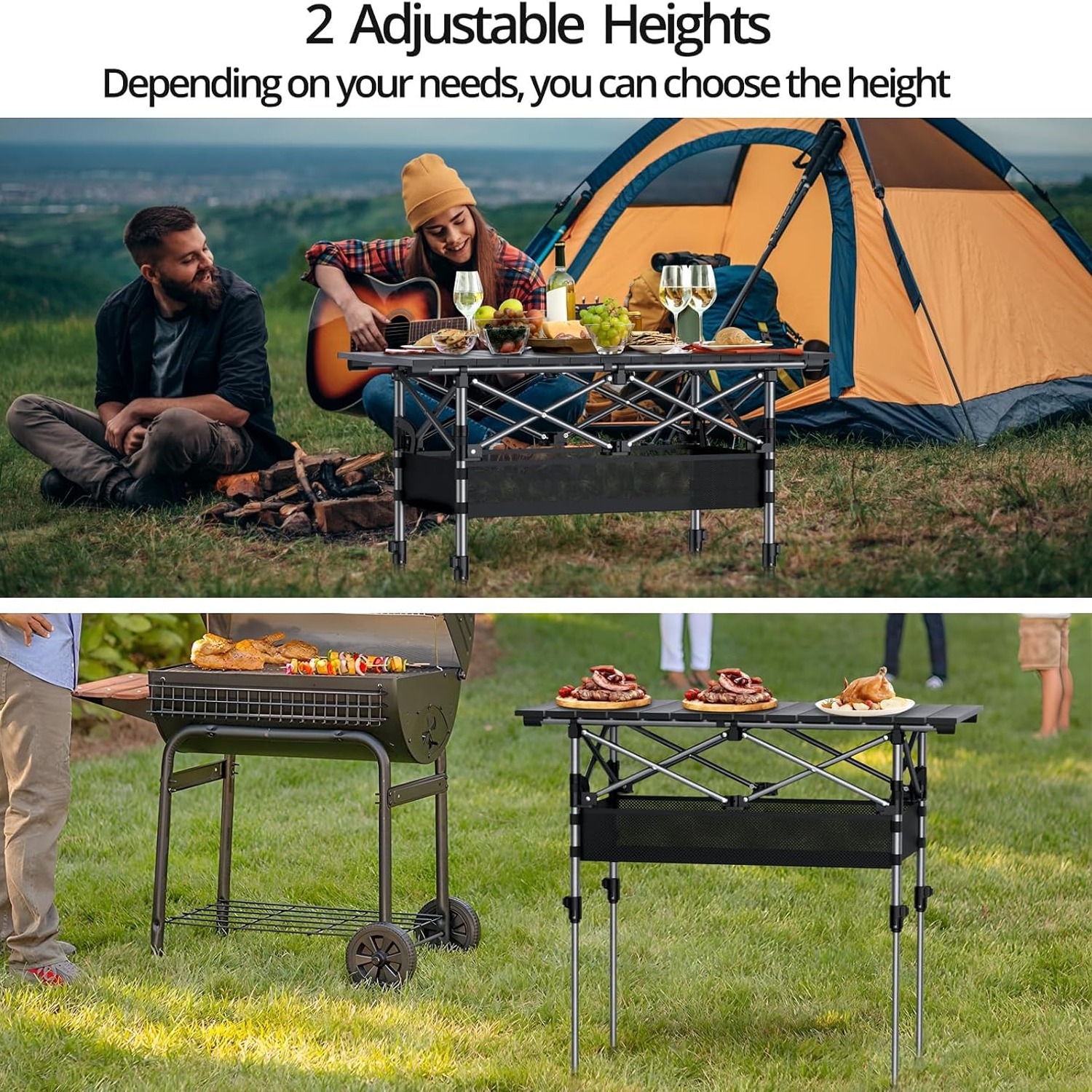
The 44 cm and 70 cm settings are not a gimmick. They are two genuinely different tables.
At 44 cm the top sits at camp chair armrest height. That is the right height for a drink, a plate on your lap height, a deck of cards, or a board game with kids. If your camp is a circle of low chairs, a tall table in the middle looks and feels wrong. The low setting fits in.
At 70 cm you can stand at it. That is prep and cooking height, the same as a kitchen bench minus a few centimetres. Chopping at 44 cm means bending over for twenty minutes and feeling it in your lower back the next day. Chopping at 70 cm feels normal.
Most people end up using both on the same trip. Cook at 70 cm, then drop the legs and sit around it later. If you camp with a group, buying two and running one at each height is a cheap way to build a proper camp kitchen.
Who this suits
Car campers are the obvious fit. The table disappears into a boot corner and comes out at every stop.
Caravan and motorhome owners like it because locker space is the whole game. A 4.2 kg bundle in a bag is far easier to live with than a rigid table that has to be wedged somewhere.
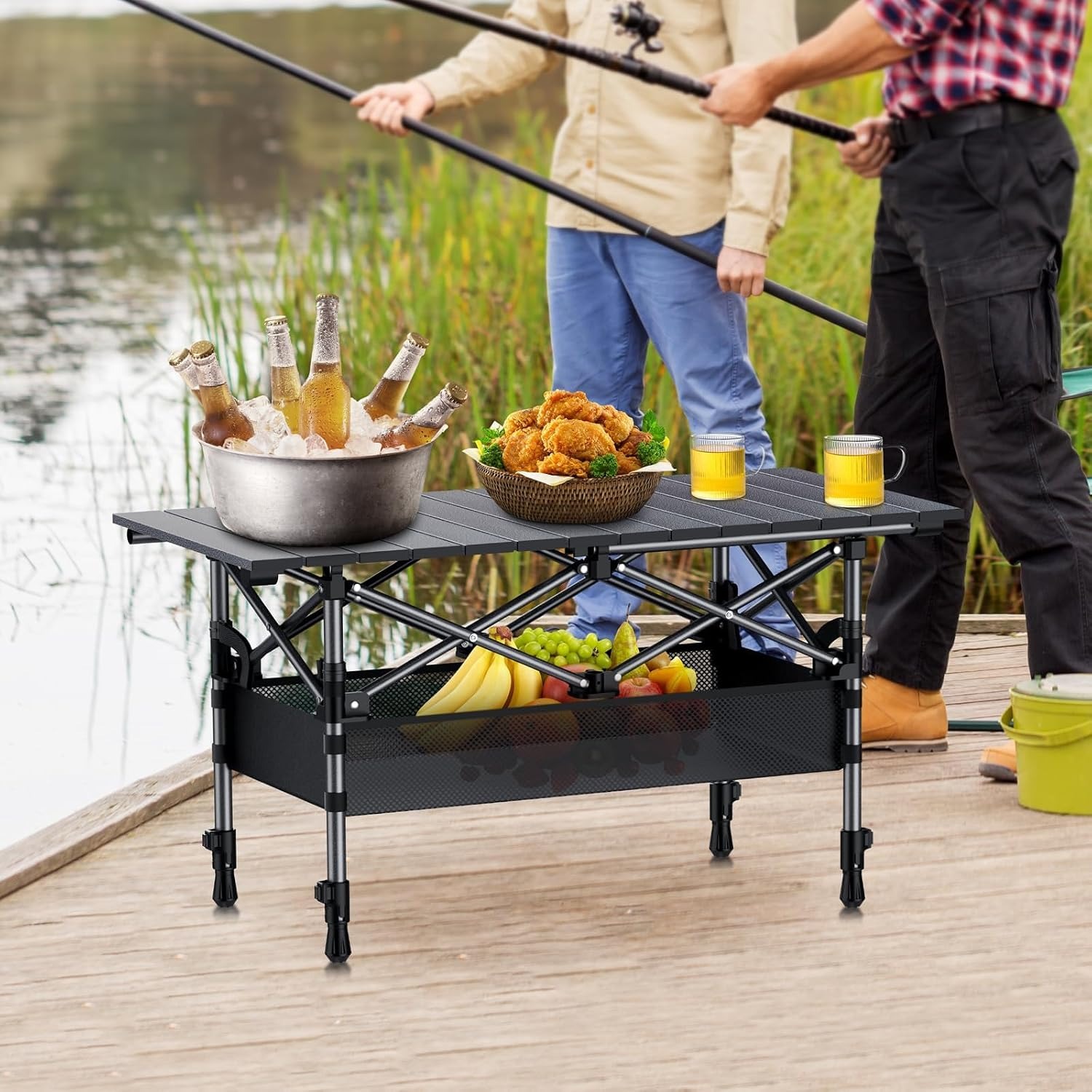
Tailgaters and day trippers use it as a drinks and food station at the back of the car. Fishers set it low on the bank and wipe it down after. Market stallholders, race crews and anyone who needs a surface in an odd place get value out of it too.
Hikers, honestly, do not. Four kilos is light for a table but heavy for a pack. If you are walking in, this is not your table. It is built for anywhere you can drive, park or wheel to.
Choosing between options
A few things actually matter when you compare models.
Load rating is first. A 45 kg limit means you can put a loaded twin burner on it and not think about it again. Tables rated at 15 kg force you to be careful, and being careful at a campsite is a losing game.
Next is how the top tensions. Roll tops that rely only on gravity feel loose. Ones with side rods, like this design, pull tight and stay tight.
Then packed size. Measure your boot gap, your locker, or the space behind your seat before buying. The rolled length is roughly the length of the slats, so a three foot table rolls to about three feet. There is no getting around that geometry.
Finally, storage. The mesh basket under this top is the kind of thing you ignore in the listing and then use constantly. Small gear stays off the dirt, and you stop losing the lighter.
Living with it
Set-up gets faster with practice. The first time takes a few minutes while you work out which rod goes where. By the third trip you will have it standing in about a minute without thinking.
For cleaning, a damp cloth does almost everything. The surface is waterproof and stain resistant, so grease and sauce lift off rather than soaking in. For stubborn marks use a little mild detergent. Skip steel wool.
The one habit worth building is drying it before you roll it. Damp webbing packed in a bag for a fortnight is how tables get musty. Give it five minutes in the sun, or towel it off, then roll.
After beach or desert trips, shake the sand out of the slats and the leg joints. Grit in a joint is what makes a folding mechanism stiff over time.
Heat is the other thing to watch. Do not put a hot grill plate, a pot straight off the flame, or coals directly on the aluminium. Use a trivet or a board. The table handles a stove sitting on it, but not direct contact with something glowing.
A few setup tricks
If the ground slopes, set the table across the slope rather than down it, and use the adjustable legs to even it out.
Put the heavy item, usually the stove, over a leg rather than in the middle of a span. The slats are stiff, but load near a support is always better.
In wind, load the mesh basket. A few kilos low down makes the whole thing much harder to shift.
If you are feeding more than two people, work out your flow before you set up. One table for the stove, one for plating, or one table at 70 cm for cooking and your esky as the serving surface.
The short version
This is a 4.2 kg aluminium table with an 82 x 40 cm roll top, two heights at 44 cm and 70 cm, a 45 kg load rating, a mesh basket underneath and a carry bag included. It packs to a bundle you can slide almost anywhere, and it sets up firm enough to cook on properly.
If you camp from a car, tow a van, fish, tailgate or just want a spare table that does not live in the garage taking up a wall, it earns its space. If you are carrying everything on your back, look elsewhere. For everyone else, it is one of the more useful pieces of gear you can throw in the boot and forget about until you need it.