
The complete guide
How to Choose a Portable Camping Table That Actually Earns Its Space
The problem with nowhere to put anything
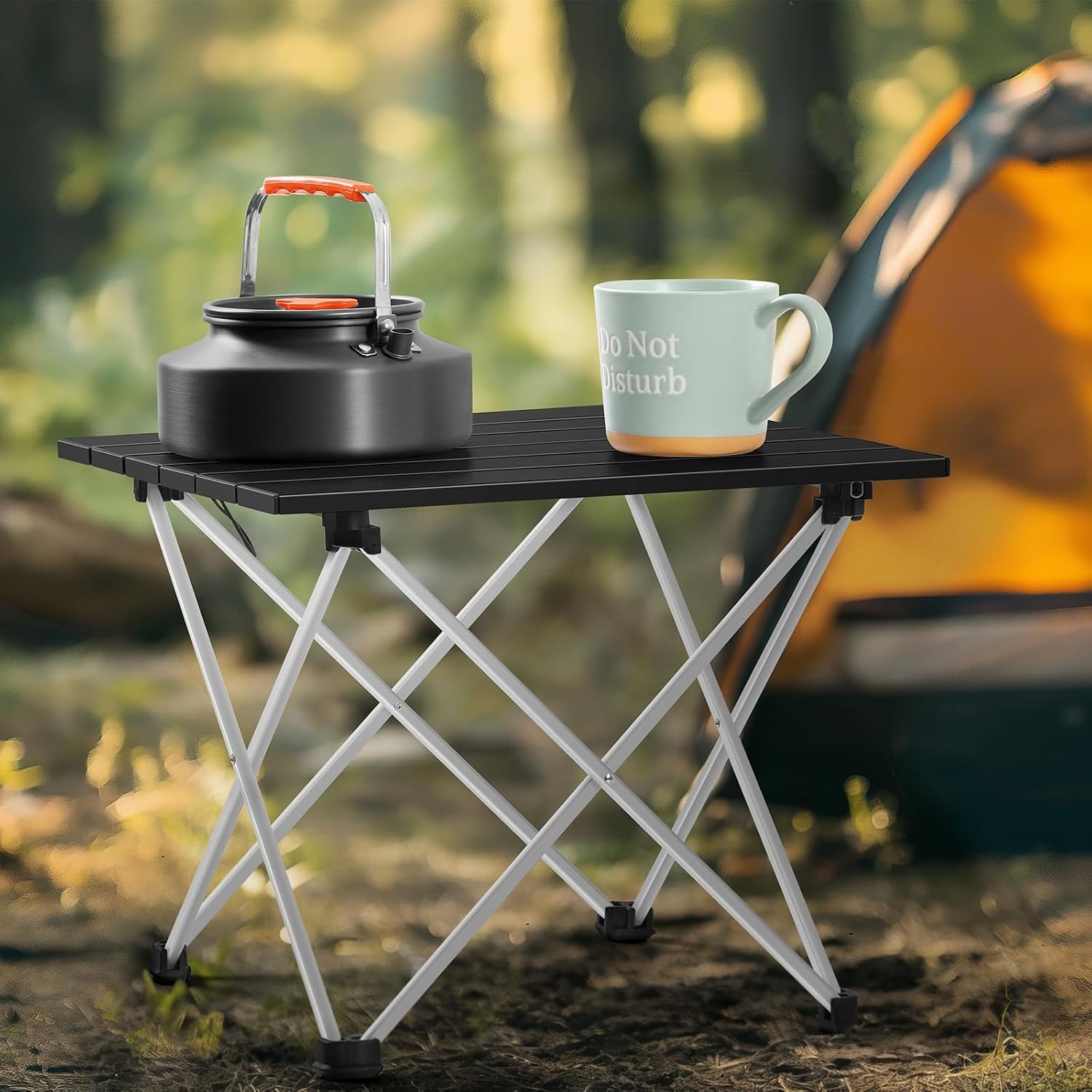
Every camp trip has the same moment. You have the stove lit, the food out of the esky, two mugs poured, and absolutely no flat surface within reach. So the stove goes on the esky lid, which means the esky cannot open. The plates go on the grass, which means they go in the grass. Somebody's drink ends up balanced on a rock at an angle that everyone can see is doomed.
A small table solves a problem that is annoying out of all proportion to its size. You do not need a big one. You need something that is flat, stable, wipeable and small enough that you never think twice about packing it. That is the gap this portable camping table fills.
What you are actually buying
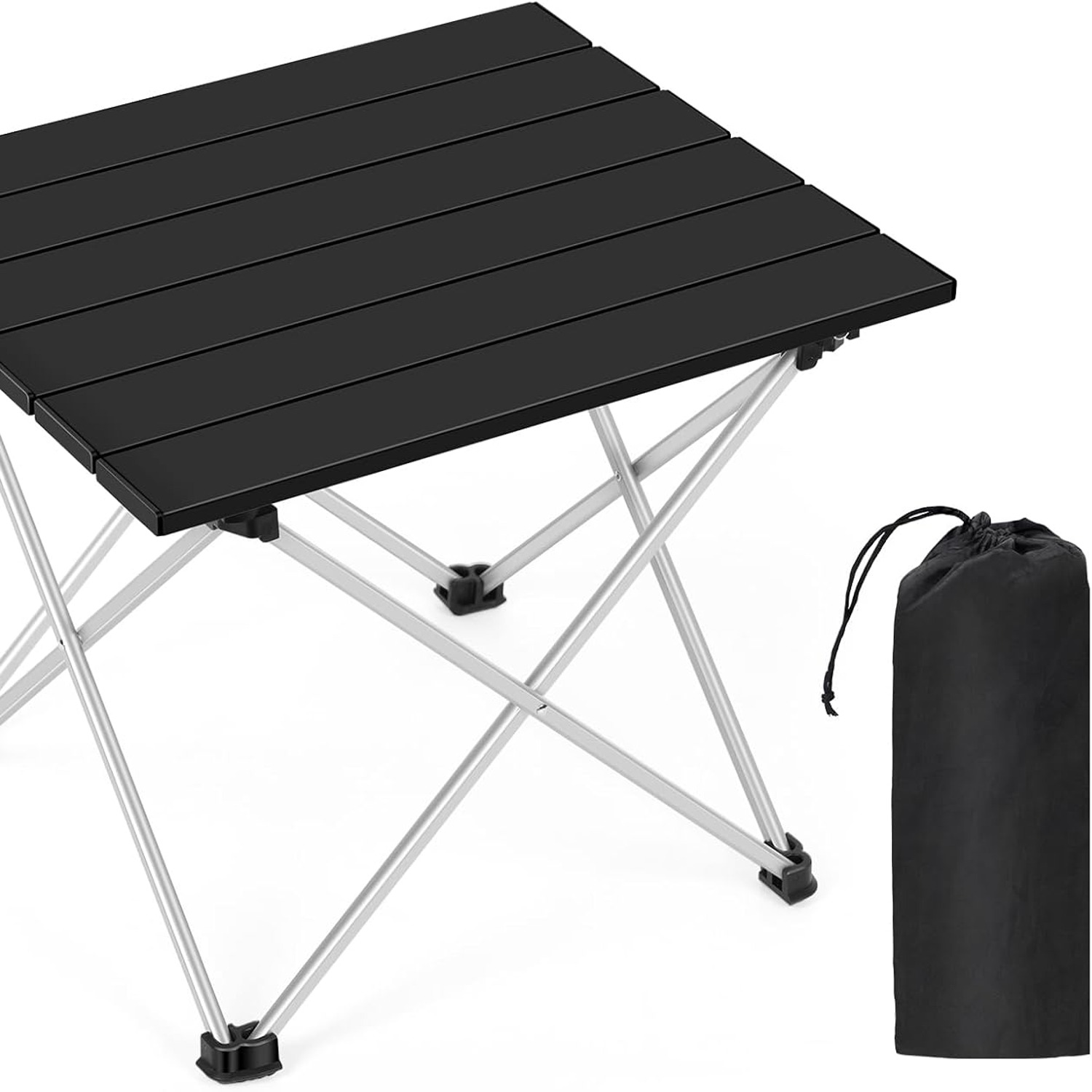
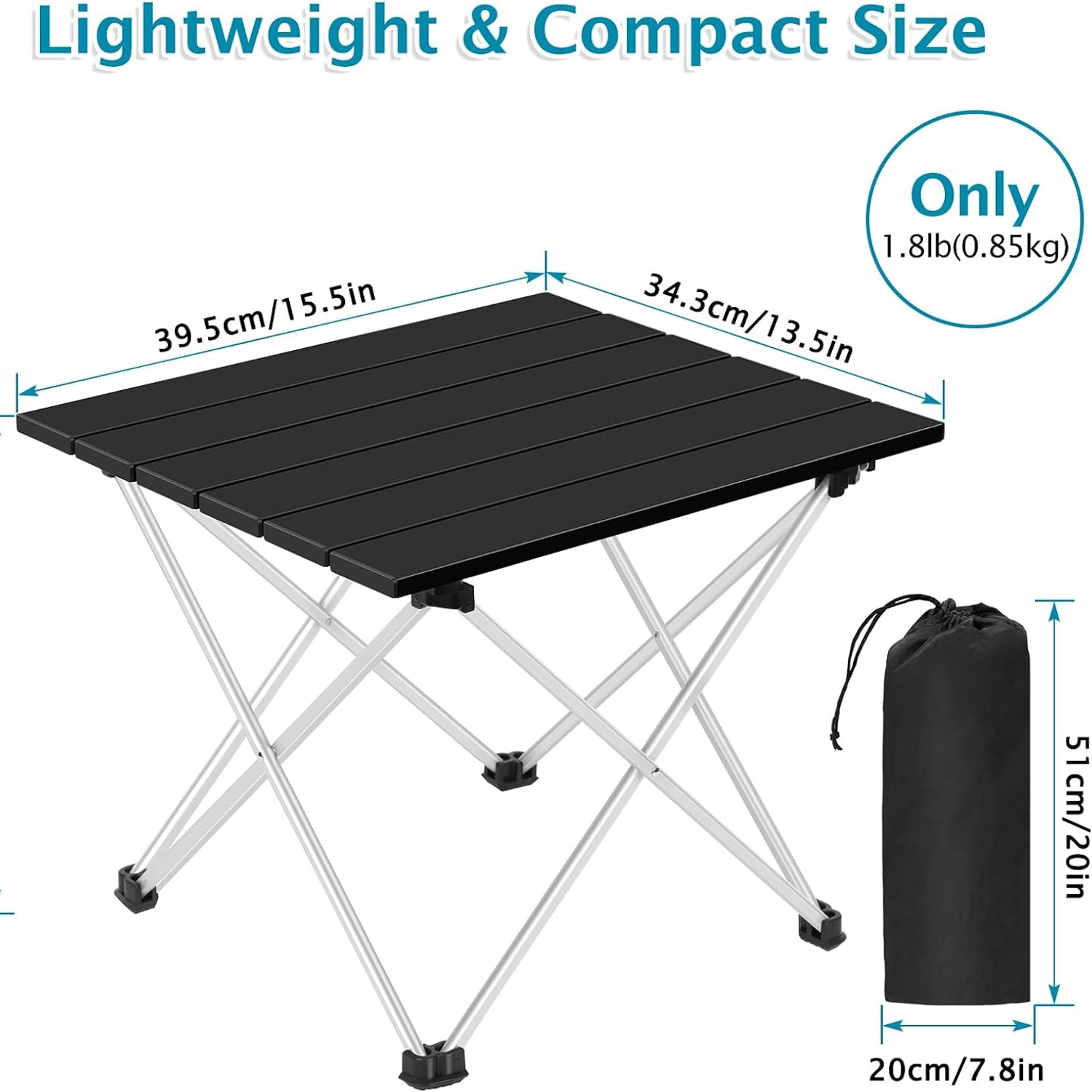
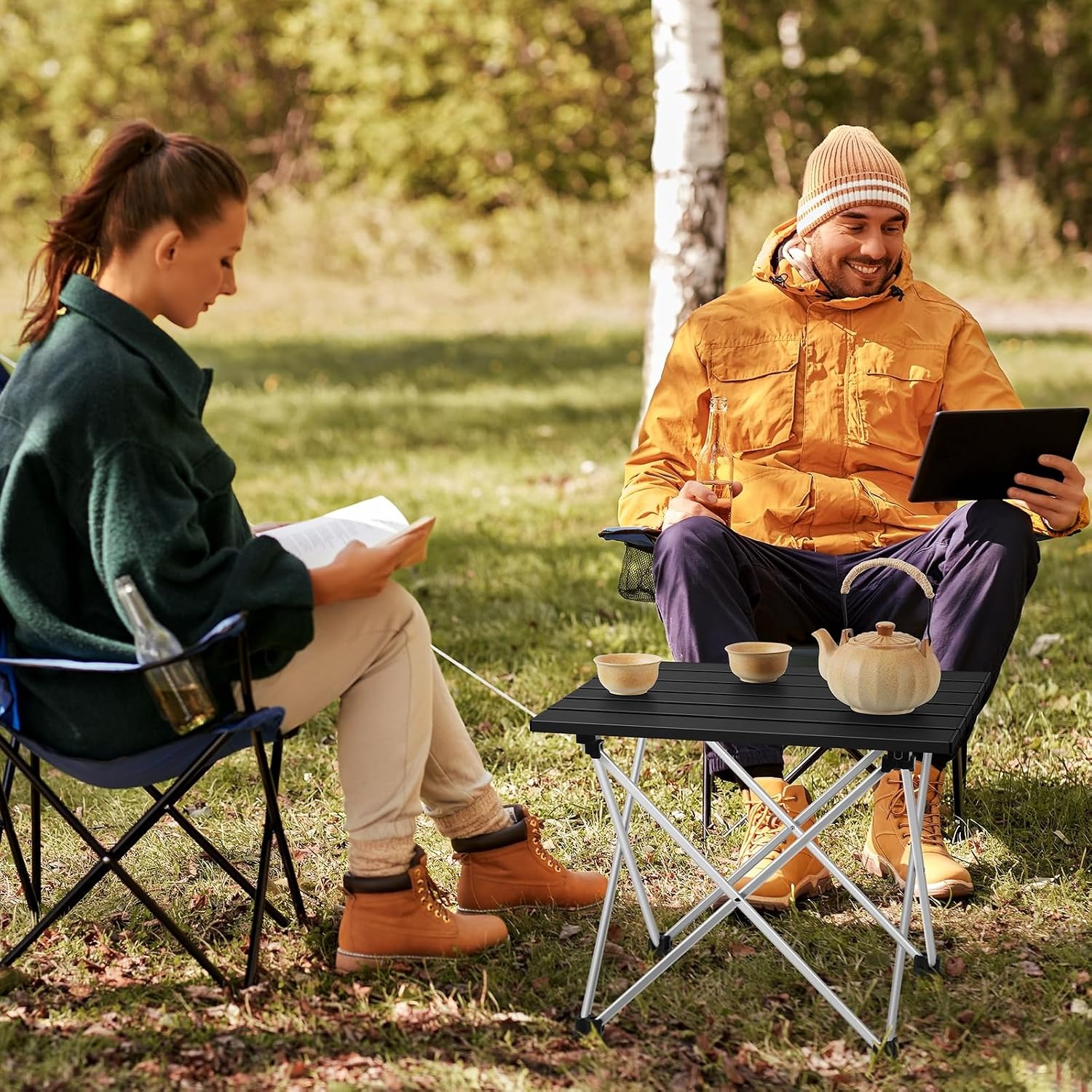
This is a folding side table with an aluminium frame and a plastic slat top. Open it out and you get a surface 39.6 cm wide and 34.5 cm deep, sitting 32.5 cm off the ground. Fold it up and you get a 440 mm bundle weighing 780 grams that slides into its own carry bag.
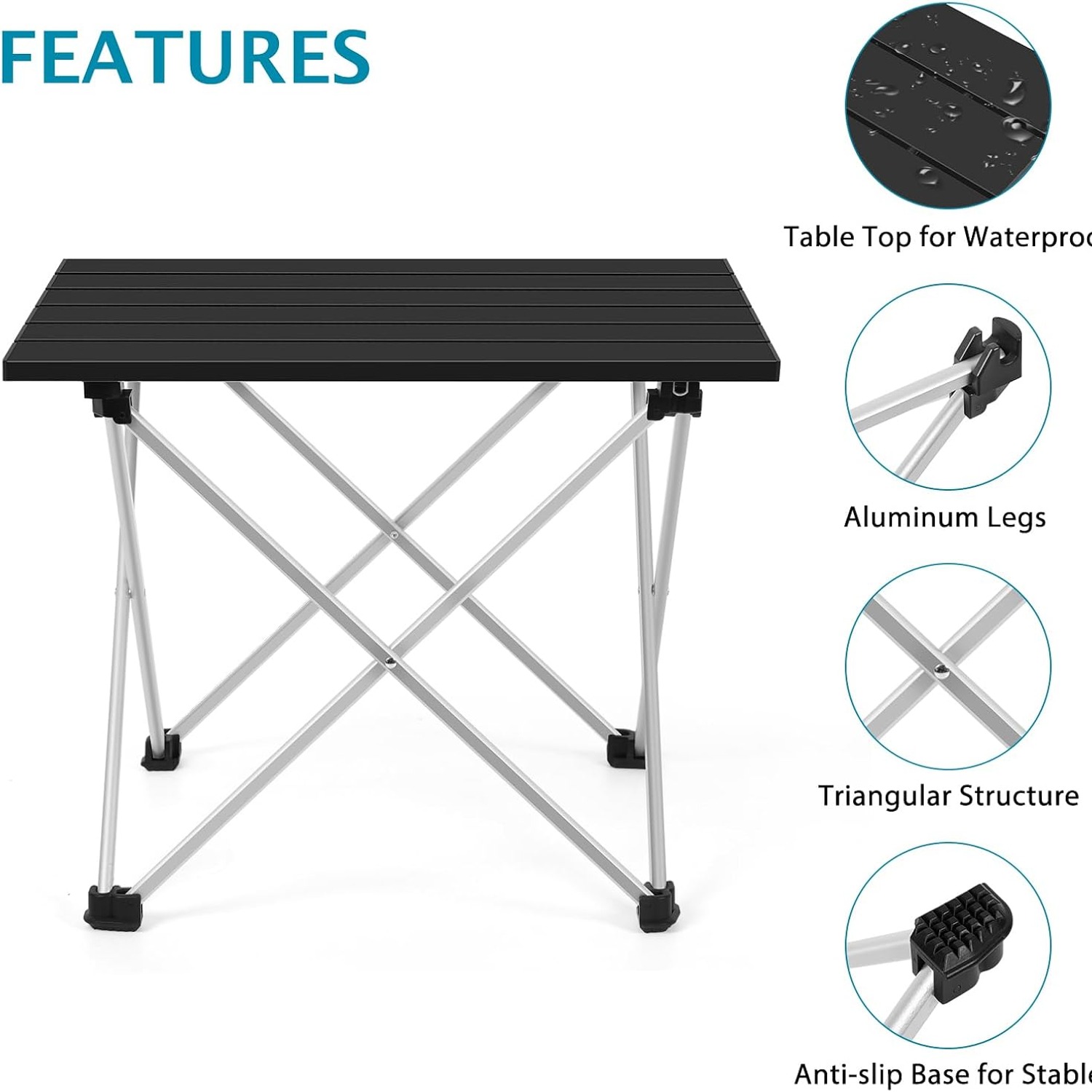
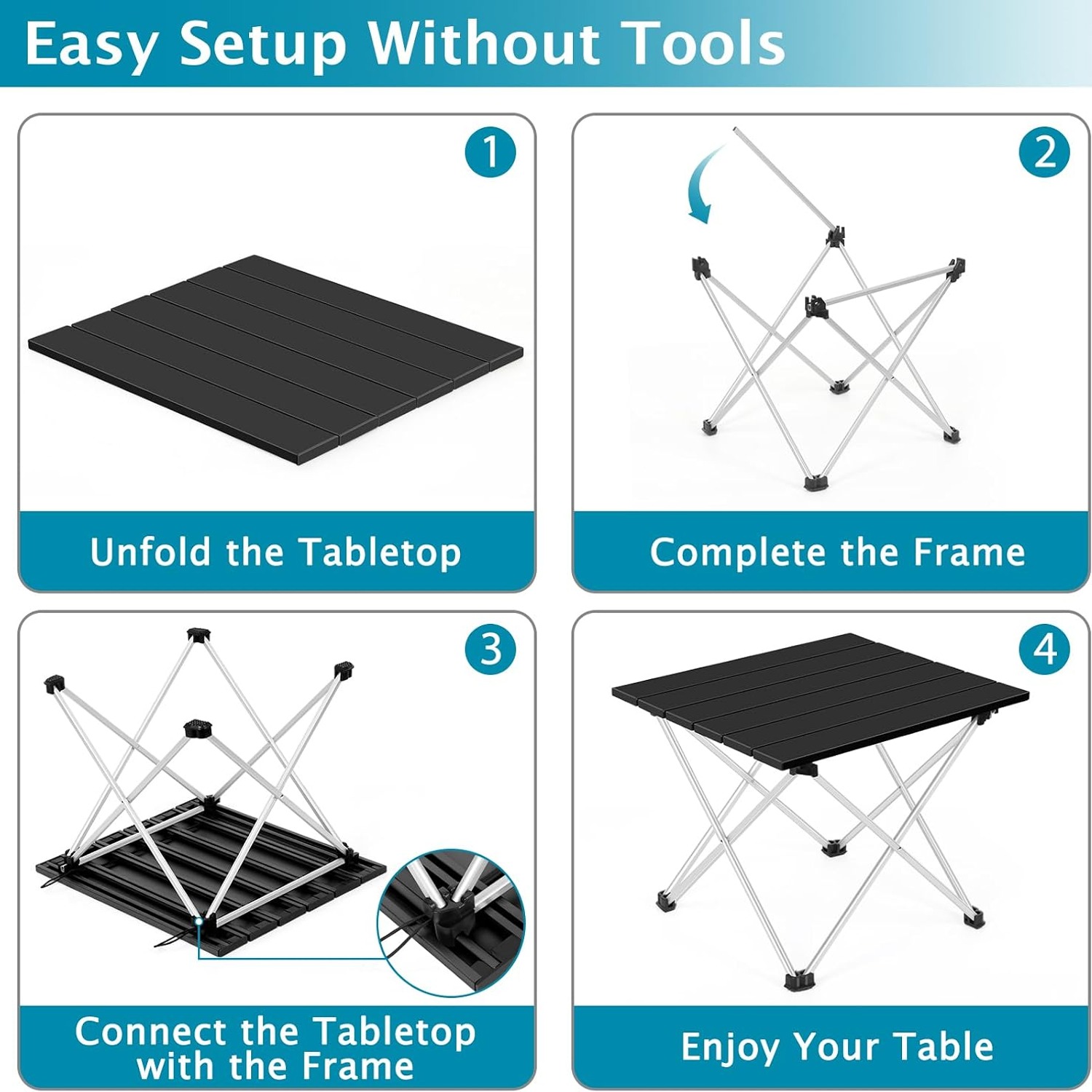
The frame uses hinge joints. The legs swing into a cross base, the slatted top rolls out across the frame, and you are done. No tools come in the box because none are needed. The finish is powder coated, the top is black, the handle is silver.
The load rating is 22.68 kg. That number tells you how to think about the table. It is for things you put down, not things you sit on.
How the design holds up in the real world
Two details make more difference than the spec sheet suggests. The first is the slat top. Plenty of light camping tables use stretched fabric, which sags the second you put a kettle in the middle and holds water for hours after a shower. Rigid slats stay flat, shed water, and wipe clean in one pass with a damp cloth. The listing calls the top stain resistant and waterproof, and that matches how slatted plastic behaves.
The second is the folded length. At 440 mm, this table does not demand its own slot in the car. It goes behind a seat, down the side of a storage tub, or on top of a pack. The best lightweight folding table is the one you still bring on the trip where you are short on space, and size is what decides that.
Aluminium does the rest. It keeps the weight down to 780 grams without the corrosion issues you get with untreated steel, and the powder coating adds another layer of protection against salt and damp.
Who it suits
Car campers get the most obvious use out of it. It becomes the stove table, the coffee table or the spot where the torch and keys live so they do not disappear into the tent.
Beach days suit it too. The low 32.5 cm height sits level with beach chairs, so you are not reaching up for your drink. Plastic does not mind sand or sea spray, and a rinse at the tap afterwards is all the maintenance it needs.
Fishing, festivals, tailgating and caravan awnings all work. So do picnics, where a low table keeps food off the grass without taking over the rug. A reasonable number of people buy one for camping and then find it living permanently on a balcony or in a caravan, because a small table that packs flat is useful almost anywhere.
Backpackers can consider it, with a caveat. At 780 grams it is light for a table, but a table is still a luxury item in a pack. For walk-in campsites and short approaches it earns its place. For a multi-day hike with everything on your back, only you know your weight budget.
How to choose between camp tables
Start with height. Tables come in roughly three heights, and the mistake people make is assuming taller is better. A 32.5 cm table is designed for low chairs and ground-level sitting. If your camp chairs are the standard low-slung type, a knee-height table is right there with you. If you want something to stand and chop at, you want a different product entirely.
Then look at the top area versus the folded size. Big tops are great until you try to fit them in the car. This one trades surface area for a bundle that is genuinely small. Decide which problem you have more often.
Check the load rating against what you actually put on a table. Most camp loads are light: a stove, a pot, plates, a lantern, a phone, drinks. A 22.68 kg rating covers that comfortably. Where ratings matter is if you plan to park a full water container or a heavy cast iron pan on the top, and in that case you want a bigger table with more legs on the ground.
Pay attention to the top material. Fabric tops pack smaller but sag and soak. Slats stay flat and dry. Solid panels are rigid but heavier and bulkier. For a small table used around food, slats are the practical middle ground.
Last, think about setup. Anything that needs tools or has loose parts will eventually be missing a part. A hinged frame with nothing to detach is one less thing to lose in the dark.
Getting good years out of it
The habits are simple. Wipe the top with a damp cloth after use and give it a moment to dry before folding. Shake sand and crumbs out of the slats and away from the hinges, because grit in a joint is what makes a folding mechanism stiff and eventually sloppy.
After beach or boat trips, rinse the frame with fresh water. Salt is patient and it will find any gap in a coating. Dry it, then bag it.
Avoid strong solvents and abrasive pads. They dull the powder coating and scuff plastic. Warm water and a cloth handle almost everything you will spill on it.
Store it in the carry bag somewhere dry rather than in a damp garage corner or the boot of a car that gets condensation. And do not sit on it. The rating is for load on the surface, not for a person, and a folding frame used as a stool is a folding frame about to fail.
A few honest limits
It is small. If you are feeding four people at a proper sit-down dinner, this is not your main table. Pair it with a bigger one and use this as the prep and drinks surface.
It is low. That is a feature if you sit in camp chairs and a drawback if you want to stand and work.
It needs level-ish ground. On a steep slope or very soft sand, any lightweight table with a cross base will feel unsettled. Spend ten seconds finding a flatter spot and it behaves.
The short version
For 780 grams and a 440 mm folded bundle, you get a flat, wipe-clean surface that holds up to 22.68 kg and opens in seconds without tools. The aluminium frame handles weather, the plastic slats handle spills, and the carry bag means it never becomes loose gear rattling around the boot.
If your camp setup is currently a pile of things balanced on an esky lid, this is the small fix that makes the whole evening easier. Pack it once and you will stop noticing it, which with camping gear is the highest compliment there is.