
The complete guide
How To Choose A Soft Cooler Bag That Actually Stays Cold
The problem with the cooler you already own
Most households have a hard esky somewhere. It is big, it is heavy, and it gets used about four times a year because dragging it out is a project. The rest of the time people end up with a supermarket bag, a bit of ice, and drinks that are lukewarm by two in the afternoon.
A soft cooler bag sits in the gap between those two extremes. It is light enough to carry with one hand, small enough to live in the boot permanently, and insulated enough to do a real job. The trade-off used to be that soft coolers leaked and gave up early. That is where build quality separates a good one from a cheap one.
How insulation actually works in a bag like this
Insulation does not make anything cold. It slows the rate at which heat moves from outside to inside. Everything you do to help that process pays off, and everything you do to fight it costs you hours.
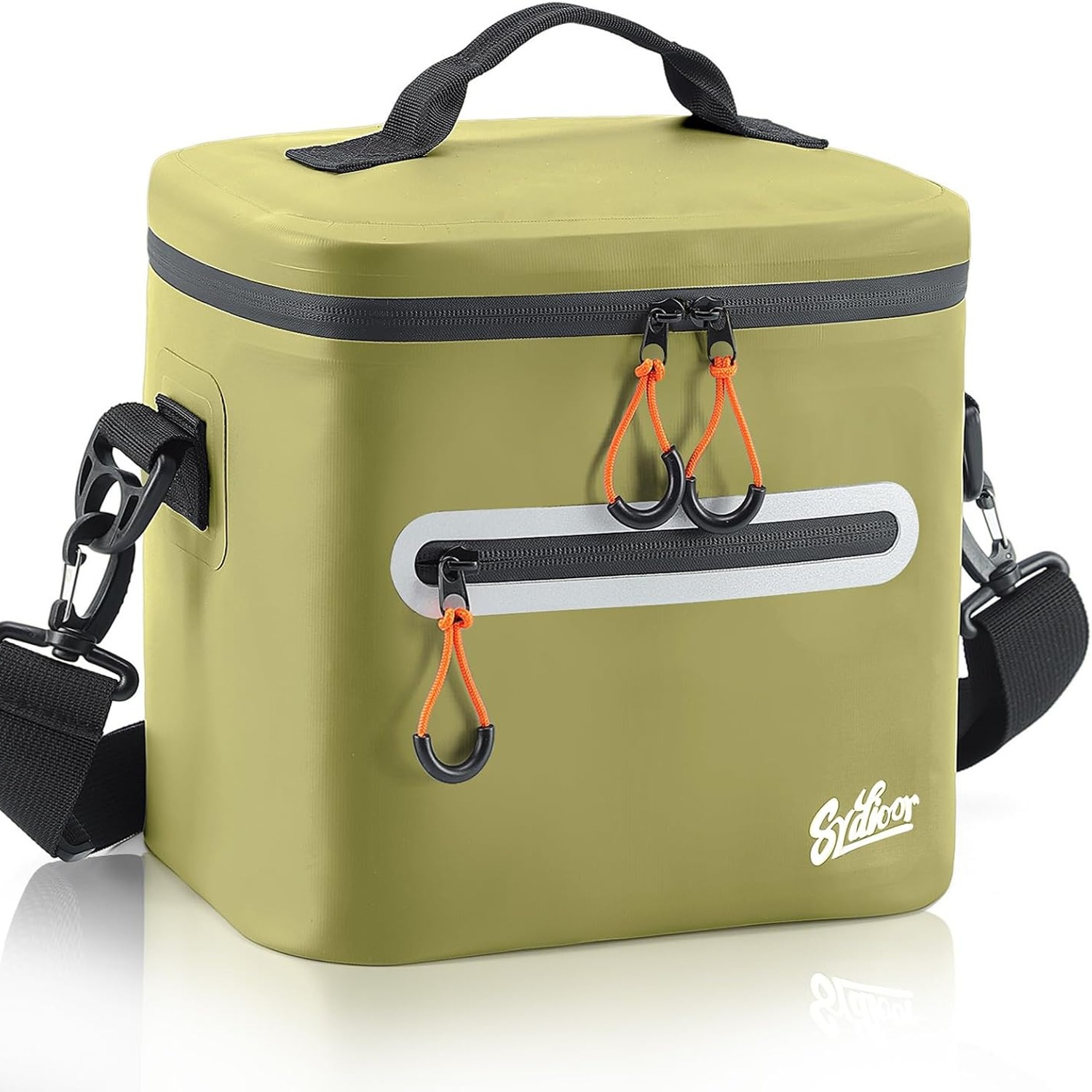
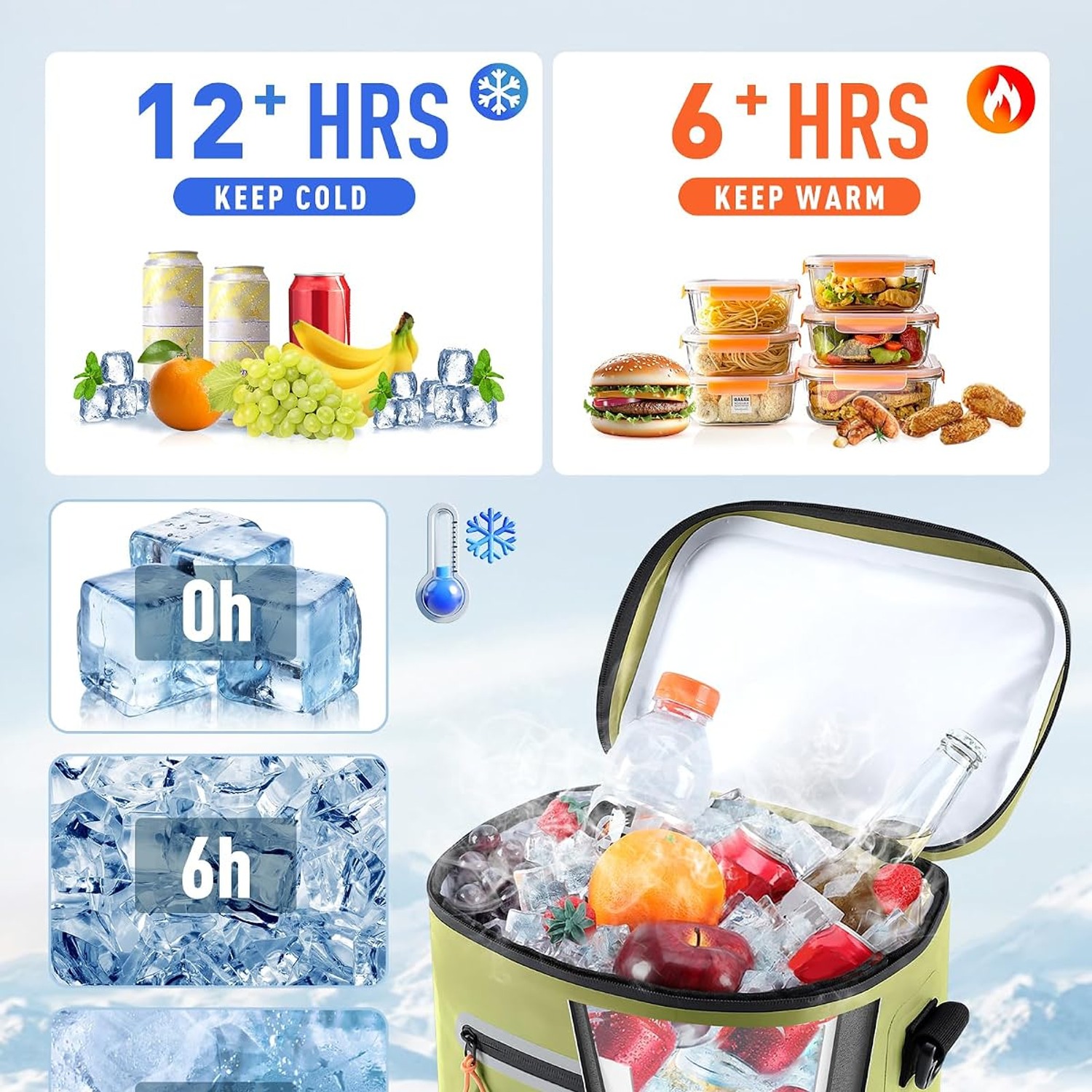
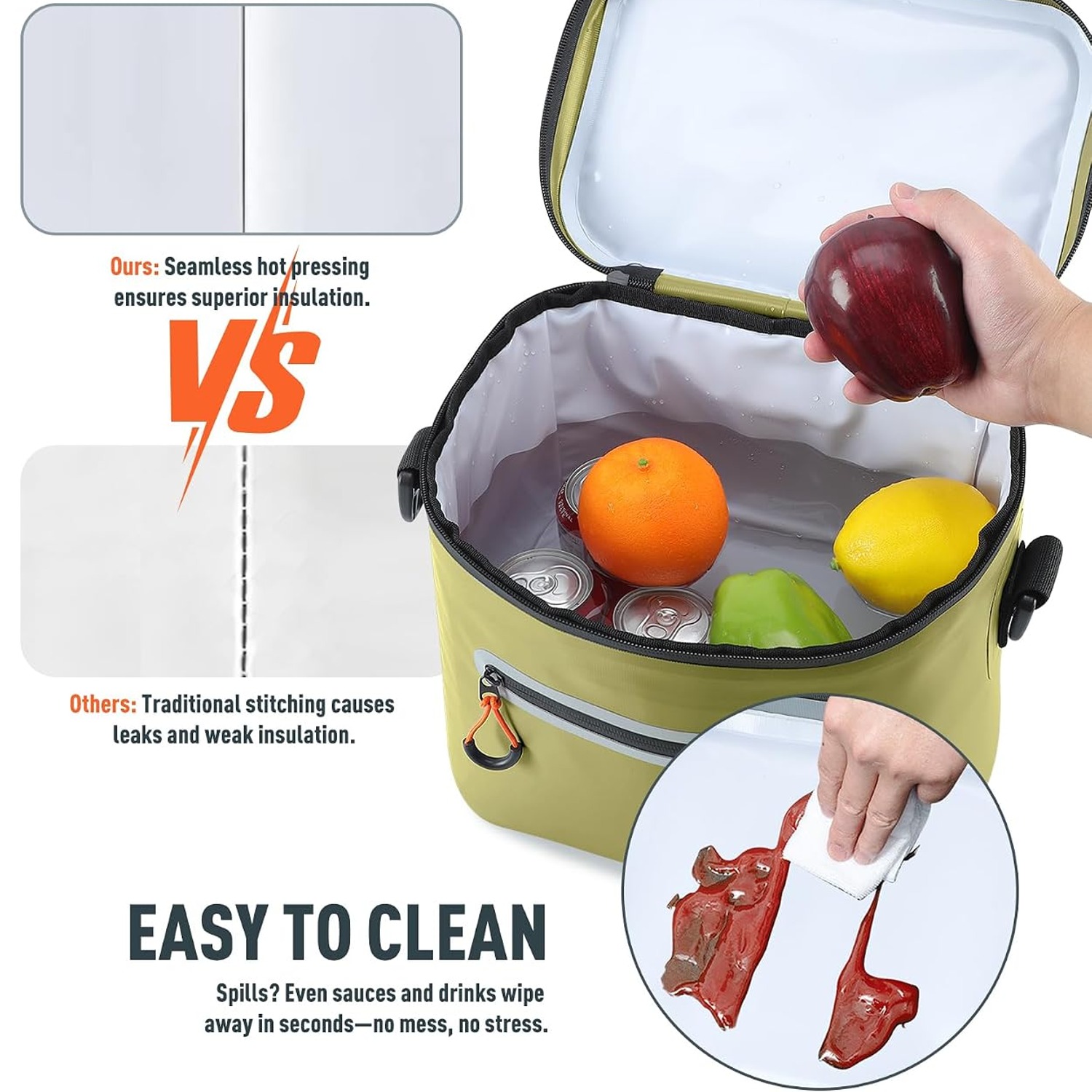
This bag uses a five-layer wall with the insulation sandwiched between the TPU outer and the PEVA liner. The body is built as one piece rather than having pockets and panels stitched all over it. Every seam is a small weak point, a place where the layers are pierced and warm air can sneak through. Removing extras from the body is a deliberate choice to hold temperature longer. The supplier quotes more than 20 hours of cold retention when used with ice, with the usual honest caveat that the day's temperature and the amount of ice you pack will change the result.
The other half of the equation is thermal mass. Ice and cold drinks hold the cold. Empty air does not. A half-full cooler warms up much faster than a full one, which is why packing it properly matters as much as the bag itself.
Why the liner is the part that matters most
If you have ever carried a cooler bag to the car and found a cold puddle on the seat, you already understand why a leak proof cooler bag is worth the extra money. Ice melts. That is its job. The question is whether the water stays inside.
The liner here is food-grade PEVA and it is sealed to hold water. That means you can pour loose ice straight in from a servo bag, let it do its work, and tip the water out when you get home. No ziplock bags, no separate containers, no soggy towel in the boot.
Food-grade also matters because food touches this surface. Sandwiches get pressed against it, fruit rolls around in it, and ice sits on it for hours. A smooth sealed liner wipes clean and does not hold onto smells the way woven fabric does.
The shell, and why TPU is different
A lot of cooler bags use Oxford fabric on the outside. It looks fine when new, but woven fabric drinks water. Leave it on wet grass and the bottom soaks through. Spill sunscreen on it and the mark stays.
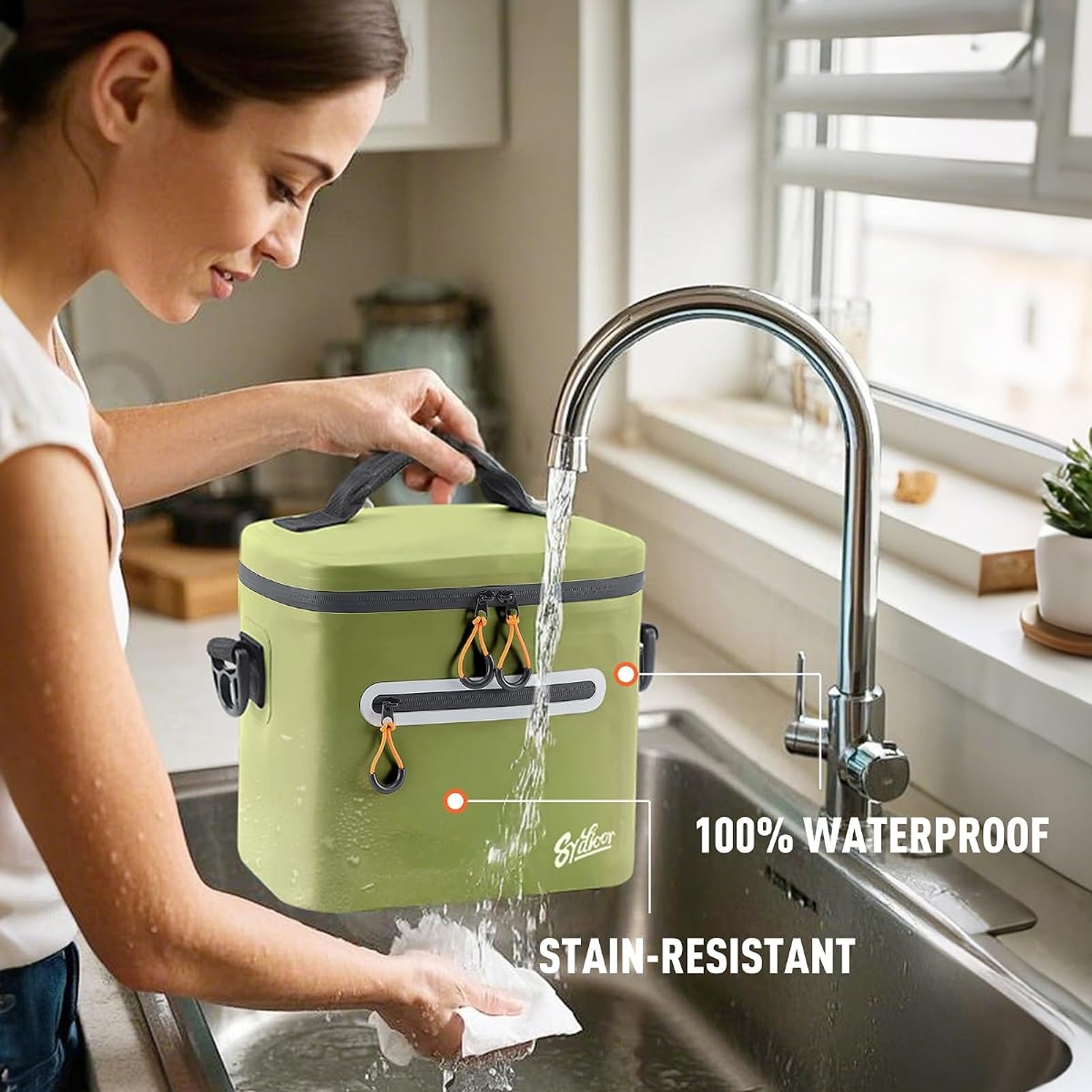
This bag uses TPU, which is a waterproof film-type material with a smooth surface. Rain runs off it. Sand brushes off it. A damp cloth takes care of everything else. For anyone using it as a fishing cooler bag or on a boat, that one difference saves a lot of annoyance over a season.
Smooth also means less grip, so it pays to set it down flat rather than leaning it on a slope in the back of a ute.
Working out the right size
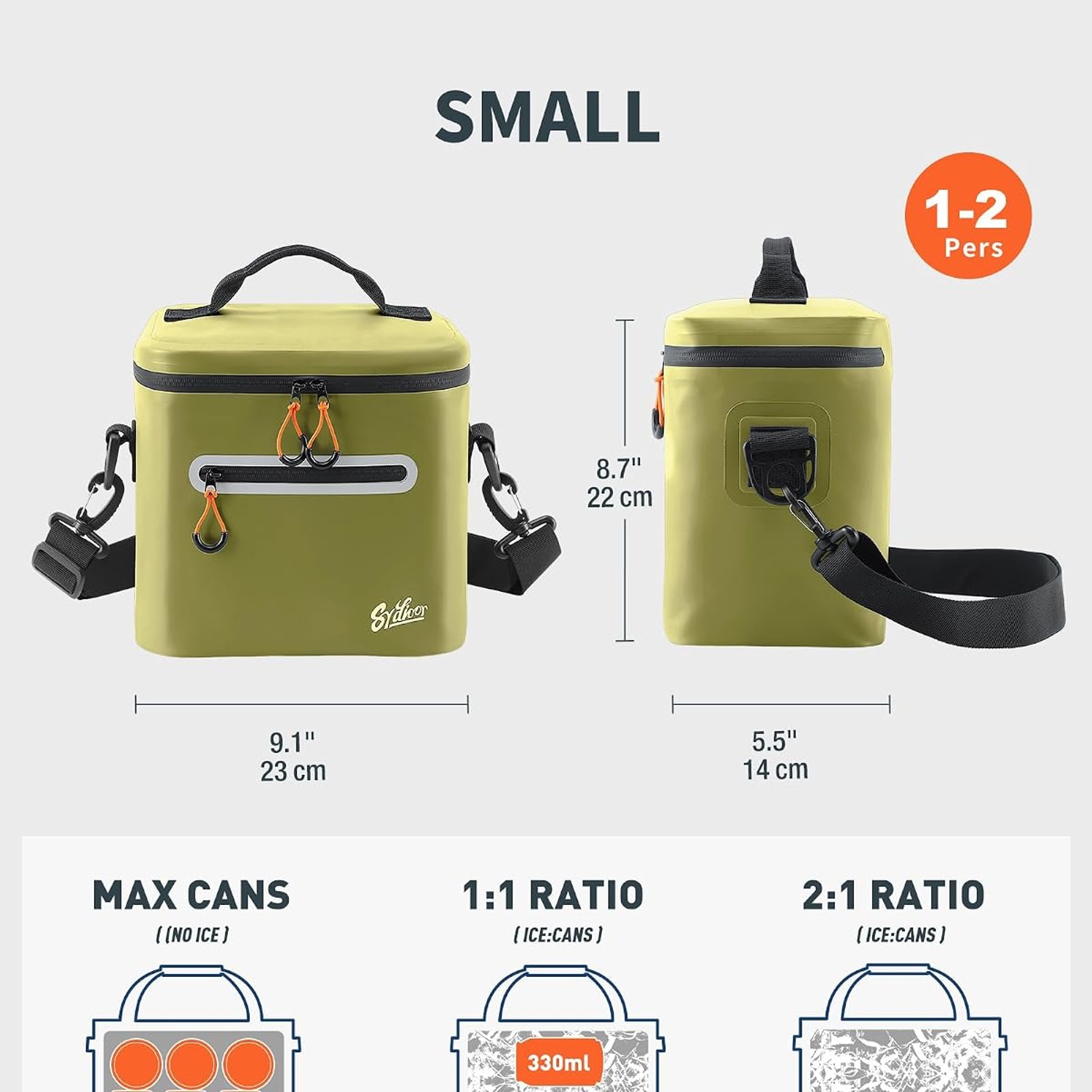
This one is 14 litres and listed as a 16 can size. In the real world you do not get 16 cans plus ice, because ice takes up room. Count on something like 10 to 12 cans with a good layer of ice, or fewer cans and a couple of containers of food.
For one person packing lunch and drinks for a shift, it is generous. For a couple heading to the beach, it is about right. For a family of five on a long day, you will want this for drinks and something else for food, or step up to a bigger capacity.
At 19 by 30 by 25 cm it slides into a car footwell, sits neatly in a boot corner, or fits in the tray of a camper. That footprint is part of the appeal. A bag you can leave in the car permanently gets used far more than one you have to go and fetch.
Who it suits
It fits a few different lives. Tradies and office workers who want a lunch cooler bag for work that does not look like a lunch box. Campers who need a portable drinks cooler for the day while the big cooler stays at the site. Anglers who want something waterproof they can hose attention onto without worrying. Parents who want a picnic cooler bag that one person can carry while holding a kid's hand.
It is less suited to multi-day expeditions where you need to keep raw meat cold for three days. Soft coolers of this size are day-trip tools. Use the right tool and it performs beautifully.
Packing it so it performs
Start with cold contents. Putting room-temperature cans into a cooler means the ice spends its first hours doing work you could have done in the fridge the night before. Pre-chill everything.
Fill the gaps. Air is the enemy. If you have space left, add more ice, a frozen water bottle or a towel.
Keep it shaded. A black bag in direct sun absorbs heat quickly. Under a chair, in the shade of the car, or wrapped in a towel all help.
Open it less. Every time you unzip it, cold air falls out and warm air walks in. Decide what you want, grab it, zip it.
Drain it when convenient. On a long day, tipping out the melt water and leaving the ice slows things down slightly, though some people prefer to keep the cold water in as extra thermal mass. Both work.
Looking after it
Cleaning is simple. Wipe the inside and outside with a damp cloth and a little mild soapy water, then go over it again with clean water. The smooth liner and TPU shell mean you are wiping, not scrubbing.
Drying is the step people skip. Leave the bag unzipped and open until it is bone dry inside, then store it in a cool dry spot. Zipping a damp bag away is how you end up with a musty smell next summer.
Avoid sharp edges. Knives, skewers and broken glass are the main threats to a soft liner. Keep sharp items in a container or in the front pocket.
Do not put it in the washing machine or the dryer. Insulation layers do not survive that treatment.
The short version
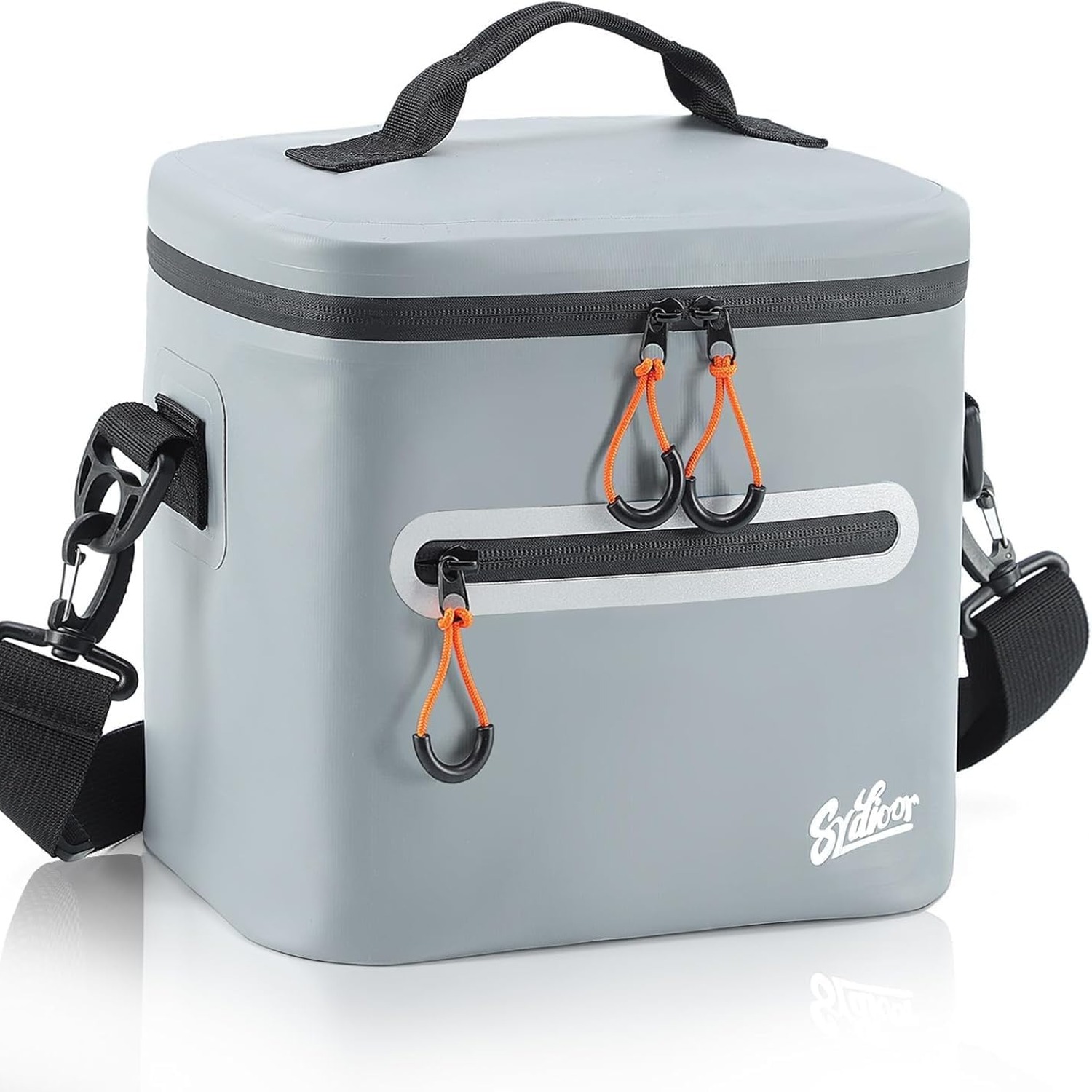
This is a 14 litre soft cooler bag with a sealed, food-grade PEVA liner and a waterproof TPU shell. The one-piece five-layer body keeps seams to a minimum, which is how it stretches cold retention past the point where cheaper bags fade. Add a detachable shoulder strap and a front zip pocket and you have a cooler that is genuinely easy to take places.
Pack it full, pack it cold, keep it shaded, and wipe it out when you get home. Do that and it will handle beach days, boat trips, picnics and the daily lunch run for years without fuss.