
The complete guide
How to Choose a High Back Camping Chair You Will Actually Sit In
The problem with most camp chairs
Here is the thing nobody mentions when they sell you a folding chair. You unpack it, you sit down, and for the first ten minutes it feels fine. Then you want to lean back. Your shoulders hit the top rail, your head tips into nothing, and you spend the rest of the evening holding your own neck up with your own neck muscles. By the time the fire burns down you are sitting bolt upright, stiff, and quietly wondering why sitting outside is less comfortable than sitting on your couch.
That is a design problem, not a you problem. A chair back that stops at shoulder height is really a stool with a lean on it. It works for twenty minutes at a barbecue. It does not work for three hours by a fire, or a full morning on a riverbank, or a long afternoon watching junior sport in the cold.
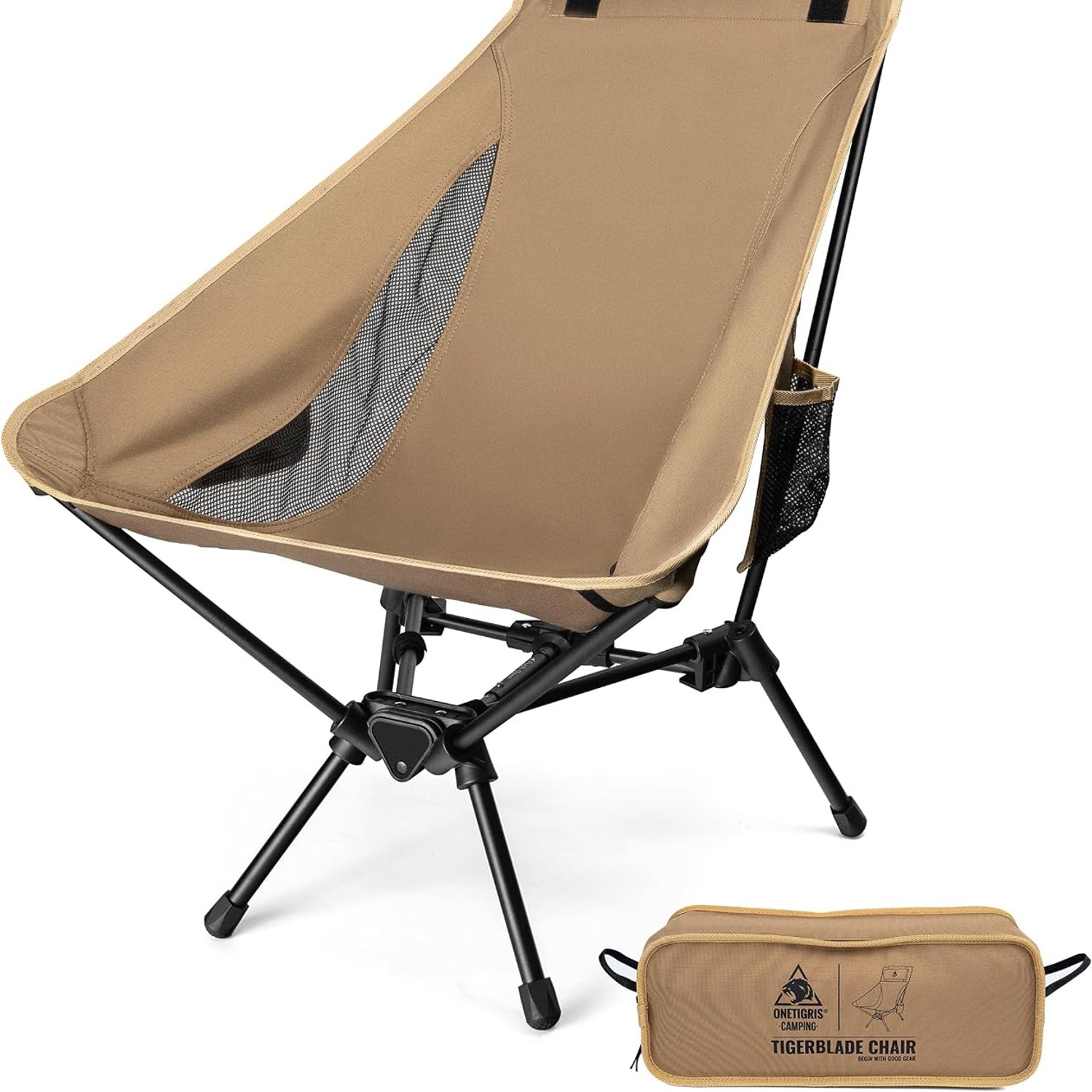
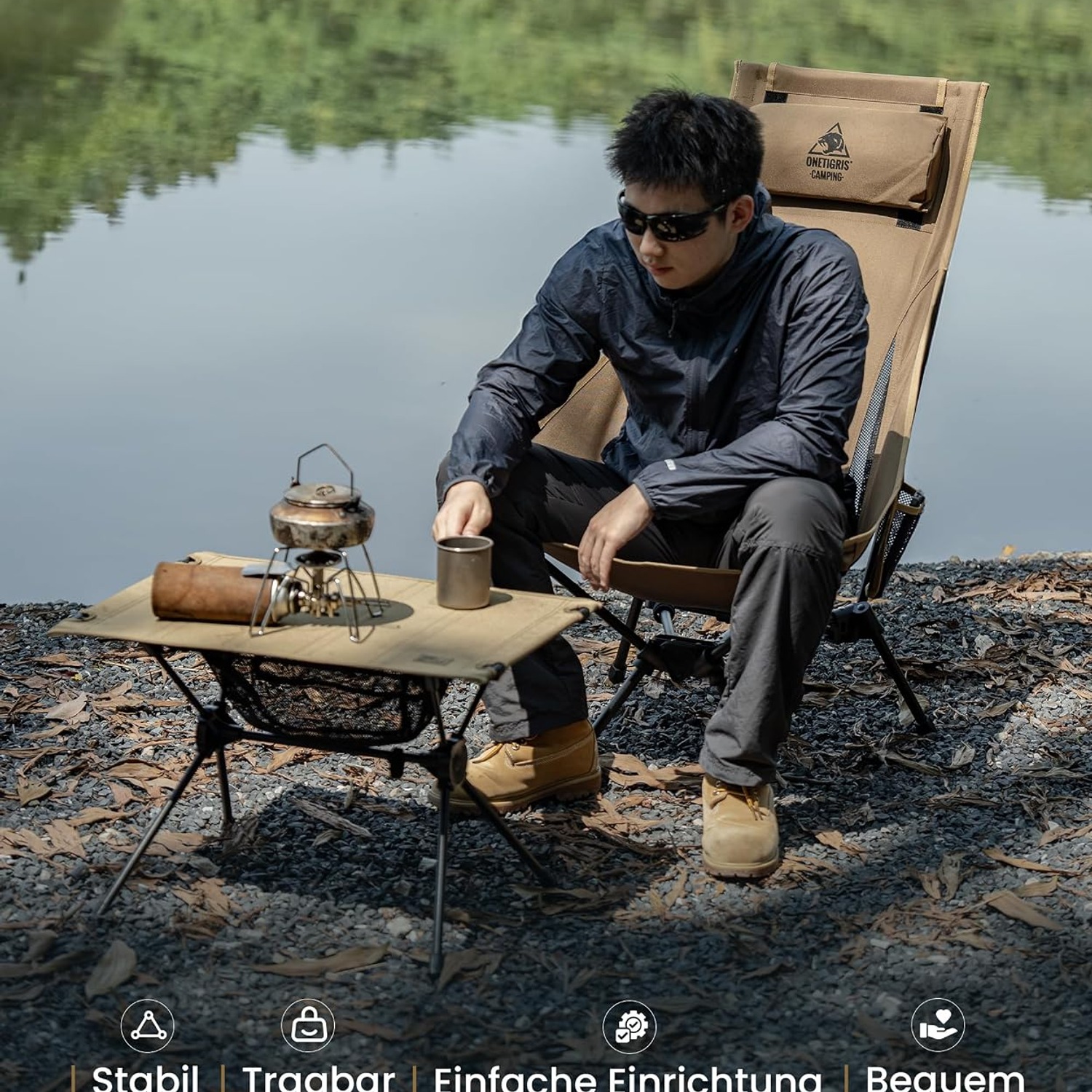
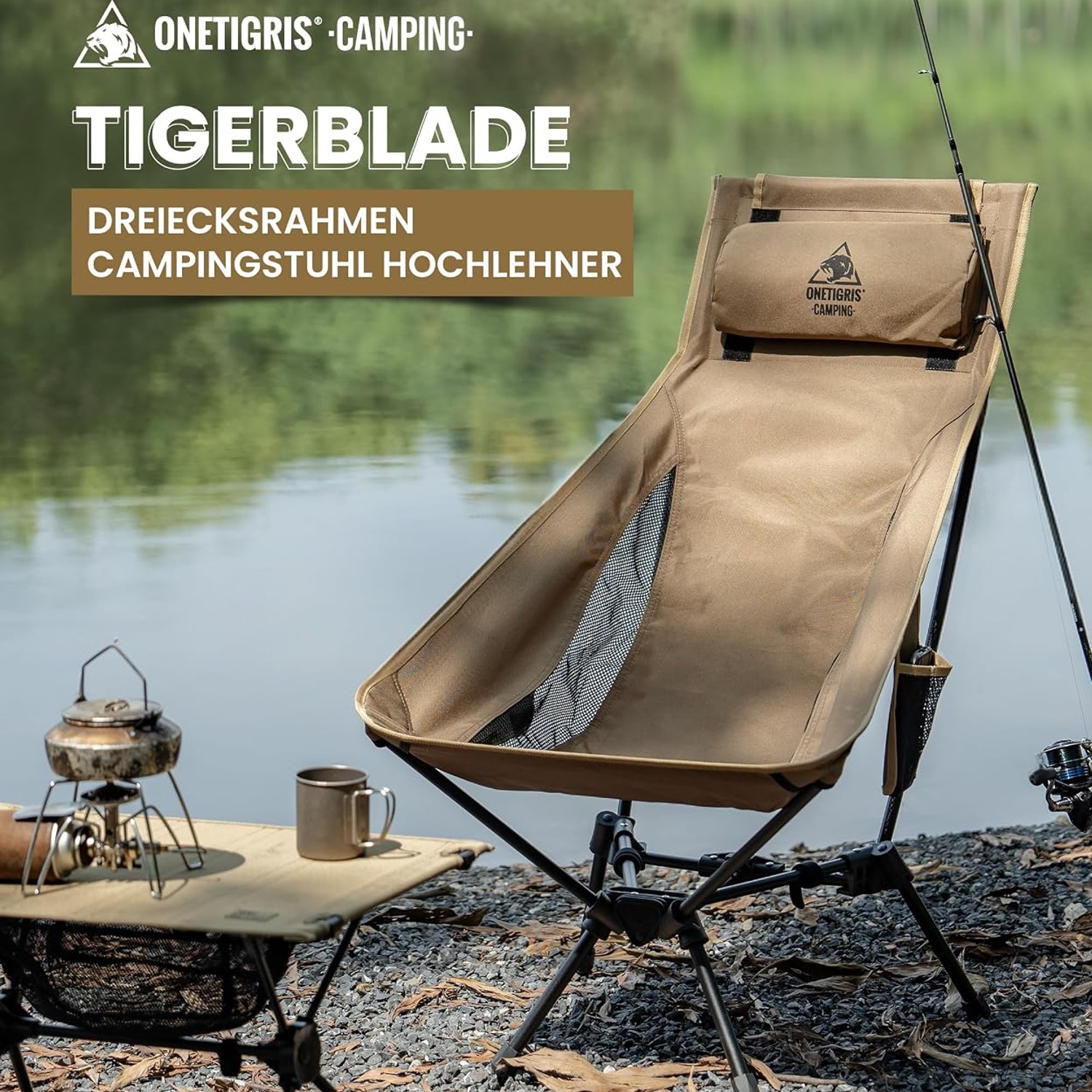
A high back camping chair fixes that one thing, and fixing that one thing changes the whole experience. The back runs tall enough to reach behind your head, and in this case a removable headrest sits at the top of it. You lean back and something is there. Your neck relaxes. Your shoulders drop. You stop shifting every few minutes.
How this chair is built
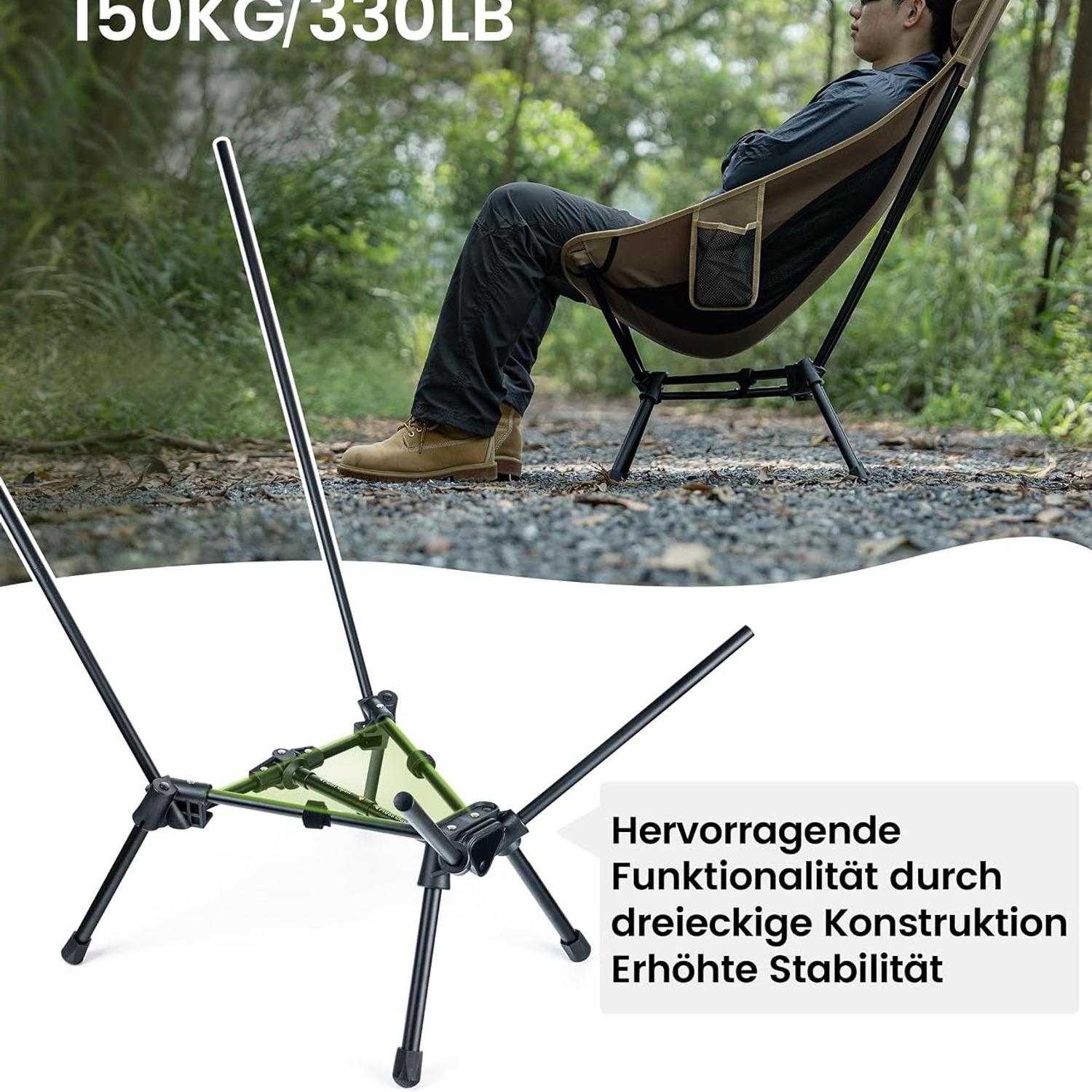
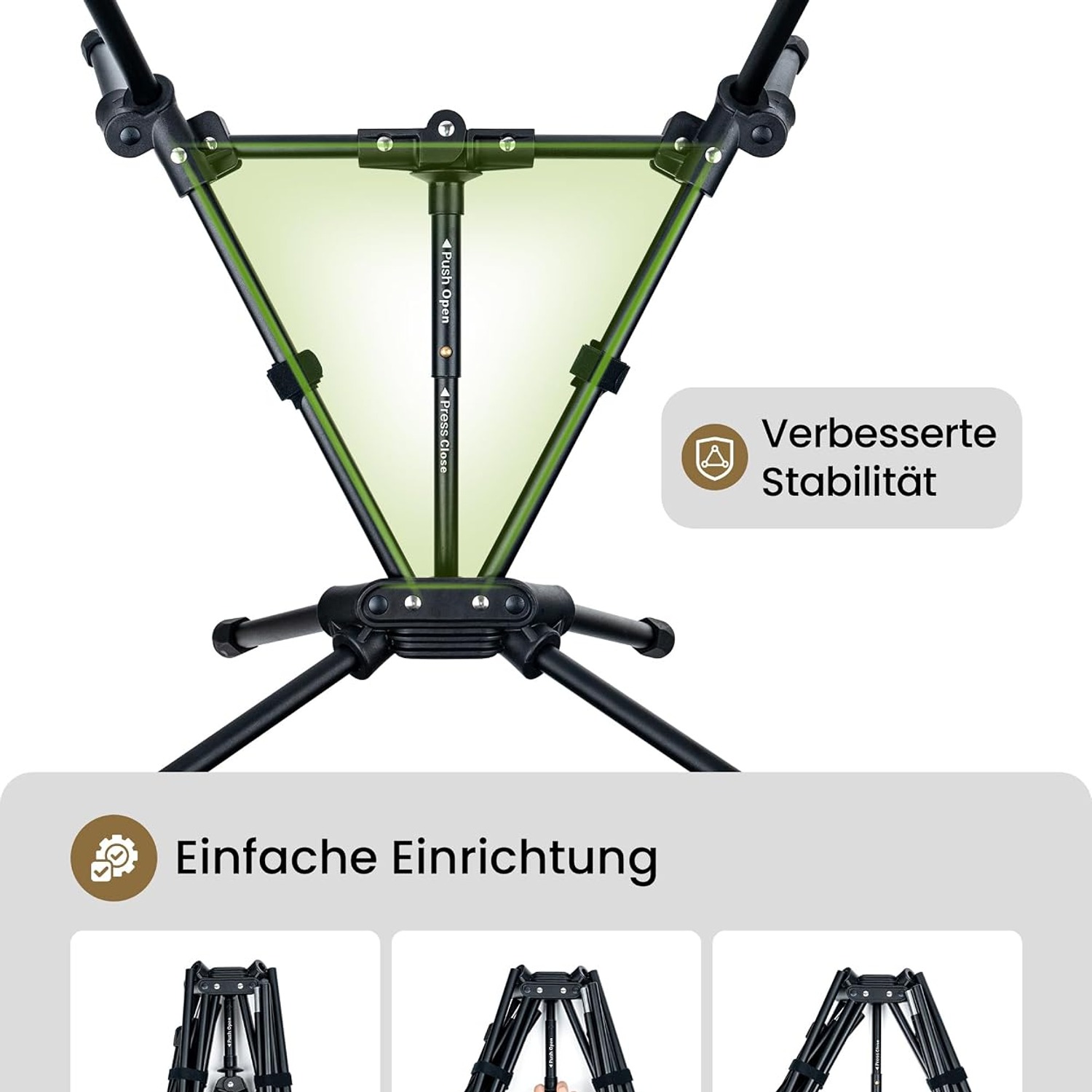
The structure is aluminium poles that connect through a central hub, with a polyester seat and back that slip over the frame ends. That hub design is the part worth understanding, because it is what makes assembly fast. Instead of threading poles through sleeves one at a time, you open the frame, lock the connection, and drop the fabric on. The first time you do it, read the instructions in the box. Every time after that, it takes less than a minute.
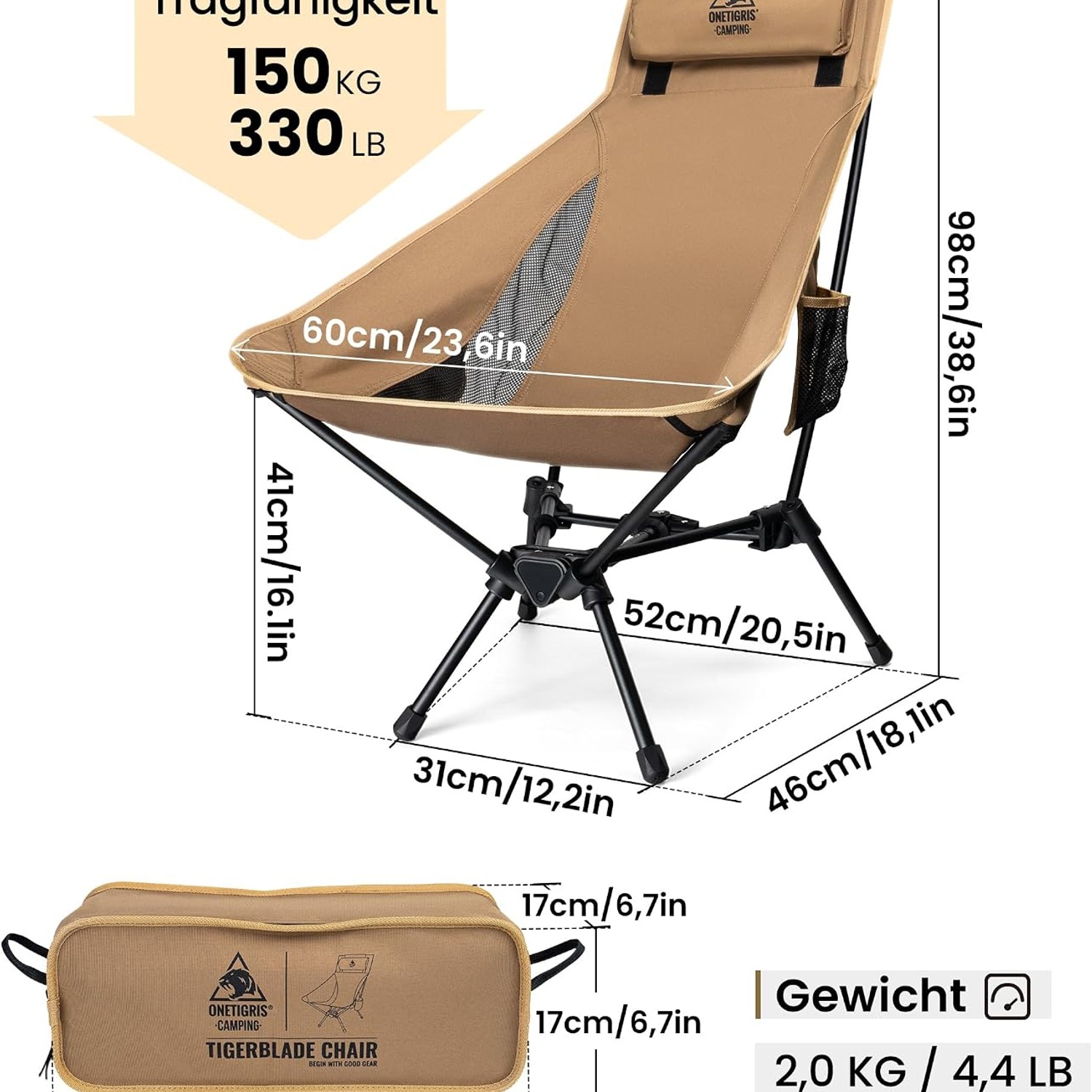
Aluminium is the reason the whole thing weighs 1.96 kg. Steel frames are cheaper and perfectly strong, but they are heavy enough that you stop wanting to bring the chair at all. That is the quiet failure mode of a bad camp chair. It does not break. It just sits in the garage because carrying it is annoying. Under two kilos is firmly in the territory where you bring it without thinking.
The fabric is polyester, which is the standard for outdoor seating for good reasons. It sheds dust, it dries reasonably fast if it gets dewy overnight, and it is not precious about contact with dirt, grass and camp tables.
Set up, the chair measures 43 cm deep, 60 cm wide and 98 cm high. The 60 cm width is the number to notice. A lot of budget chairs narrow down to the low fifties, which feels fine in a shop and pinchy after an hour in a jacket. Folded, it comes down to roughly 43 x 17 x 17 cm, a long thin bundle rather than a bulky one, and it travels in the carry bag that comes with it.
Two heights, one chair
The two seat height settings are more useful than they sound on a spec sheet. Think about how an evening actually runs. Early on, you are at the table. Eating, playing cards, passing things around. For that you want to sit higher, closer to table level, so you are not reaching up to your own plate.
Later, the table is cleared and everyone has drifted toward the fire. Now you want to be lower. Legs out, weight back, head resting. A chair that only does one of those is right for half the night.
Switching between them takes seconds, and it is the detail that makes this feel like one of the better adjustable height camp chair designs rather than a gimmick. If you only ever use one setting, that is fine too. But having both is why a single chair can cover a camp table, a fire pit and a beach without compromise.
Who it suits
Car campers get the most out of it. You have room in the boot, you are setting up a base for a few nights, and comfort over long sitting hours matters more than shaving grams. This is squarely the right chair for that.
Anglers do well with it too. The side pockets take the small things that otherwise get lost in grass, and the low setting works for sitting back from a bank. Anyone looking for the best chair for fishing is usually weighing exactly those two features against weight, and this lands in a good spot on all three.
Parents on sidelines, festival goers and people with small balconies also tend to like high back folding chairs. The folded size means it lives in a cupboard rather than taking up floor space, and it comes out when visitors arrive.
Walk-in campers should think about it honestly. Just under 2 kg is light for a chair with a real back, but it is still 2 kg you are carrying. For short walk-ins and anywhere you can park nearby, it is easy. For a multi-day hike with a full pack, a chair of any kind is a comfort decision rather than a necessity.
How to choose between chairs
Start with back height, because that is what you cannot change later. If you want to rest your head, you need a back that reaches past your shoulders. Measure from a chair seat up to the base of your skull while sitting, and compare that to the chair's listed height.
Then look at packed size, not just weight. Two chairs can weigh the same and pack very differently. A long thin bundle like 43 x 17 x 17 cm slots beside other gear. A short fat one has to go on top of everything, which is how it ends up left behind.
Seat width comes next. Sixty centimetres is roomy. Anything under about 50 cm gets tight once you are wearing a jacket or sitting for hours.
Finally, think about the small stuff. Pockets sound trivial until you have hunted for a headtorch in wet grass at eleven at night. A carry bag sounds trivial until you have tried to fold loose poles into a boot. These are the features that decide whether a chair feels like one of the best folding camp chair options you have owned or just another chair.
Looking after it
Camp chairs do not usually die from heavy use. They die from being packed away damp and dirty. Brush the grit off before folding, especially around the pole ends and the central hub, because that grit is what makes a chair feel gritty and stiff a season later.
For marks on the fabric, spot clean with mild soap and cool water, then let it air dry properly before it goes in the bag. Skip bleach and strong solvents, which can weaken polyester over time. Do not machine wash it, because the seams and pole sleeves take a beating in a drum.
Store it dry, in its bag, somewhere out of long term direct sun. UV is the slow enemy of all outdoor fabric. A chair left on a sunny deck for a whole summer will fade and weaken faster than one that lives in a cupboard between trips.
The short version
If you have ever sat in a camp chair and found yourself holding your head up by hour two, the back was too short. This one runs to 98 cm with a removable headrest, so there is something behind your head when you lean.
It weighs 1.96 kg on an aluminium frame, folds to about 43 x 17 x 17 cm, comes with a carry bag, and gives you two seat heights so the same chair works at a table and at a fire. The seat is 60 cm wide polyester with two side pockets. Assembly is needed, instructions come with it, and after the first time it is a one minute job.
Buy it if you sit outside for long stretches and want to stay there. That is really the whole case.