
The complete guide
Choosing a Dome Tent, a Plain-English Buyer's Guide
The problem with most camping nights
The camping part is easy. The tent part is where things fall apart.
Anyone who has camped more than a couple of times has a story about arriving at a site in fading light, pulling a tangle of poles out of a bag and trying to work out which sleeve they thread through while someone holds a phone torch. Add a bit of wind, add kids who are hungry, add rain that was not in the forecast, and a twenty minute pitch feels like an hour.
Then there is the other failure mode. You get the tent up fine, you sleep well, and at 3am you discover the floor has let water through, or the roof is dripping condensation onto your sleeping bag. Both of those come down to the same thing, a tent that was not designed properly for the conditions it was sold into.
A simple dome tent with clip-on poles and a decent waterproof rating solves most of this. Not all of it, since no tent fixes bad weather, but most of it.
How a dome tent works
A dome is the oldest practical tent shape in modern camping and it has stuck around because the geometry works. Two or more poles cross over the top and bend down to the corners. That curve puts tension into the fabric and gives the structure its strength. Wind hits a curved surface and slides around it instead of pushing against a flat wall.
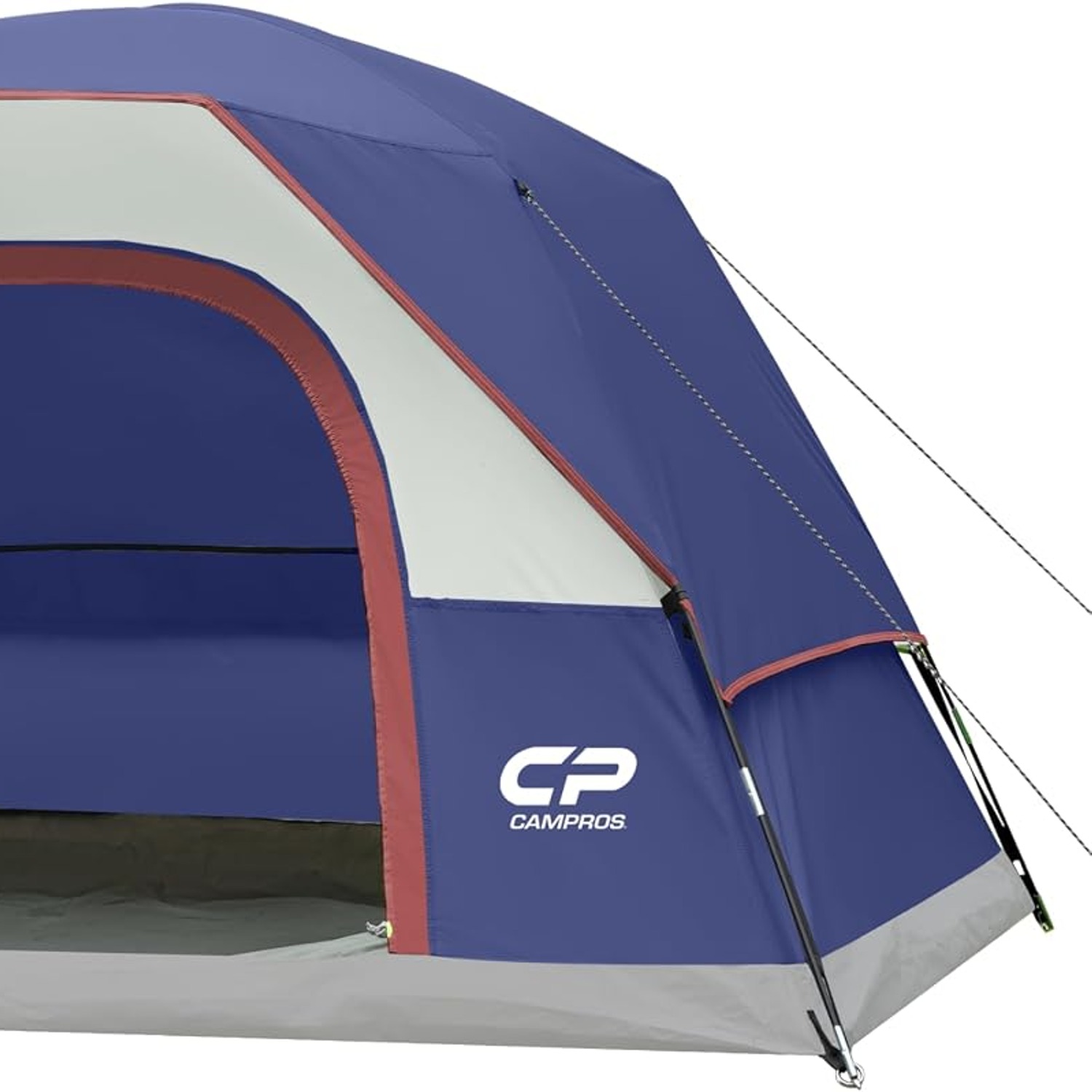
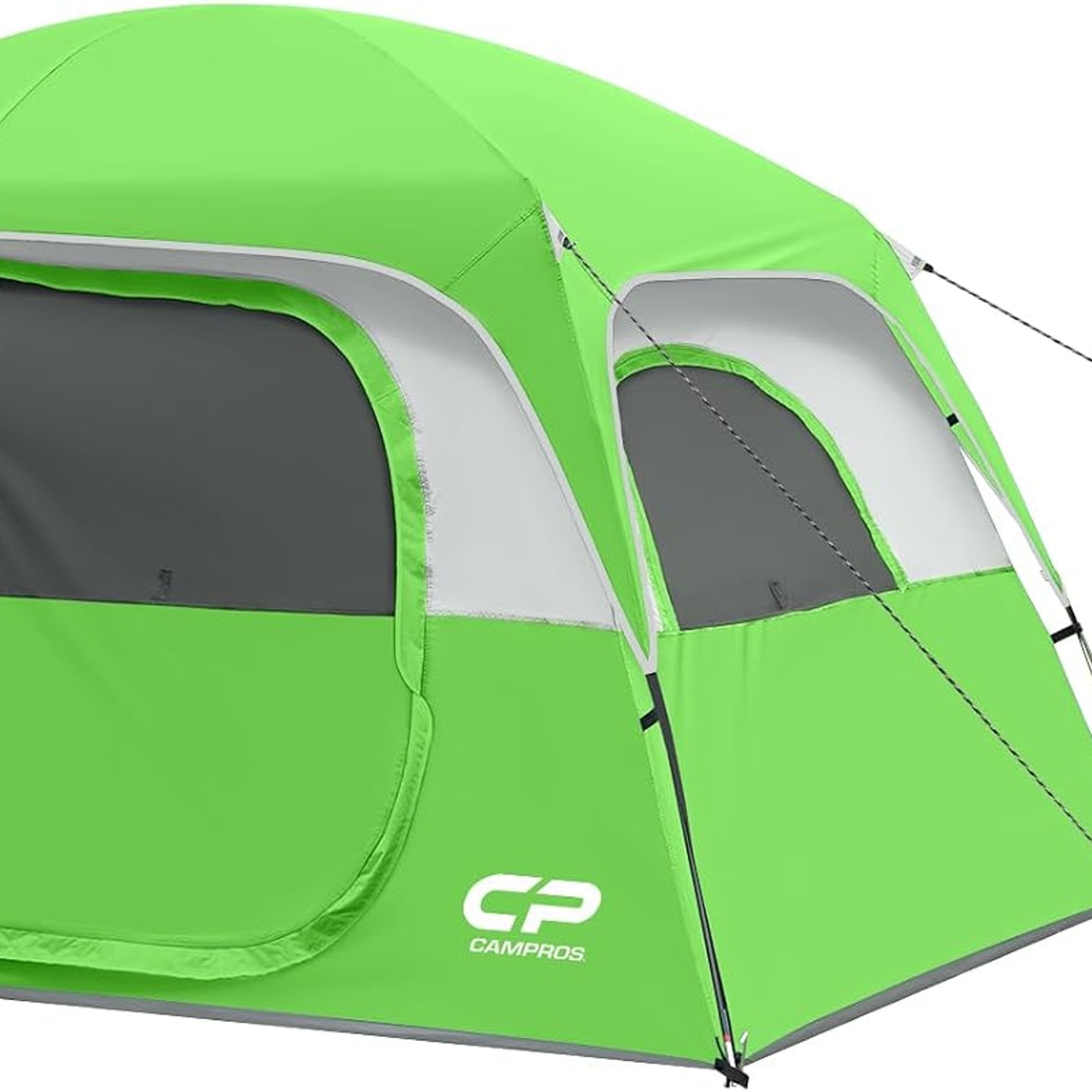
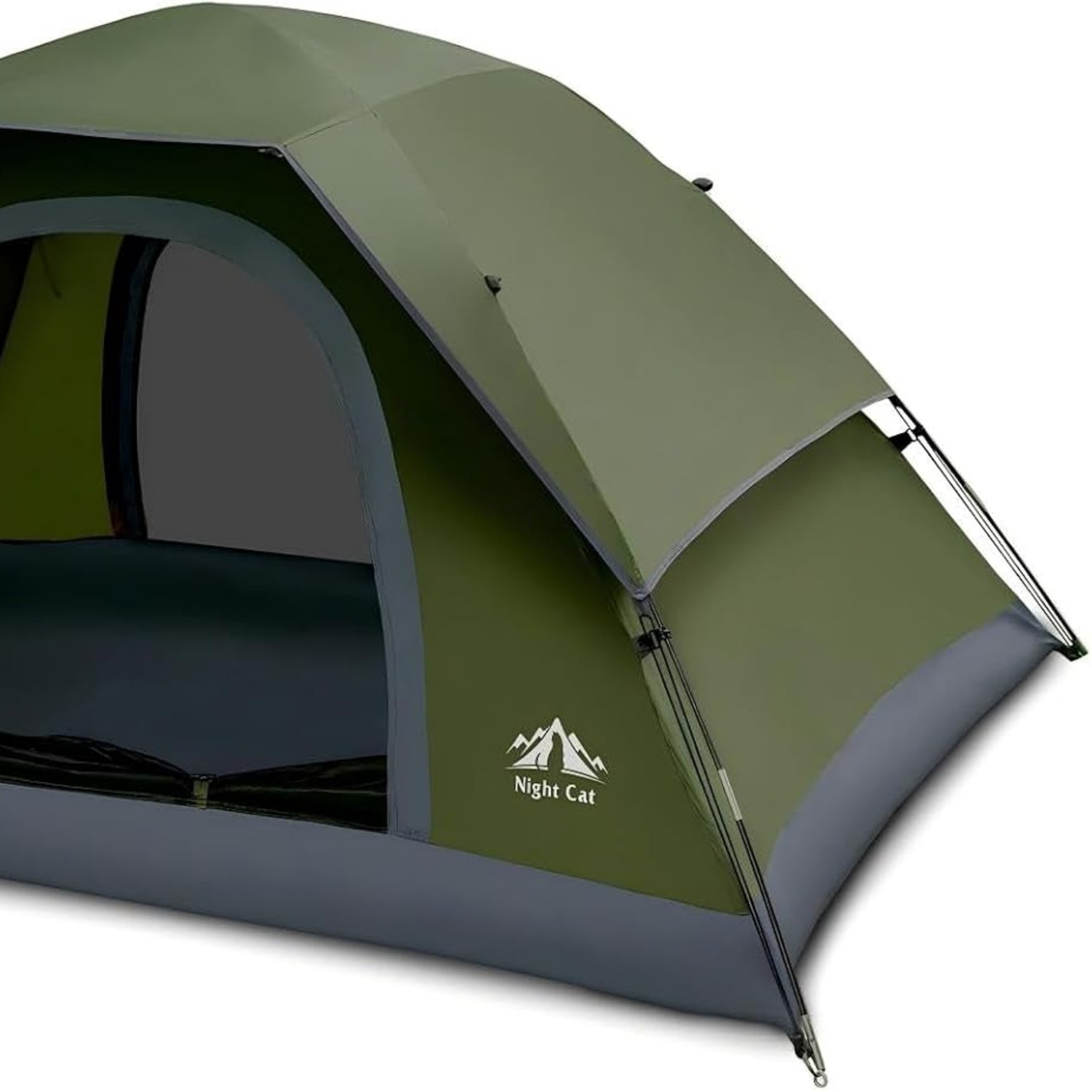
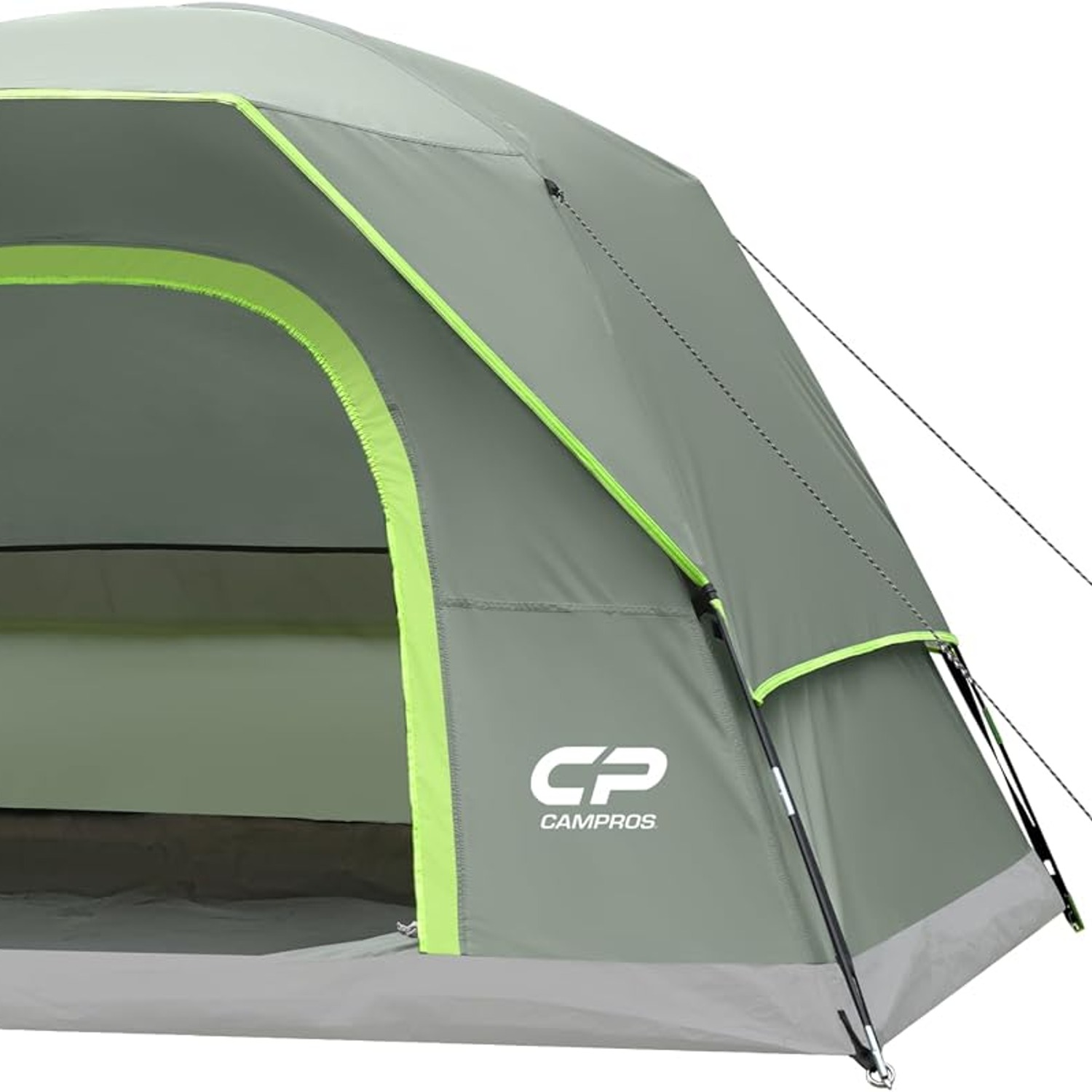
This model uses four aluminium poles that clip to the tent body. Clips matter more than people expect. With sleeves, you feed a long pole through a fabric tunnel, which is fiddly and slow and prone to snagging. With clips, you lay the tent flat, arch the poles, then snap the clips on one at a time. Two people can finish it in about five minutes, which is the listed assembly time.
Because it is free standing, the tent holds its shape before you peg anything. That is genuinely useful. You can pick it up and move it a metre to the left when you realise you have pitched it on a slope, and you can shake grit out of the floor at the end of a trip without dismantling everything.
Over the top goes the rainfly, a second polyester layer that catches rain and keeps it off the inner tent. The fly is removable, so on a warm clear night you can take it off and sleep under mesh.
Waterproofing, explained without the jargon
Tent fabric gets a hydrostatic head rating, written in millimetres. It comes from a lab test where a tube of water sits on the fabric and they measure how tall the water column gets before it pushes through. This tent is rated at PU 1500mm, meaning the polyester has a polyurethane coating that holds a 1500mm column.
For three-season camping, 1500mm is a practical working level. It handles showers, steady rain and the heavy dew that soaks everything on a clear cold morning. It is not an expedition rating, and the tent is sold as a three-season shelter, so spring through autumn rather than alpine winter.
The floor is polyethylene, which is a different material to the walls and for good reason. The ground is where pressure builds. When you kneel on a wet floor, your body weight pushes water up through the fabric. Polyethylene is the thick tarp-style plastic used on the base of most camping tents because it resists that pressure and shrugs off grit, wet grass and the small sharp things you did not notice when you picked your pitch.
Two habits make any waterproof rating work harder. Pitch the tent taut so the fly does not touch the inner wall, and peg the fly out so there is an air gap and water runs clear. Loose fabric is where leaks and drips come from, not usually the coating itself.
Condensation, the thing people blame on leaks
Here is the common misunderstanding. A person breathing overnight puts out a surprising amount of water vapour. That vapour hits the cold inner surface of the tent and turns back into liquid. In the morning it looks exactly like a leak.
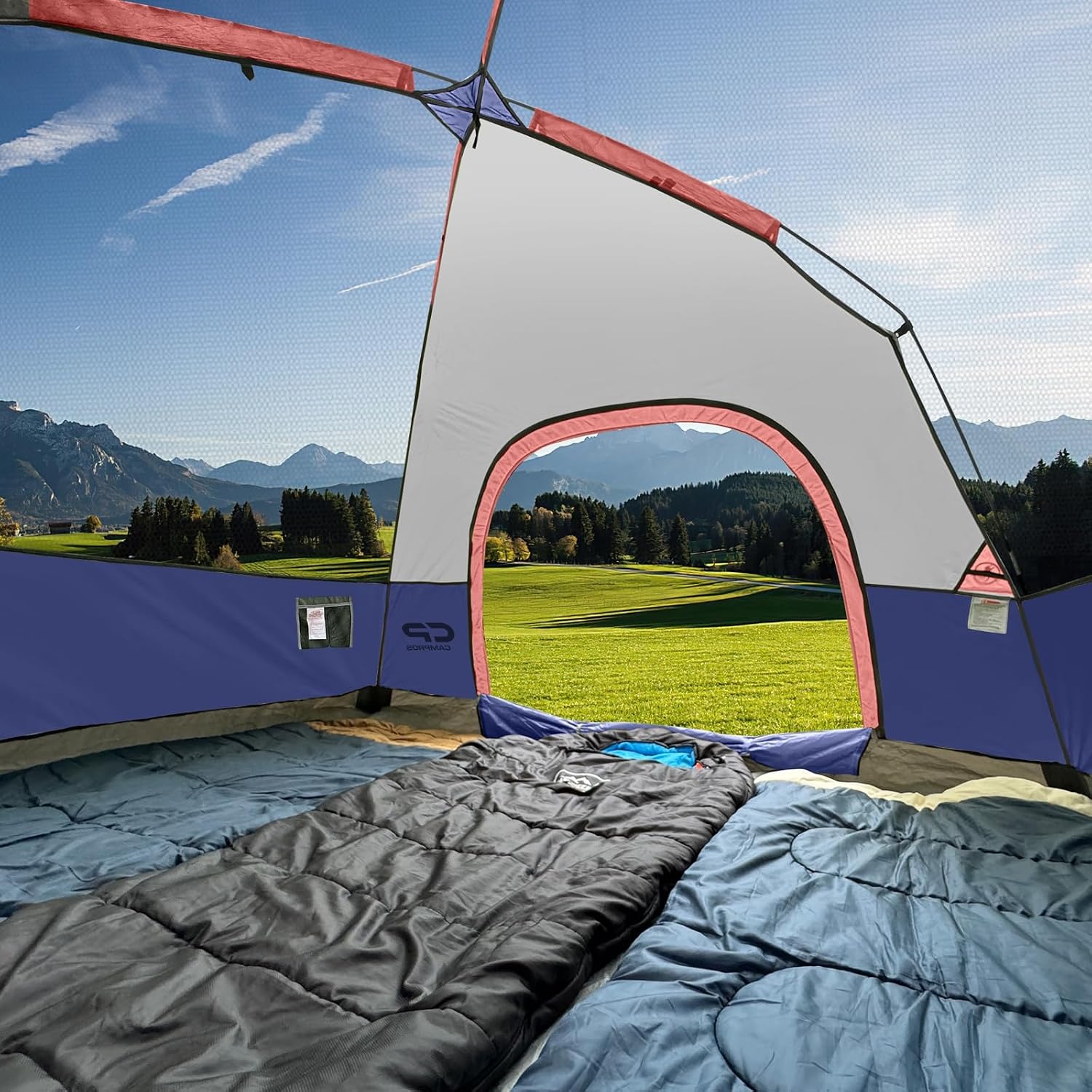
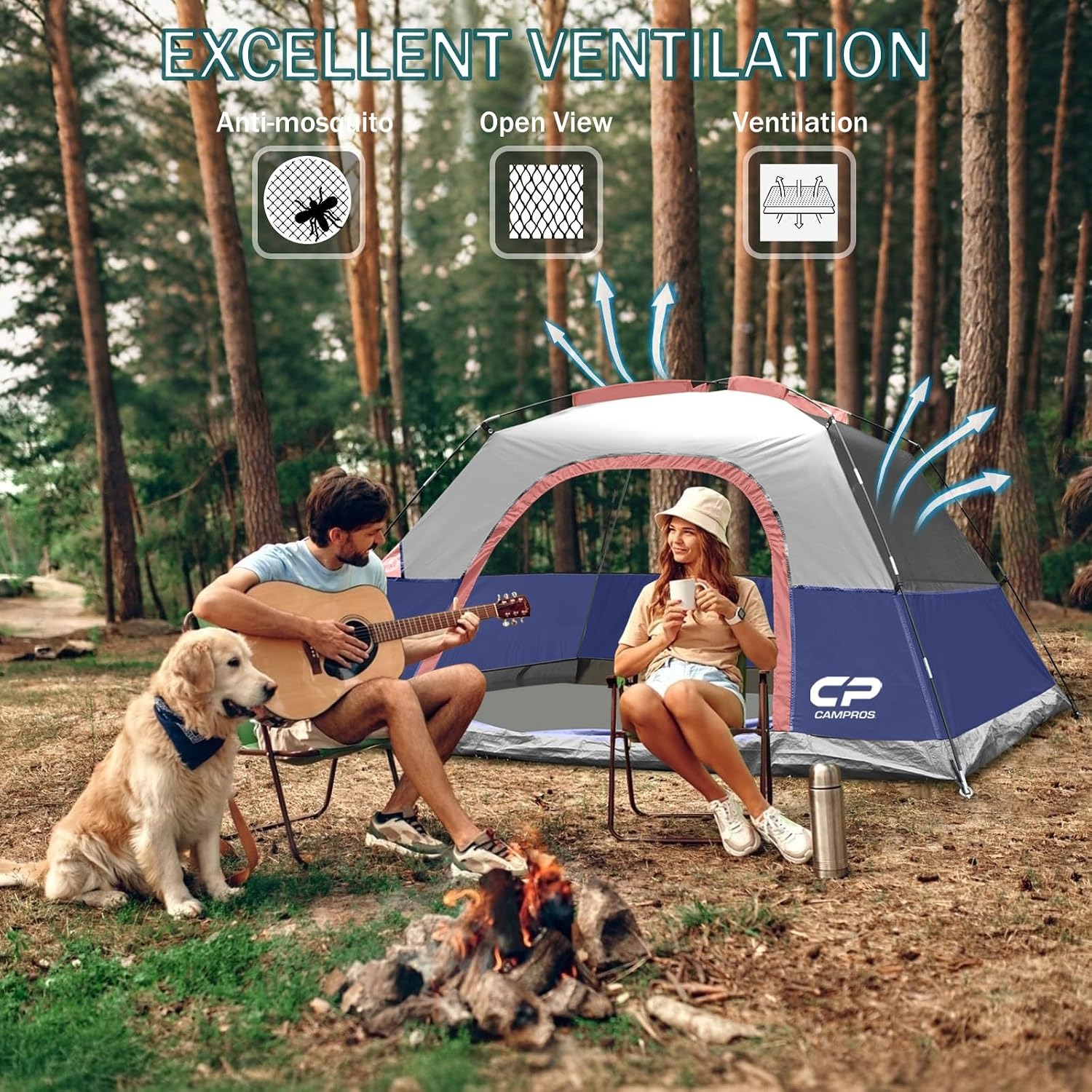
Ventilation is the fix. This tent has one mesh window and a zippered door, which lets air move through and carry moisture out. Leave the window open a crack even when it is cool, keep wet clothes in the vestibule rather than inside, and never cook in the tent. If you wake up to damp fabric, open everything up for twenty minutes while you make coffee and most of it will go.
Who this size suits
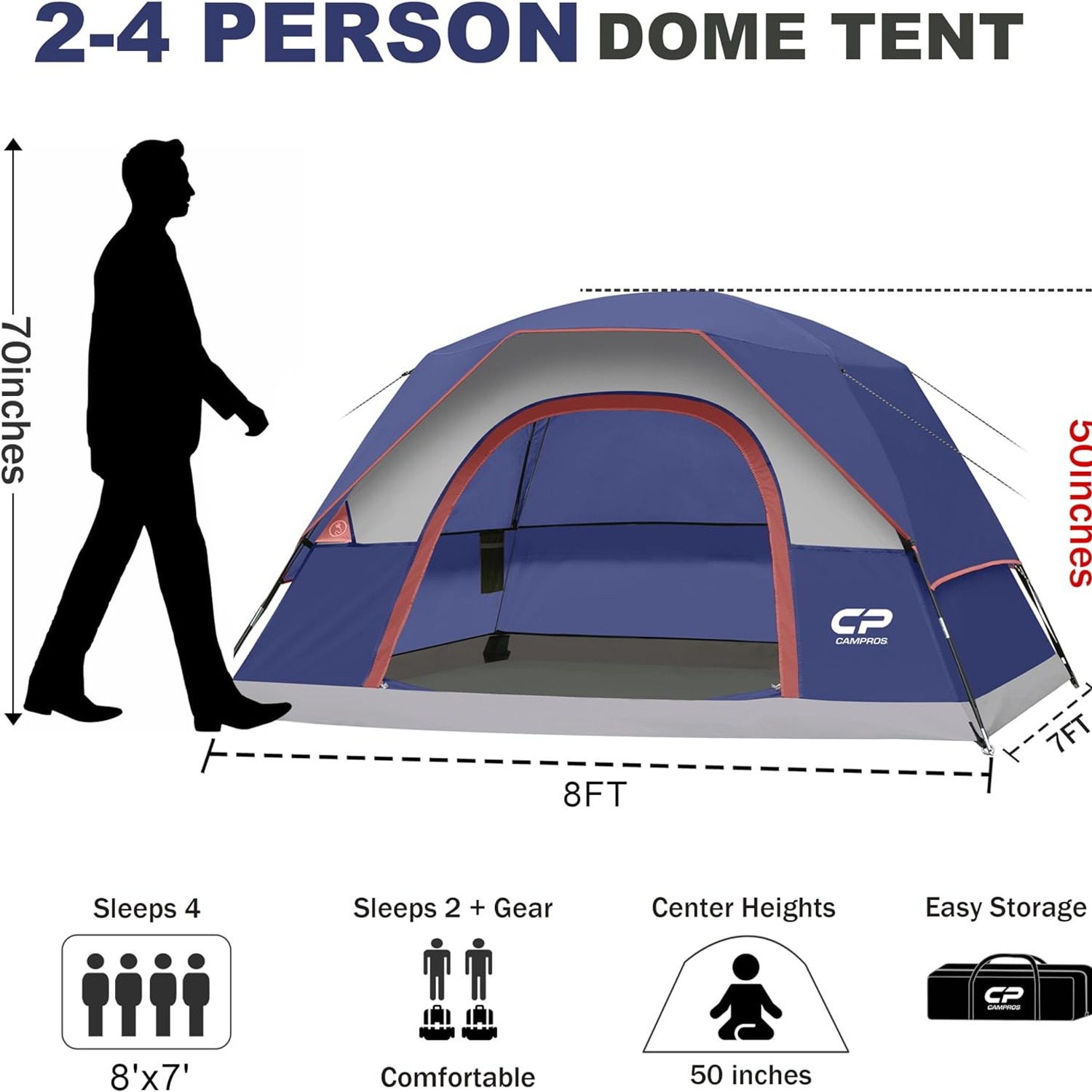
The listing calls it a 4 person tent, based on a floor of 2.44 m by 2.13 m, about 5.2 square metres. Tent capacity numbers across the whole industry are measured the same way, assuming adults lying side by side with no gear between them. Four adults will fit in here. They will also be touching shoulders and stacking packs at their feet.
The honest answer is that it is excellent for two people with plenty of room, very good for three, and workable for four if everyone is friendly or small. A queen air mattress fits with space along one side.
Centre height is 1.27 m, or 50 inches. You sit up, you do not stand up. That is the trade a dome makes. Keeping the profile low is exactly what makes it stable in wind and light enough at 3.5 kg to carry.
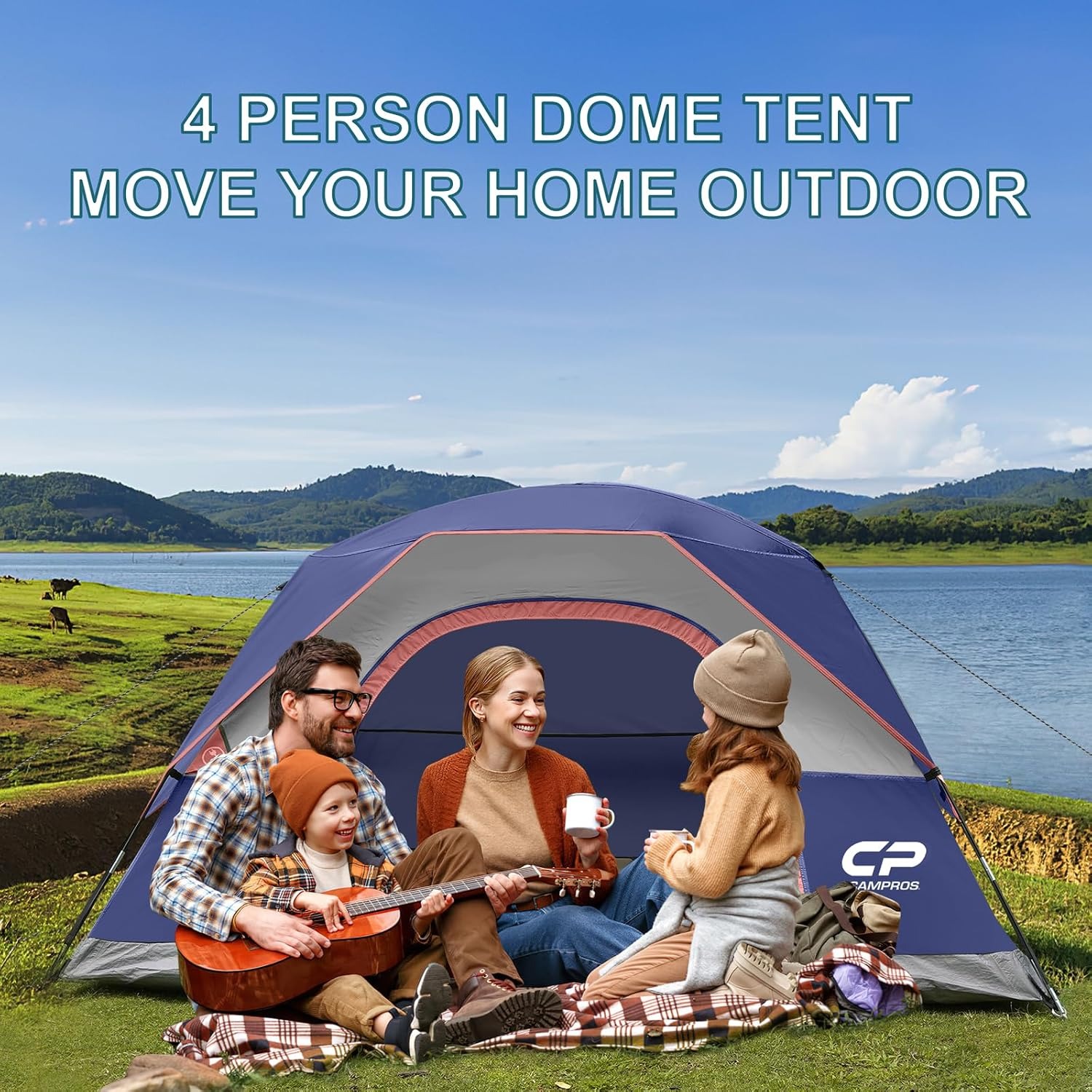
So it suits weekend campers, festival goers, people who fish, families with young children, and hikers doing shorter trips where the weight can be split between two packs. Someone doing a long multi-day trek with every gram counted will want something lighter and more specialised.
How to choose, practically
Start with the number of people, then add one. If two of you are going, a four-person listing gives you a comfortable two-person space with room for packs. That is the single most useful rule in tent buying.
Next, look at season rating rather than price. Three-season covers the vast majority of camping people actually do. Four-season tents are heavier, hotter in summer and cost more, and most buyers never need them.
Then check the pole material. Aluminium bends and springs back. Fibreglass can split and leave you holding two sharp halves at midnight. Four aluminium poles is a good sign at this price point.
Finally, think about pitch time honestly. If you often arrive after dark or camp with impatient company, a clip-pole free-standing design will do more for your camping enjoyment than any other feature on the spec sheet.
Looking after it
Hand wash only, cool water, soft cloth. The washing machine will destroy the coating and the dryer will do worse. Bleach and strong detergents are off the list for the same reason.
The rule that matters most is drying. Pack a tent damp and it will grow mildew within a week, and mildew smell does not come out. If you have to pack wet because it is raining when you leave, unpack it the moment you get home and hang it over a rail or pitch it in the yard until it is fully dry.
Shake grit out of the floor before folding. Brush sand out of the zips and rinse them with fresh water after beach trips. Store the tent loosely in a dry cupboard rather than compressed in its stuff sack for six months. Keep a small repair patch kit with it, because a pinhole fixed early never becomes a tear.
The short version
This is a straightforward three-season dome tent that does the basics properly. Polyester shell with a PU 1500mm coating, polyethylene floor, removable rainfly, four aluminium clip-on poles, one door, one mesh window, one vestibule and two pockets. Floor is 2.44 m by 2.13 m with 1.27 m of centre height, and the whole thing packs to 3.5 kg with stakes and bag included.
Buy it if you want to pull up, pitch in five minutes and get on with the evening. Buy something heavier if you camp in snow. For everything in between, this covers it.