

The complete guide
How to Choose a Lightweight Backpacking Tent That Actually Keeps You Dry
The problem with most first tents
Plenty of people buy a tent once, use it twice, and never take it out again. Usually it is one of two reasons. Either it was so heavy that carrying it stopped being fun, or it leaked and the trip turned into a damp, sleepless night that nobody wants to repeat.
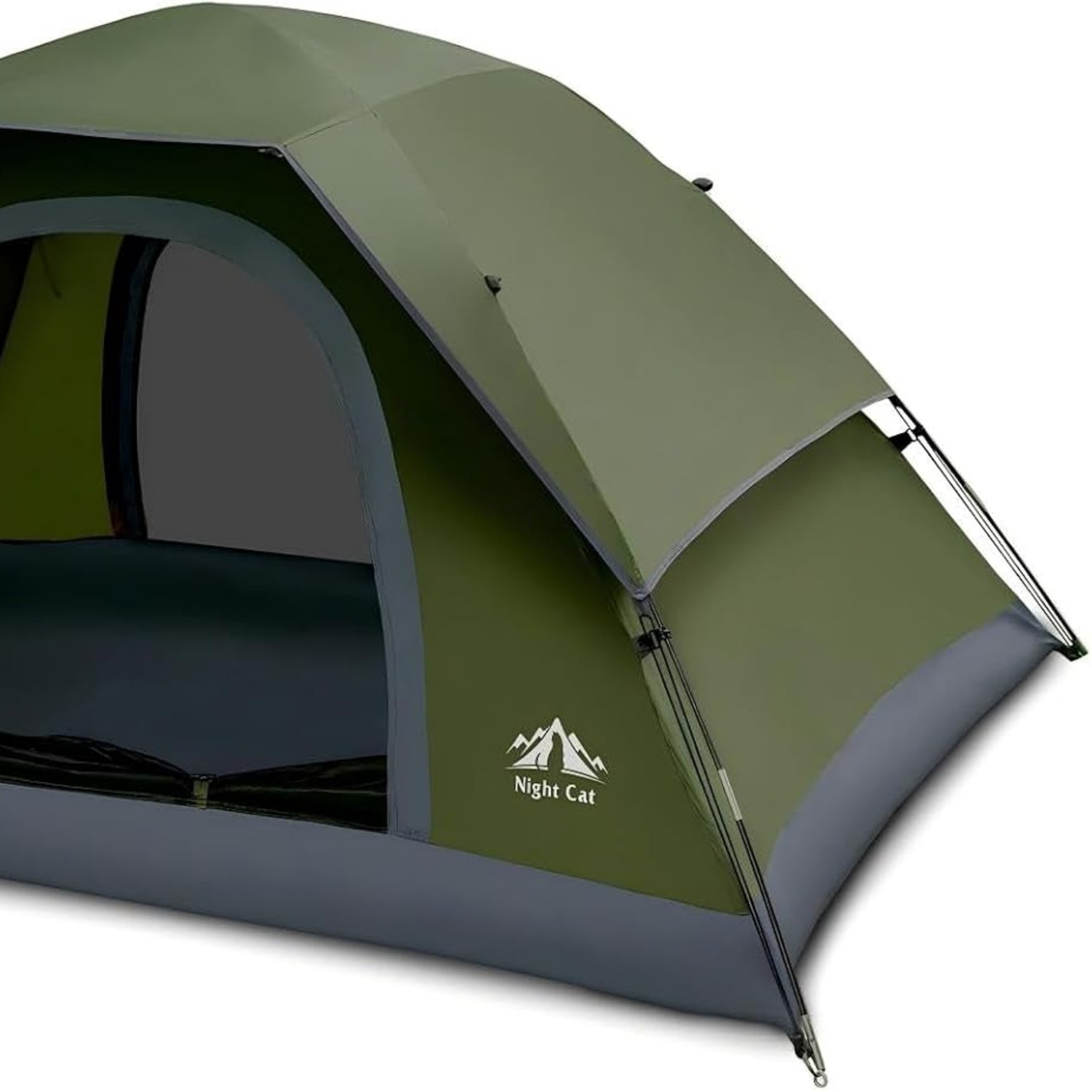
Those two failures pull against each other. Light tents can feel flimsy. Properly waterproof tents can be heavy. What you actually want is the middle ground, a shelter you will still pack on the fourth day of a walk and that holds up when the forecast turns. That is the slot this Night Cat dome is aiming at, with 2.45 kg packed weight and 3000 mm water resistance across the fly, the roof and the floor.
What the waterproof number really means
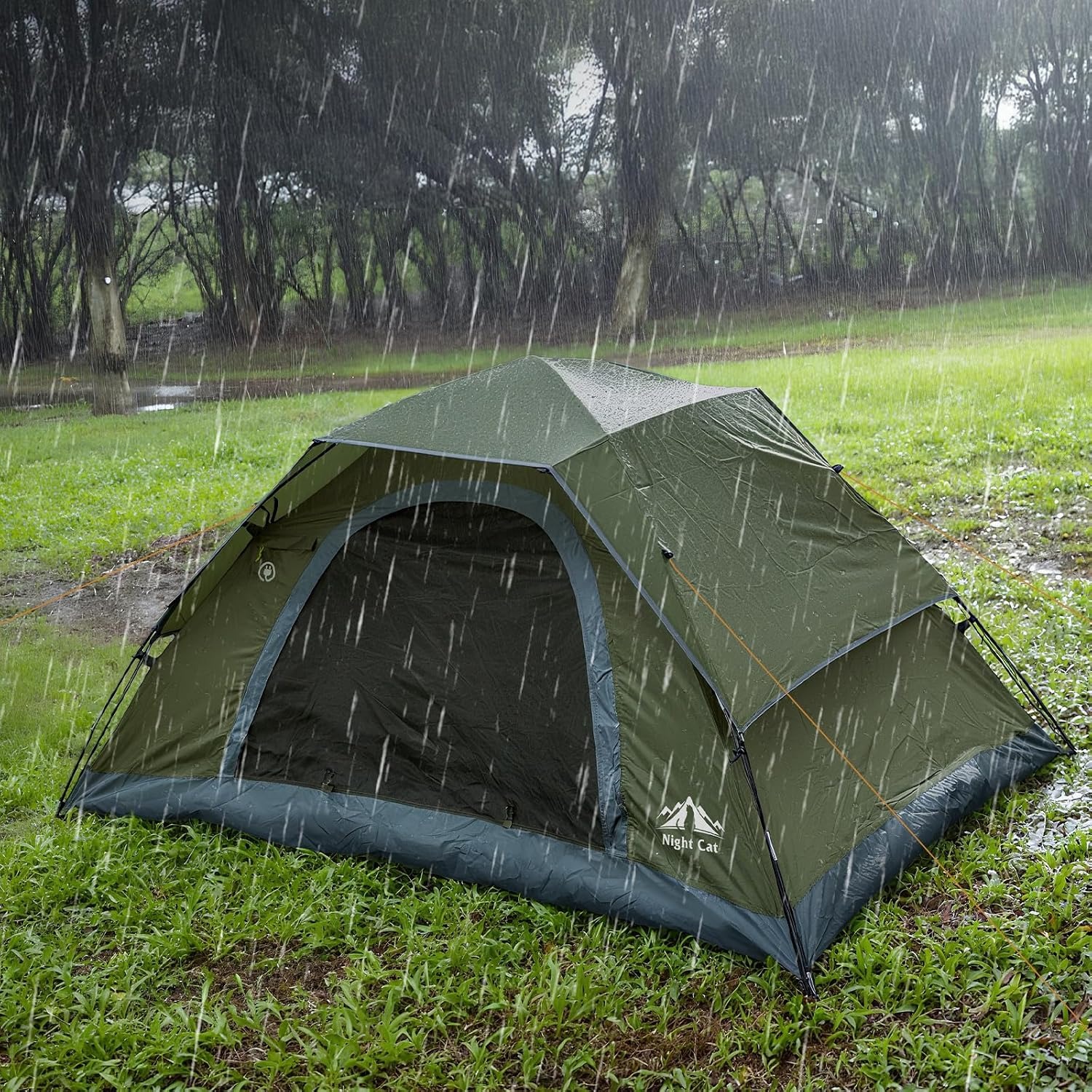
Tent waterproofing is measured as a hydrostatic head, written in millimetres. Lay a tube of water on the fabric and see how tall the column gets before water pushes through. A 3000 mm rating means a three metre column of water.
In practice, that is well past what rain alone applies. Rain does not push very hard. The pressure that matters comes from you, kneeling on a wet floor, or a pack pressing down on a damp patch. That is why floors are usually rated higher or made from heavier fabric. Here the floor is 150D Oxford, which is a chunkier weave than the canopy, and it is rated to the same 3000 mm.
For context, a lot of budget tents sit around 1000 to 1500 mm. That is enough for a light shower and not much else. At 3000 mm you have margin, and margin is what lets you sleep through weather instead of lying awake listening to it.
Weight, and where it goes
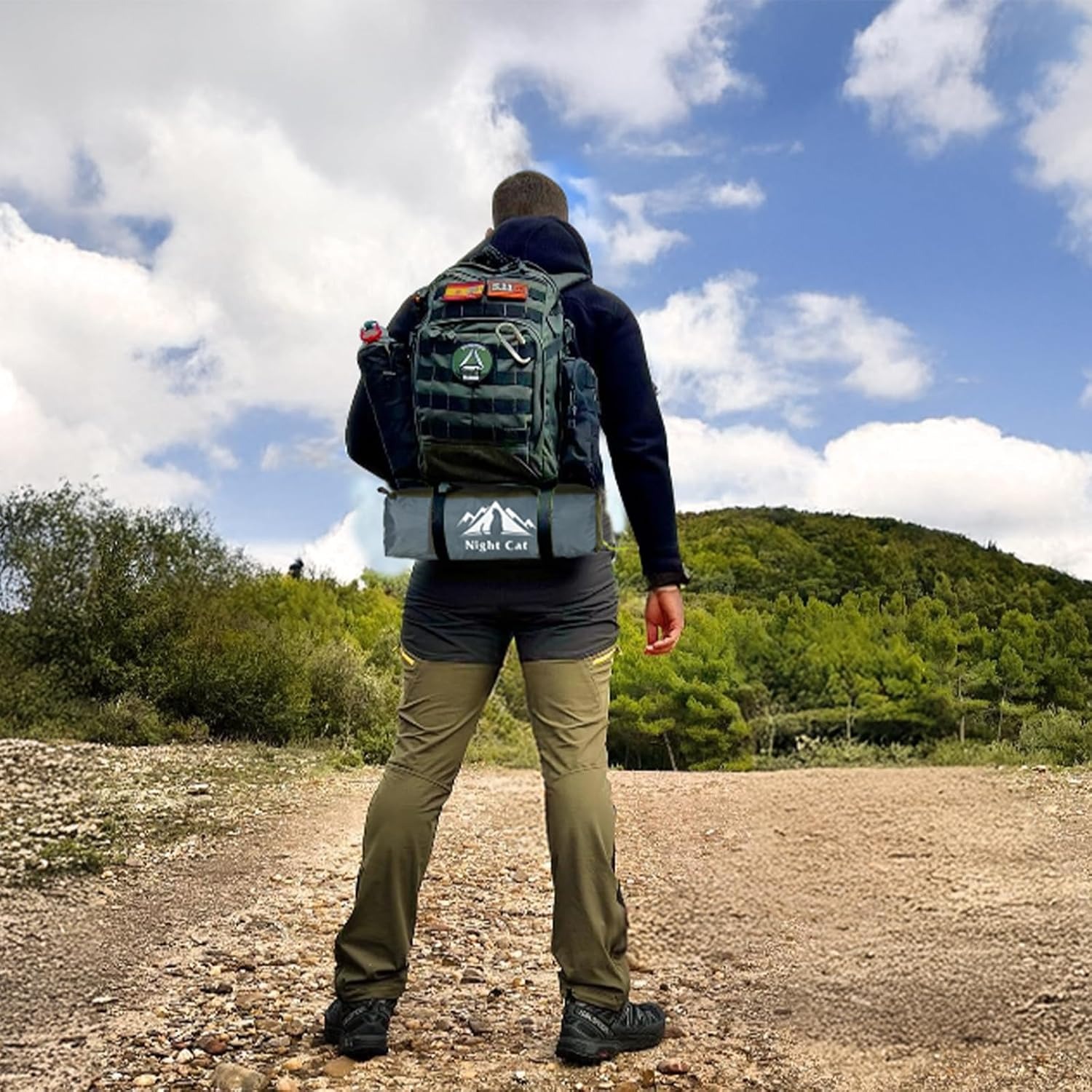
At 2.45 kg, this sits in a sensible place for a solo walker. You are not in ultralight racing territory, where people trim labels off their gear, but you are also not hauling a four kilo car-camping dome up a hill.
Here is a useful way to think about it. Shelter, sleep system and pack are your big three. If each of those is under three kilos, your base weight stays manageable and you can carry food and water without hating life. A 2.45 kg tent leaves room in that budget.
Worth noting that minimum trail weight is listed as the same 2.45 kg, which means the figure already includes what you actually carry rather than being a stripped-down number with half the parts left at home. That makes it easier to plan.
If you are splitting the load with a walking partner, one carries the fabric and the other carries poles and stakes, and suddenly you are both under one and a half kilos for shelter. That is how most people use the best lightweight backpacking tent in a pair.
Why two doors change the experience
A single-door tent is cheaper to make and usually a bit lighter. It is also more annoying to live in.
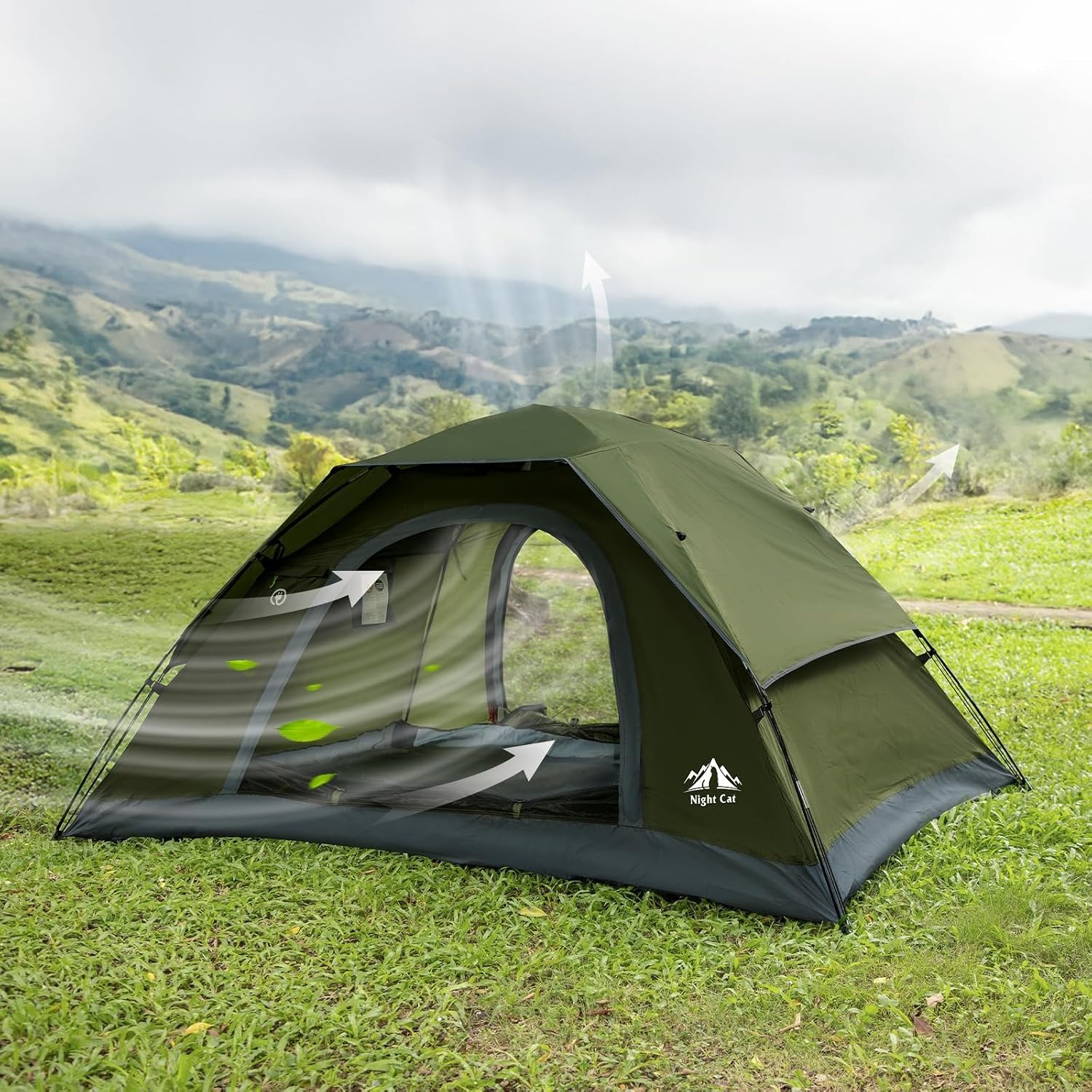
With two doors you get three things that matter. You can open both for cross-flow air, which cuts condensation on a still night. You can pick the leeward side to climb out of when one face is catching the weather. And if you are sharing, nobody has to clamber over anybody at 3 am.
This tent has two zipped doors with parallel poles running over the top, which keeps the opening wide and the inside from feeling like a tunnel. The one-and-a-half layer build sits between a basic single-skin and a full double-wall, trading a little weight for better breathability than a single skin on its own.
Setting it up without the swearing
The frame is two fibreglass poles that clip to the body. Clips beat sleeves for speed. You thread nothing, you just snap the body onto the frame and lift. Stated pitch time is around two minutes.
A few habits make that number realistic:
Pitch it once at home before the trip. Doing it in daylight on grass with no wind teaches you the sequence, so the first real pitch at dusk is muscle memory.
Clear the ground properly. Two minutes of kicking stones and sticks out of the way saves your floor and saves your back.
Peg it even when you do not think you need to. The frame is freestanding, so the tent stands up without stakes, which tempts people to skip them. Then a gust arrives and the tent becomes a kite. Ten aluminium stakes are included, so use them.
Use the guylines in any real wind. Four are supplied. Angled out at roughly 45 degrees, they take a surprising amount of load off the poles.
Being freestanding has a genuine benefit beyond speed. You can pick the whole thing up and move it, which is handy when you realise you pitched on a slight slope, and you can turn it upside down to shake out grit before packing.
Who this suits
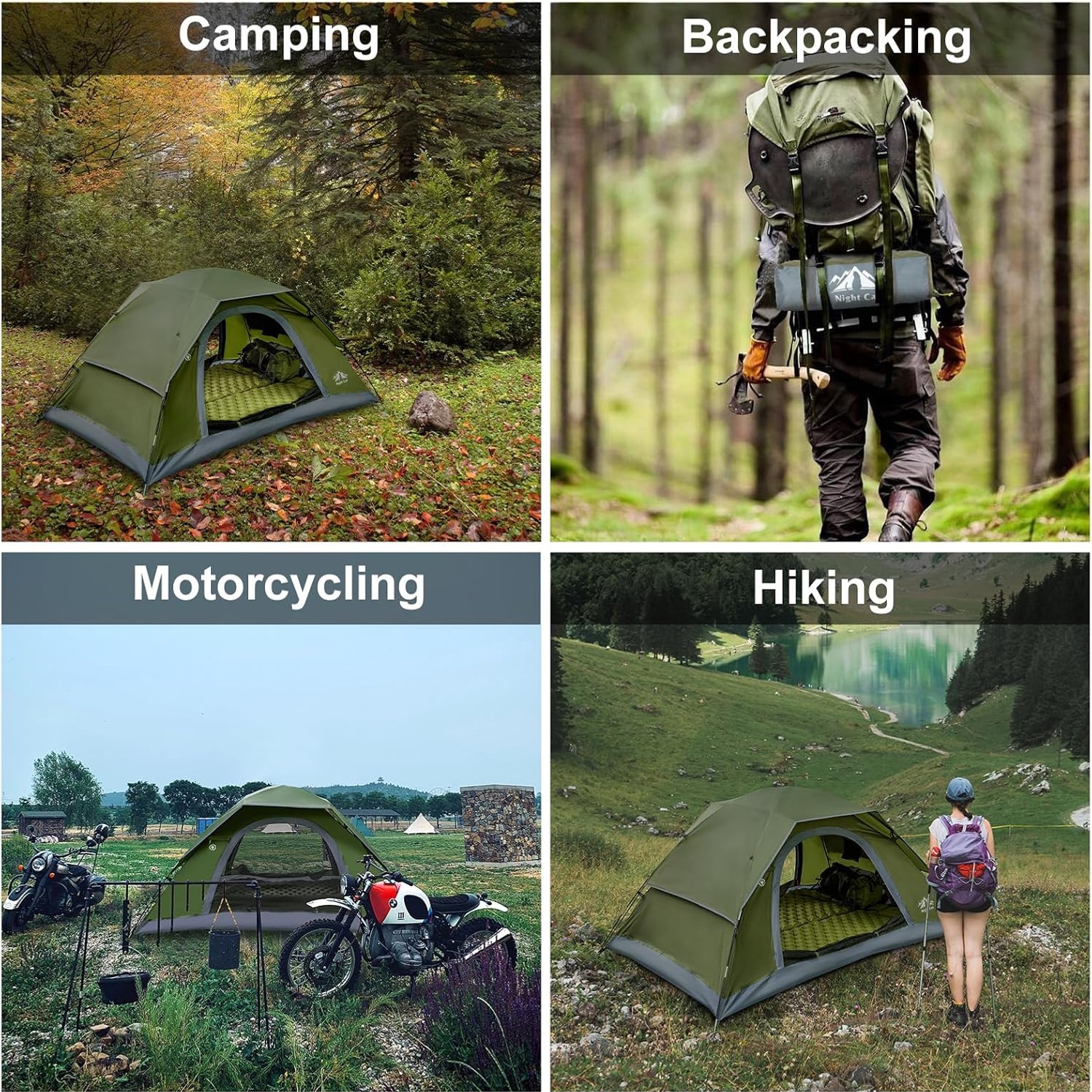
This is a good match for weekend and multi-day hikers who want a real enclosed shelter rather than a tarp. It also works well for fishing trips, bike touring, festivals and anywhere you carry your kit from a car park to a pitch and want to be set up fast.
With 220 cm by 150 cm of floor and 110 cm of headroom, a tall adult fits comfortably with their pack inside. Two people can share it if both are travelling light and neither minds being close. If you want two people plus two full packs under cover, you will want a bigger model with vestibules.
Who it does not suit: anyone planning serious winter mountaineering. It is described as usable year-round, and it will handle cold, rain and wind, but fibreglass poles and a three-season style dome are not what you want under heavy snow load on an exposed ridge. Know the limits and it will last.
Looking after it
Tents mostly die from neglect rather than use. Two rules cover ninety percent of it.
Dry it before storage. Always. A tent packed damp will grow mildew, and mildew eats the coating and the smell never fully leaves. If you have to pack it wet on the trail, hang it up as soon as you get home.
Hand wash only, cool water, mild soap. No machine, no tumble dryer, no bleach, no detergent with softeners. Sponge mud off rather than scrubbing, since scrubbing abrades the waterproof layer.
Beyond that, brush grit out of zips, since grit kills zips faster than anything. Keep the floor clean and consider a cheap groundsheet under it. And when the fabric eventually stops beading water after a few seasons, a spray-on reproofer made for polyester brings a lot of it back.
The short version
If you want a shelter that is light enough to carry, waterproof enough to trust and quick enough to put up before the rain lands, this covers it. You get 2.45 kg packed, 3000 mm water resistance on fly, roof and floor, two clip-on fibreglass poles, two doors, ten stakes, four guylines and roughly 3 square metres of floor with 110 cm of headroom.
It is a solo tent that can squeeze two at a push, built for hiking, camping, fishing and touring rather than alpine expeditions. Pitch it once at home, peg it out properly every time, and dry it before it goes back in the cupboard. Do those three things and it will keep showing up for trips long after the novelty wears off.