
The complete guide
How to Choose a Camping Kettle That Earns Its Space in the Car
The first problem of every camp morning
You get to site late. The tent goes up in fading light. Someone wants tea. And the only thing you have to boil water in is the saucepan you brought for dinner.
It works, sort of. The pan takes ages because the heat crawls up the sides. You cannot hear it boiling over the wind. When you finally pour, half of it goes down the side of the mug and the rest scalds your wrist. The next morning the same thing happens, except now there are four people waiting.
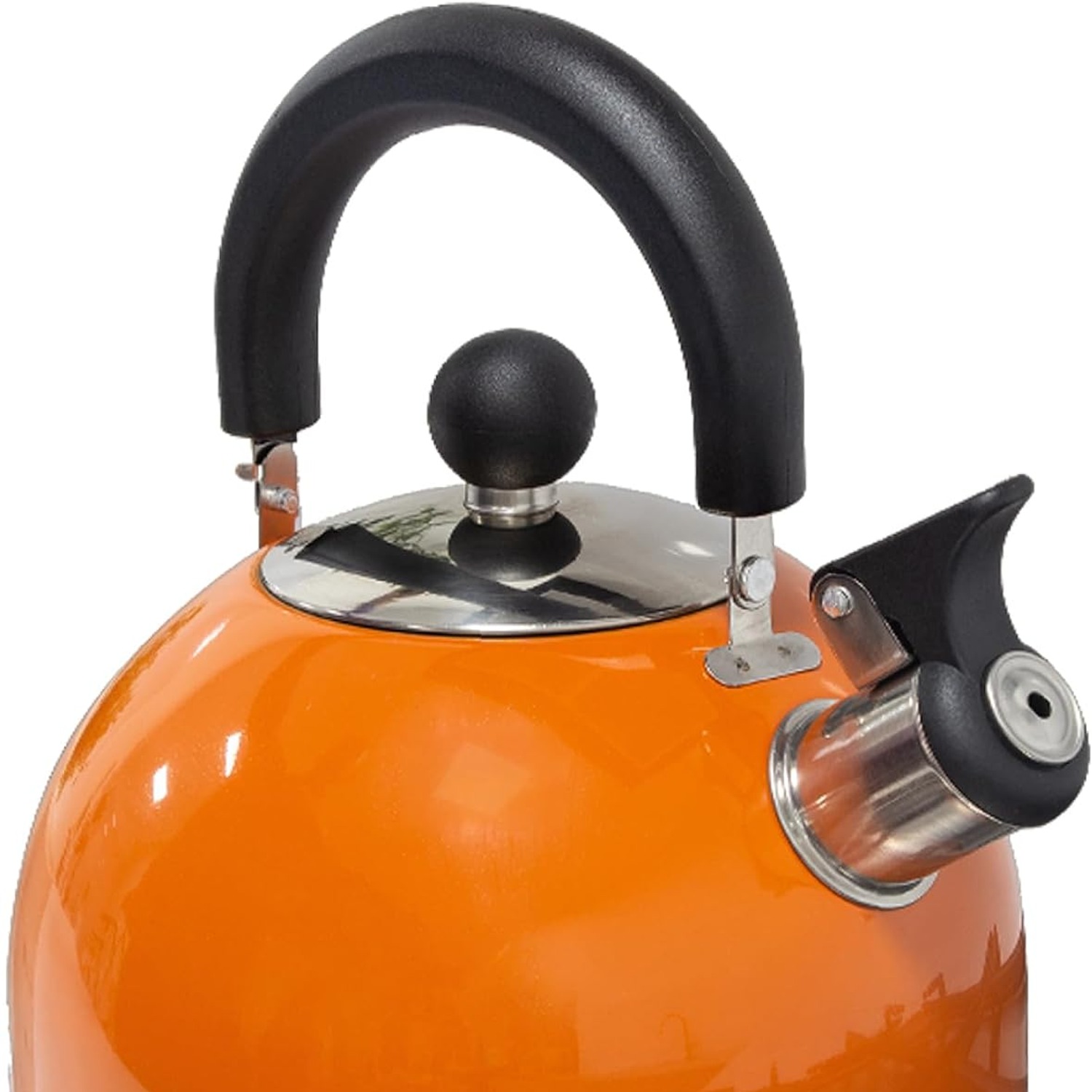
A kettle fixes this. Not a fancy one, just a proper stove top camping kettle with a whistle and a decent spout. It is one of those pieces of kit that costs little, takes up a corner of a crate, and quietly improves every trip you take.
What a whistling camp kettle actually does differently
Three things set a camp kettle apart from the pan you already own.
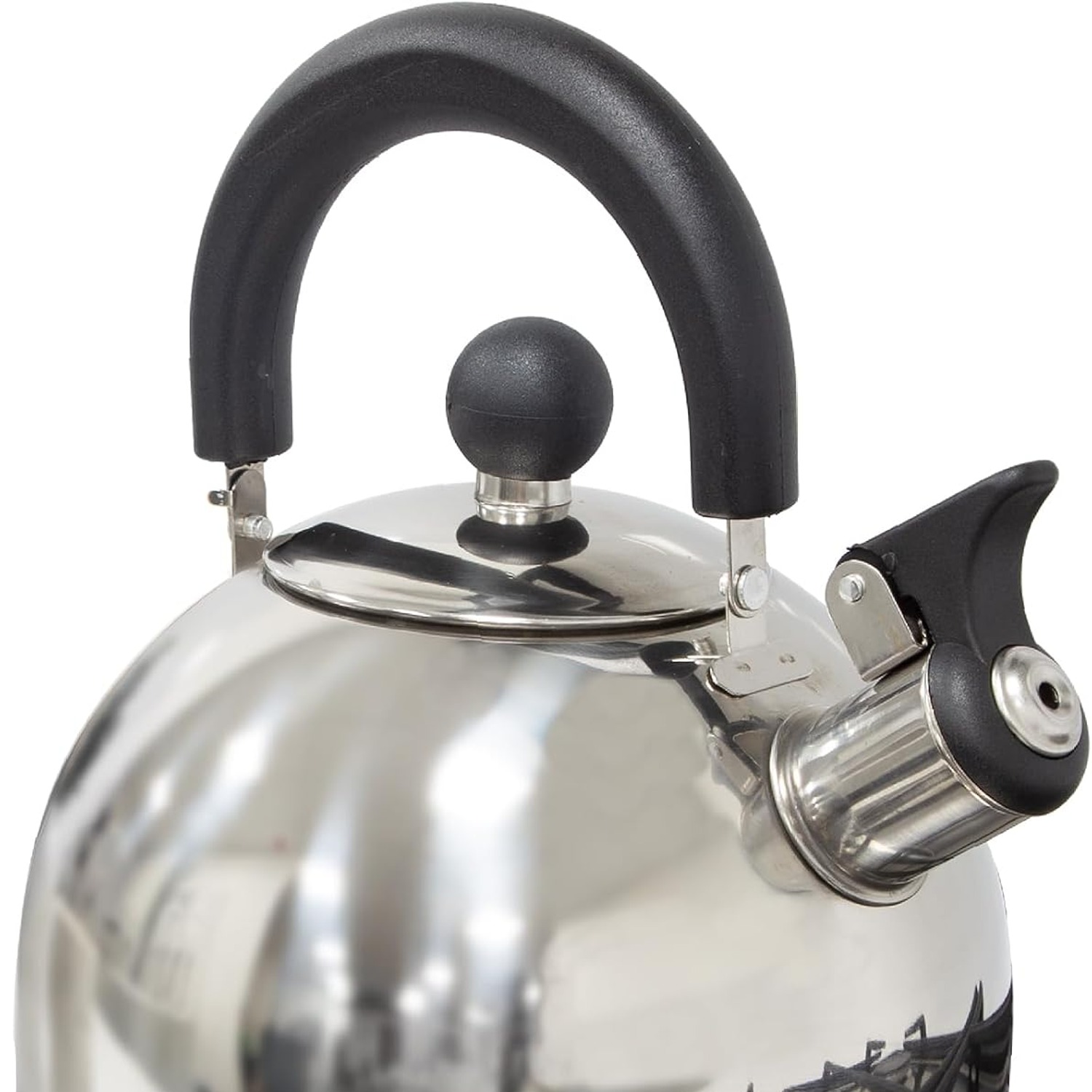
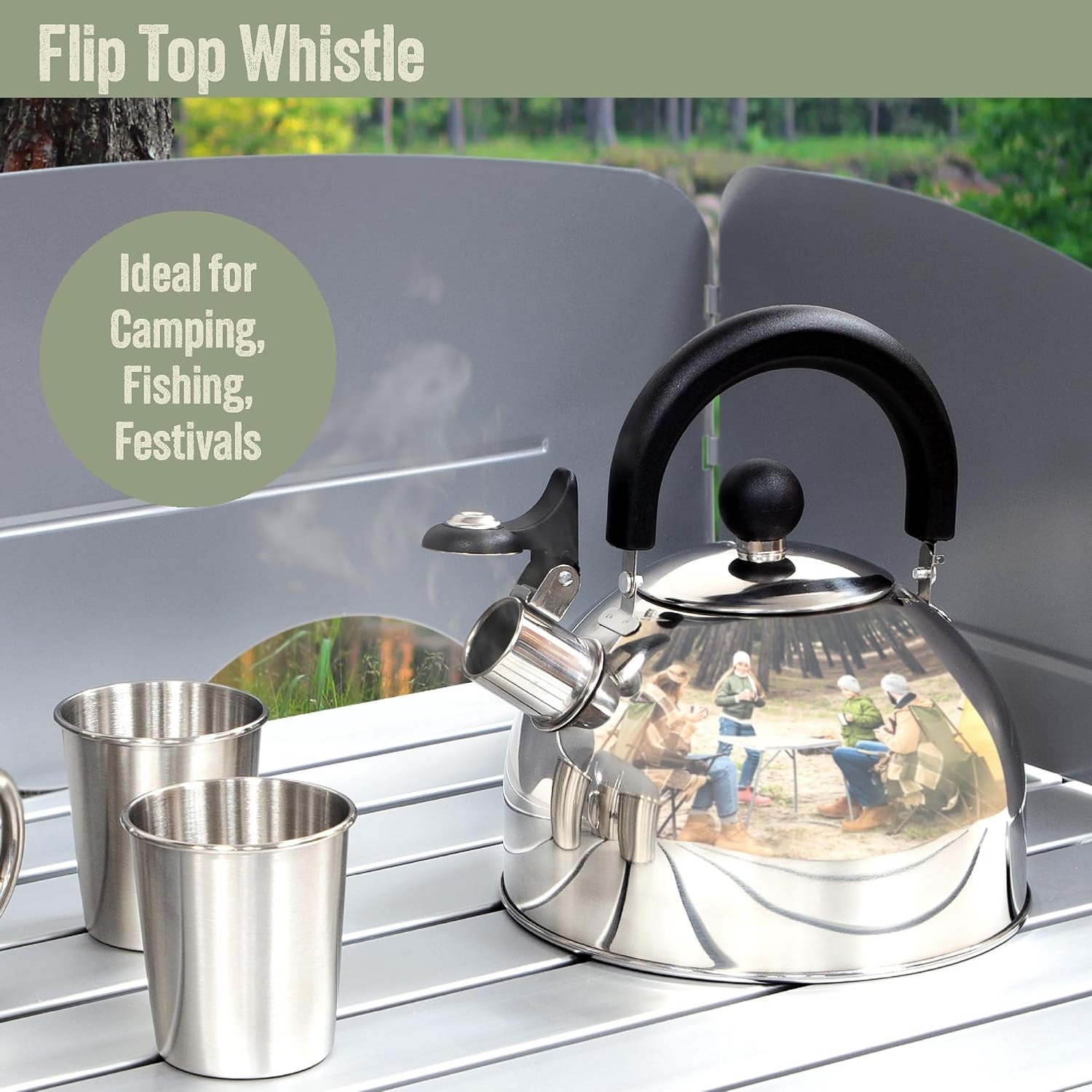
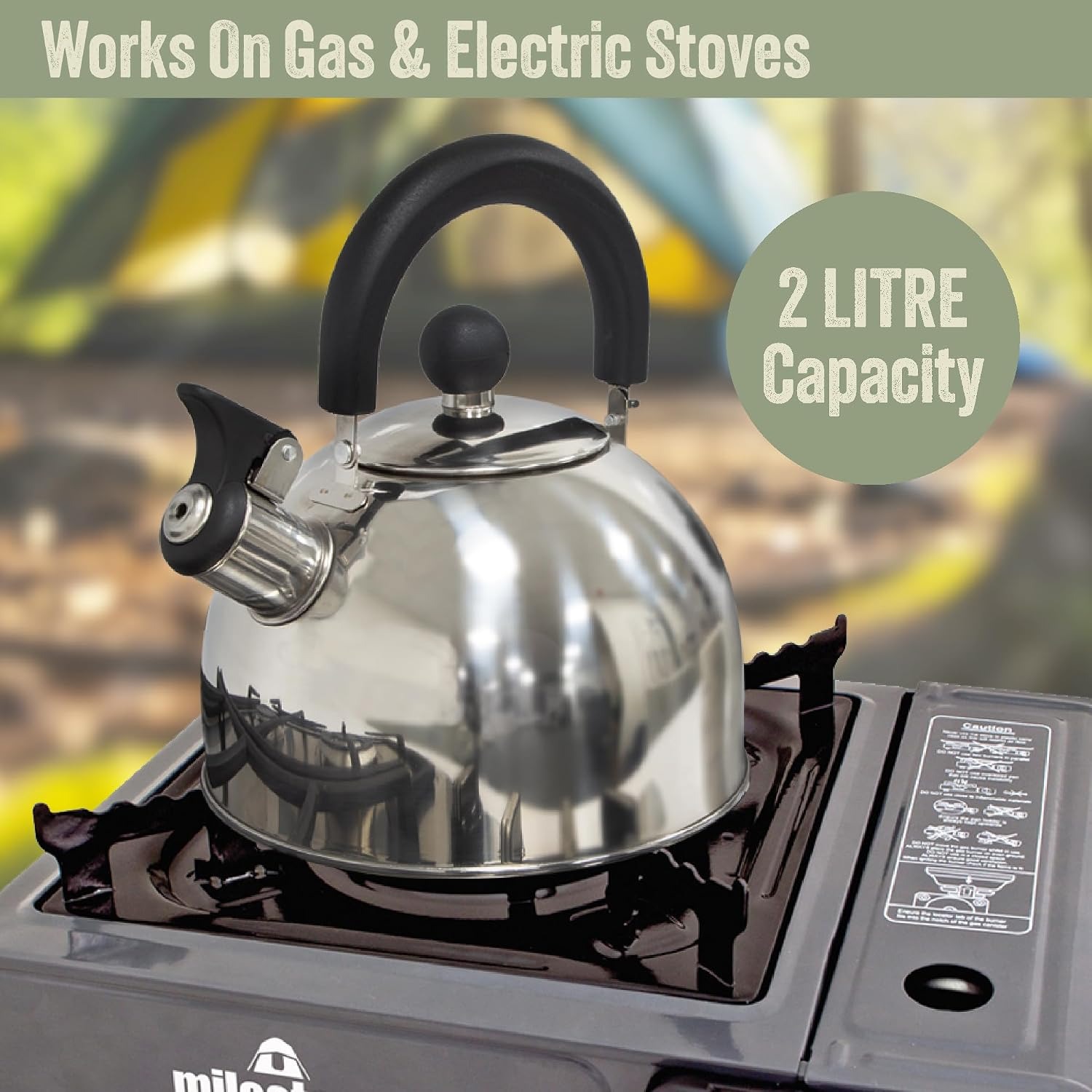
The first is the whistle. A spout whistle sounds when the water hits a rolling boil. On a windy site you often cannot hear bubbling and cannot see steam, so without a whistle you either hover over the stove or you forget and boil it dry. Boiling dry wastes gas, and gas is the one thing you cannot top up at two in the morning. This is the main reason a lot of people hunting for the best whistling kettle for camping will not go back to a lidded pan.
The second is the shape. A kettle has a narrow, controlled spout. That matters more than it sounds when you are filling a travel mug or a flask by head torch. You get the water where you aimed it.
The third is the base. This Milestone Camping kettle uses stainless steel and aluminium. Aluminium conducts heat quickly and spreads it across the whole base instead of letting one spot above the burner do all the work. Stainless steel takes the abuse of being thrown in a boot, stacked under a tent bag and dragged out of a shed six months later.
Getting the size right
Capacity is the decision most people get wrong, usually by going too small.
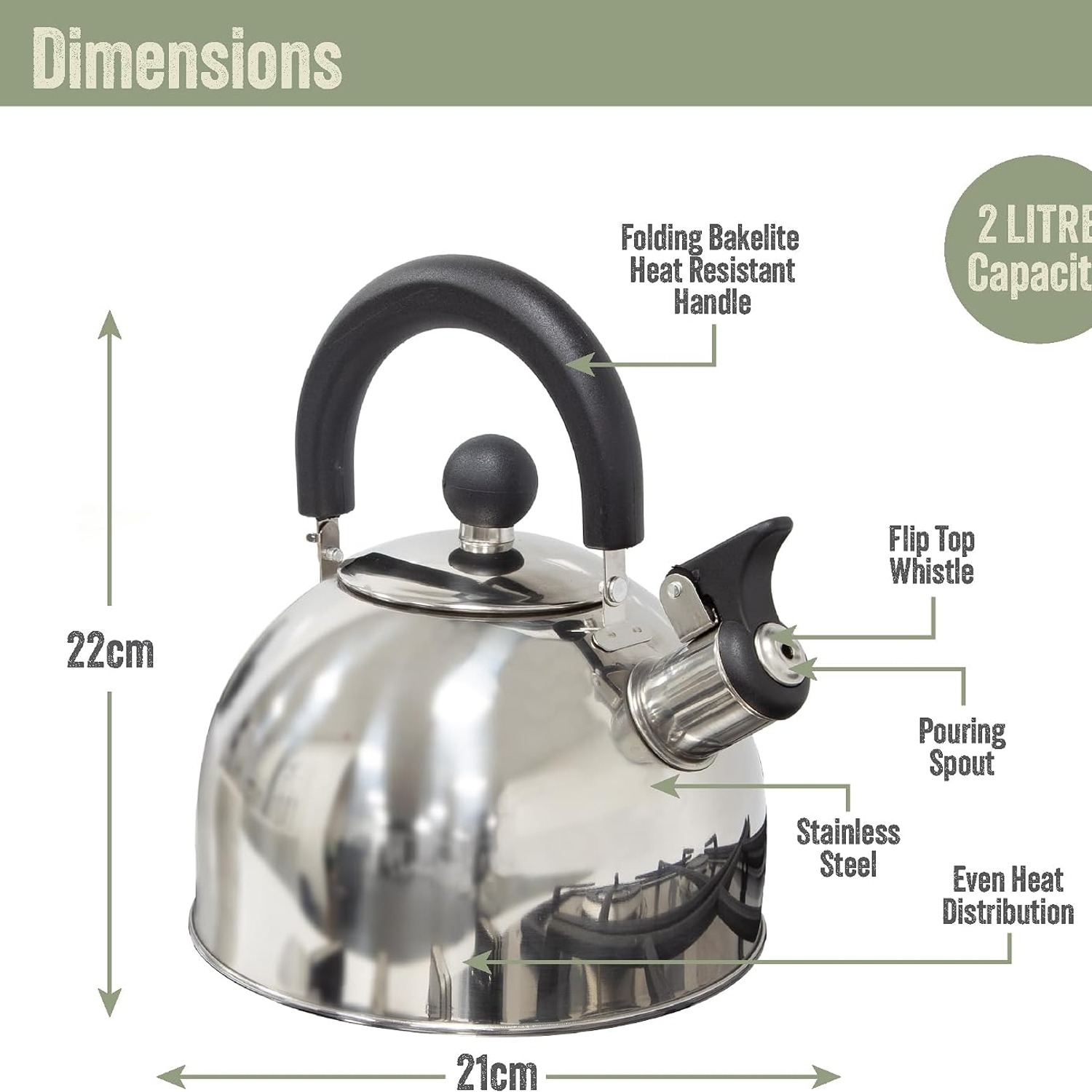
This kettle holds 2 litres. In mug terms that is around eight drinks, give or take. For a couple it is generous and means you can make drinks and still have hot water left for the washing up bowl. For a family of four it is about right for one go at breakfast. For a group of six or more you are into a second boil, but at least the kettle is doing it fast.
A smaller 1 litre kettle boils quicker and packs tighter, so it suits solo hikers and anyone counting grams. The trade off is that you will boil it two or three times for a group, which burns more gas overall than one bigger boil. If you camp with other people, the best 2 litre camping kettle usually beats the smaller one on total time and total fuel.
The listed dimensions here are 18 cm by 18 cm by 15.5 cm. Measure your camp box before you buy anything. A kettle that does not fit in the crate ends up loose in the boot, rattling against everything else.
Handles, lids and the small details that matter
The handle is Bakelite, which is a heat resistant material used on cookware for decades because it does not conduct heat the way bare metal does. You can grip it without a glove in normal use. It folds down flat, which is the detail that makes a kettle pack well. A fixed upright handle wastes space and catches on everything in the crate.
One caution with any heat resistant handle. If the kettle is sitting low over a fire and flames are licking up the side, the handle is in the fire too. Keep the flame under the base, not around the body, and use a pot lifter or a folded tea towel if you are working over coals.
The lid is stainless steel and lifts off, so you can fill the kettle properly, get a sponge inside and dry it out before it goes away. A kettle you cannot dry properly is a kettle that smells musty next trip.
Who this suits
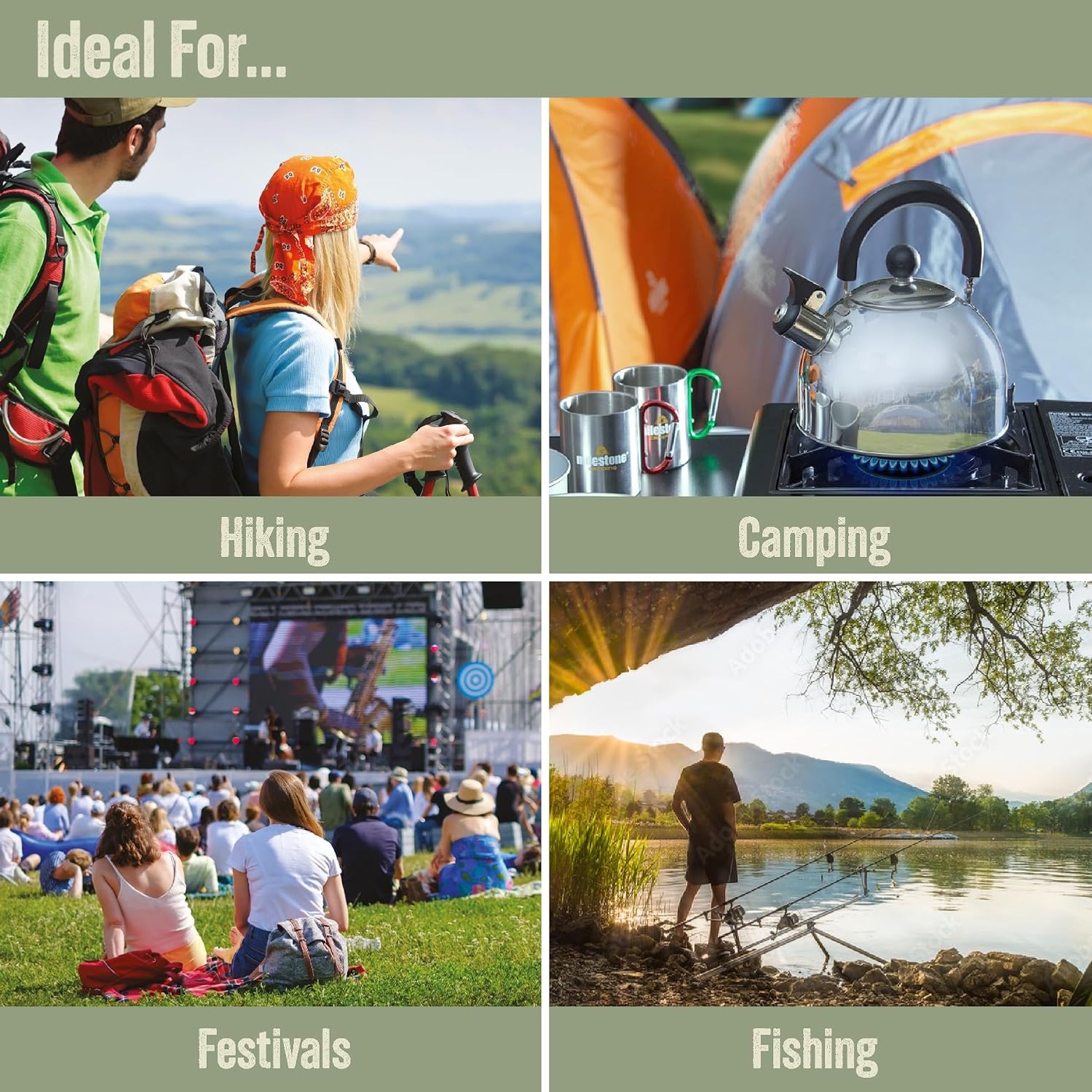
Car campers and caravanners get the most from it. You have a gas hob or a two burner stove, you are not weighing every item, and you want hot water fast for several people. The best caravan kettle is almost always a stove top one rather than electric, because it works when you are off hookup.
Fishing is the other obvious fit. Long sessions, cold mornings, a small burner on the bank. The whistle carries, which matters when your attention is on the rods. Anyone shopping for the best kettle for fishing trips wants exactly this combination of loud, tough and simple.
Then there is the non camping crowd. Workshops, garages, boats and allotment sheds all have the same problem, a heat source but no spare socket. A stove kettle solves it without wiring anything. Plenty of these end up permanently on a workshop hotplate and never see a tent.
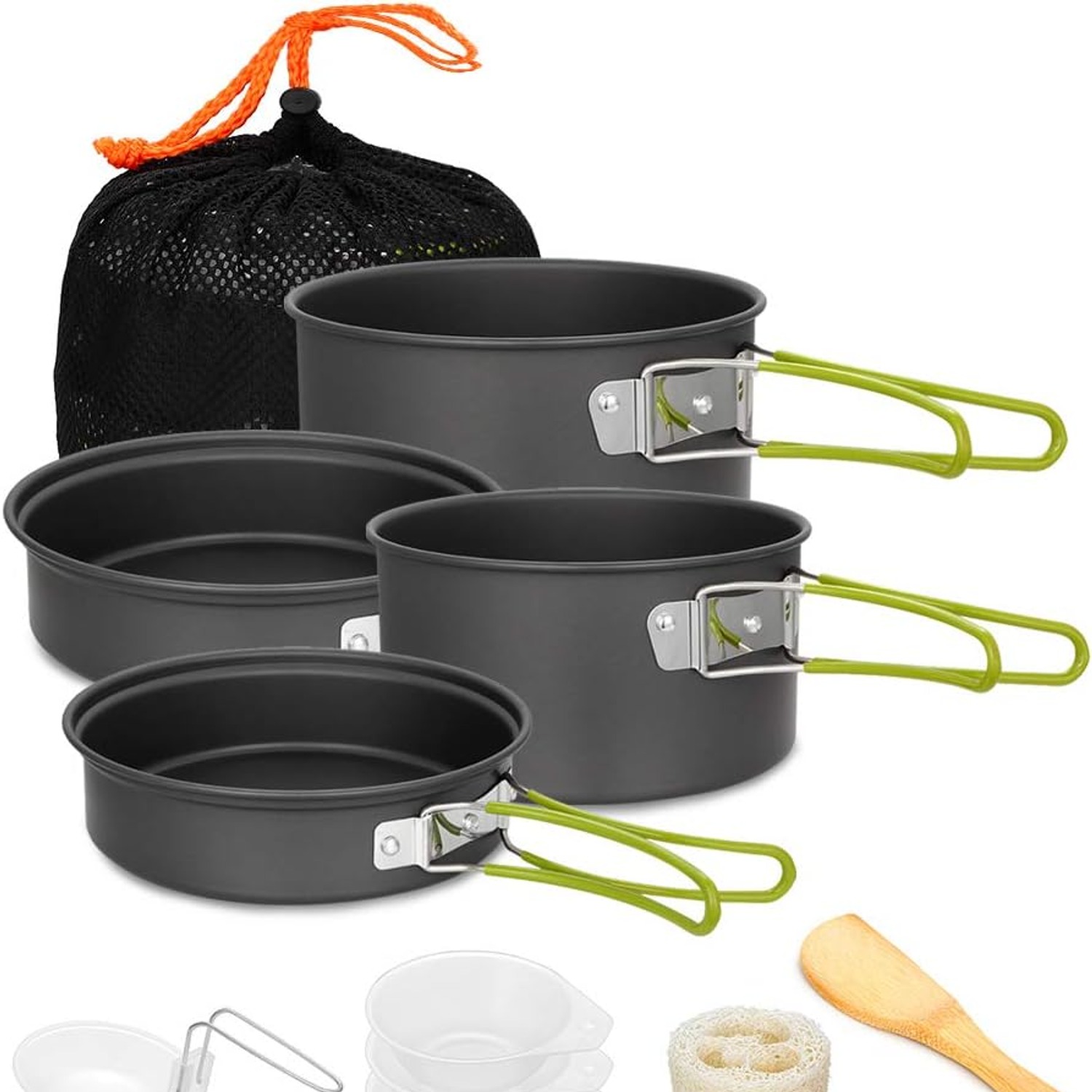
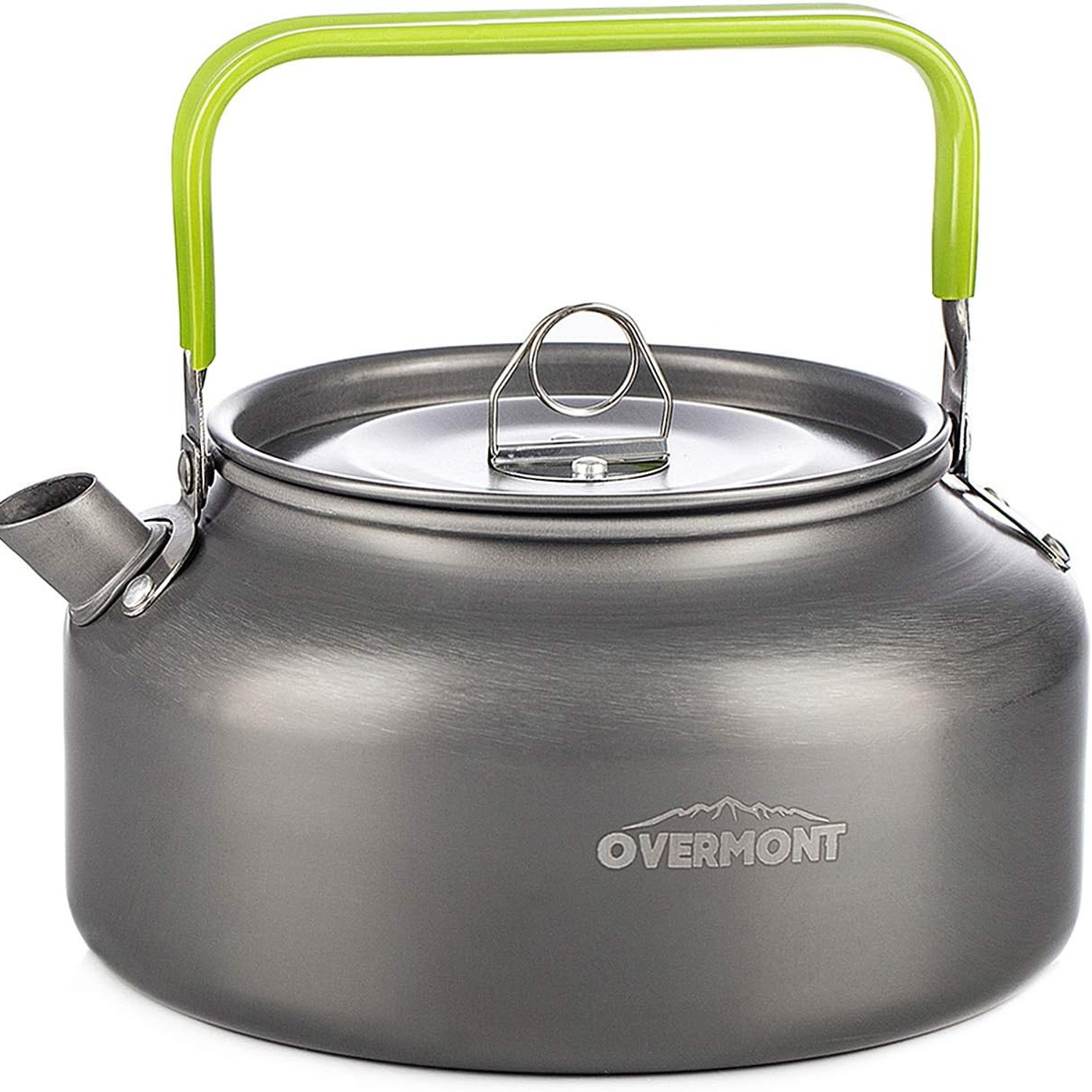
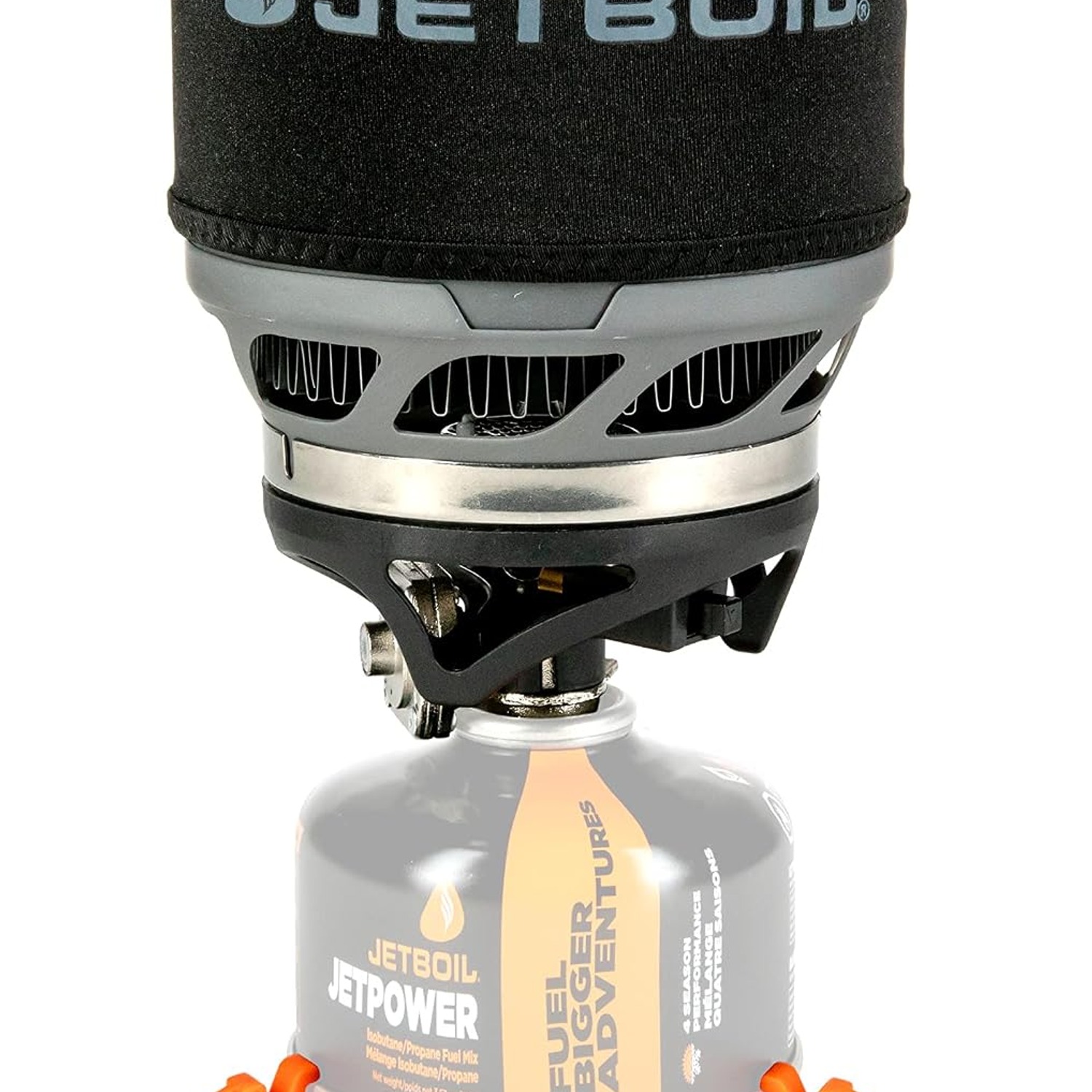
If you are a long distance backpacker counting grams, this is not your kettle. Look at a titanium mug and stove combo instead. The best lightweight camping kettle for hiking is a different product category.
Using it well
Fill to just below the spout, not to the brim. Overfill and the water pushes out through the spout as it boils, which makes a mess and can muffle the whistle.
Start with a half fill if you only need two drinks. Less water boils faster and uses less gas, and there is no prize for boiling two litres you will not drink.
Shelter the stove from wind. Wind strips heat off the sides of a kettle faster than almost anything, and a cheap windshield will cut your boil time more than any upgrade to the kettle itself.
Pour slowly for the first second or two. A full 2 litre kettle is heavy and the weight is high, so a controlled start stops it glugging.
Keeping it in good shape
This kettle is not dishwasher safe, so hand washing is the plan. Warm soapy water, a soft sponge, no steel wool on the outside finish.
The real enemy is water left sitting inside. Empty it after every use, dry it, and store it with the lid off or loose so air can move through. That single habit does more than anything else to keep a camp kettle fresh.
Hard water leaves a chalky film inside over time. Soak it with a mix of white vinegar and water for an hour, tip it out, then rinse several times until the vinegar smell is gone. Do that once or twice a season and the inside stays clean.
Let it cool fully before you fold the handle down and pack it. Hot metal against a nylon crate liner is a mark you will not get out.
Buying it as a gift
Camping kettles are an easy gift because almost nobody buys one for themselves until the first morning they wish they had. Someone setting up a new caravan, a first time camper, a person who just bought a camper van or a van conversion, they all need one. It is practical, it is not a duplicate of something they already own, and it does not depend on knowing their size or taste.
The short version
Boiling water is the job you do most often at camp, and a saucepan is a poor tool for it. A 2 litre stainless steel and aluminium kettle with a whistle, a folding Bakelite handle and a controlled spout turns a slow, splashy chore into a thirty second task you can walk away from.
Check it fits your crate. Hand wash it and dry it properly. Keep flames under the base rather than around the handle. Do that and this is the kind of kit that lasts years of trips, then retires to the workshop hotplate and keeps going there.