
The complete guide
How To Choose A Pop Up Beach Tent That Actually Gets Used
The problem with beach days
Most people do not give up on the beach because of the sand or the drive. They give up because of the sun. There is a point, usually around one in the afternoon, where the heat stops being pleasant and becomes something you are enduring. Kids get cranky. Someone's shoulders go pink. The umbrella tips over for the fourth time and skitters down the sand while half the family chases it.
Shade fixes almost all of that, but only if it is easy. A shelter that takes ten minutes of swearing and pole threading will sit in the garage. A shelter that opens by itself gets taken everywhere.
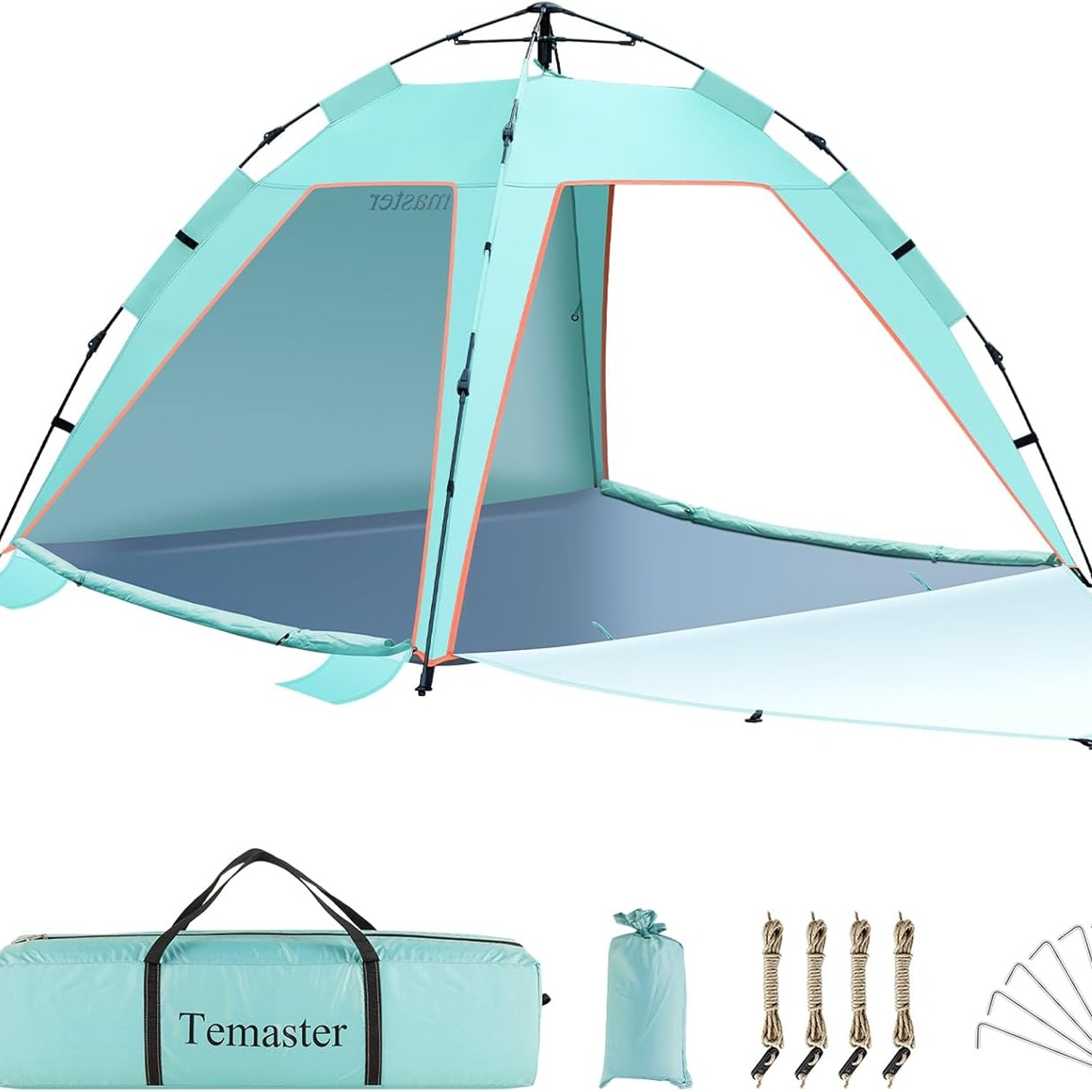
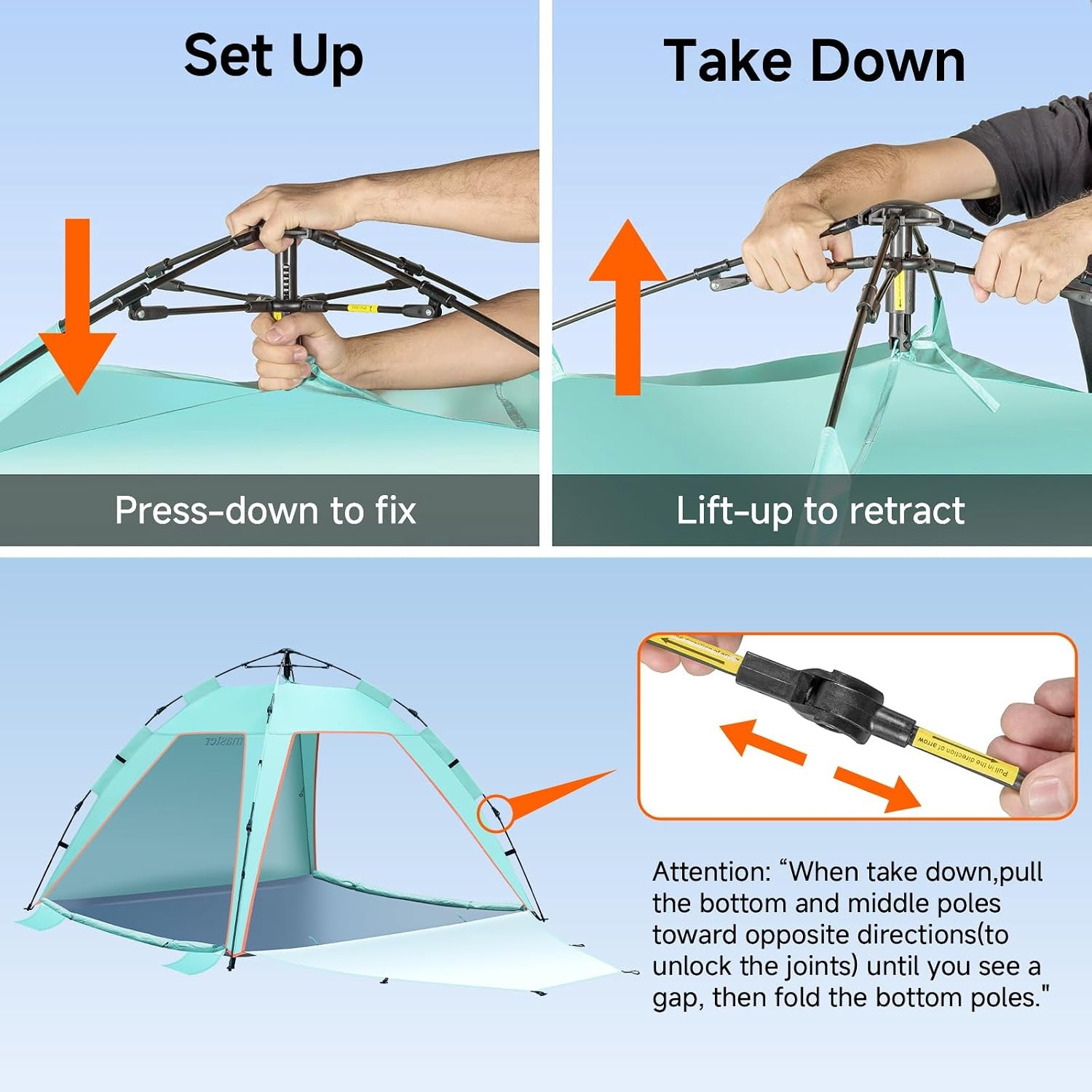
That is the simple argument for an automatic pop up beach tent. The fibreglass frame on this one is hydraulic, meaning it does the structural work when released. You take it out, let it open, anchor it, and you are sitting in shade before the towels are even unrolled. When it is time to go, the same motion in reverse packs it down.
How the automatic frame works
Traditional dome shelters use poles you feed through fabric sleeves. Pop up shelters use pre-tensioned frames that hold stored energy, so they spring to shape without any input beyond release.
This one uses fibreglass rods. Fibreglass is a sensible choice for the beach. It flexes rather than kinks, it does not corrode in salt air the way untreated steel can, and it keeps the packed weight reasonable for the walk from the car. There is a trade-off, fibreglass is less rigid than aluminium, which is partly why anchoring matters so much. The guylines and wind strips are not optional extras. They are the thing that turns a light frame into a stable one.
Learning the fold is worth five minutes at home before your first trip. Every pop up shelter has a specific folding motion, and figuring it out in front of an audience on a windy beach is nobody's idea of fun. Do it once in the backyard and it becomes muscle memory.
Shade that is actually doing something
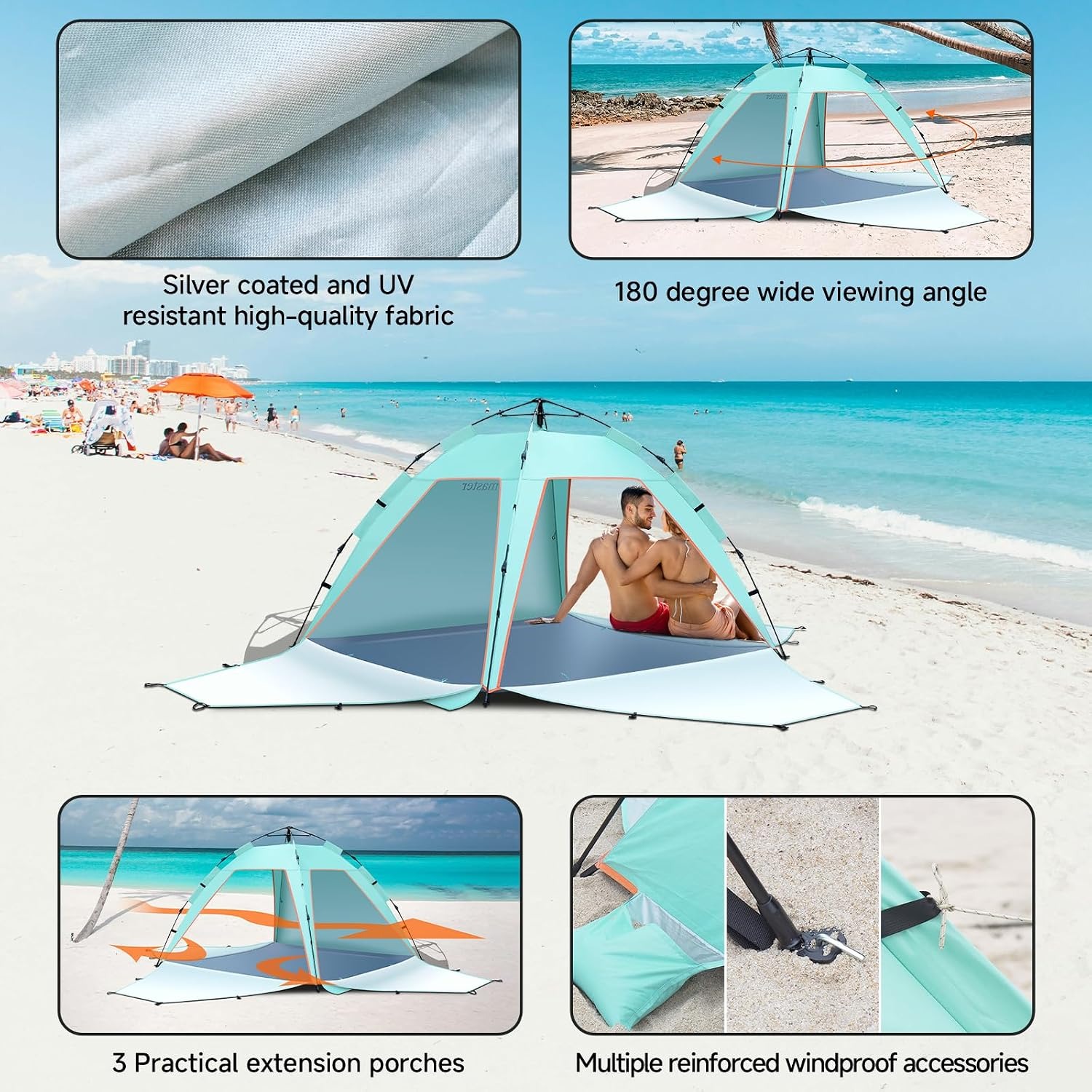
UPF 50+ is the rating listed for this canopy. UPF works like SPF but for fabric, and 50+ means the material blocks the overwhelming majority of ultraviolet light that reaches it. That is a meaningful number, not marketing decoration.
Plenty of fabric feels shady while letting UV through. A thin cotton sarong strung between two chairs will dim the light and do very little for your skin. That is why the rating matters more than how dark the shelter looks inside.
A couple of practical notes. UV bounces off water and pale sand, so some reflected light still reaches you from the sides. Shade reduces exposure, it does not eliminate it. Keep sunscreen on anyone who is moving in and out, and remember that the sun travels, so the shelter that was perfectly positioned at eleven will need a nudge by three.
Why three doors change the feel
Most budget beach shelters are half domes with one opening. They work, but they trap heat and they cut off your view of the water, which is a strange thing to do at the beach.
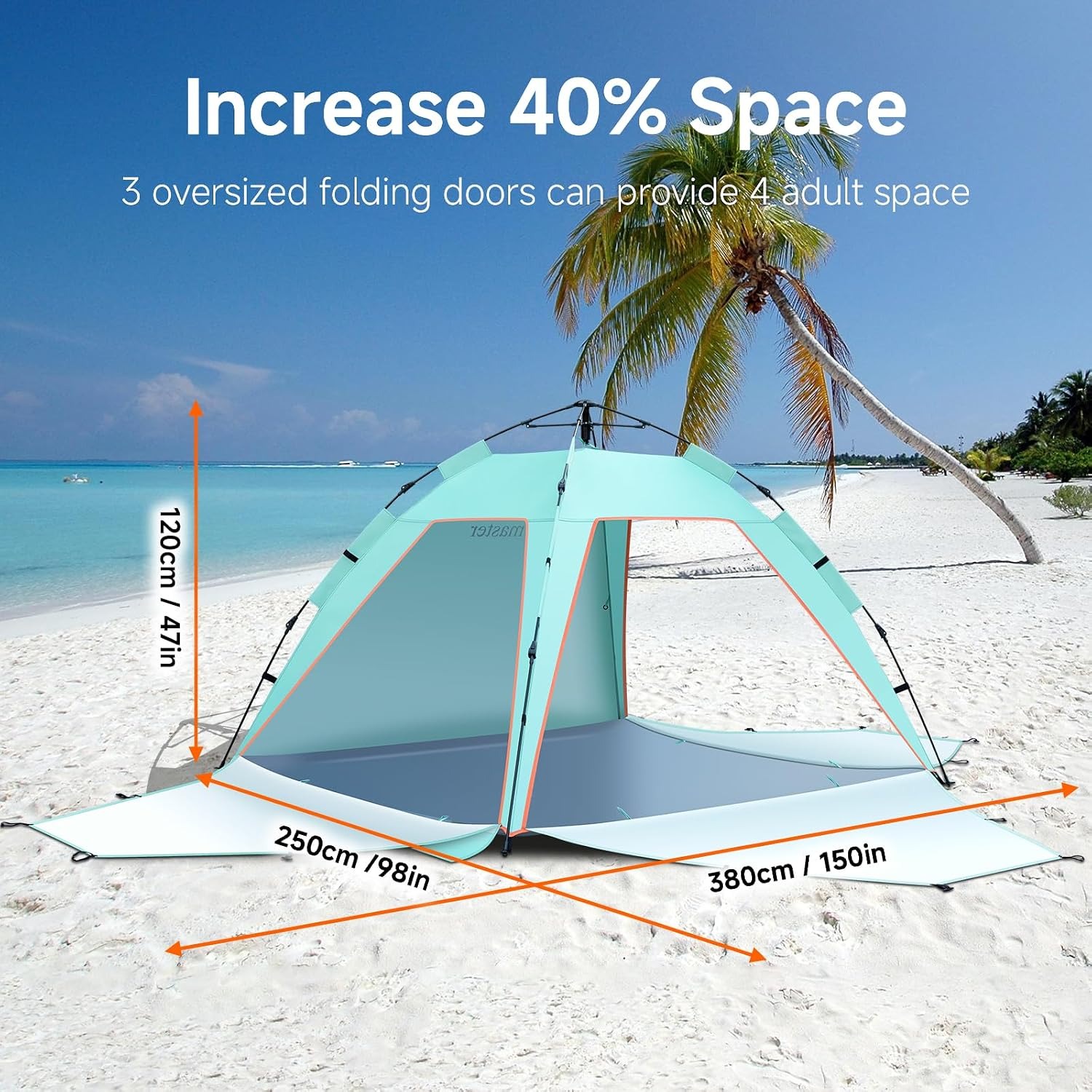
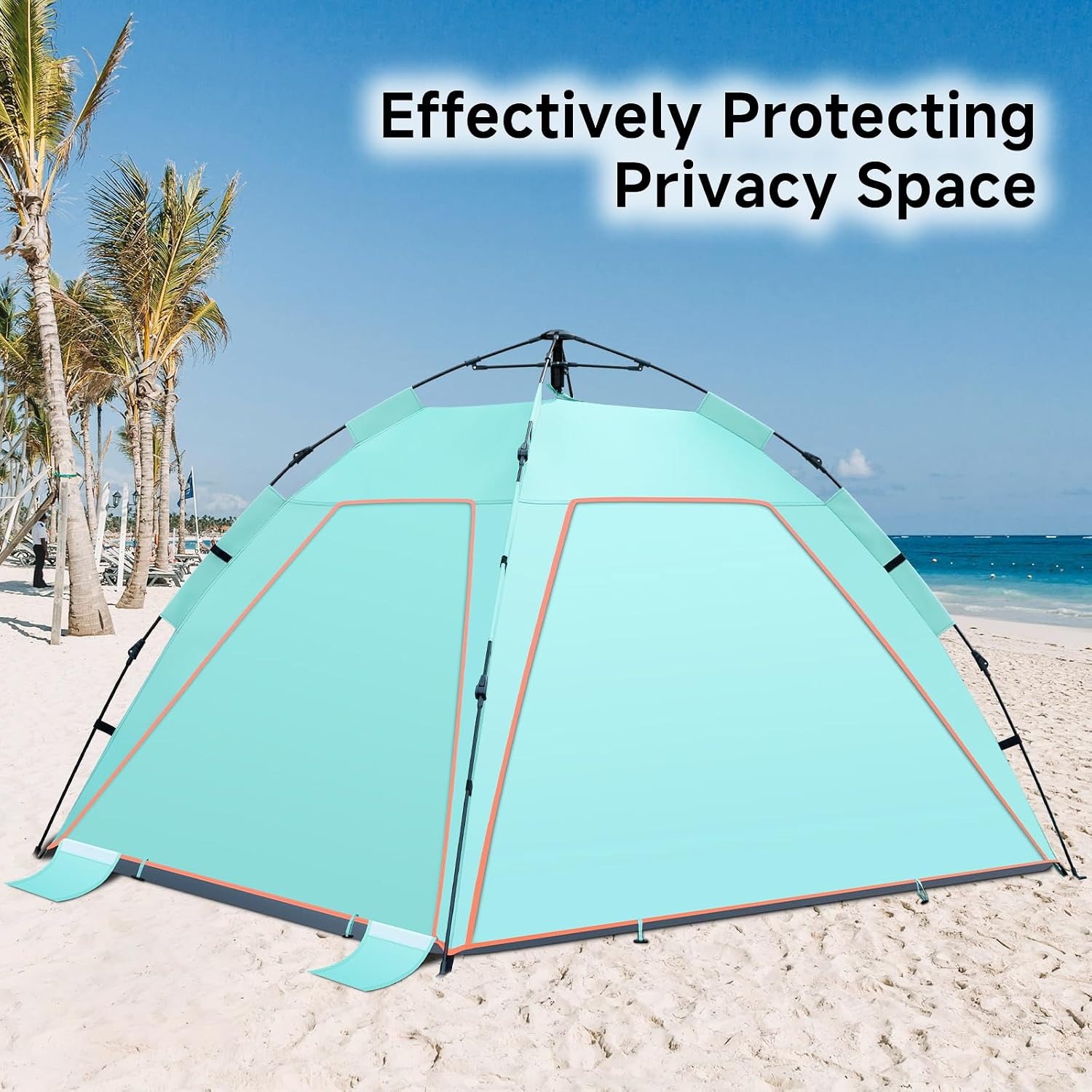
This design uses three expandable porch doors. Open all three and air moves right through, the inside stays cooler and you can watch kids in the shallows without craning your neck. Close them and the shelter becomes private, which is the bit parents appreciate. Changing a toddler out of wet swimmers, settling a baby for a nap or just getting out of a sharp wind all become easier when you can seal the space.
Being able to switch between those two states during a single afternoon is more useful than it sounds. Morning sun from one side, afternoon wind from another, and you adjust by opening or closing a panel rather than moving the whole shelter.
Who this suits
Families with small children get the most from it. The combination of a UPF 50+ canopy, enclosed privacy and 190 by 170 centimetres of floor space solves the nap problem, the changing problem and the sunburn problem at once.
It also works well for groups of friends who want a base. Bags, food and anything you would rather not leave baking in the sun have a home, and people rotate in and out of the shade between swims.
Anyone sensitive to heat will appreciate the ventilation. If you have an older relative who tires in the sun, or you have had a skin check that made you more careful, having a cool spot to retreat to extends how long you can stay out comfortably.
Who it does not suit is campers. The record is clear that it is recommended for beach use and that it is not water resistant. Use it for days out, not nights out.
How to choose between sizes and styles
Start with how many people you actually bring, not how many you might one day bring. A shelter that is too big is harder to anchor and more affected by wind. A shelter that is too small gets abandoned because nobody wants to be the one sitting with their legs in the sun.
Next, think about your typical spot. Soft dry sand means you need weighted anchoring, so sandbags, an esky or bags of gear in the corners. Grass or firm damp sand holds pegs better. The best beach tent for windy days is the one you have taken five minutes to anchor properly, regardless of brand.
Then look at height. 120 centimetres means adults can sit upright comfortably, which is the difference between a shelter and a crawl space. Low pods look compact in the bag and feel claustrophobic in use.
Finally, be honest about setup patience. If the answer is low, automatic is the only format worth considering. The best automatic beach tent is simply the one you will bother taking.
Looking after it
Beach gear lives a hard life. Salt, sand and UV are all working against the fabric. The good news is that care is simple.
Shake out sand before folding, every time. Grit left inside grinds against the coating and frays stitching over months. Rinse salt off with fresh water when you get home, particularly after a windy day when spray has coated everything.
Let it dry completely in the shade before it goes in the bag. Packing damp fabric is the single most common way people ruin a shelter, and musty mildew marks are very hard to undo.
Store it somewhere dry and out of direct sun, with the pegs and anchors in the same bag. Future you will be grateful when you arrive at the beach with everything you need.
And know when to pack down. If the wind is lifting the frame or the guylines are straining, take it down. No fabric shelter survives being left pegged in a gale, and that is not a fault, it is physics.
The short version
An automatic pop up beach tent earns its keep through speed. This one opens on a hydraulic fibreglass frame with no assembly, gives you 190 by 170 by 120 centimetres of space and shades everyone under a UPF 50+ polyester canopy. Three expandable porch doors let you choose between breeze and privacy, and four guylines plus reinforced wind strips keep it planted when properly anchored.
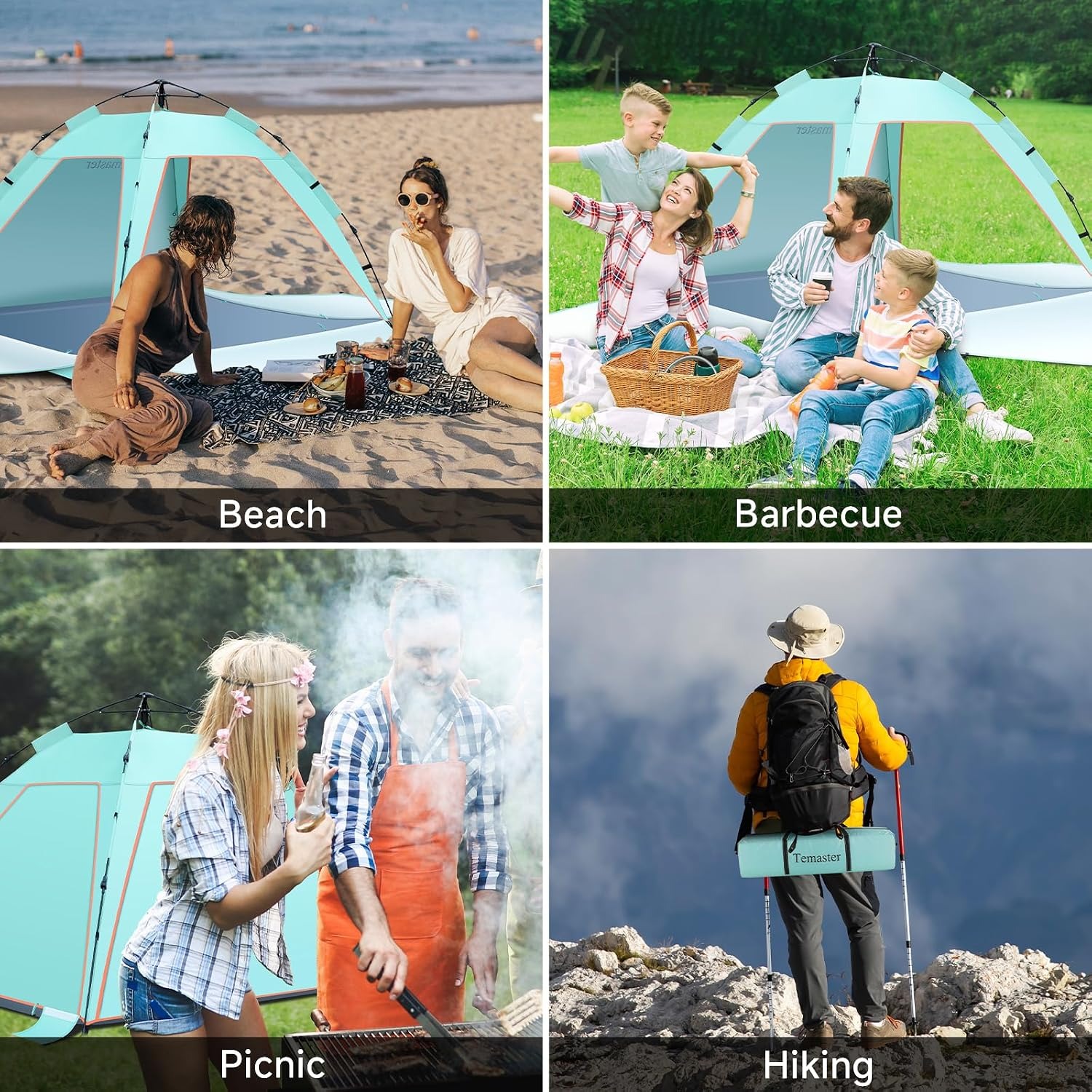
It is a day shelter, not a camping tent, and it is not water resistant. Used for what it was built for, which is beaches, parks and picnics, it turns the hottest part of the day from something you endure into something you enjoy. Anchor it well, rinse it off, dry it before storage, and it will be the first thing in the boot every summer.