

The complete guide
Choosing Heavy Duty Tent Pegs: A Practical Buyer's Guide
The problem with the pegs in the bag
Almost every tent sold comes with a small bundle of thin wire pegs. They cost the manufacturer very little, they weigh nothing, and on a soft campsite lawn in spring they do the job perfectly well. The trouble starts the first time you pitch somewhere real.
Dry summer clay. A gravel pad at a caravan park. A paddock laced with old tree roots. Hit any of those with a wire peg and it bends into a question mark halfway down, or it skips sideways under the mallet and ends up at a useless angle. You straighten it, try again, and the metal fatigues a little more each time. By the end of a long weekend you have four good pegs, three mangled ones, and a corner of the tent flapping.
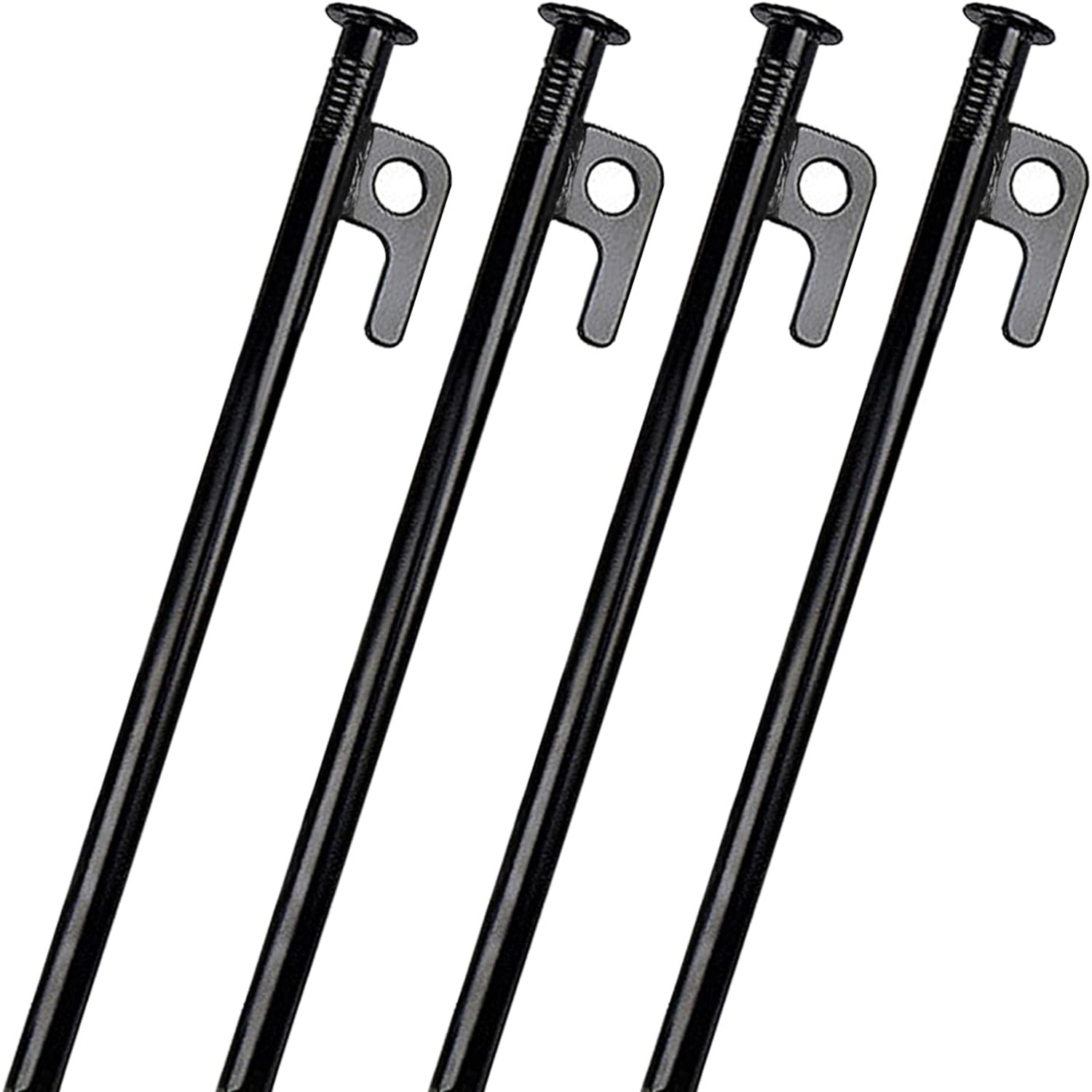
Heavy duty tent pegs fix that specific problem. They are thicker, made from stronger metal, and shaped so the force of the mallet travels down the shaft instead of folding it. You carry a bit more weight. In exchange, you pitch faster, your tent holds its shape in wind, and you stop replacing pegs every season.
What makes a peg heavy duty
Three things matter: the metal, the thickness, and the shape of the ends.
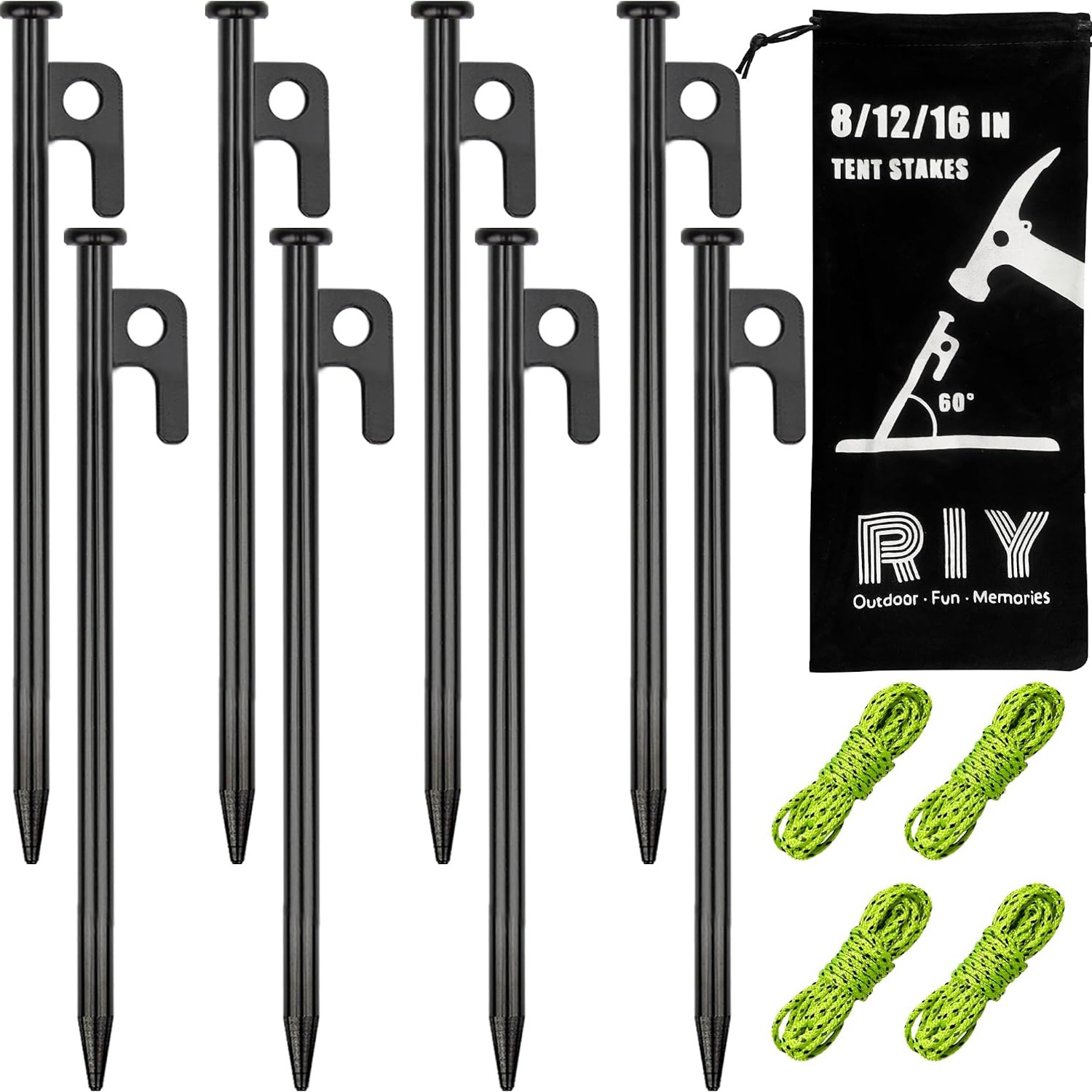
Forged steel is the material used here. Forging means the metal is shaped under pressure rather than cut or cast, which lines up the internal grain and makes the finished peg far more resistant to bending. It is the same reason a forged spanner outlasts a cheap pressed one. Cast or stamped pegs can crack under a sharp blow. Wire pegs just bend.
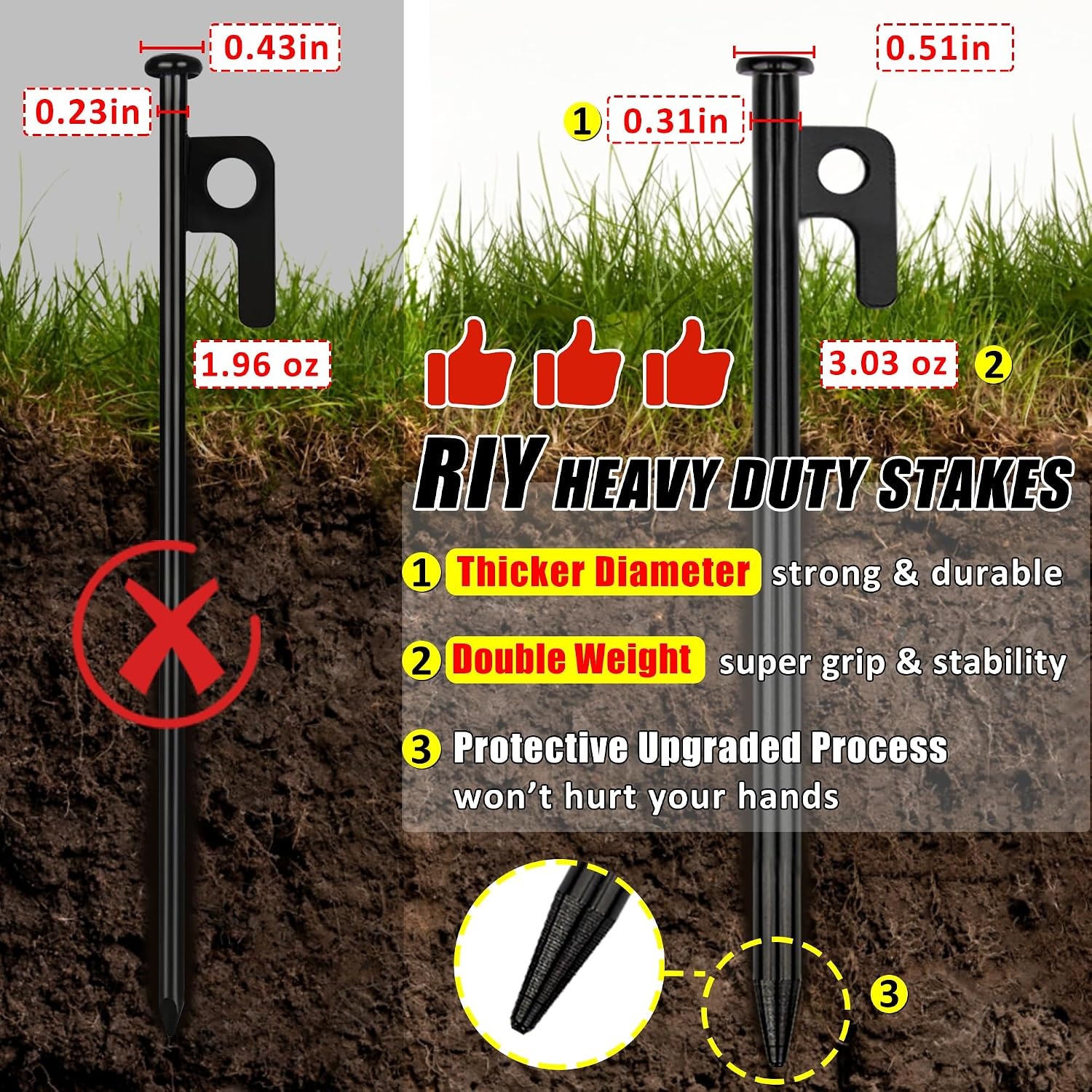
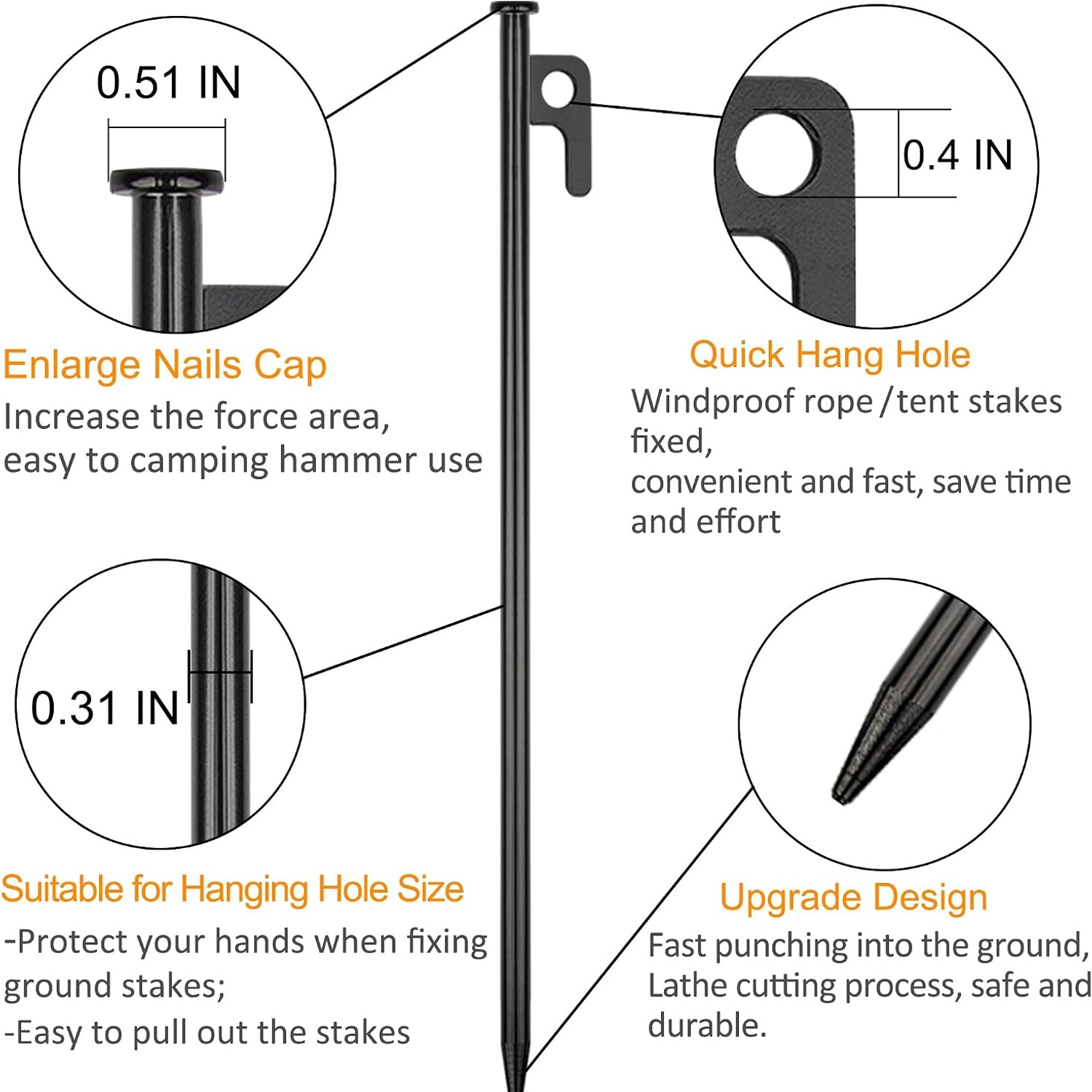
Thickness follows. These stakes are 1.5 cm at the widest point, which gives the shaft enough body to shrug off a mallet strike and enough surface area to grip the soil around it. A peg holds partly by friction along its length, so a fatter peg in the same soil generally holds harder than a thin one.
Then the ends. The point is tapered so it starts cleanly and parts compacted soil instead of compressing it. The head is broad and shaped, which does two jobs. It gives the mallet a target you can actually hit in low light, and it gives you something to hook when the peg has to come back out. Pegs with a plain rounded top are miserable to extract from clay.
Is 20 cm the right length
These are 20.3 cm long, listed as 8 inches. That length is the sensible default for a reason.
Shorter pegs, around 15 cm, are quick to drive and light to carry, but they do not have much bite in soft or sandy ground. Longer pegs of 25 cm and up hold brilliantly in loose soil, but they take real effort to drive into hard pack and real effort to pull out again. They also take up more room in the bag.
At 20 cm you get something that works in most conditions. Enough length for grass, soil and gravel pitches. Short enough that you are not hammering for a minute per peg. If your usual sites are soft, loamy or sandy, you may eventually want a few longer stakes as well, but you would still start here.
Who these suit
Car campers get the most out of a set like this. When the gear travels in a boot rather than on your back, the extra 762 g across eight pegs is irrelevant, and the reliability is worth a lot.
Tarp users are the next group. A tarp converts wind into pull on a small number of anchor points, so each one is doing serious work. Steel stakes handle that load. The same goes for anyone pegging an awning off the side of a van or a camper.
Festival and event camping is another good fit. Ground at festival sites is often churned, compacted or full of buried debris, and you frequently pitch in a hurry. Pegs that do not bend save a lot of frustration at eleven at night.
Market traders and anyone with a pop-up canopy should keep a pack in the van. Gazebo legs lift in surprisingly mild gusts, and proper steel anchors through the leg plates make a visible difference.
Gardeners are the group people forget. The listed uses include landscape fabric and plant support, and that is not marketing. These work as landscape fabric pins through weed matting, as garden edging stakes holding timber or steel strip in line, and as anchors for netting over a vegetable bed.
The one group who should think twice is lightweight hikers. If you are weighing your kit in grams, a full set of steel is more than you need. Carry two or three for the most loaded corners and keep titanium or alloy for the rest.
Pitching properly
Good pegs still need good technique.
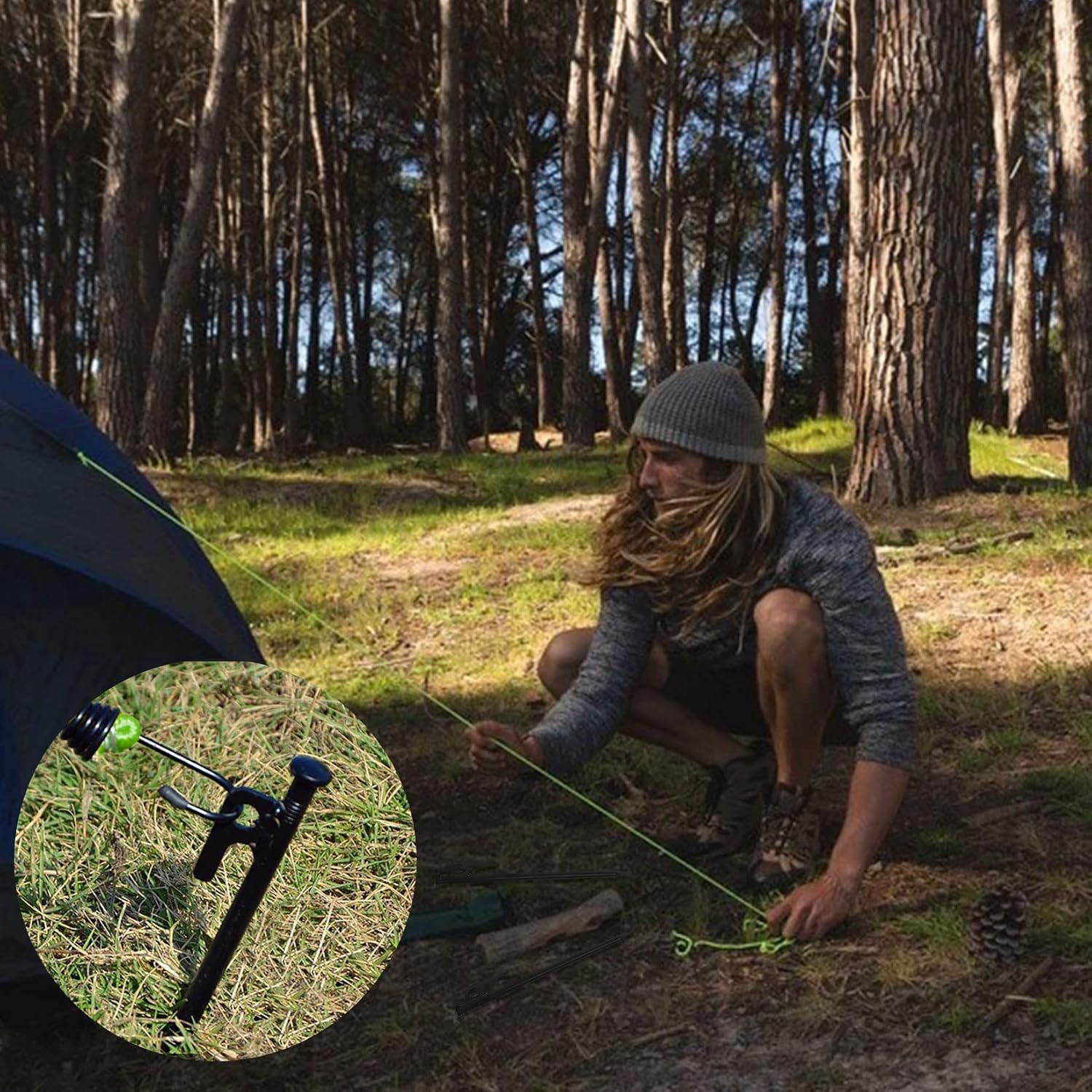
Angle each peg about 45 degrees away from the direction of pull, so the guy line tugs against the length of the stake rather than straight up along it. Driving a peg vertically is the single most common pitching mistake, and it halves your holding power.
Drive until the head is close to ground level. Leaving three or four centimetres proud creates a lever that wind can work against, and it turns the peg into a trip hazard.
Use short, repeated strikes rather than big swings. You keep better aim, the peg travels straighter, and you are less likely to glance off the head. A rubber or steel camping mallet is the right tool. A rock is not, because it will mushroom the head and eventually hurt you.
If a peg stops dead after a few centimetres, you have found a stone or a root. Pull it, move ten centimetres, and try again. Forcing it is how pegs get bent.
To remove, hook the head with a peg puller, a spare peg or a short cord loop. Rock it side to side first to break the soil seal, then lift straight up. Pulling at an angle is how heads get deformed.
Looking after them
Steel pegs last for years if you give them ten minutes of attention a season.
Knock the soil off before they go in the bag. Wet clay left on a peg holds moisture against the metal for months. Let them dry properly rather than sealing damp pegs inside a tent bag over winter, which is the fastest route to surface rust.
Keep them together in a dedicated pouch. Loose pegs rattling around a boot blunt their points and scratch other gear. If a point does go dull after a season on stony ground, a few strokes with a flat file restores it.
Black pegs vanish in grass. A loop of bright cord through each head takes five minutes and saves you crawling around at pack-up.
The short version
Thin wire pegs are fine on soft lawn and useless on anything harder. This eight pack of forged steel stakes is the straightforward upgrade: 20.3 cm long, 1.5 cm wide, 762 g for the set, with a sharp point for starting and a shaped head for hitting and pulling.
Eight is enough for a small tent or a tarp kit, so buy two packs for a family tent. They are too heavy for gram-counting hikers and ideal for anyone who drives to the site. And when camping season ends, they move straight into the garden for weed matting, edging and plant supports, which is more than you can say for the pegs that came in the bag.