
The complete guide
How to Choose a Portable Camping Shower That Actually Works
The problem with getting clean outdoors
Camping is great until the third day. Salt dries on your skin, dust settles into your hair, sunscreen and sweat mix into something you would rather not sleep in. Campground showers help when they exist, but plenty of the best spots have no facilities at all, and the ones that do often have queues, coin metres or water that runs cold the moment you have soap in your eyes.
The old fixes are not much better. A solar bag hung in a tree gives you a slow trickle and goes cold by late afternoon. A bucket and a jug is fine for a rinse but hopeless for washing hair. Baby wipes are a stopgap. What most people actually want is water running over them at a steady rate for two or three minutes, somewhere private, without needing plumbing.
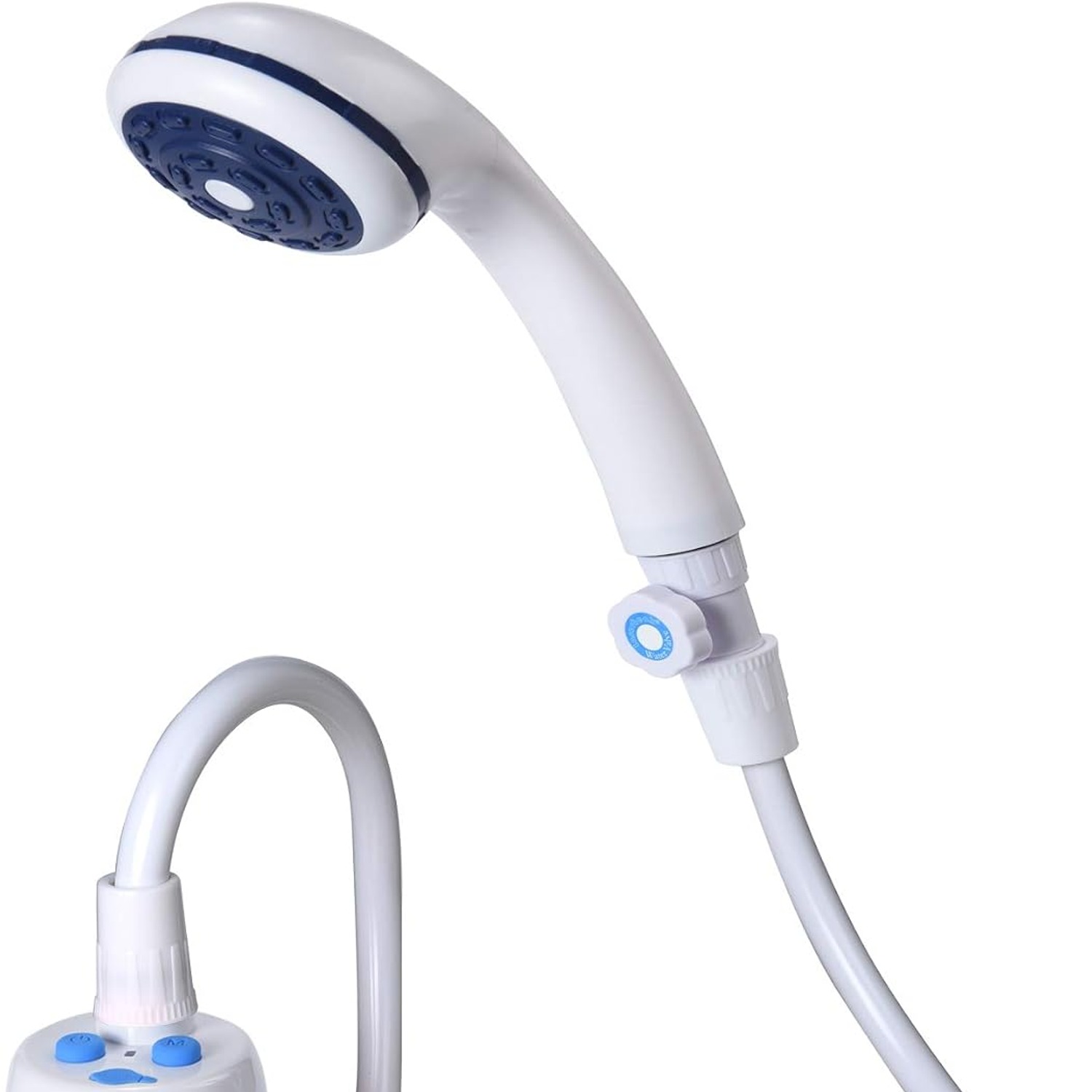
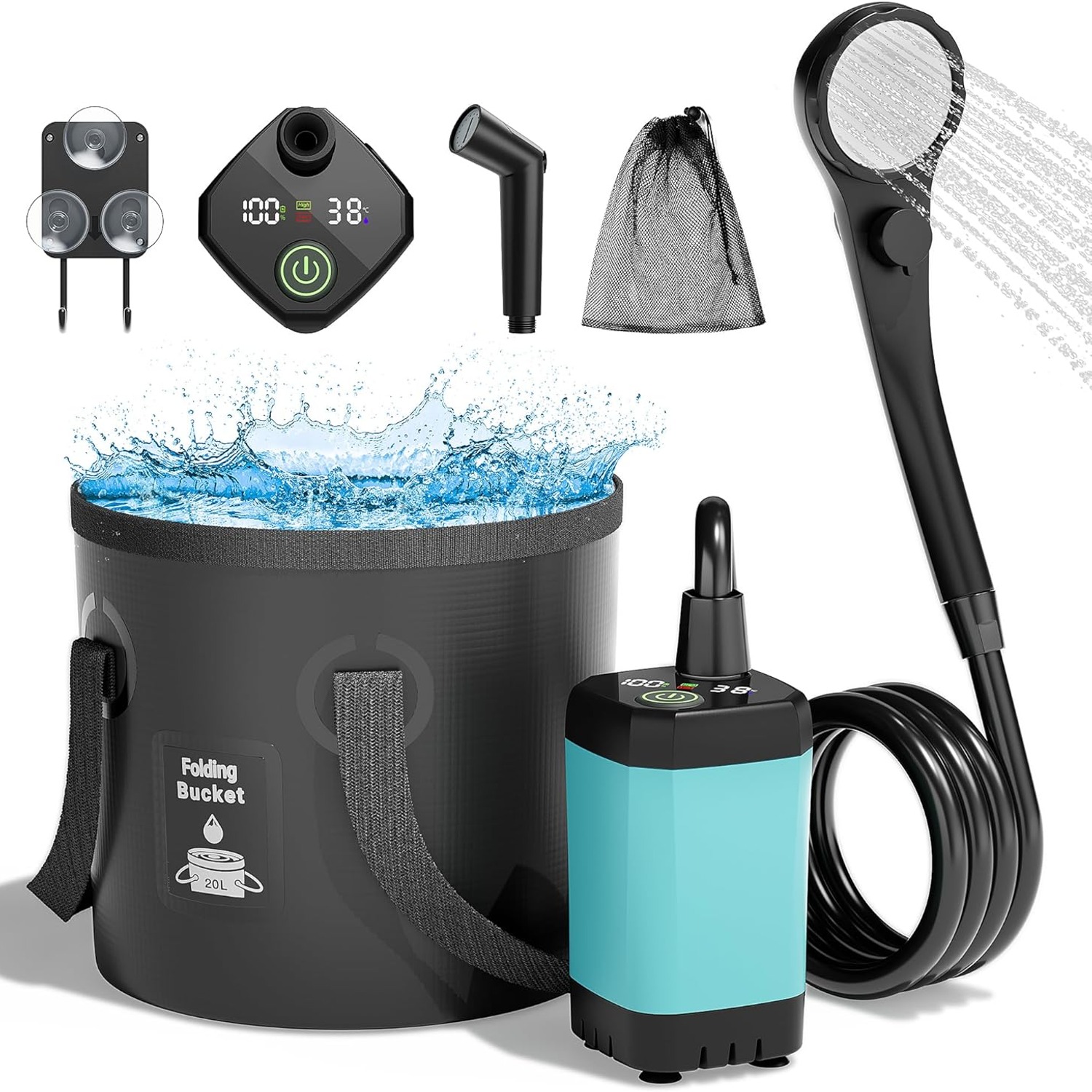
That is the gap a portable camping shower fills. It is a small pump with a hose and a shower head. The pump sits in whatever water you have, and the battery gives it enough push to feel like a real shower rather than a dribble.
How a battery shower pump works
The design is simple on purpose. A submersible pump drops into a bucket, jerry can or collapsible container. It draws water in through a filtered inlet, pushes it up a hose, and out through a shower head. A rechargeable battery inside the pump unit powers the motor, so nothing needs to be plugged in while you wash.
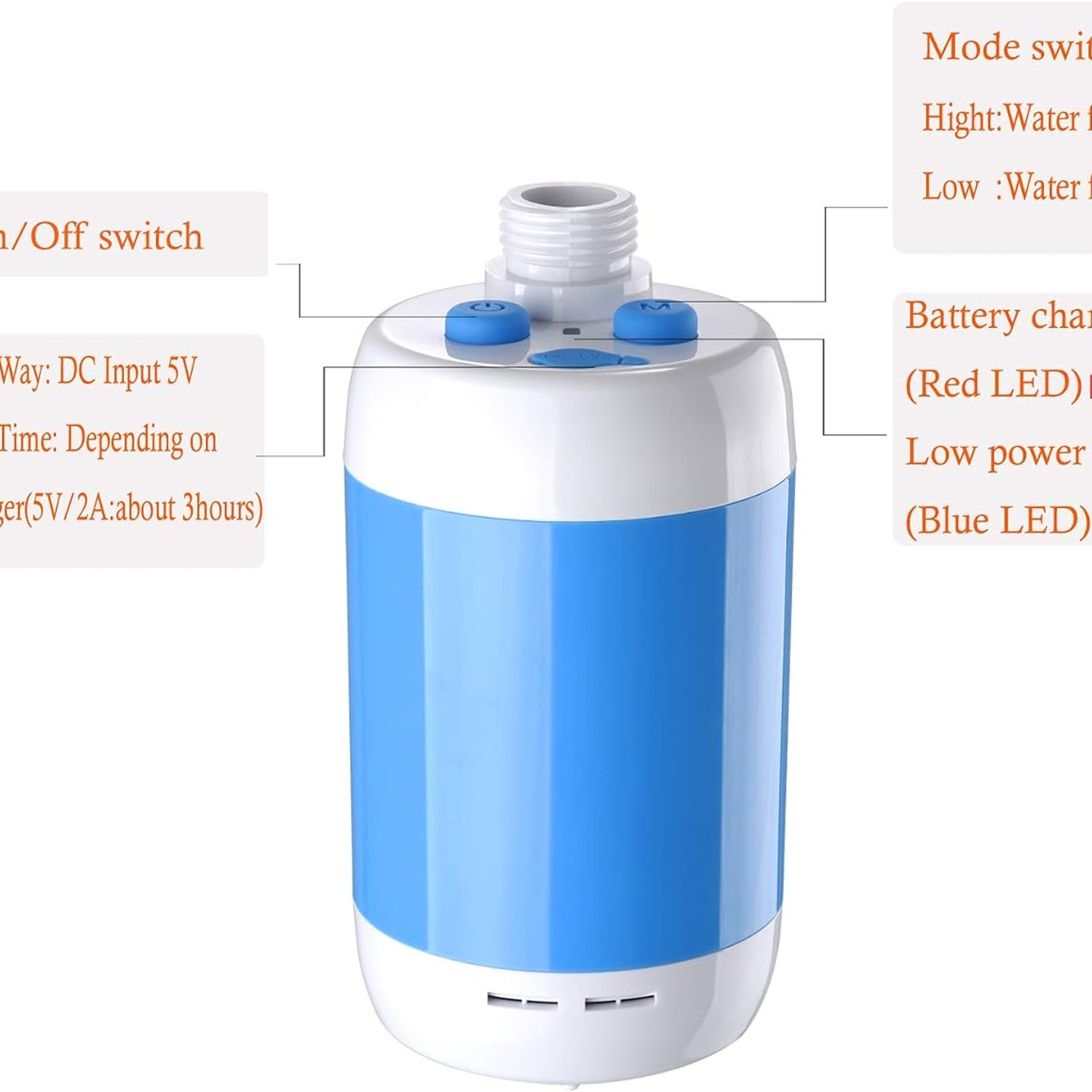
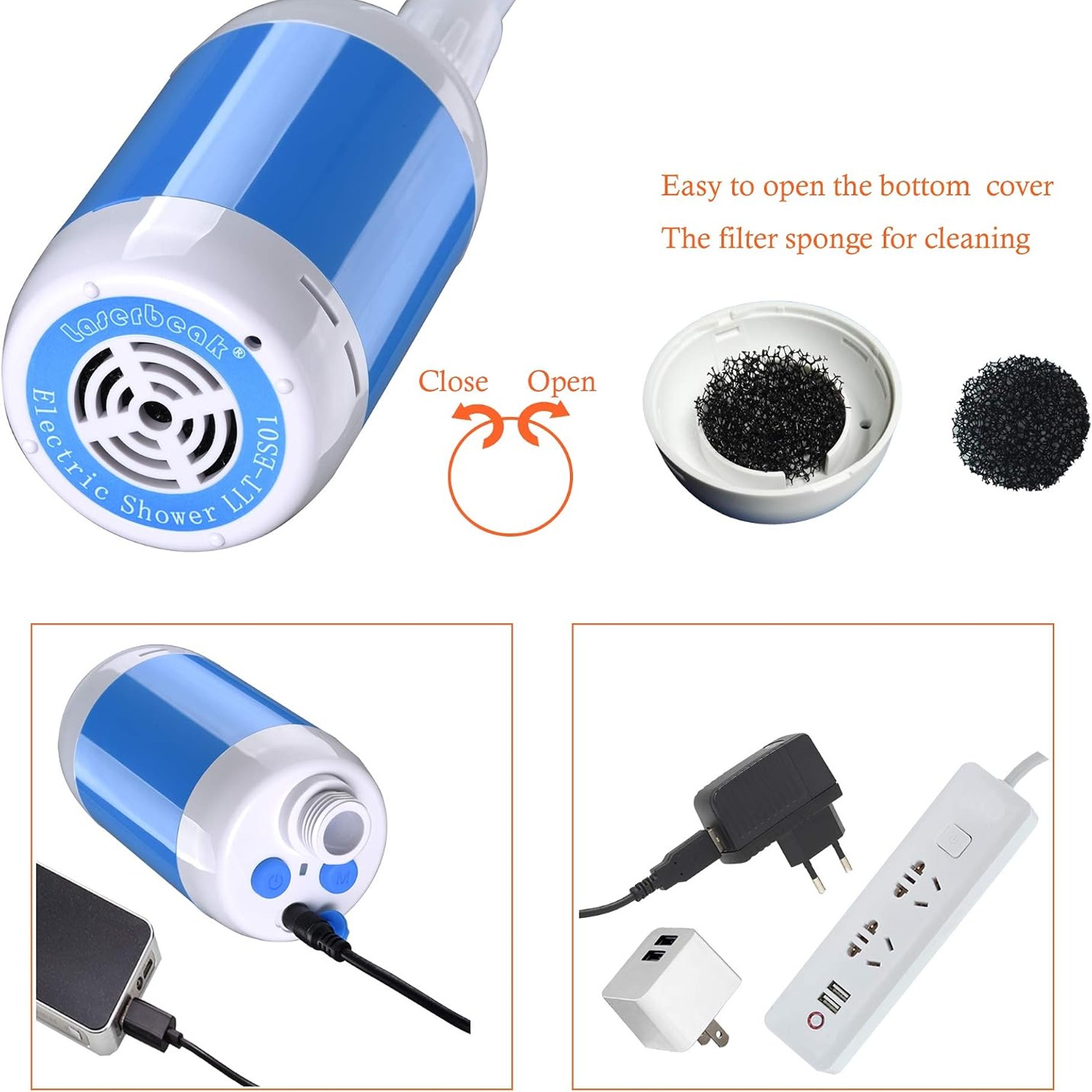
This unit has a 4800mAh lithium battery, made up of two 2400mAh cells running at 3.7 volts. Charging is done over a standard 5V USB input with the included cable, and takes about three hours with a 5V/2A charger. That means a wall charger at home, a car USB socket on the road, or a camp power bank all work. A blue light shows charging in progress and a red light tells you the charge is running low.
Flow is adjustable. The low setting gives about 3 litres per minute and the high setting about 4 litres per minute. There is also a shut-off valve on the head itself. That matters more than the flow rates do, because the biggest water saving comes from stopping the flow while you soap up rather than letting it run. A careful shower on the low setting can stretch a 10 litre container surprisingly far.
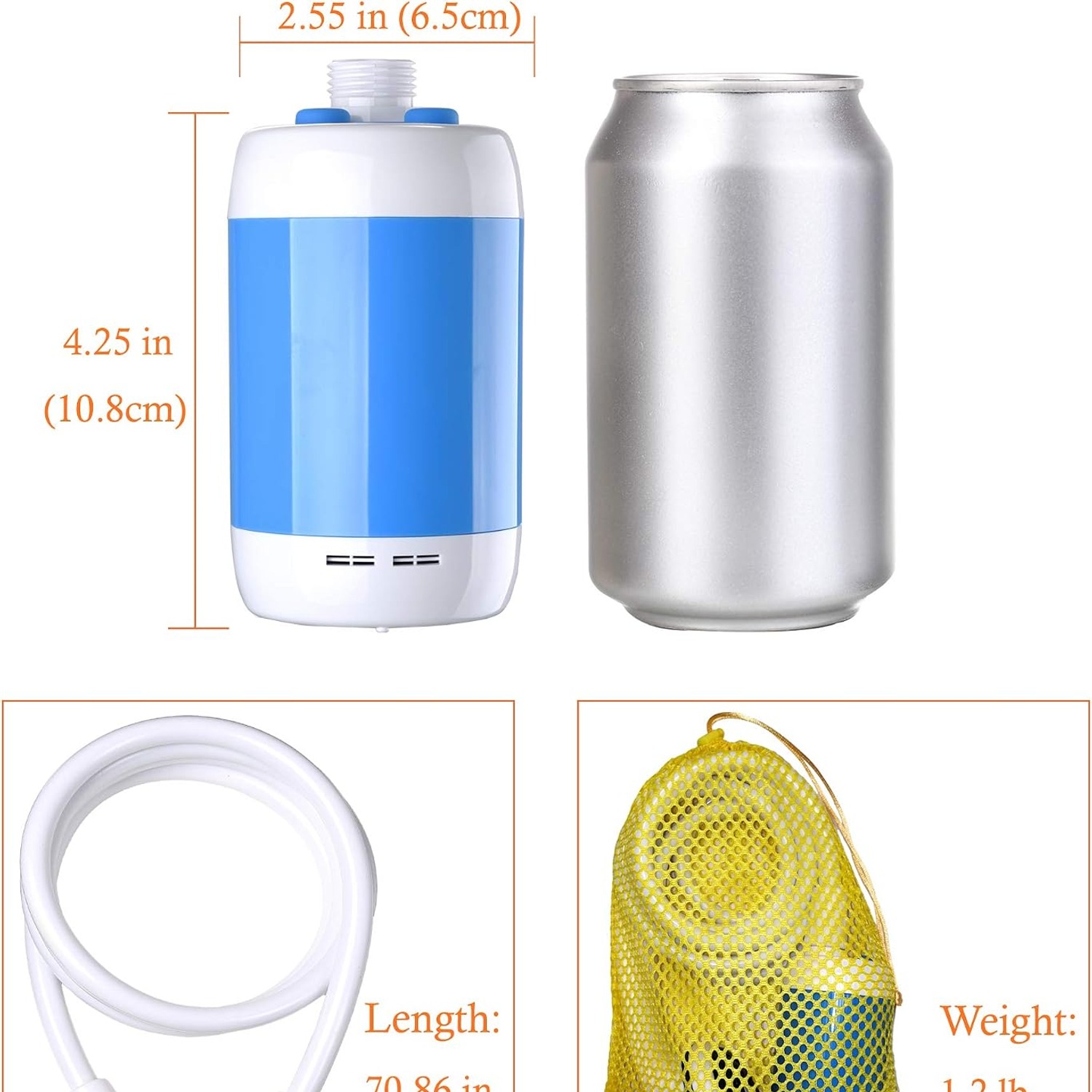
The hose is about 210 cm long in total, enough to put the water container on the ground and still hang the head overhead. The pump body measures 65 mm across and 108 mm tall, which is narrow enough to drop through a jerry can opening. There is a filter on the inlet so grit from a creek, tank or dusty bucket does not get drawn into the motor.
Who this suits
Tent campers who want a wash at the end of a hot day are the obvious group. So are four wheel drivers and anyone with a roof top tent, because the kit lives in a corner of the boot and does not need a fixed install. Van and ute setups use them for the same reason, as the best battery powered shower option for a build with no plumbing.
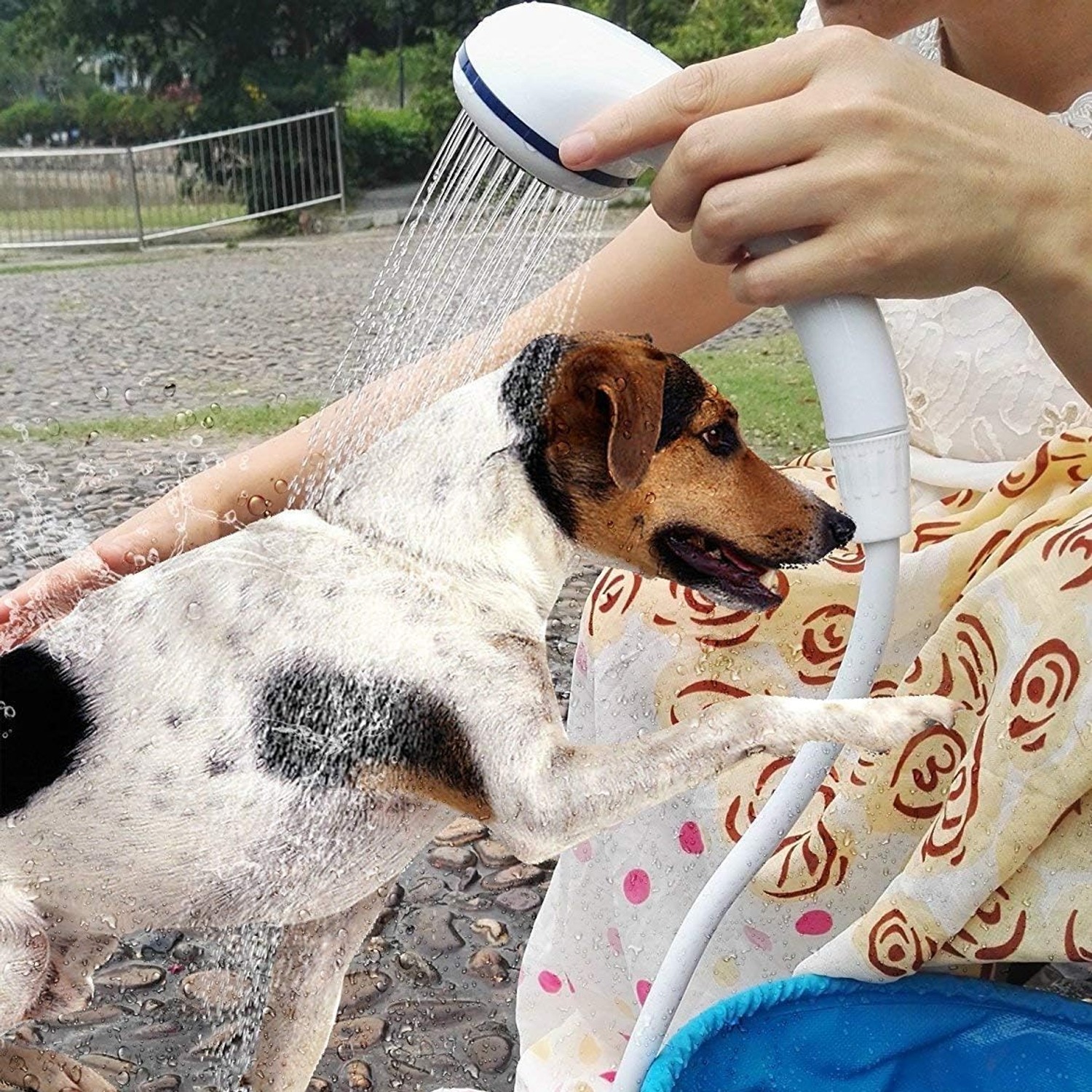
Beyond camping, the use cases pile up fast. Surfers and swimmers keep a container in the car for a fresh water rinse at the carpark. Dog owners use it to hose off sand and mud before the dog gets back in the vehicle. Mountain bikers rinse frames and legs. Boat owners wash down gear at the ramp. Gardeners pump from a rain barrel onto pots. People doing festivals or sports weekends use it behind a cheap privacy tent.
It is less suited to someone wanting high pressure cleaning. This is a shower pump, not a pressure washer. If your plan is blasting caked mud off a chassis, you want different gear.
What to look at when choosing
Battery and charging. A pump is useless flat. Look at capacity and, more importantly, how it recharges. USB charging is the practical choice because almost everyone already carries a power bank or has a car USB socket. Wired-in 12V pumps are fine for a permanent build but tie you to the vehicle.
Flow rate and control. Higher flow feels better but drains your water faster. Two settings plus a shut-off valve gives you the control to run hard when you have plenty of water and conserve when you do not. A pump with no shut-off wastes water every time you reach for shampoo.
Hose length. Short hoses force you to balance the bucket on something. Around two metres lets you set up properly, with the container on the ground and the head above your head.
Pump size and shape. A narrow pump body fits more containers. If the pump only fits a wide bucket, you cannot use a jerry can, and jerry cans are what most people already carry.
Filtration. If you ever plan to draw from a creek, tank or a bucket that has been sitting out, an inlet filter is not optional. Grit kills small pumps.
Packed size and weight. This kit packs into 27.1 x 21.4 x 8.1 cm at 830 grams. For context, that is about the footprint of a shoebox lid and lighter than a full drink bottle. If a shower kit is bulky, it gets left at home, which defeats the point.
Setting it up at camp
Fill your container before you need it. Water warms up during the day if you leave a dark jerry can in the sun, which is free hot water with no gear involved. If you want it warmer, add a kettle of boiled water and stir, keeping the final temperature under 50°C since that is the rated limit for the pump.
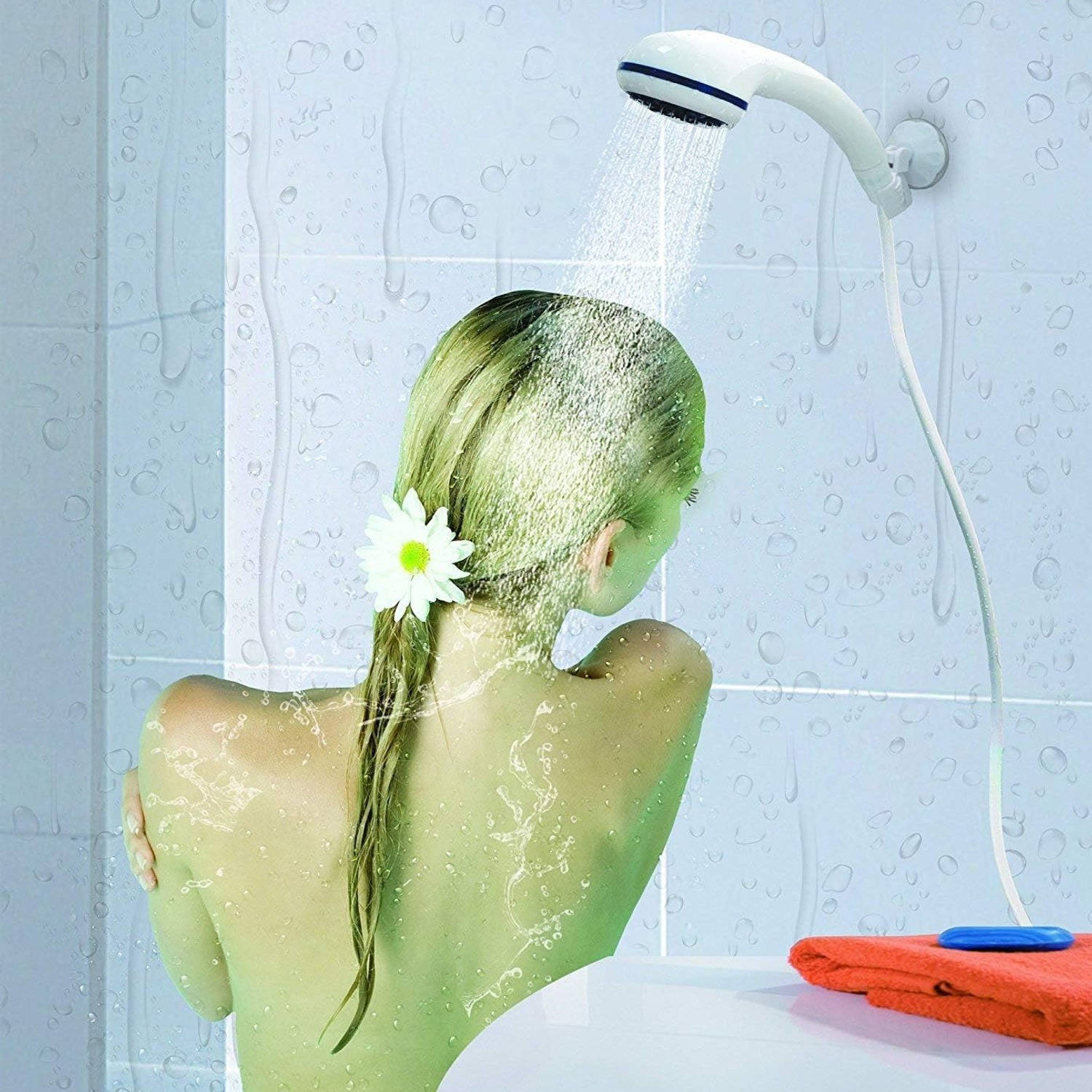
Find somewhere to hang the head. The suction lid works on smooth surfaces like van panels, car windows and tiles. Otherwise a short length of cord over a branch or an awning pole does the job. Height is what makes it feel like a shower instead of a hose.
Get wet on high, switch the valve off, soap and shampoo, then rinse on whichever setting your water supply allows. That sequence is the difference between one shower and three from the same container. If you are camping with others, agree on a water budget per person before the first one starts.
Privacy is worth solving once. A pop-up shower tent, a tarp strung between trees, or the open back door of a van all work. People often spend ages choosing the best portable camping shower and then have nowhere to stand.
Looking after it
Fresh water is the enemy of nothing and the friend of every pump. After salt water, soapy water or creek water, run clean water through the pump for a minute and rinse the outside. Pull out the inlet filter and clear any grit or leaves.
Let the hose and head dry before packing, otherwise you open the bag next trip to a damp, musty mess. Store the kit somewhere dry and out of direct sun, since UV is hard on hoses and plastics over time.
Lithium batteries prefer not to sit flat. If the shower is going into storage for the off season, charge it first and top it up every couple of months. If you are flying anywhere with it, remember lithium batteries normally have to travel in carry-on luggage, so check your airline's rules before you pack.
The short version
A portable camping shower is one of those items that seems like a luxury until you own one, then becomes the thing you pack first. This one combines a 4800mAh USB rechargeable battery, two flow settings at 3 and 4 litres per minute, a shut-off valve, a 210 cm hose and a filtered narrow pump that fits most containers. It is IPX7 rated so it can sit submerged while it runs.
Pair it with a 20 litre container and something to stand behind, and you have a working shower anywhere you can park or pitch. The rest of the year it washes dogs, bikes, boots and garden pots. For 830 grams of packed gear, that is a reasonable amount of use.