
The complete guide
The Honest Buyer's Guide to Ultralight Solid Fuel Stoves
The weight problem nobody talks about until the second day
Most people pack a stove without thinking much about it. You grab the one in the cupboard, clip the canister to the side of the pack, and off you go. It feels fine in the driveway. It feels different on day two, climbing a ridge in the afternoon heat, when you start mentally auditing everything you are carrying.
Cooking gear is one of the sneakiest weight sinks in a pack. The burner itself might be light, but then there is the canister, the spare canister because you are not sure how much is left in the first one, the windscreen, the piezo igniter that stopped working, and the little stuff sack that holds it all. By the time you weigh the lot you are often past 400 grams for the privilege of boiling two cups of water a day.
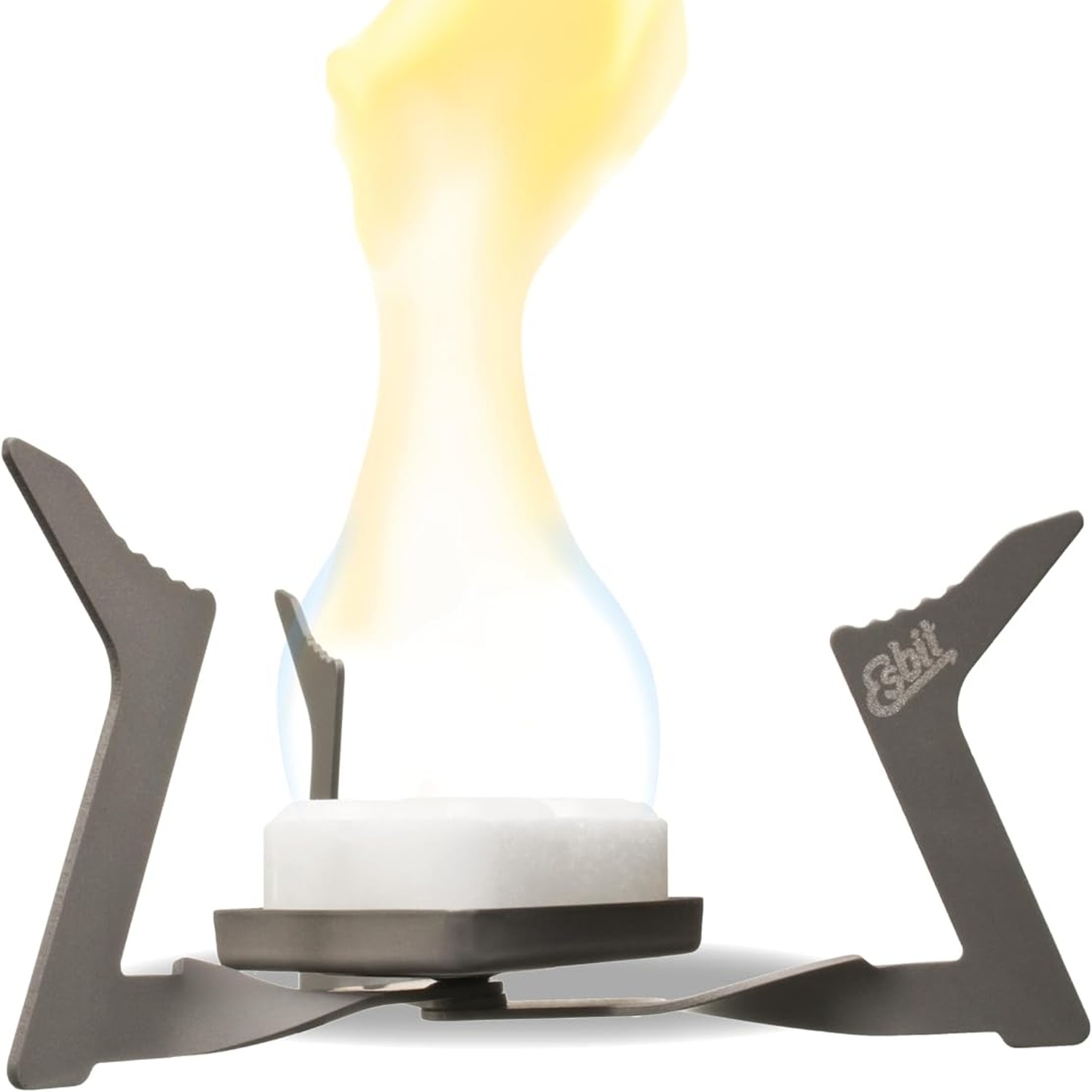
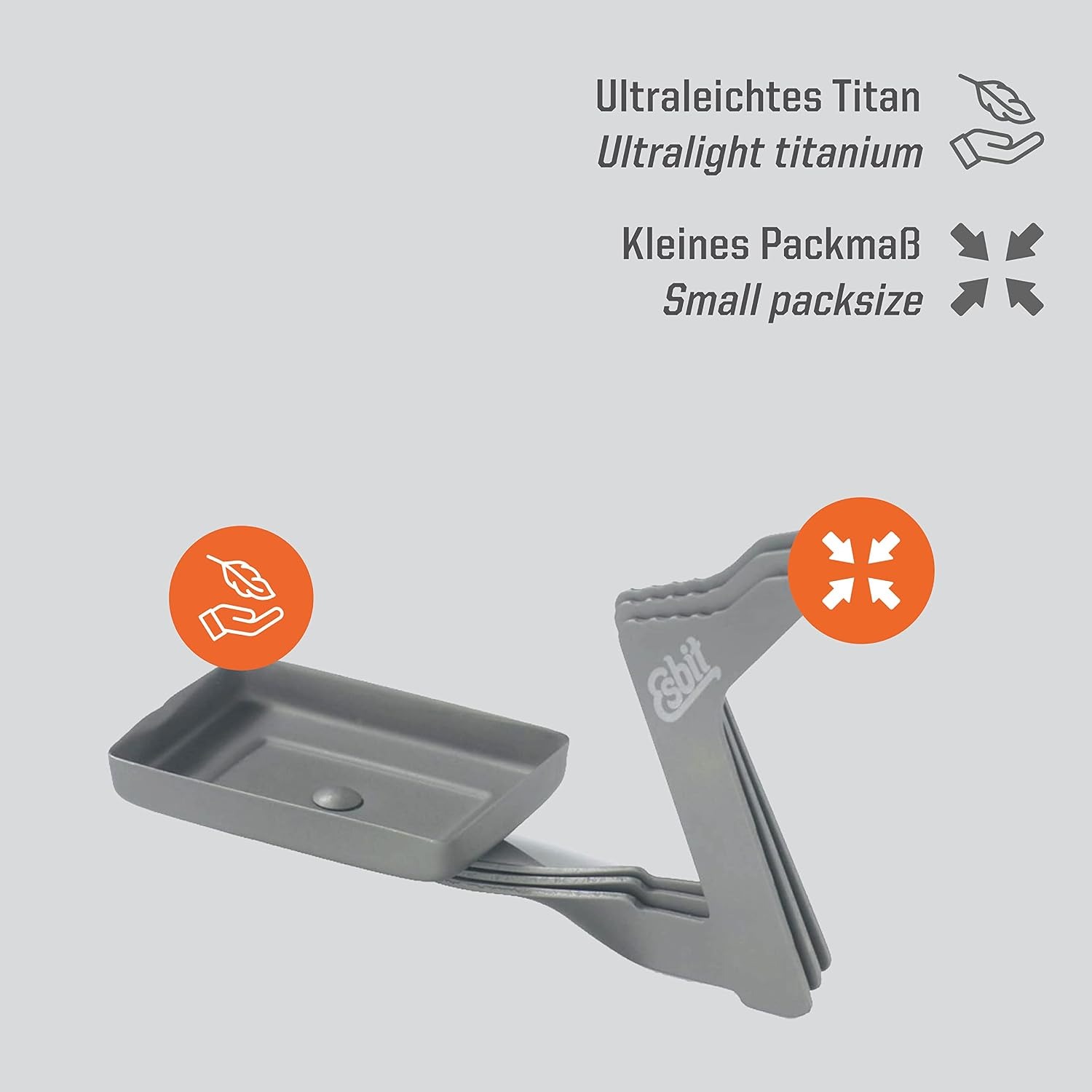
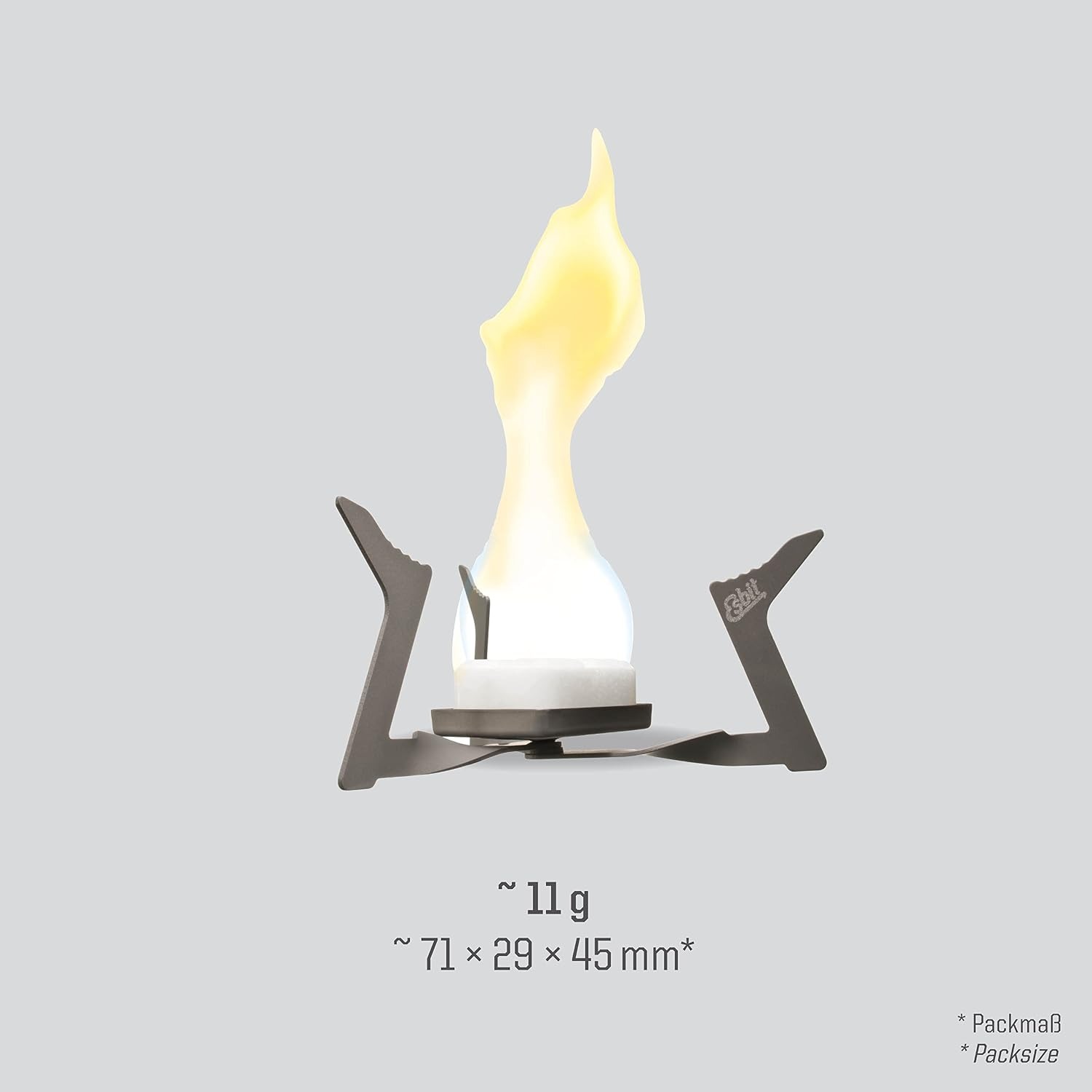
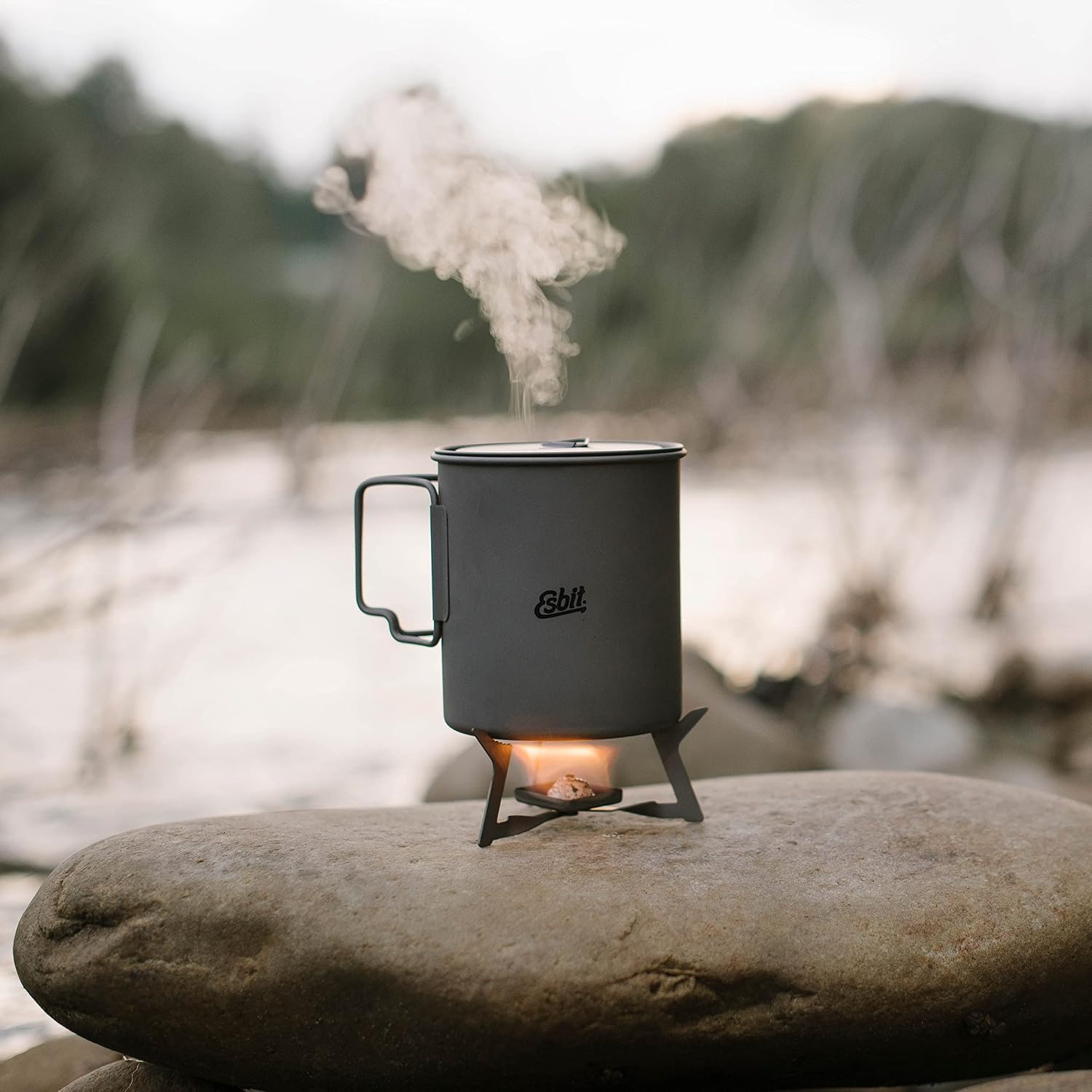
A solid fuel stove solves that by removing almost everything. This one is a folded piece of titanium with three legs, listed at 0.02 kg, measuring 28 x 28 x 84 millimetres. You carry it with however many fuel tablets the trip needs. That is the entire system.
How a solid fuel stove actually works
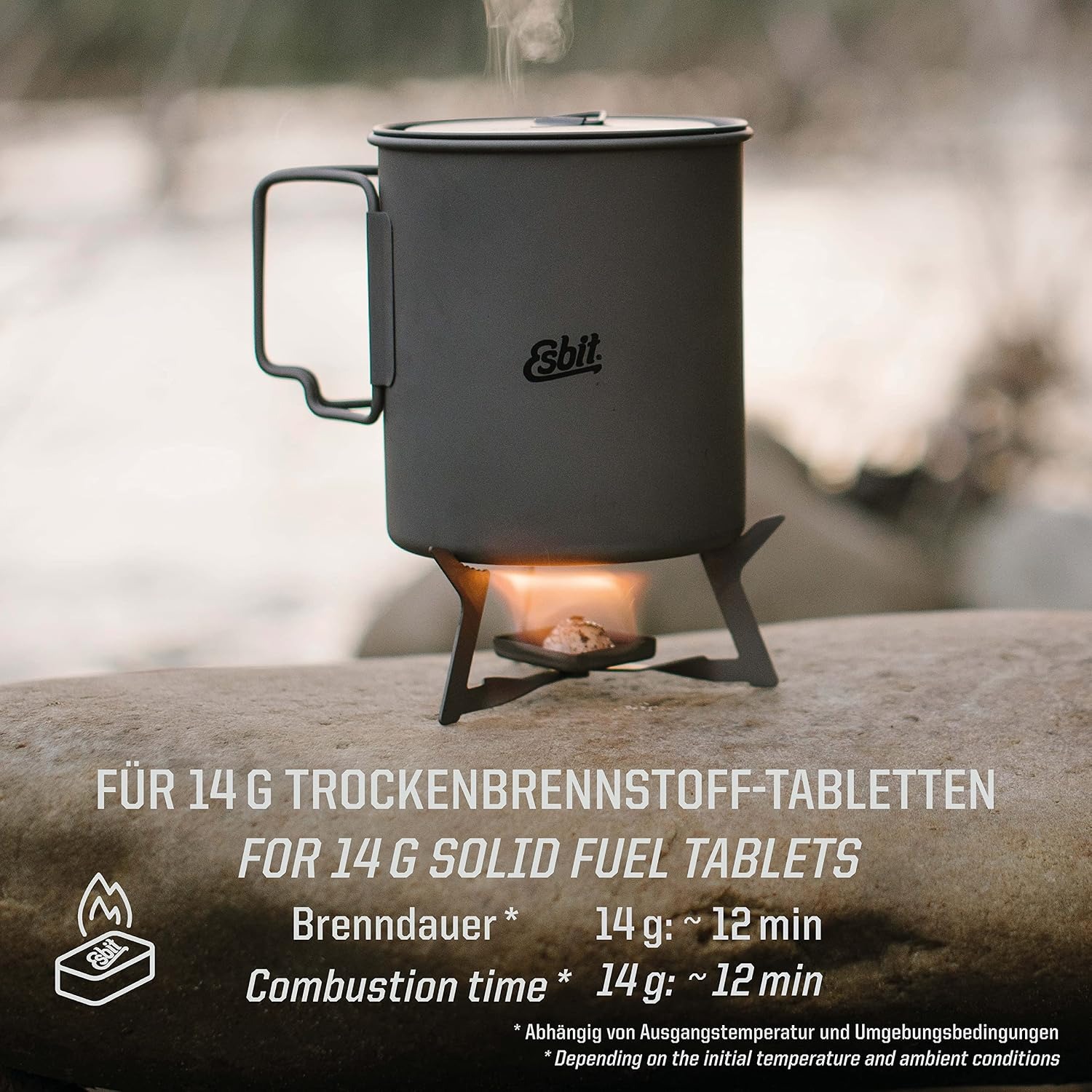
There is not much to explain, which is the appeal. You unfold the three legs so they form a tripod. You put a solid fuel tablet in the middle of the body. You light the tablet with a lighter or a match, let it catch, and set your pot on top of the legs.
The tablet burns down and heats the pot. When it is done, it is done. There is no valve to turn, no pressure to build, no priming, no pumping. The flame is what it is, and your job is to shield it from wind and keep the pot where it belongs.
That simplicity has a real cost and a real benefit. The cost is control. You cannot turn the heat down to simmer a sauce, and you cannot stretch a half-used tablet the way you can throttle a gas burner. The benefit is reliability. Cold weather does not drop the pressure in a tablet. Altitude does not change how it lights. There is no seal to perish, no jet to clog and no canister thread to strip in the dark.
Why titanium
Titanium shows up constantly in ultralight gear for one reason. It holds its shape at high temperature while weighing far less than steel for the same strength. For a stove, that means legs that stay straight under a loaded pot and a body that sits directly in a flame trip after trip without warping into something useless.
It also means the stove can be thin. The reason this thing packs down to 84 millimetres tall and 28 millimetres across is that the metal does not need to be thick to do the job. Steel of the same strength would be heavier and bulkier.
Titanium does change colour where it gets hot. Expect a bronze or blue tint around the flame area after a few burns, plus soot. Neither affects performance. Most people stop noticing within a trip or two.
Who this stove suits
Think about the trips where weight beats everything else. Overnight hikes. Fastpacking. Adventure races where every gram is scrutinised. Bikepacking, where everything has to fit in small bags bolted to a frame. Solo trips where you only need hot water once or twice a day.
It also earns a spot in kits that sit unused for months. Glovebox kits, home emergency boxes, bugout bags. Solid fuel tablets do not leak, do not vent, and do not need to be stored upright. A gas canister in a car for two summers is a slightly different proposition. For anyone assembling the best emergency cooking stove setup on a budget and a tight footprint, this ticks the boxes.
Who it does not suit is just as important. If you cook for a group, you want something with more output and a wider pot support. If you like real cooking in camp, frying and simmering, you want flame control. If you are doing a long expedition where fuel resupply is hard, a liquid fuel stove is usually the better tool. Be honest about which camp you are in before buying.
Choosing the right setup around it
A stove this small works best as part of a deliberately small system. Here is how the pieces fit.
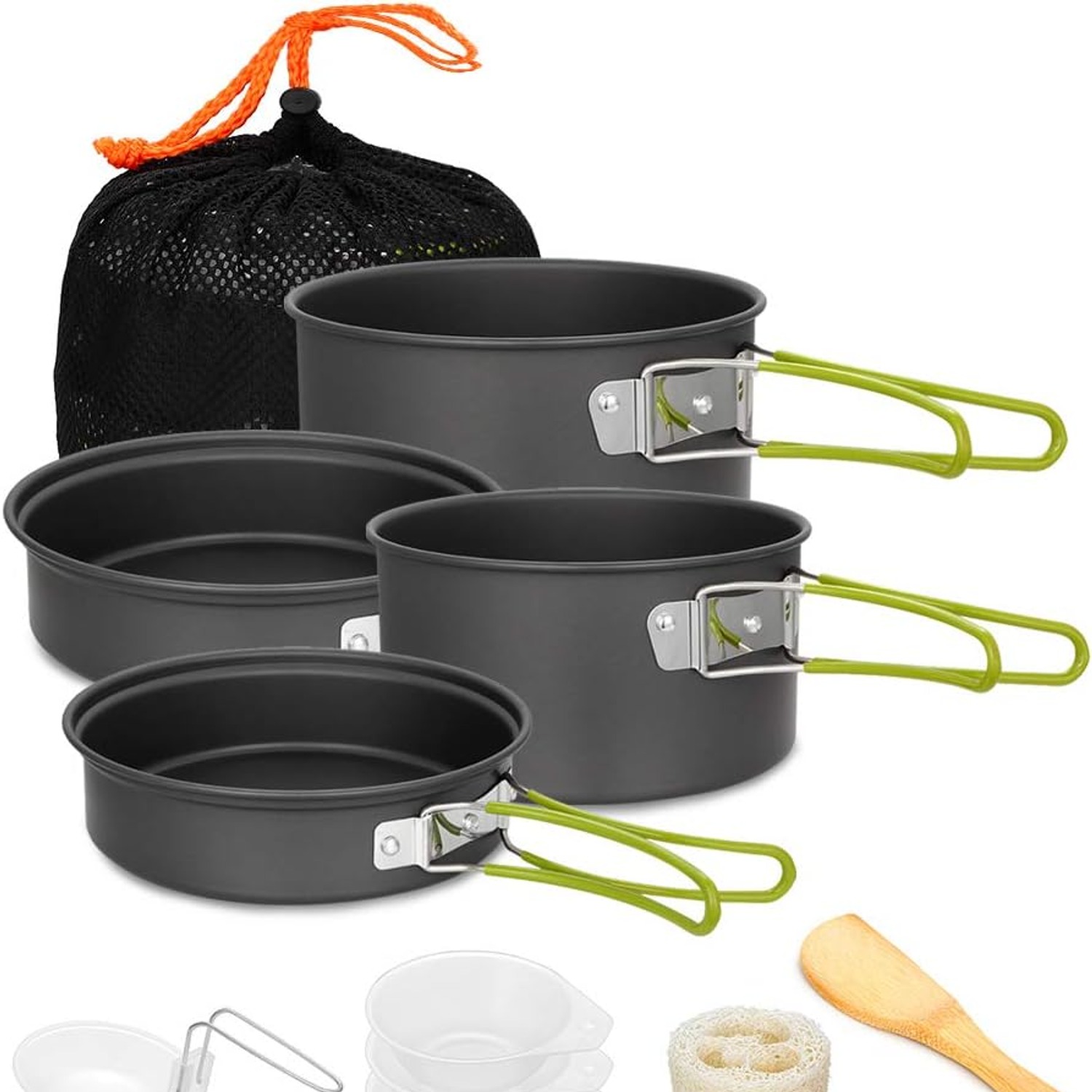
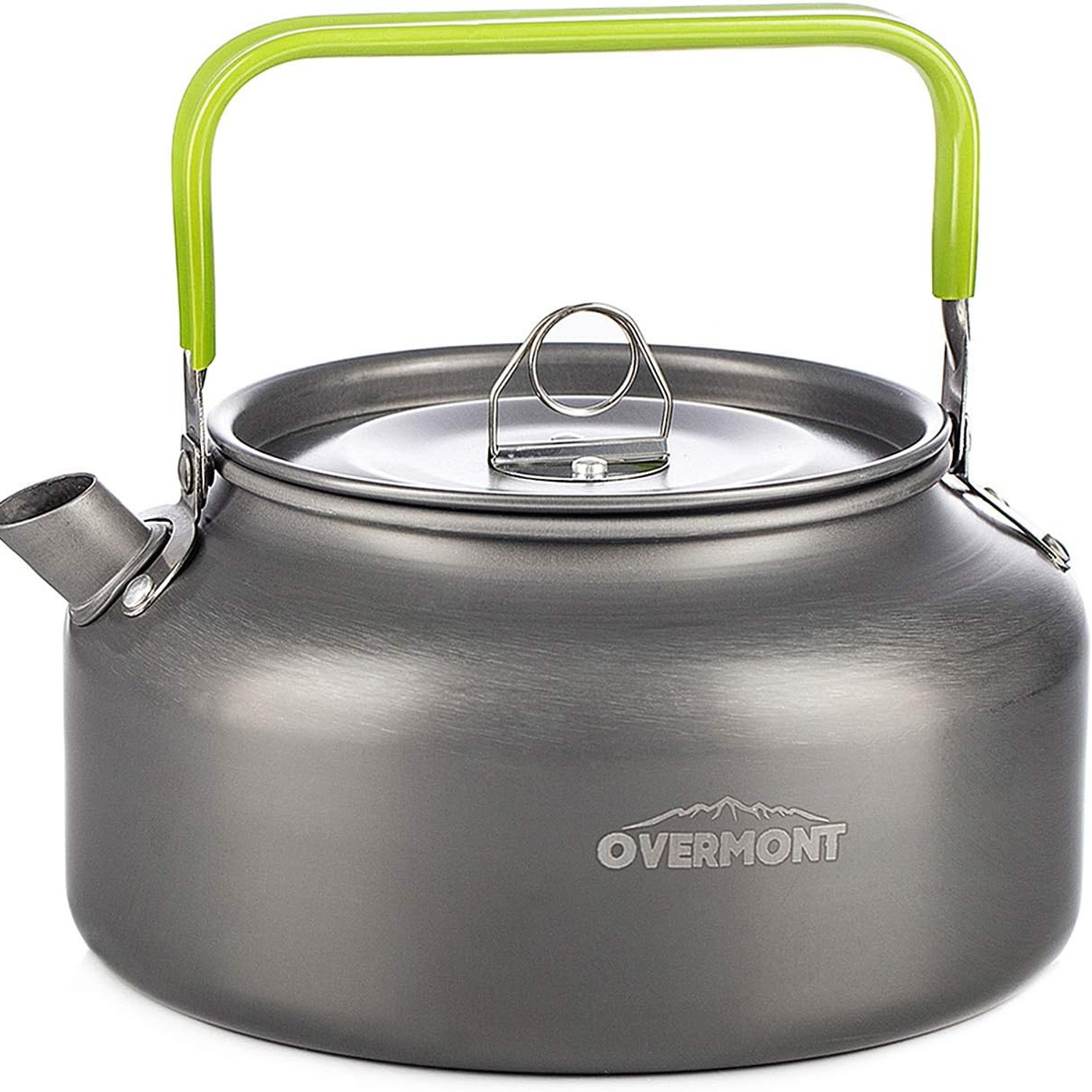
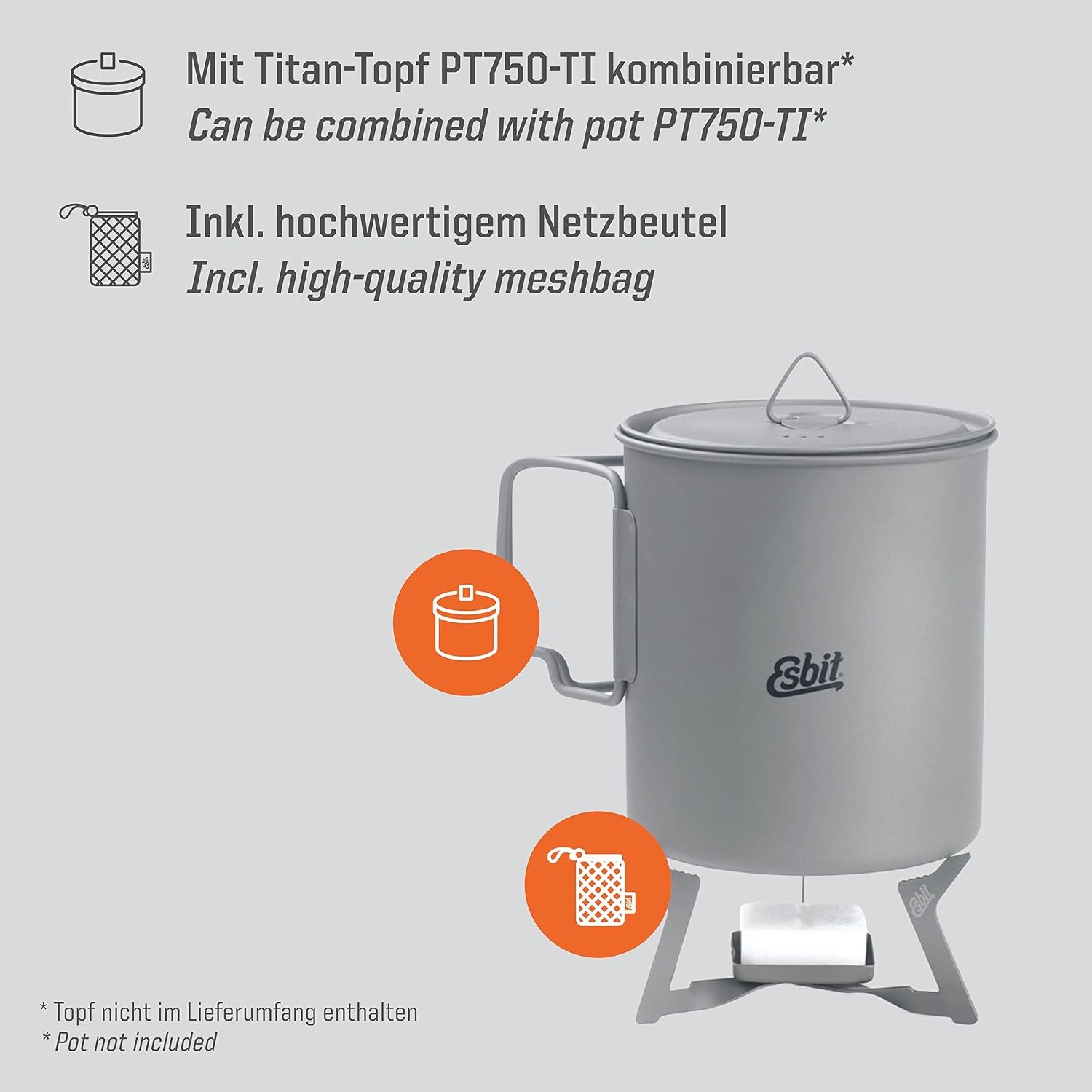
The pot. Go small and narrow rather than wide and shallow. A 500 to 750 ml titanium or aluminium pot sits well on a tripod of this size and heats faster because less of the flame escapes around the edges. Check the inside of your pot against the 28 x 28 x 84 millimetre packed size, since most people store the stove inside the pot.
The fuel. Count tablets by meal, not by day. Work out how many boils you need, add one or two spare, and seal them in a zip bag so they stay dry. Wet tablets are frustrating to light.
The ignition. Carry a lighter and a few matches as backup. Tablets light easily but a wet lighter in a windy pass is a bad surprise.
The windbreak. This is the big one. Wind steals more heat than anything else with an open flame. A low rock wall, your pack turned on its side, or a thin foil screen will cut your boil time noticeably. Just leave airflow underneath and never seal the flame in completely.
The base. The flame radiates heat downwards. Use bare ground, rock, or a piece of foil. Never a picnic table, a tent floor, or dry grass.
Using it well
Set up on flat, firm ground before you light anything. On soft soil, press the legs in slightly so the stove does not tip. Check that your pot is centred, not perched on two legs with a corner hanging over the third.
Light the tablet, give it a few seconds to establish, then set the pot on. Resist the urge to lift the pot and check progress. Every time you do, heat escapes and the tablet keeps burning anyway.
When the tablet is spent, let the stove cool before you touch it. Titanium holds heat and it will be hotter than it looks. Once cool, tip out any ash, wipe the body, fold the legs and slide it into the mesh bag.
Looking after it
Maintenance is close to nonexistent, which suits a piece of gear that lives in a pack. Wipe the soot off with a dry cloth when it bothers you. Warm water and a little mild detergent will shift anything stubborn. Dry it fully before storing so moisture does not sit in the mesh bag.
Every so often, open and close the legs a few times and clear grit out of the hinges. That is the only part with any movement, so it is the only part worth checking.
Store it inside your pot or in a dry pocket. The mesh bag exists mainly to stop soot transferring to your sleeping bag and spare clothes, so use it.
A realistic look at the trade-offs
It would be dishonest to pitch this as a replacement for every stove. Boiling water with a fuel tablet takes longer than with a gas burner, especially in wind or cold. You have no flame adjustment. Tablets leave a residue and have a distinctive smell when burning. And you carry fuel as discrete blocks rather than a topped-up canister, so planning matters more.
What you get back is a cooking system that weighs 0.02 kg, costs nothing in pack space, cannot leak, and has no mechanism to fail. For a lot of trips, that trade is easy. For some, it is not. The honest answer depends entirely on the kind of walking you do.
The short version
This is a titanium solid fuel stove with three folding legs, listed at 0.02 kg, packing down to 28 x 28 x 84 millimetres, supplied with a mesh bag. It burns Esbit solid fuel tablets, which are sold separately. There is nothing to pump, adjust or service.
Buy it if you are chasing the lowest possible pack weight, if you want a stove that will sit in an emergency kit for years and still work, or if you simply like gear that cannot break. Skip it if you cook for a crowd or want to simmer. Pair it with a small pot, a pack of tablets, a reliable lighter and something to block the wind, and you have a complete cook kit that most people would not notice in their pack.