
The complete guide
How To Choose A Rechargeable Camping Light That Actually Earns Its Space
The problem with camp lighting
Most people find out their camp lighting is wrong at the worst possible moment. It is half past seven, the sun has gone, dinner is half cooked, and someone is holding a phone torch over the stove while the battery percentage drops. Or the opposite happens. Someone brings a lantern so fierce that it bleaches out the whole table, everyone gets a headache, and the kids will not settle because the tent glows like a service station.
Good camp lighting sits between those two. Enough brightness to actually do things, enough control to turn it down when the jobs are finished. That is the whole job, and a surprising number of lights fail it.
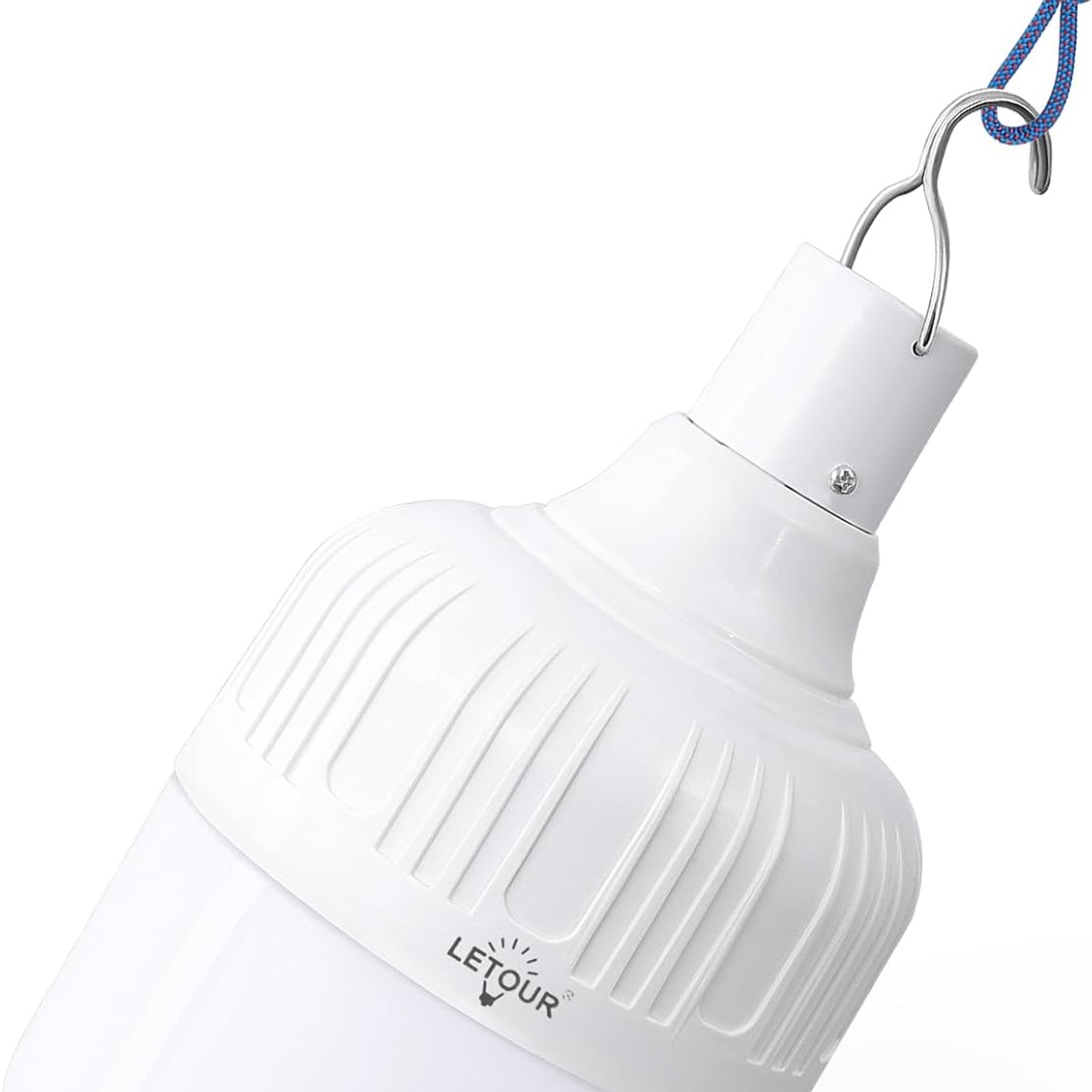
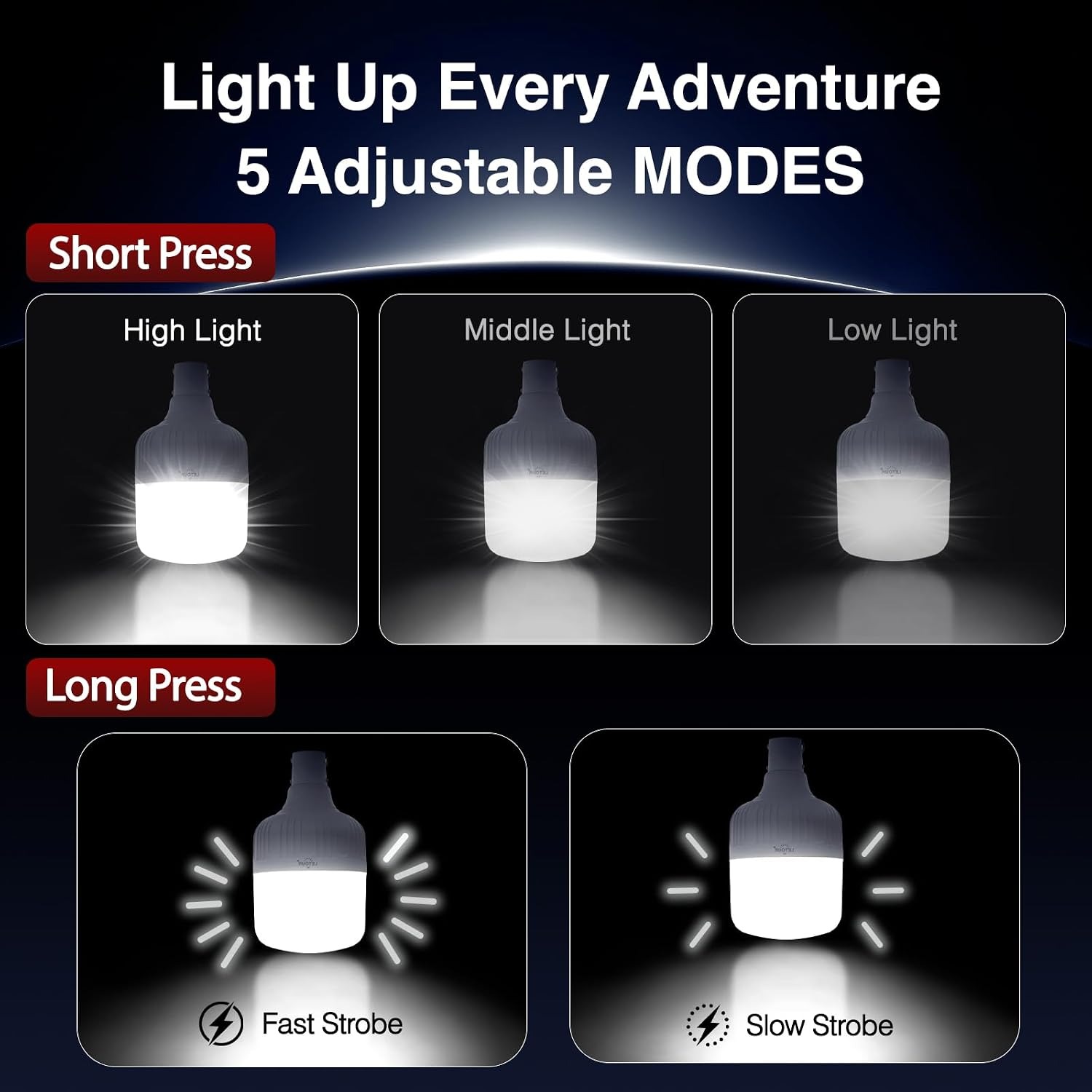
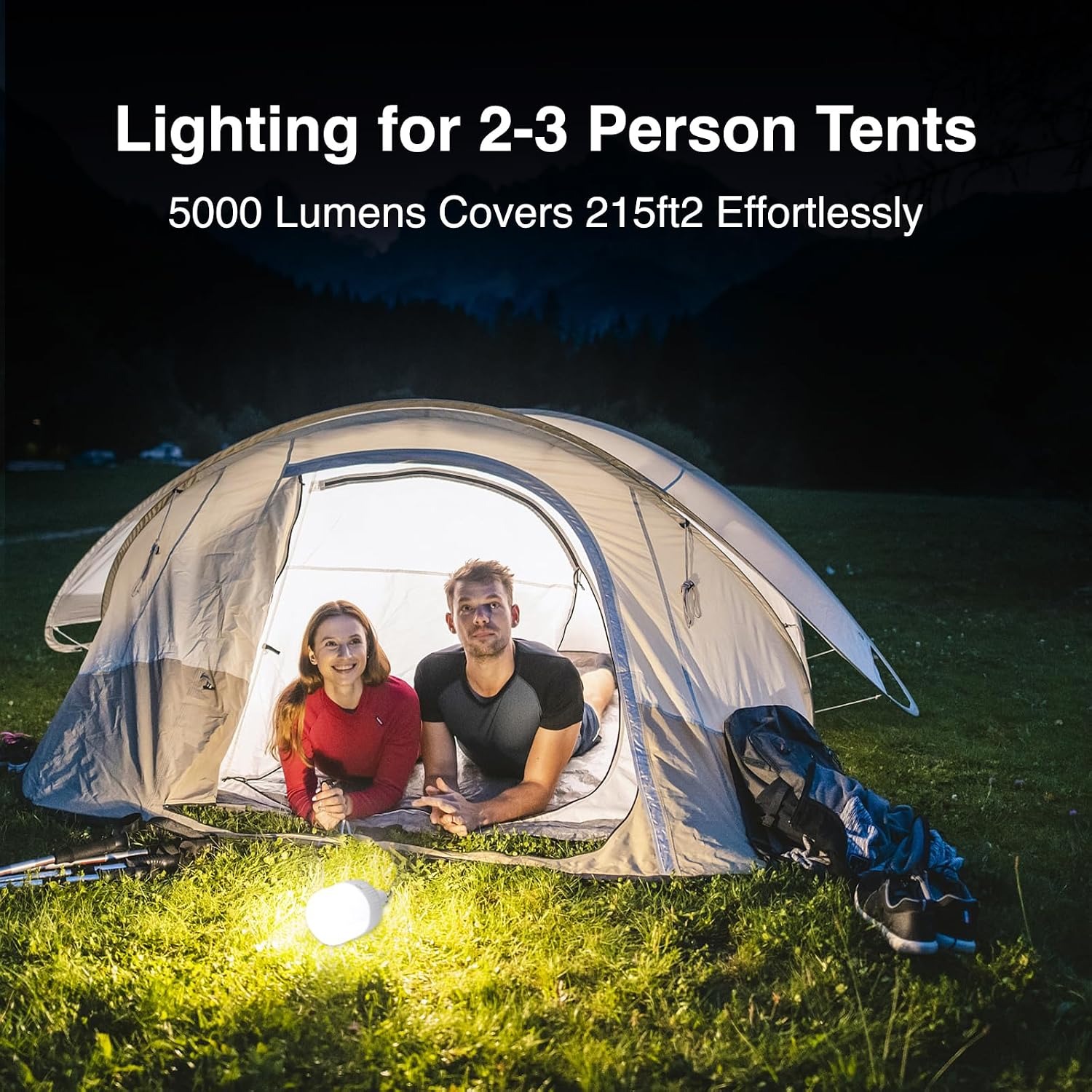
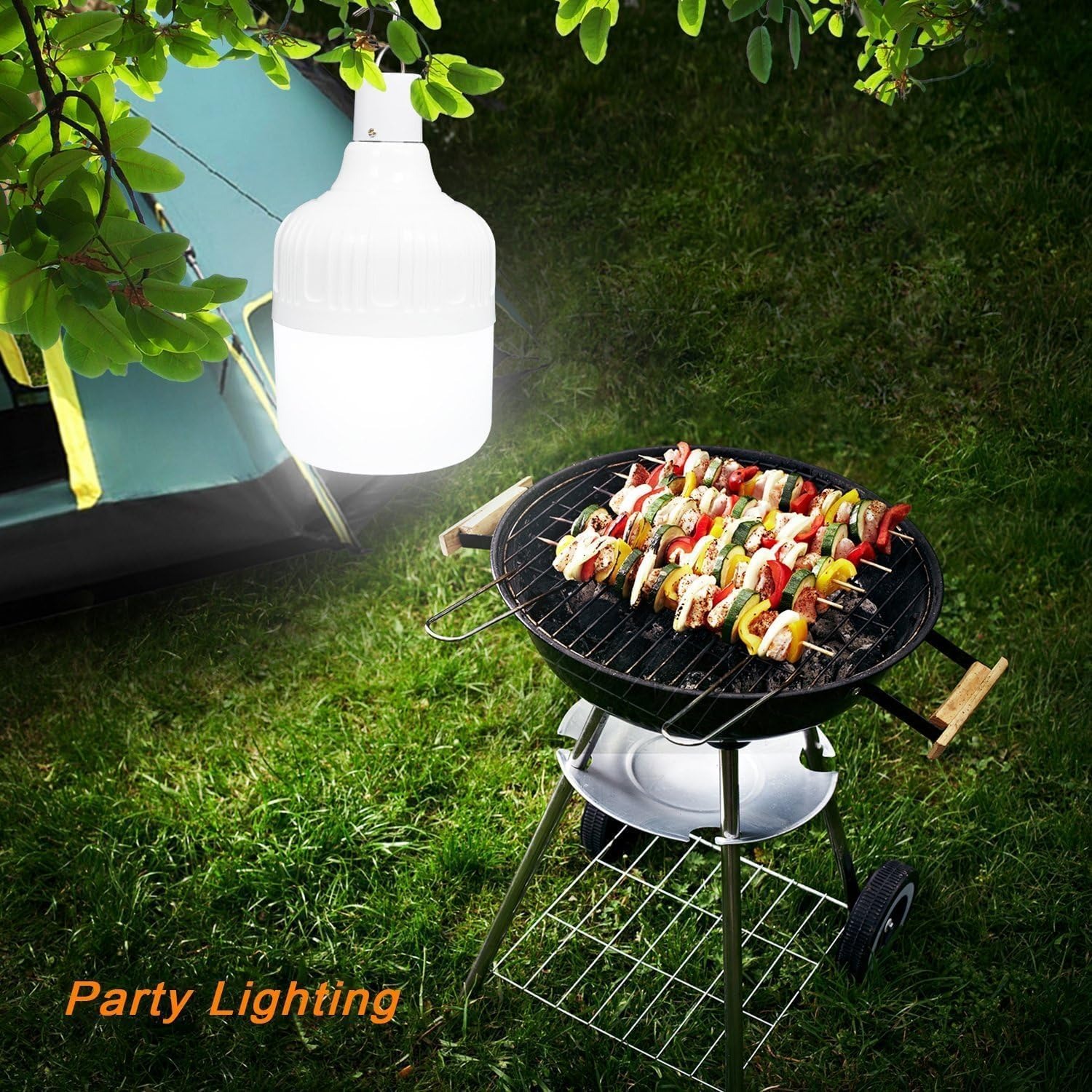
A rechargeable LED lamp like this one takes a fairly direct run at the problem. You get up to 5000 lumens across 24 LED sources when you need output, five modes so you can choose how much of it you want, and a lithium-ion battery that fills up from the same USB cable you already pack for your phone.
How a rechargeable LED lantern works
The old camp lantern burned fuel, or ate disposable batteries at an alarming rate. LEDs changed the maths. They convert far more of their power into light instead of heat, which means you can get a serious amount of brightness out of a lamp that weighs 272 grams.
Here this lamp spreads the work across 24 separate LED sources rather than one big emitter. That matters for comfort. A single bright point throws hard shadows and makes people squint. Spread the same output across lots of small sources and the light gets softer and more even, which is why a multi-LED panel is pleasant to sit under.
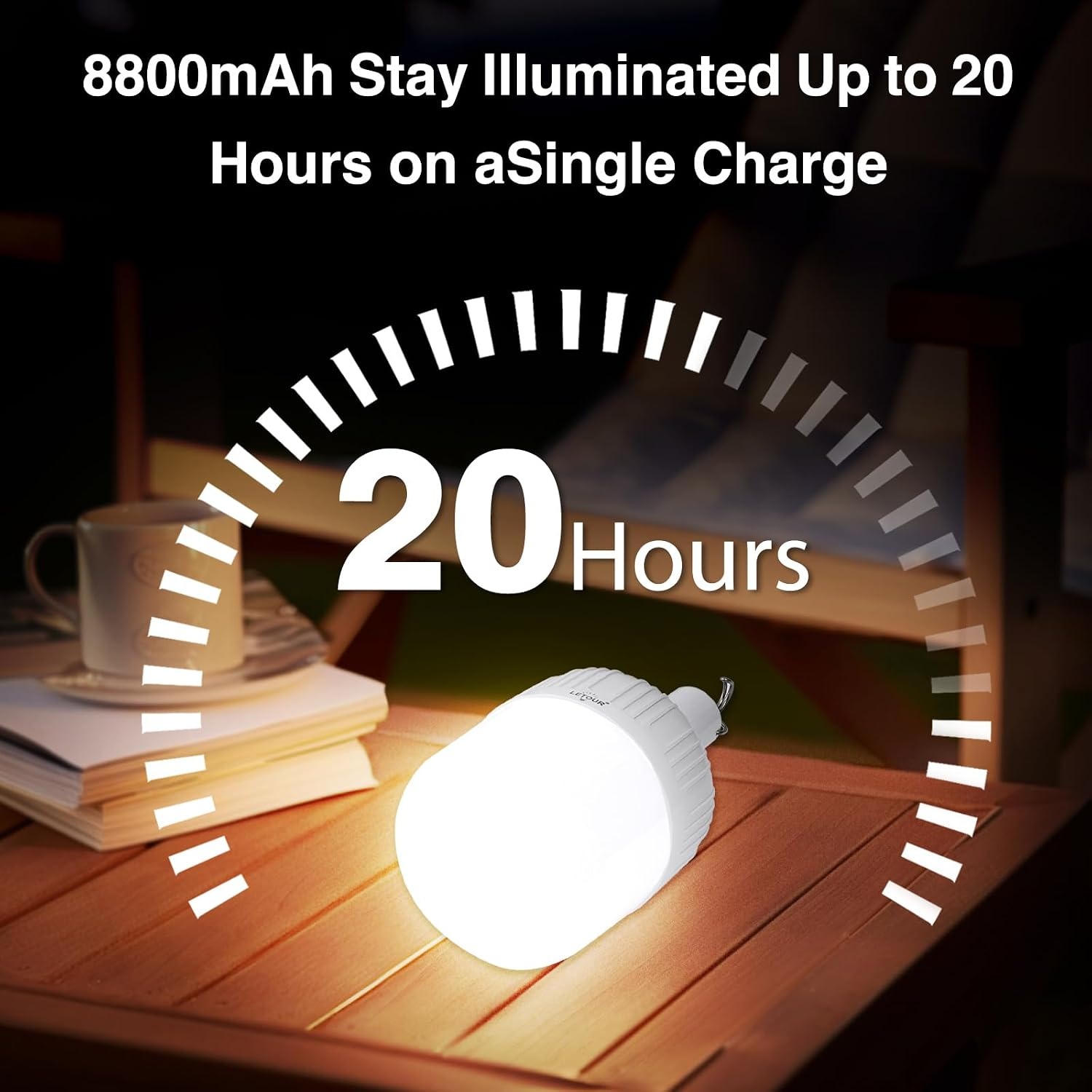
The power side is simple. A built-in lithium-ion battery charges at 5 volts over USB. That is the same standard as almost every phone charger, car adapter and power bank made in the last decade. On a weekend trip you charge it before you leave. On a longer trip you top it up from a power bank or a solar panel with a USB output. You are no longer tied to whether the nearest shop stocks the right size cells.
The listed figures for this lamp include a 50 watt light source wattage and a 60 watt overall wattage, plus a rated battery life figure of 100,000 hours. Read that last number as a rated service life for the lighting components, not as runtime from one charge. Runtime per charge depends entirely on which mode you pick.
Who this kind of light suits
Families camping with kids are the obvious group. The low setting is the real hero here, because a soft light hanging from the tent ceiling helps small children settle in an unfamiliar place without lighting the whole campsite. Then you can wind it up to high in the morning when you are trying to find a sock.
Caravan and van owners get good value from a portable lamp too. There is no wiring, no drilling, no fiddling with a 12 volt circuit. You hang it where you want light tonight, and somewhere else tomorrow.
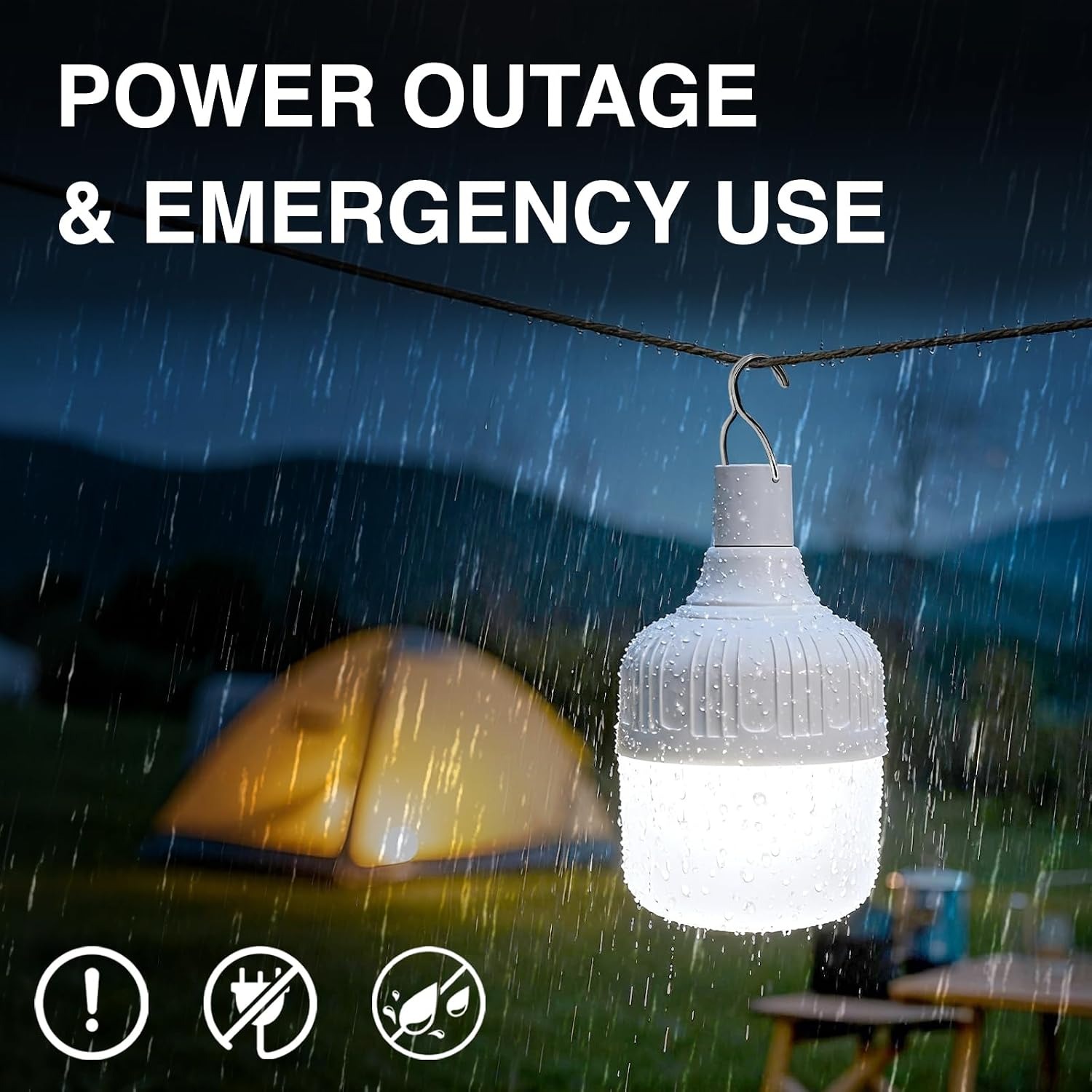
It also earns its keep at home. Keep it charged in a kitchen drawer and a power cut becomes mildly annoying instead of a scramble. A hanging lamp lights a room properly, which a torch never does. Plenty of people buy one for camping and then find it lives indoors for most of the year.
Festival campers, allotment holders, people with an unlit shed, anyone running a stall at a night market under a marquee. The common thread is a covered space that needs light for a few hours without mains power.
The one limitation to plan around
This lamp is listed as not water resistant. That is not a dealbreaker, but it does shape how you use it.
Think of it as a shelter light. Inside a tent, inside a caravan, under an awning, under a gazebo, on a covered verandah, indoors. All fine. Hanging from a bare tree branch in drizzle, sitting on a picnic table when the weather is turning, clipped to the outside of a pack in the rain. Not fine.
If most of your lighting needs are out in the open in rough weather, you want a sealed, weather-rated light instead. If your lighting needs are mostly about making a sheltered space comfortable, which for most campers they are, this is not a real constraint. Just build the habit of bringing it in before bed.
How to choose between camp lights
A few things actually matter when you are comparing options, and a few things only look like they matter.
Brightness range beats peak brightness. A light that only does maximum output is a floodlight, not a lantern. The useful question is how low it goes, because that is the setting you will use most. Five modes, including three brightness levels, gives you somewhere sensible to land in most situations.
Charging method shapes your trip. USB charging means one cable type covers your phone, your lamp and probably your head torch. Disposable batteries mean carrying spares and binning dead ones. For anyone weighing up the best USB camping lamp against a battery model, that cable simplicity is usually the deciding factor.
Weight only matters if you carry it. At 272 grams this is light enough for a pack. If you only ever drive to a site, weight hardly registers, and you might prefer something larger. If you walk in, every hundred grams counts.
Mounting decides where the light goes. A hanging mount gets the source above head height, which is where you want it. Light from above spreads across a space. Light sitting on a table blinds whoever is opposite you.
Housing material tells you about durability. ABS plastic is the standard for portable lights because it absorbs drops and keeps the weight down. It will scuff over time. That is fine, it is camp gear.
Getting the best out of it
Charge it fully before you leave, even if you used it last weekend and think there is probably enough in it. There almost never is.
Pick your hanging point before dark. A loop in the tent roof, a carabiner on the awning rail, a hook on the gazebo upright. Doing this in daylight saves a lot of fumbling later.
Use high sparingly. Setting up, cooking, finding something you dropped. Then drop to middle for eating and talking, and low for the last hour before sleep. Running on low rather than high stretches your charge enormously, and honestly it makes for better evenings anyway.
Keep the strobe modes in mind for the situations they are built for. Flagging someone down, marking your pitch for a friend arriving late, making yourself visible at the roadside. They are not party lights, and they will annoy your neighbours if you treat them that way.
Care and storage
Care here is light work. Wipe the ABS housing with a slightly damp cloth and dry it. Never submerge it or hold it under a tap, because there is no water resistance rating to fall back on.
Between trips, store it dry at room temperature with some charge in it rather than fully flat. Lithium-ion batteries sit happier that way. If it is going to be months, give it a top-up every so often rather than finding it dead the night you need it.
Avoid leaving it on a car dashboard in summer. Heat is harder on batteries than cold is. A camp box in the boot is better than a windscreen shelf.
Coil the cable and keep it with the lamp. A rechargeable light with no cable is just a paperweight, and they are easy to lose.
The short version
This is a compact, hangable LED lamp that puts out up to 5000 lumens from 24 LED sources, dims through five modes, weighs 272 grams and charges over USB from an included lithium-ion battery. It is white ABS plastic, it mounts by hanging, and it is not water resistant.
If you want a light for tents, caravans, awnings, covered patios and power cuts, that covers it neatly. Charge it, hang it, turn it down when dinner is over. If your lighting lives out in the weather, look for a sealed model instead. For everything under a roof or a bit of canvas, this does the job without fuss.