
The complete guide
How To Choose A Self Inflating Sleeping Mat That Actually Lets You Sleep
The real problem is the ground, not the sleeping bag
Most people who come back from a camping trip complaining about a bad night blame the sleeping bag. Usually the bag was fine. The problem was underneath them.
Bare ground does two things. It conducts heat away from your body all night, far faster than cold air does, and it presses back on every point where your weight concentrates. On your side, that is your hip and shoulder. On your back, it is your tailbone. A sleeping bag cannot fix either of those, because the insulation under you gets crushed flat the moment you lie down and stops working.
That gap is what a sleeping mat fills. It puts a layer of foam and trapped air between you and the ground, which handles both the cold and the pressure points. Get the mat right and a basic sleeping bag suddenly performs much better.
What "self inflating" actually means
A self inflating sleeping mat has open-cell foam sealed inside an airtight shell. When the valve is closed, the foam is compressed flat. Open the valve and the foam wants to spring back to its natural thickness, which pulls air in through the opening. Leave it a few minutes and it does a decent chunk of the work on its own.
The catch with older self-inflating mats is the last stage. The foam gets you most of the way there, but the final firmness needs a few breaths or a pump, and that is the part nobody enjoys after a long day.
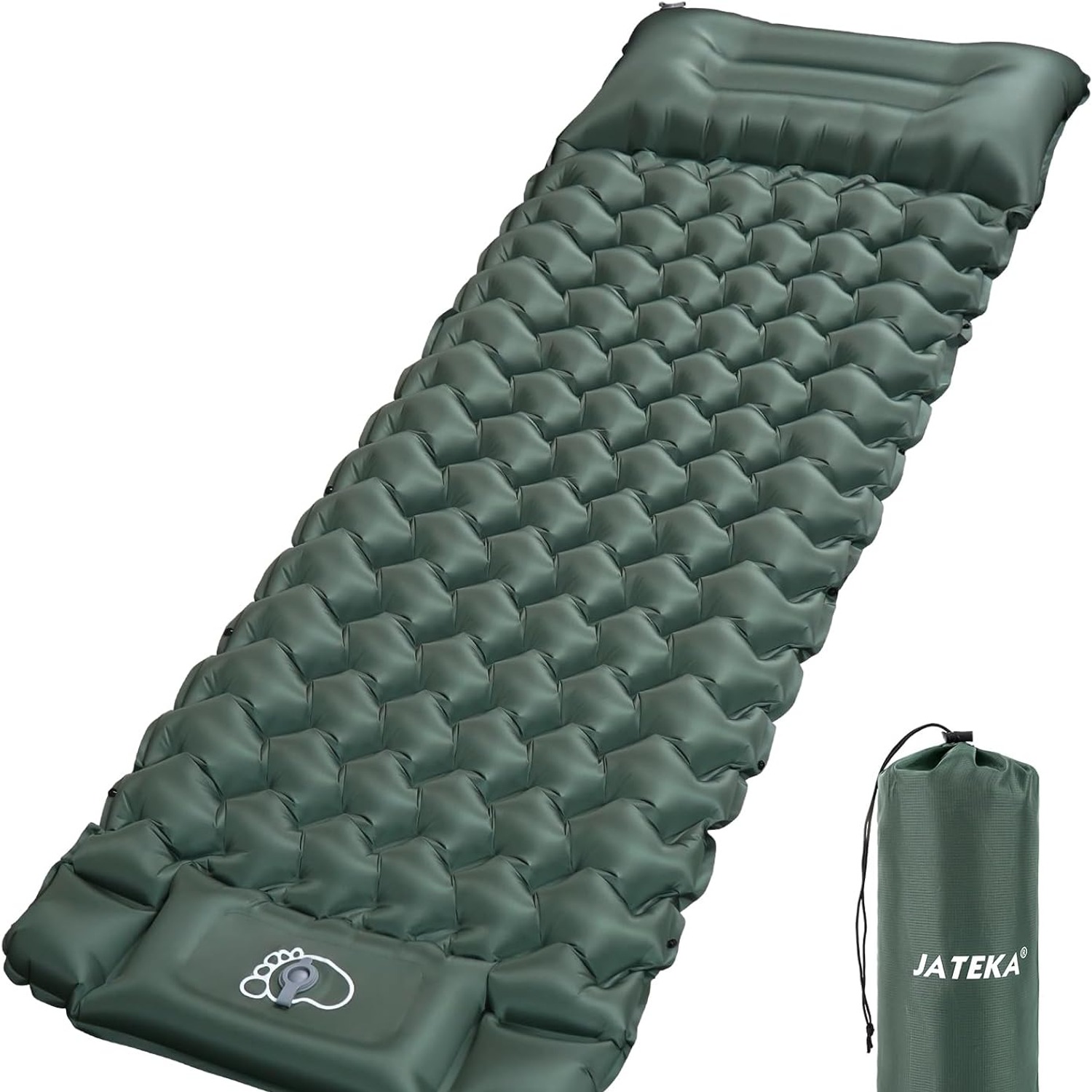
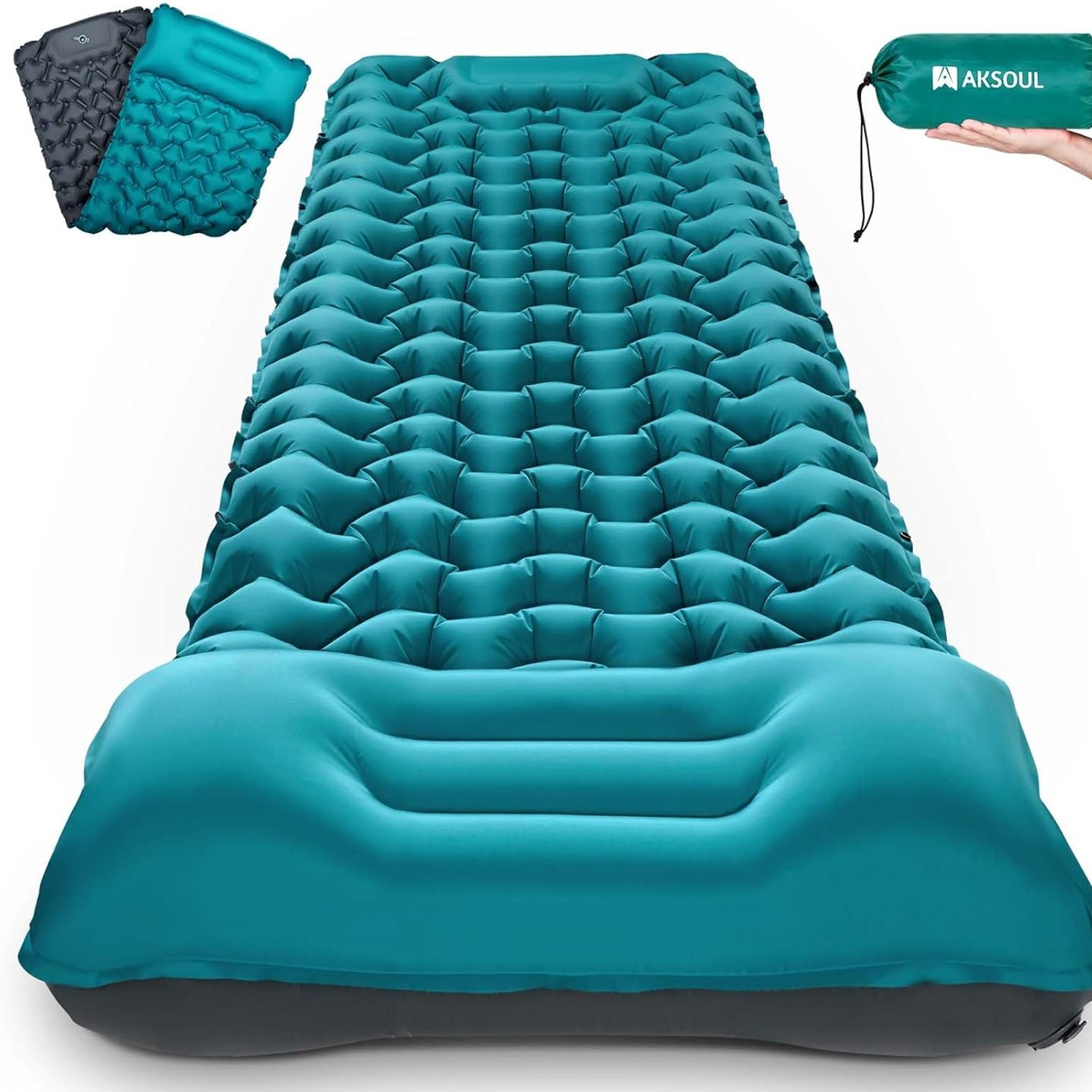
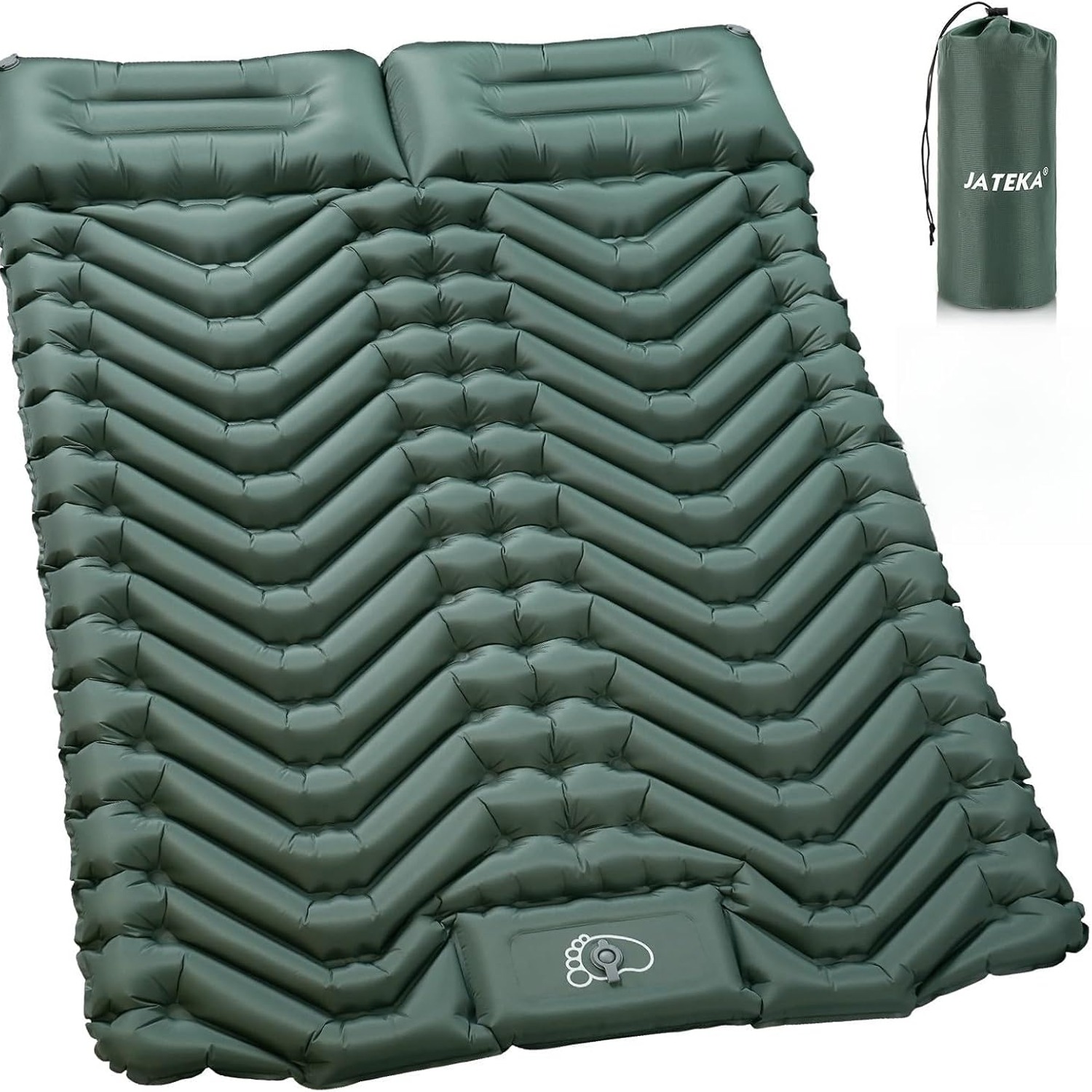
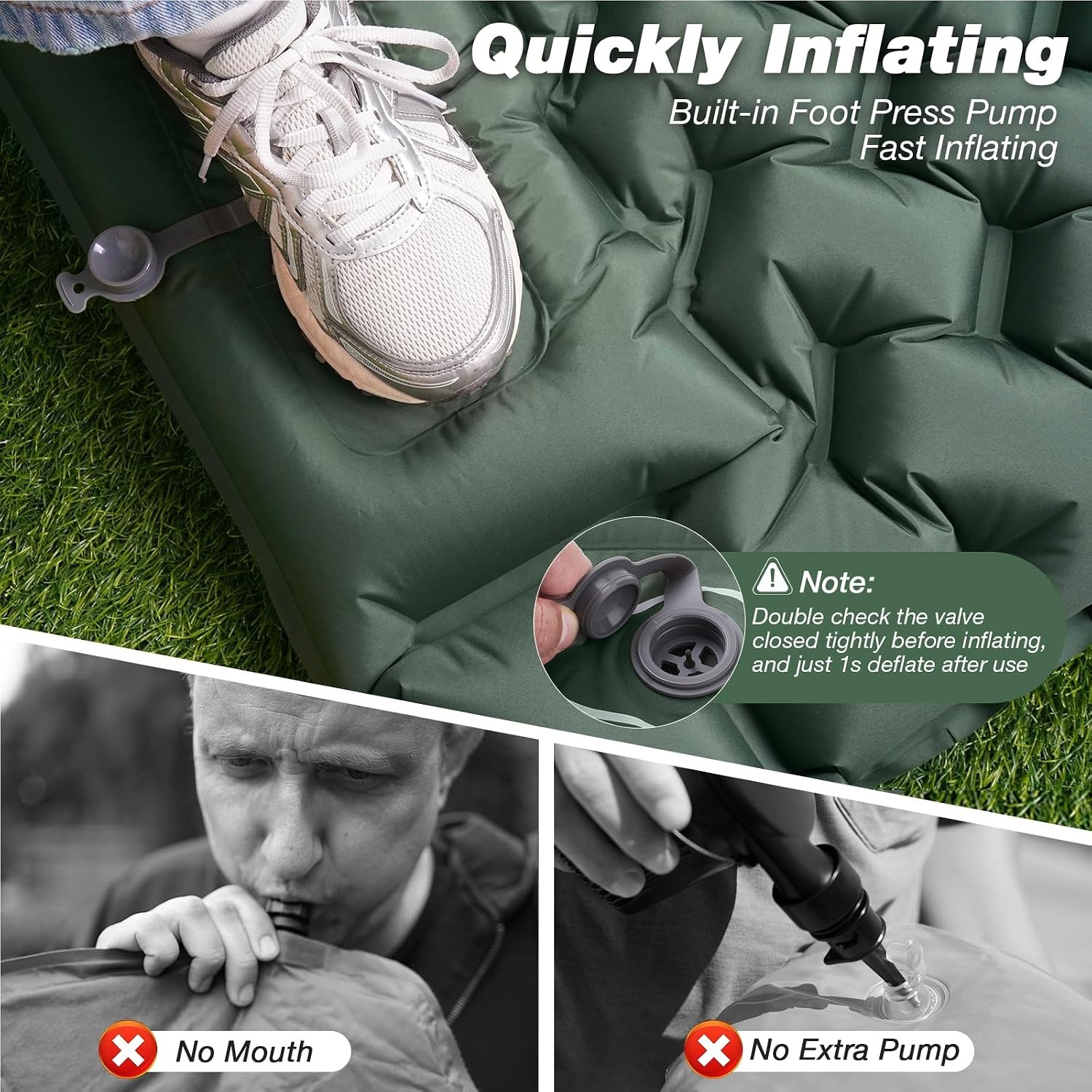
This mat solves it with a foot pump built into the body of the mat. You open the valve, let the foam do its thing while you unroll the sleeping bag, then pedal the pump until the mat feels right. No separate pump to carry, no bag of damp breath sitting inside the mat for the rest of the trip.
The valves matter just as much at the other end of the trip. Double-layer valves hold the air in overnight and then release it in about a second when you open them to pack. Anyone who has knelt on a stubborn mat at 7am in the rain will understand why that is worth having.
Materials, and why 50D nylon with TPU is a sensible combination
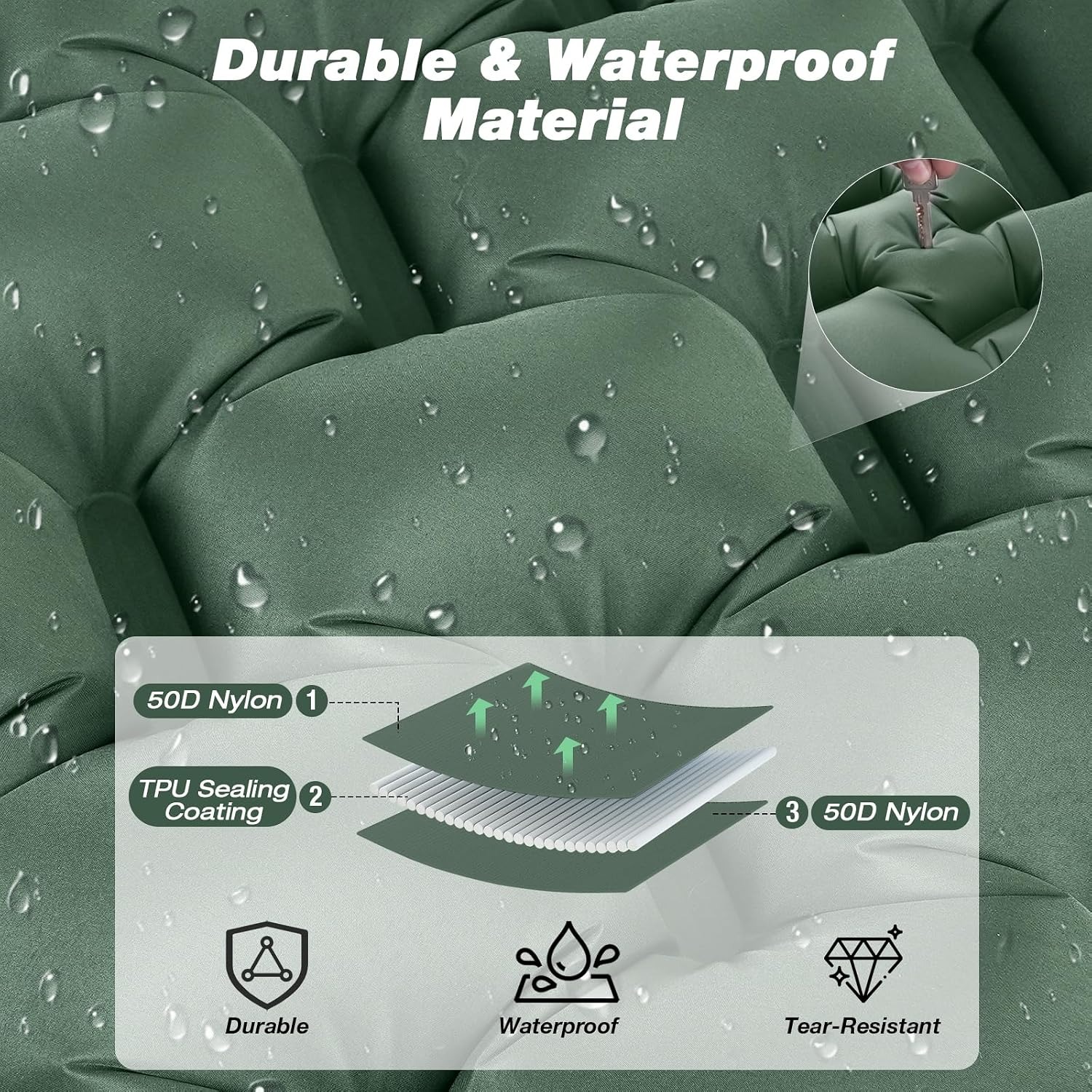
The shell on this mat is 50D nylon with an inner TPU sealing coating. Two layers, two jobs.
The nylon is the part that faces the world. The 50D figure refers to the yarn weight, and that range is common in outdoor gear because it balances toughness against bulk. It resists scuffing and tearing better than the thin, slippery fabrics used on very cheap mats, and it wipes clean when mud happens.
The TPU layer sits inside and does the airtight work. It is also why the mat is listed as waterproof. Damp grass, condensation running down the inside of a tent, a spilled cup of tea: none of it soaks into the mat. You wipe it and move on.
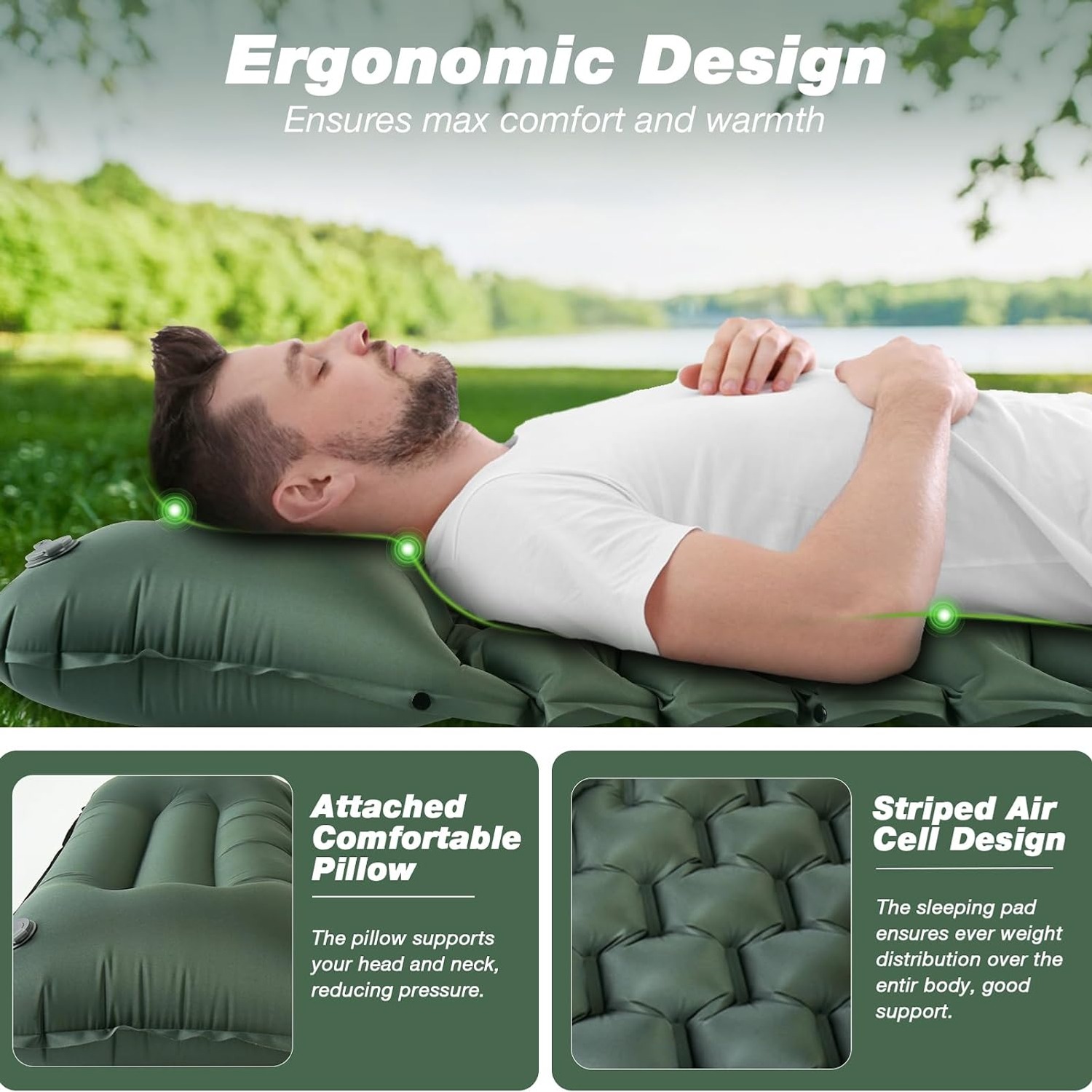
Inside, there is a comfort foam layer, and the firmness is described as plush rather than firm. That is a meaningful difference. Plush suits side sleepers, because the surface gives at the hip and shoulder instead of pushing back. Back sleepers who want more support can just add air with the pump.
Who this mat suits
Think about how you actually camp, because that decides more than any spec sheet.
If you drive to a campsite and carry gear fifty metres from the car, packed size barely matters and comfort is everything. A plush mat with a pillow already attached is a very easy yes.
If you walk in with everything on your back, packed size and bulk are the deciding factors. The listed packed dimensions of 33 x 14 x 8.5 cm are compact enough to go in a side pocket or strap to the outside of a pack. Weight is not specified in this record, so if you are counting grams for a long route, weigh it against the rest of your kit before committing.
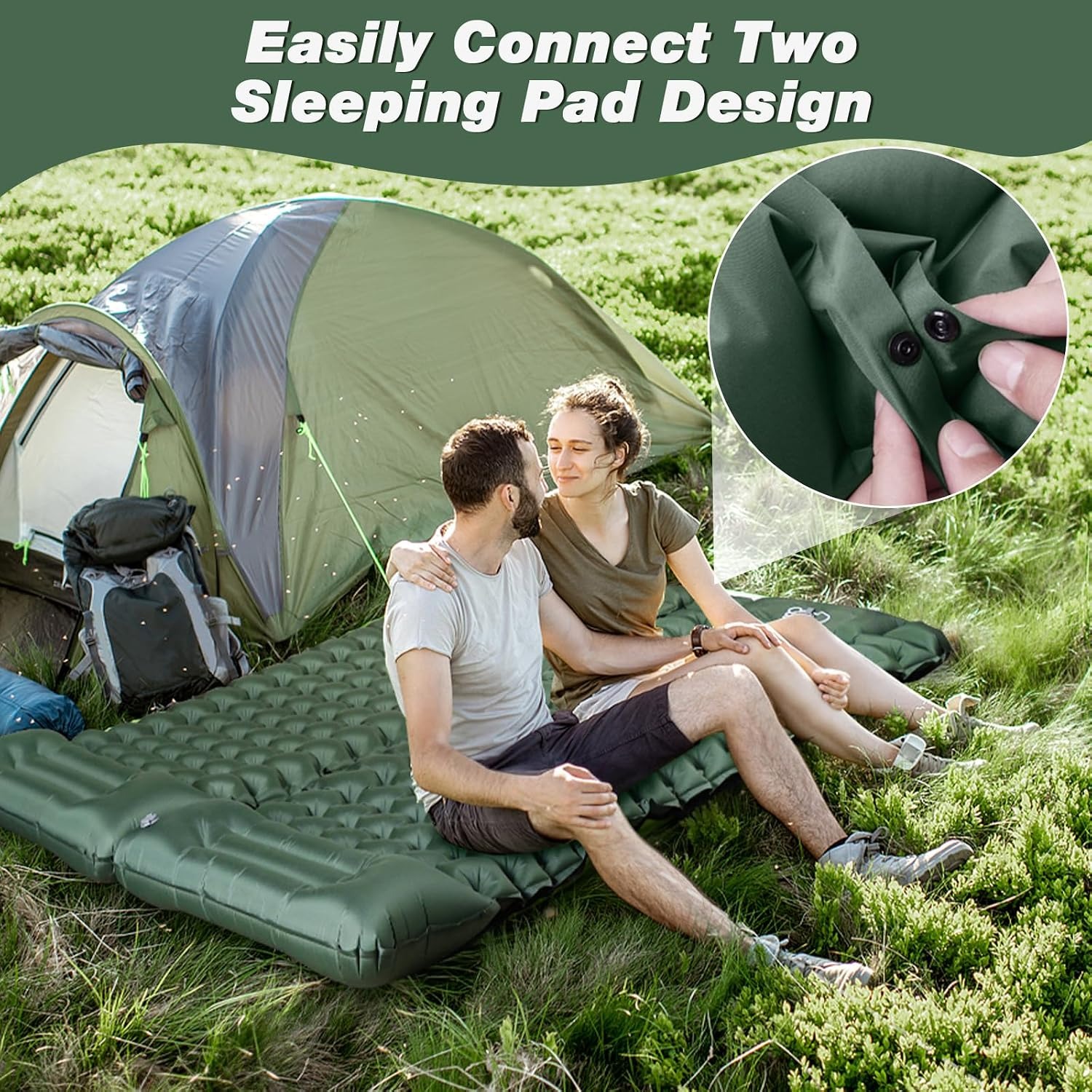
If you camp as a couple, look at the connecting buttons along the side. Two mats clip together and become one double surface. It stops the slow overnight separation that happens on two loose pads, and it keeps a shared blanket sitting flat instead of falling into the trench between them.
And if you have people staying over at home now and then, this doubles as a spare bed that stores in a cupboard. The best travel sleeping mat is often the one that earns its keep between trips.
How to choose, in practical terms
Start with your sleeping position. Side sleepers want give. Back and front sleepers usually want firmer. The ability to add or release air on the spot matters more than any factory firmness rating, and a built-in pump makes those adjustments quick enough that you will actually bother.
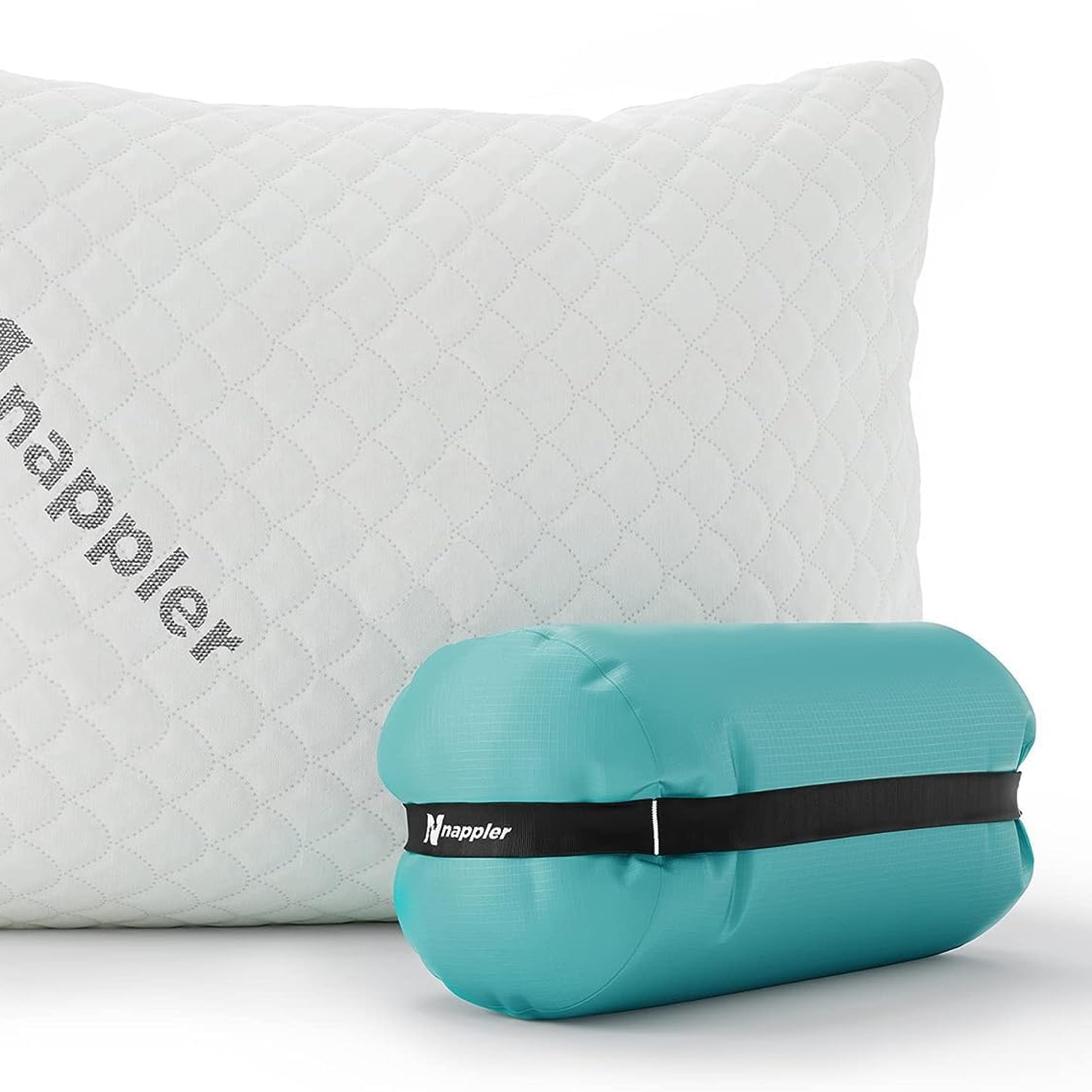
Next, think about the pillow. A built-in cushion is one less thing to inflate, one less thing to pack, and one less thing to slide off into the corner of the tent at 3am. If you are used to a thicker pillow at home, you can still stack a stuff sack of clothing on top.
Then consider how cold your trips get. No insulation rating is given for this mat, so we are not going to quote one. What we can say is that any mat with foam and trapped air puts a real barrier between you and the ground. For genuinely cold ground, campers often stack a cheap closed-cell foam mat underneath. It costs little, adds warmth, and protects the inflatable mat from sharp objects at the same time.
Finally, be realistic about ground conditions. The best waterproof camping mat in the world still does not like broken glass or a sharp flint. A groundsheet under the tent, and ten seconds clearing the pitch before you set up, will add years to the mat's life.
Looking after it
Care is simple and mostly about moisture and storage.
Clean it with a damp cloth and mild soap, nothing stronger. Rinse the soap residue off and then let it dry completely before it goes anywhere near the stuff sack. Packing a mat away even slightly damp is how you get that musty smell that never quite leaves.
Between trips, do not keep it crushed into its bag for months. Store it loosely rolled or flat with the valve unscrewed so the foam can sit at full loft. The foam is what powers the self-inflation, and foam that has been compressed for half a year is slower to recover.
Keep it away from fire, sparks and anything hot. Nylon and TPU do not forgive a flying ember from the campfire.
When a puncture happens, and eventually one will, use the supplied repair patches. Inflate the mat, listen and feel for the leak, or wipe soapy water across the surface and watch where bubbles appear. Clean the area, dry it properly, then press a patch down firmly and leave it to bond before you pack up. A patched mat lasts a long time.
The short version
A good night's sleep outdoors comes from what is under you, not just what is over you. This mat handles that with self-inflating foam, a 50D nylon and TPU shell listed as waterproof, a plush comfort layer and a built-in pillow so there is one less item in the bag.
The foot pump takes the effort out of setting up, and the double-layer valves dump the air in about a second when you are packing down. Two mats clip together with side buttons if you want a double.
It comes in green, packs to 33 x 14 x 8.5 cm, and arrives with a storage bag and repair patches. Weight, inflated size and country of origin are not specified in this record, so we have left them blank rather than guess. If you camp a few times a year and want a mat that is comfortable, quick to set up and quick to pack, this one covers the ground that matters.