
The complete guide
How to Choose a Camping Sleeping Pad That Actually Lets You Sleep
The real reason camping feels exhausting
Ask people why they came home tired from a weekend outdoors and they will usually blame the walking. It is almost never the walking. It is three nights of broken sleep on a mat that was never thick enough for the ground underneath it.
Hard ground does two things to a sleeping body. It presses back against the parts that stick out, your hips, your shoulders, the side of your knee, and it pulls heat out of you from below. A thin foam roll mat helps a little with the second problem and barely touches the first. You end up rolling over every twenty minutes trying to find a position that does not hurt, and by morning your lower back is tight before you have even stood up.
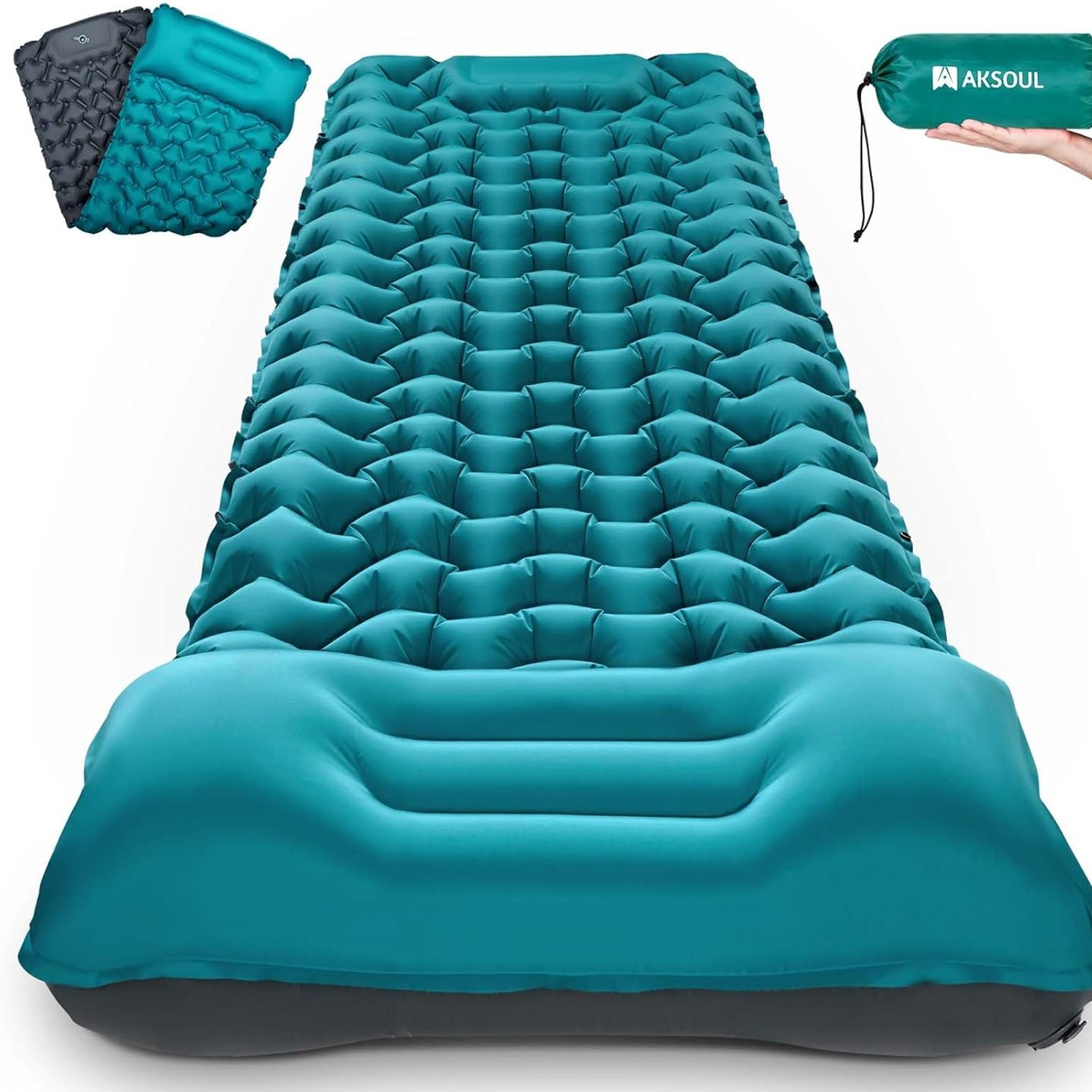
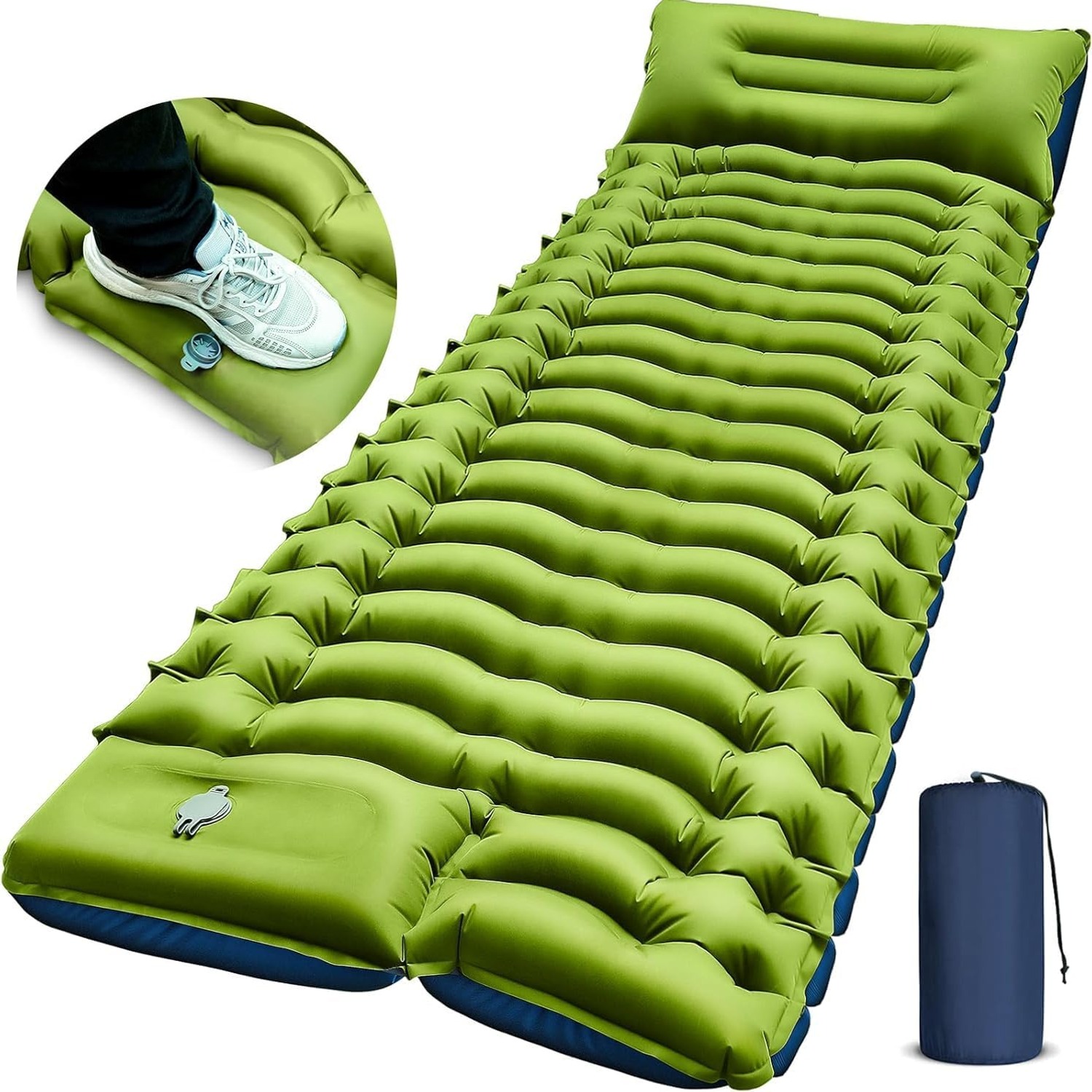
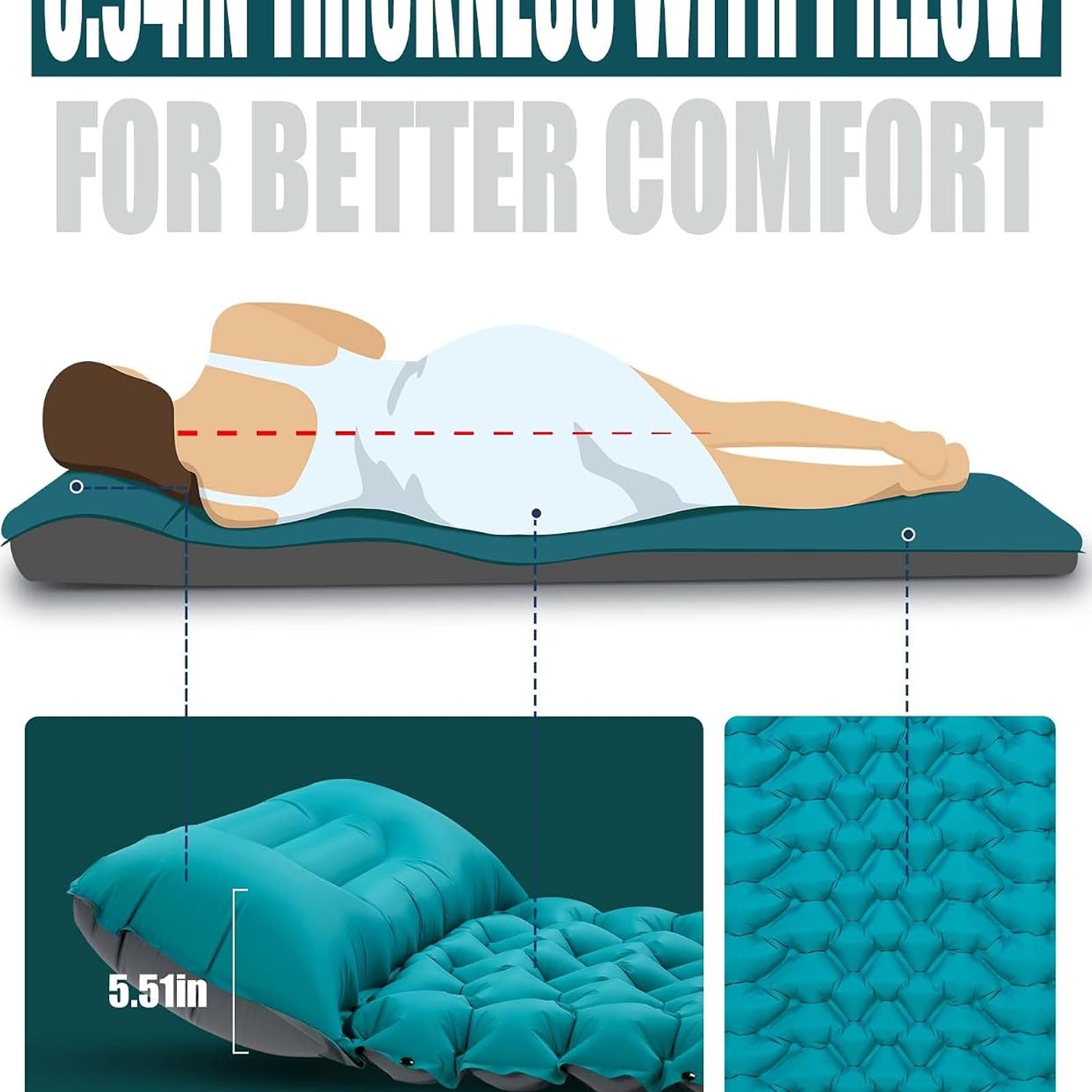
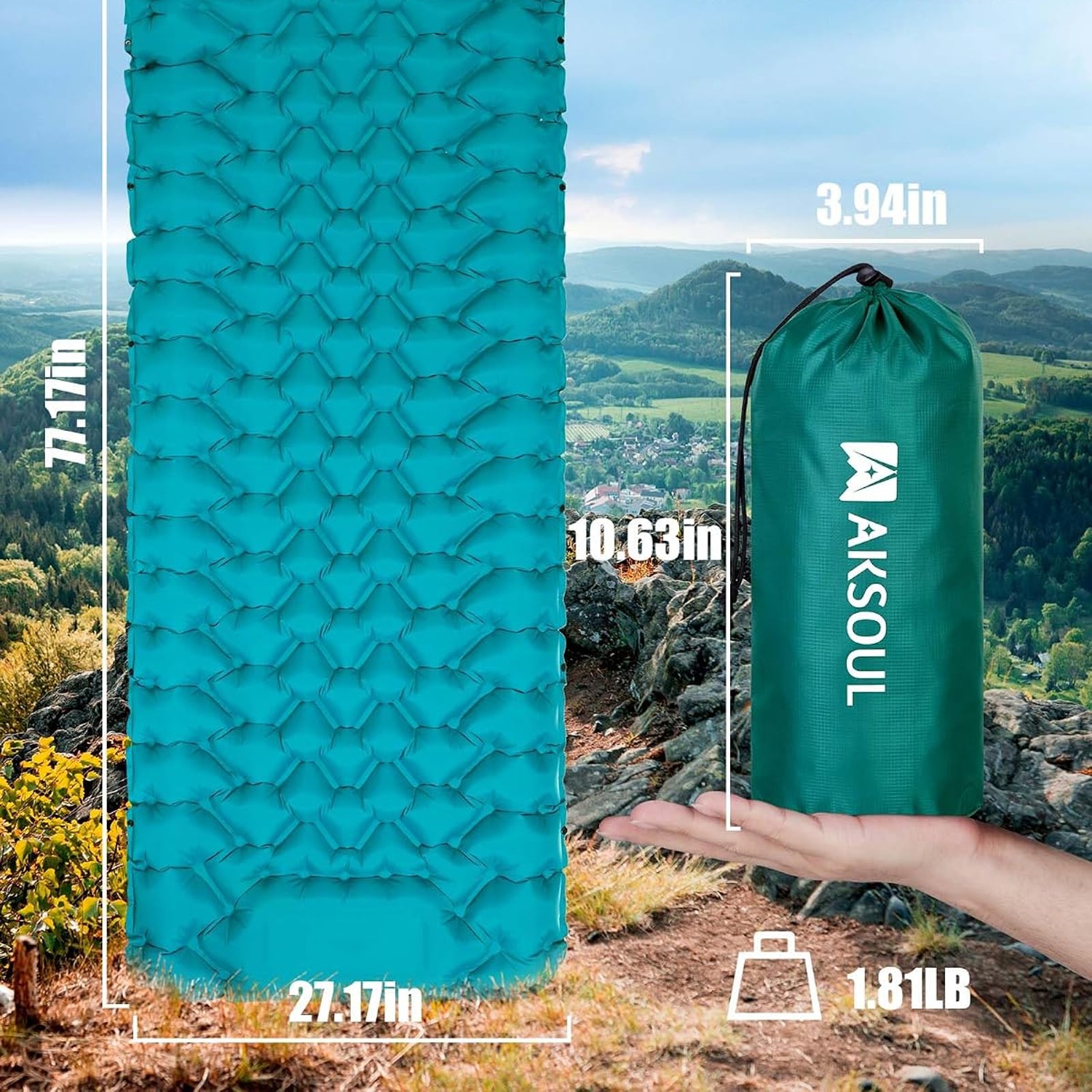
A thick air pad fixes the pressure problem directly. Put nearly 10 cm of air under you and the hard points of your body sink in instead of grinding against a rock. That is the whole idea behind this camping sleeping pad, which inflates to roughly 195.8 x 68.8 x 9.9 cm and is described by the maker as plush rather than firm.
How an inflatable pad works
An air pad is a sealed nylon shell with internal structure that stops it from ballooning into a sausage. Air goes in, the baffles hold the shape, and your weight is spread across the whole surface instead of a few contact points. More air means a firmer, springier feel. Less air means the pad contours more and you sit deeper into it.
That adjustability is the quiet advantage of air over foam. A foam mat is whatever firmness it was made at. An air pad lets you tune it. Back sleepers often like a slightly firmer setting so the hips do not drop. Side sleepers usually do better letting a bit of air out, so the shoulder and hip can sink and the spine stays straight. It is worth inflating the pad on your living room floor once before a trip and finding your setting, rather than fiddling with it by head torch at a campsite.
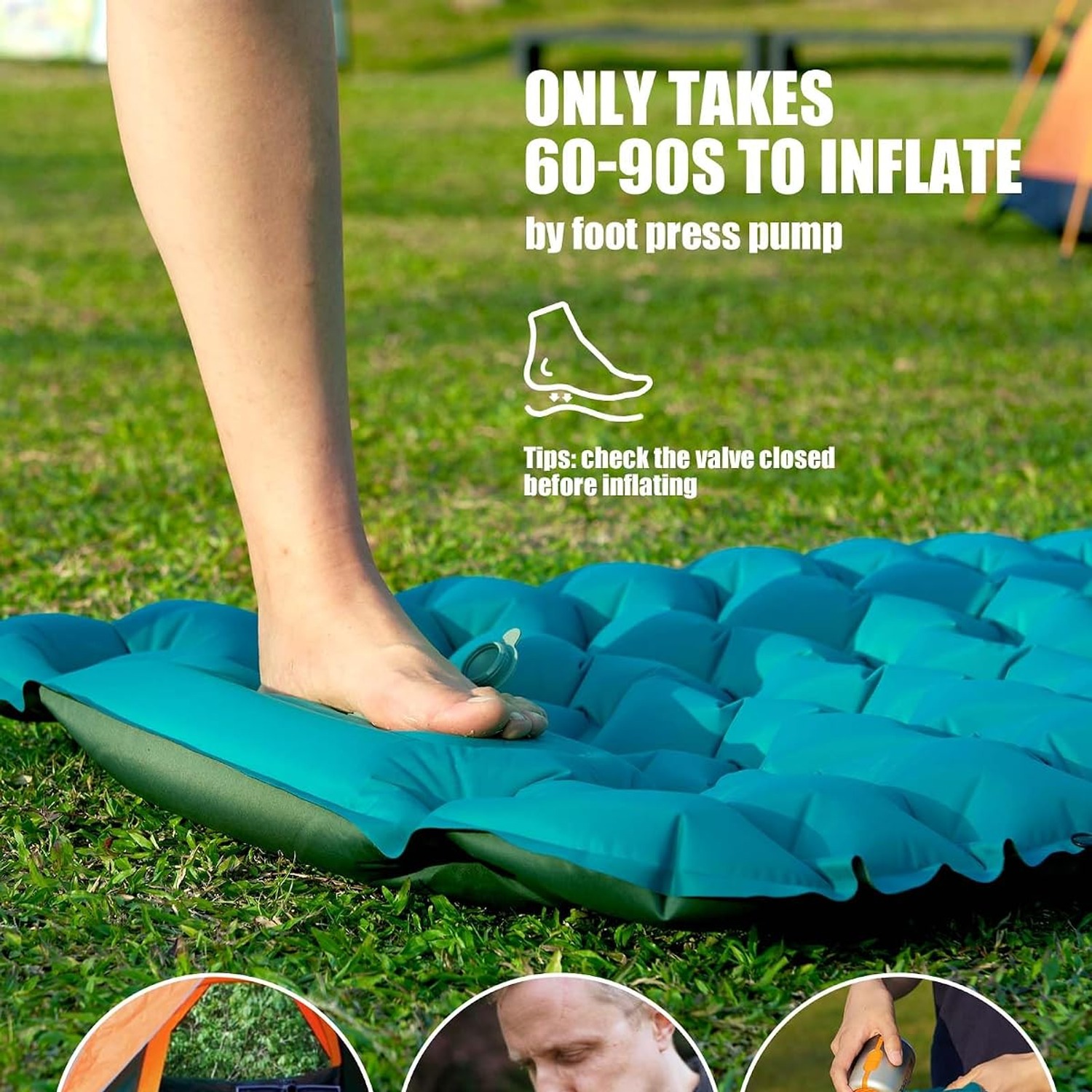
The pump here is built in. You stand the pad flat, open the valve and step on the pump section. Your leg is far stronger than your hand or your lungs, so each press moves a useful amount of air and you are not light-headed by the end. There is no separate pump to lose, nothing to charge, and nothing that stops working when it is cold. For anyone hunting the best sleeping pad with built-in pump, that mechanical simplicity is the point.
Who this suits
Car campers get the most obvious benefit. When weight barely matters, you may as well have thickness, and 850 g is nothing in a boot.
Weekend hikers and festival goers do well too, because 850 g is genuinely light for this much cushion and the packed size slips into a pack rather than strapping awkwardly to the outside.
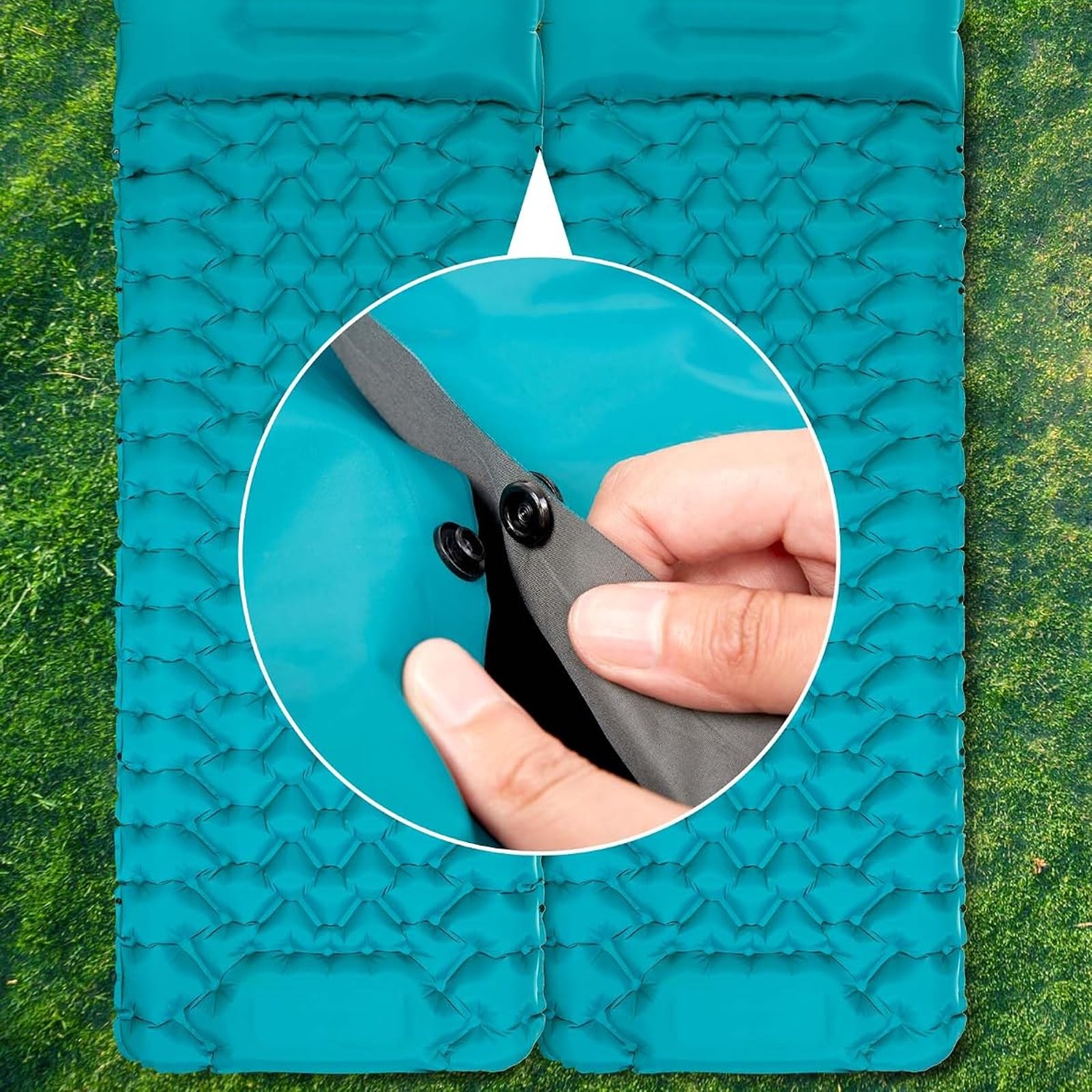
Couples are the other group worth mentioning. The side snaps mean two pads join into one wide surface, so nobody wakes up wedged in the valley between two mats. If you have ever shared a tent with separate mats you know the problem. Joined pads also share body heat better, which is welcome in spring and autumn.
It is less suited to serious winter camping. No insulation rating is given for this pad, so if you are heading out in genuine cold, plan on a closed-cell foam mat underneath to block ground chill. Air alone is not insulation.
Choosing the right pad
Start with thickness. Anything under about 5 cm and heavier sleepers will feel the ground on uneven sites. Around 8 to 10 cm is where most people stop noticing what is beneath them, which puts this pad in a comfortable spot.
Then look at size. Measure your tent floor, not just the tent's rated capacity. A pad at 196 x 69 cm fits most two-person tents, but tapered backpacking shells can be narrower at the foot than you expect. If you plan to snap two pads together, you need a tent with real floor width.
Weight and packed size come next, and they trade off against comfort. Ultralight pads get thin and noisy. Luxury pads get heavy. At 850 g for nearly 10 cm of loft, this one lands in the practical middle, which is what most people actually want from the best lightweight camping mat.
Finally, consider the extras. A built-in pillow saves an item from your packing list and keeps your head aligned with the pad surface. Snaps for joining pads are only useful if you camp with someone, but when you do, they matter a lot. A stated capacity of 199.58 kg means the pad is rated for adult use rather than being a children's-only product.
Getting the most out of it
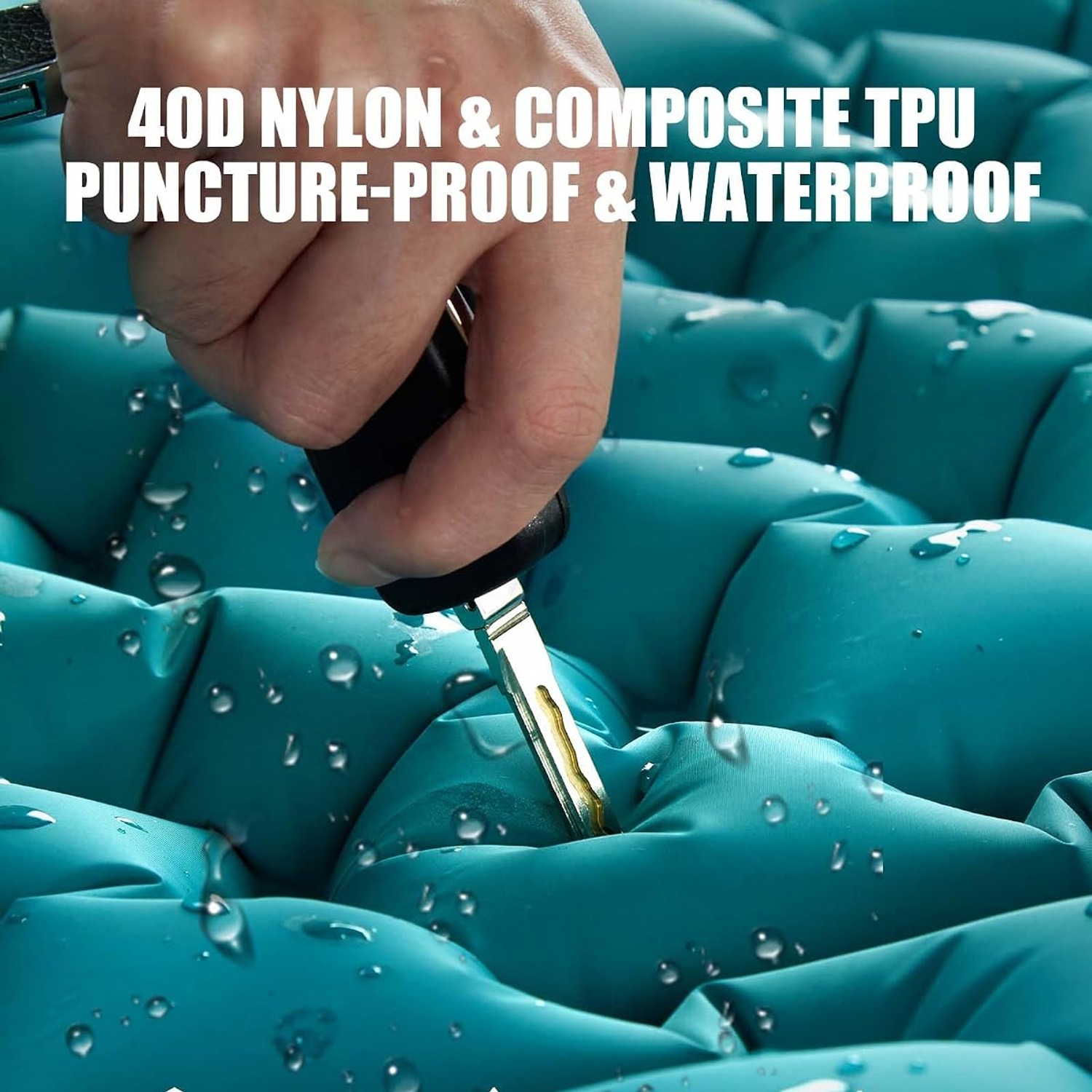
Clear the ground before you lay anything down. Thirty seconds spent kicking away stones and sticks does more for your night than any amount of padding, and it protects the nylon from punctures.
Use a groundsheet or tent footprint under the tent floor. It is cheap insurance against abrasion from gravel and thorns.
Inflate the pad, then lie on it and let a little air out until it feels right. Most people over-inflate on the first go. If you can press a hand down and feel the floor, add air. If your hips feel propped up and your back arches, let some out.
In the morning, a pad that feels softer than it did at bedtime is usually not leaking. Cold air takes up less space than warm air, so the pressure drops overnight. A few presses on the pump and you are back where you started.
Looking after it
Care is hand wash only. Wipe the nylon with a damp cloth and a bit of mild soap when it gets grubby, rinse lightly, then let it dry fully in the shade. Packing a damp pad away is how you get mildew smells that never quite leave.
Store it loosely rolled or flat with the valve open rather than crushed into its stuff sack for six months. Compression over long periods is harder on the seams than any amount of use.
Keep it away from heat. Campfire sparks, stove flames and hot car dashboards are all enemies of coated nylon. Carry the repair patches with you rather than leaving them at home, because a tiny puncture found on night one of a four-night trip is a five-minute fix if you have the patch and a trip-ruiner if you do not.
The short version
A camping sleeping pad only has one job, which is to put enough air between you and the ground that you forget the ground is there. This one does it with 9.9 cm of thickness, a nylon shell, a foot pump you work with your leg, a pillow that is already attached, and side snaps so two pads become one bed. It weighs about 850 g and is rated to 199.58 kg.
If your current setup is a thin foam mat and a rolled-up jacket for a pillow, this is the upgrade that changes how the whole trip feels. Sleep well, and the walking takes care of itself.