

The complete guide
Head Torch Buying Guide, How to Pick the Right One
The problem a head torch solves
Holding a torch is fine until you need to do something. Then you are stuck. You tuck it under your arm, grip it in your teeth, or balance it on a rock where it immediately rolls and points at nothing useful. Anyone who has tried to put up a tent at dusk, change a tyre on a dark verge, or find the stopcock during a blackout knows exactly how that goes.
A head torch fixes the problem in the simplest way possible. The light sits on your forehead and follows your eyes. Wherever you look, the beam is already there. Both hands stay free. That is the whole idea, and it is why people who own one rarely go back to a handheld torch for anything practical.
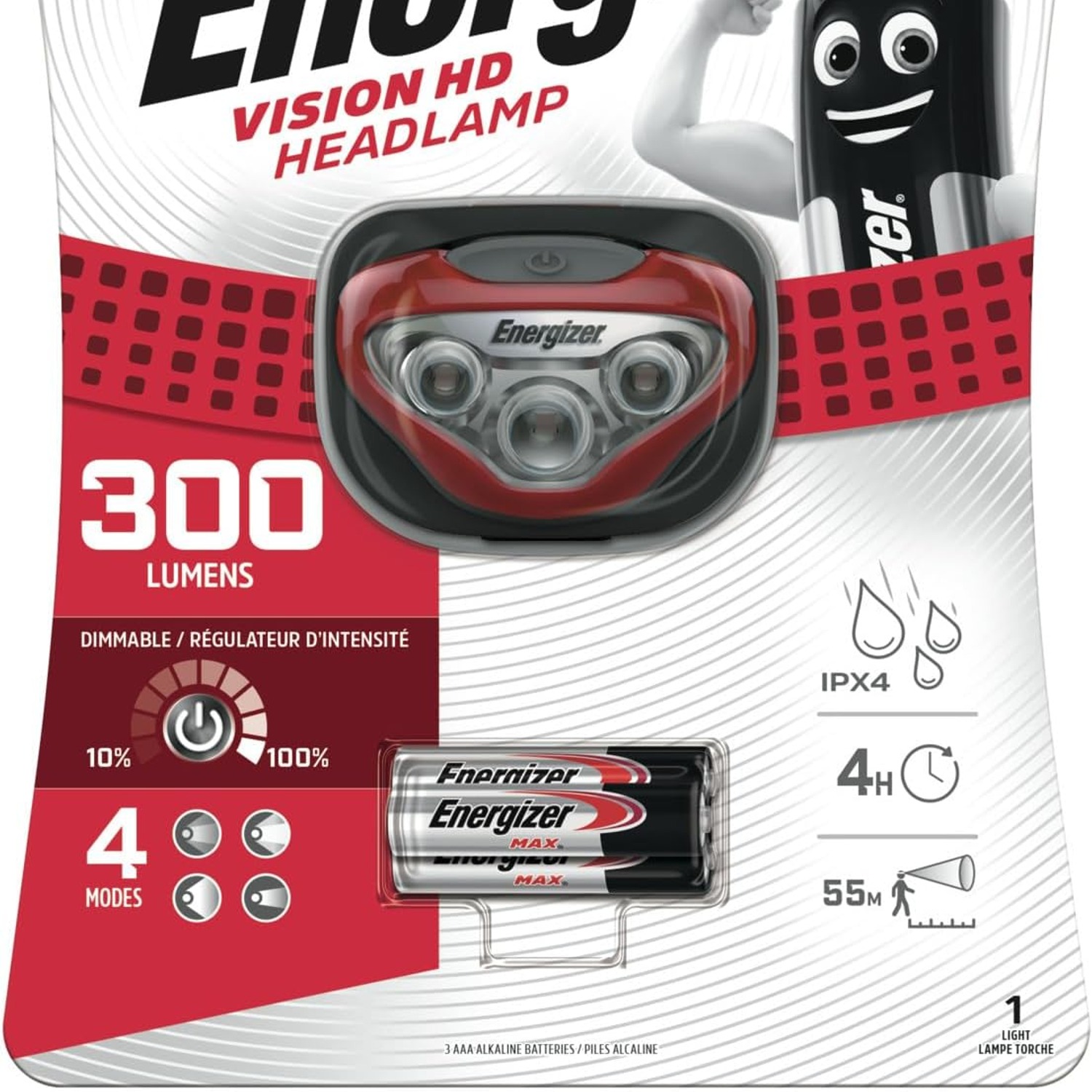
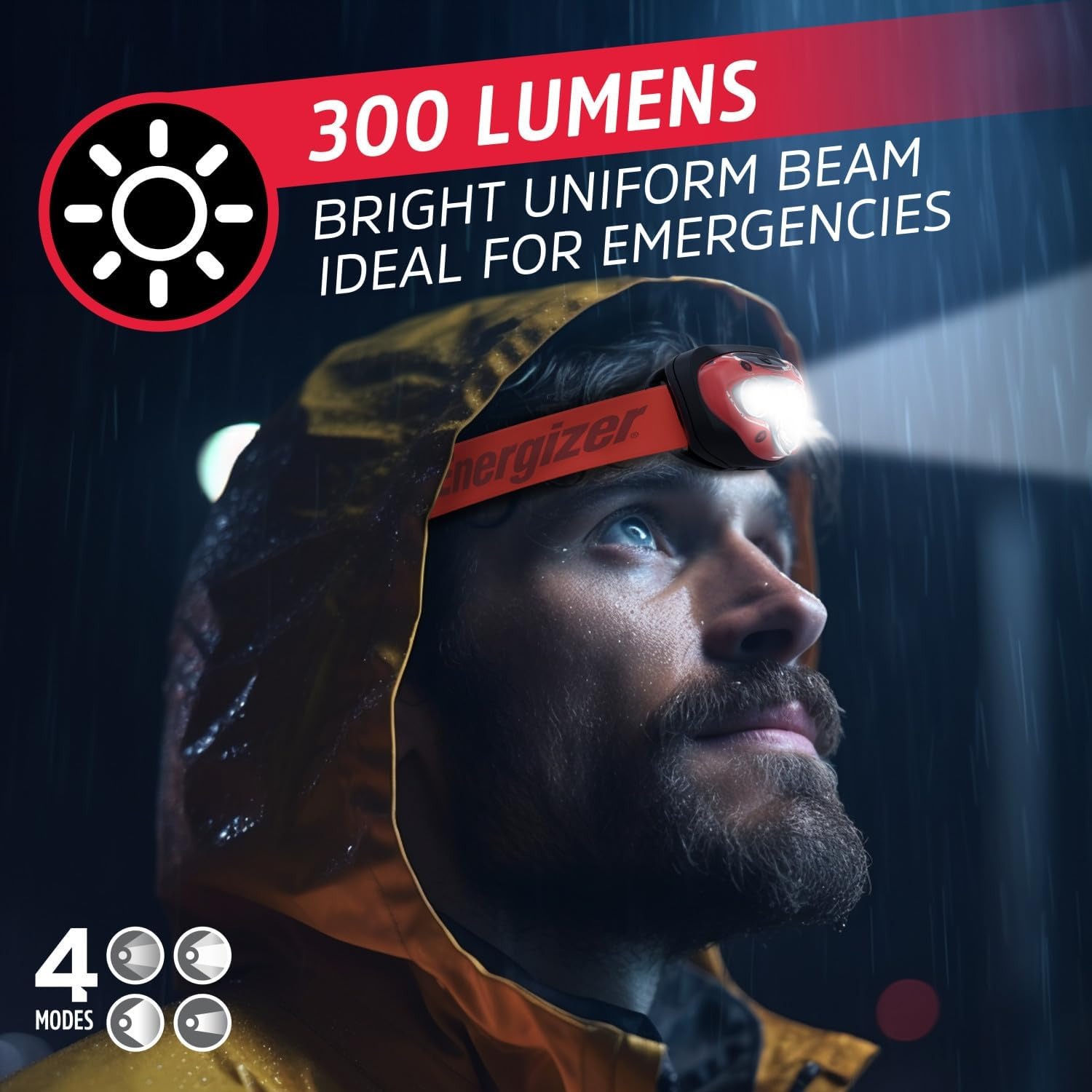
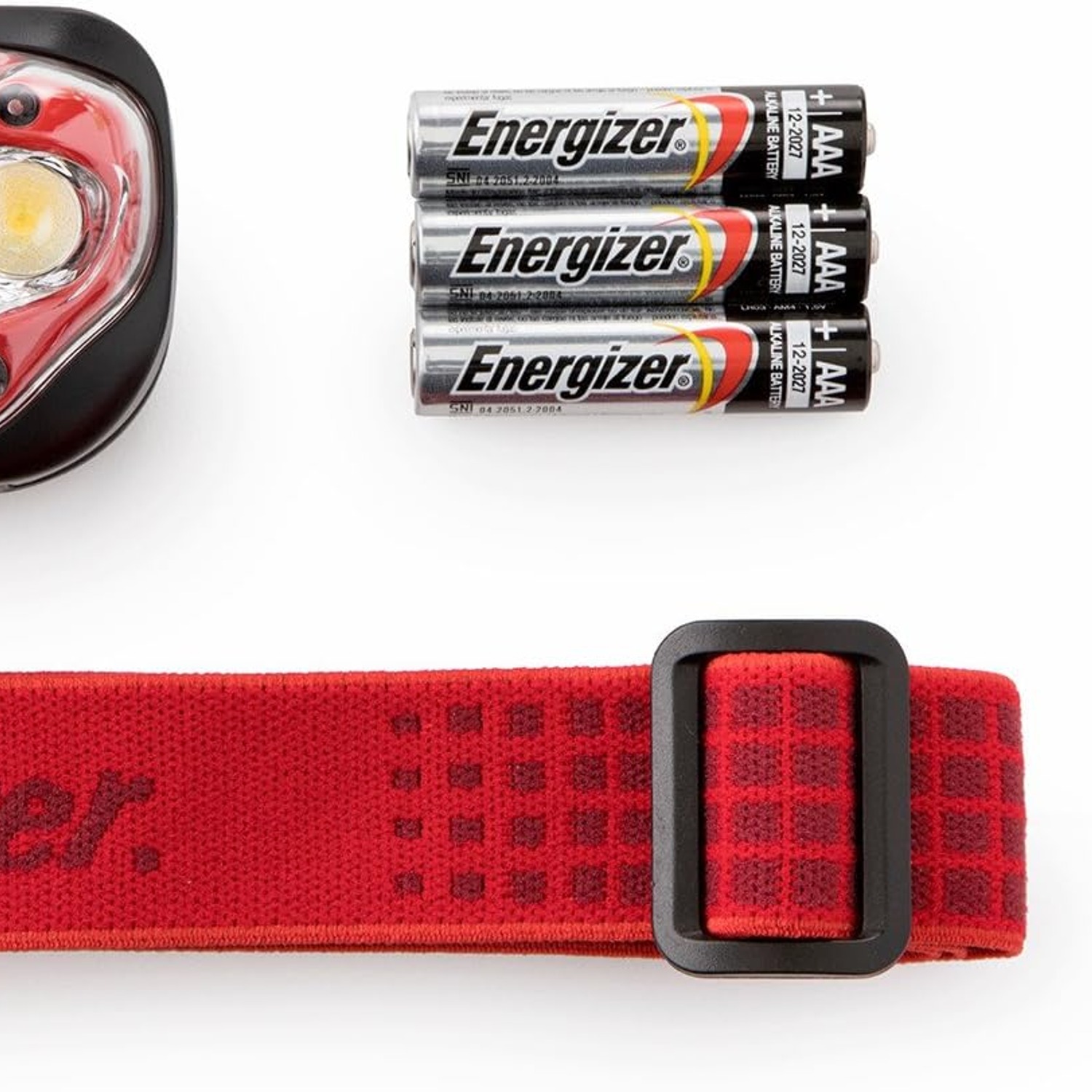
This Energizer model is built for that everyday work. It runs on three AAA alkaline batteries, puts out 150 lumens from four LED light sources, and throws light about 18 metres. The unit weighs 0.06 kg, which is roughly the same as a small chocolate bar.
How a head torch actually works
Inside the housing sit the LEDs, a reflector or lens to shape the light, and a battery compartment. The LEDs convert battery power into light far more efficiently than the old filament bulbs did, which is why a modern torch this small can be genuinely useful for hours on three small cells.
Two numbers matter most. Lumens tell you how much total light comes out. Beam distance tells you how far that light usefully reaches. This torch gives 150 lumens and 18 metres. In practice, that is a good spread for close work and for seeing the ground in front of you on a path. It is not designed to light up a field or pick out something a hundred metres away, and no small AAA torch really does that honestly.
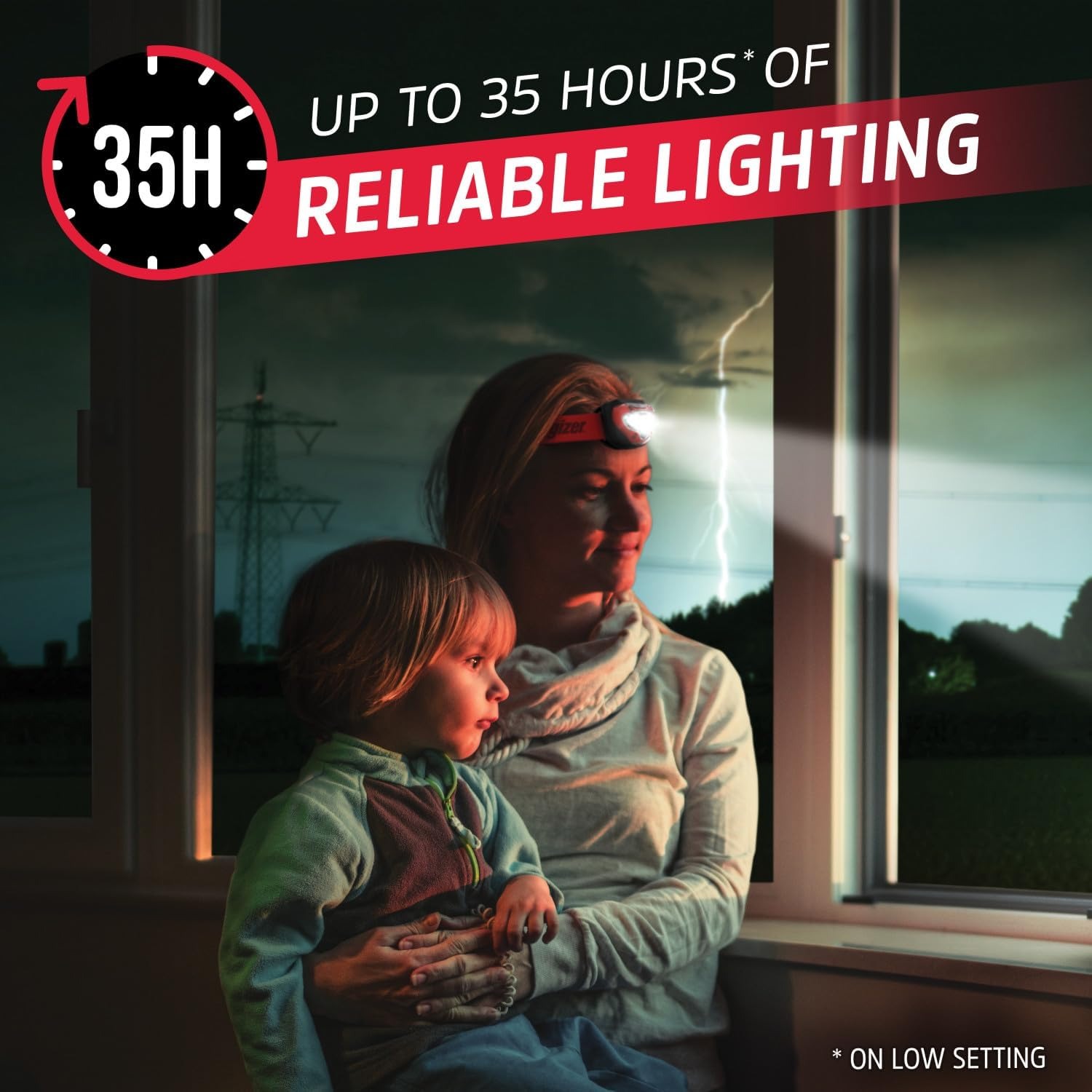
Runtime is the third number. Energizer lists four hours here. Runtime always depends on conditions. Cold weather pulls down alkaline performance, and old batteries that have sat in a drawer for two years will not match fresh ones. Plan on a little less than the stated figure if you are out in winter.
Who this suits
Campers get the most obvious benefit. Setting up after dark, cooking, reading in a tent, walking to the amenities block at two in the morning. A head torch handles all of it without a free hand.
Walkers and runners are the next group. The manufacturer lists running, hiking and biking among the recommended uses. At sixty grams, this one is light enough that you stop noticing it. If you run on roads, remember that a head torch helps you see but does not replace reflective gear that helps drivers see you.
Then there is the home and car crowd, which is probably the largest group of all. The best head torch for power cuts is the one you can find in the dark, and a drawer in the kitchen is a sensible home for it. People doing DIY under sinks, in roof spaces or behind car dashboards use these constantly. Fishing, dog walking at dusk, checking on animals, loading a van before sunrise, the list keeps going.
How to choose the right one
Start with the job, not the specification sheet. If most of your use is within a few metres, something around 150 lumens is plenty and will treat your batteries kindly. If you need to spot a trail marker across a valley, you want a different class of torch with a tighter beam and more output.
Next, think about batteries. Replaceable AAA cells like these have a real advantage over built-in rechargeable packs when you are away from power. You can buy AAA batteries almost anywhere, carry a spare set in a pocket, and swap them in thirty seconds. Rechargeable torches are tidier day to day, but they leave you stuck when the charge runs out mid-trip and there is no USB port for miles. For camping, emergency kits and travel, replaceable cells usually win.
Weight is the third thing, and it is underrated. A heavy torch is a torch you take off. Sixty grams sits lightly enough that you will wear it for a whole evening without thinking about it.
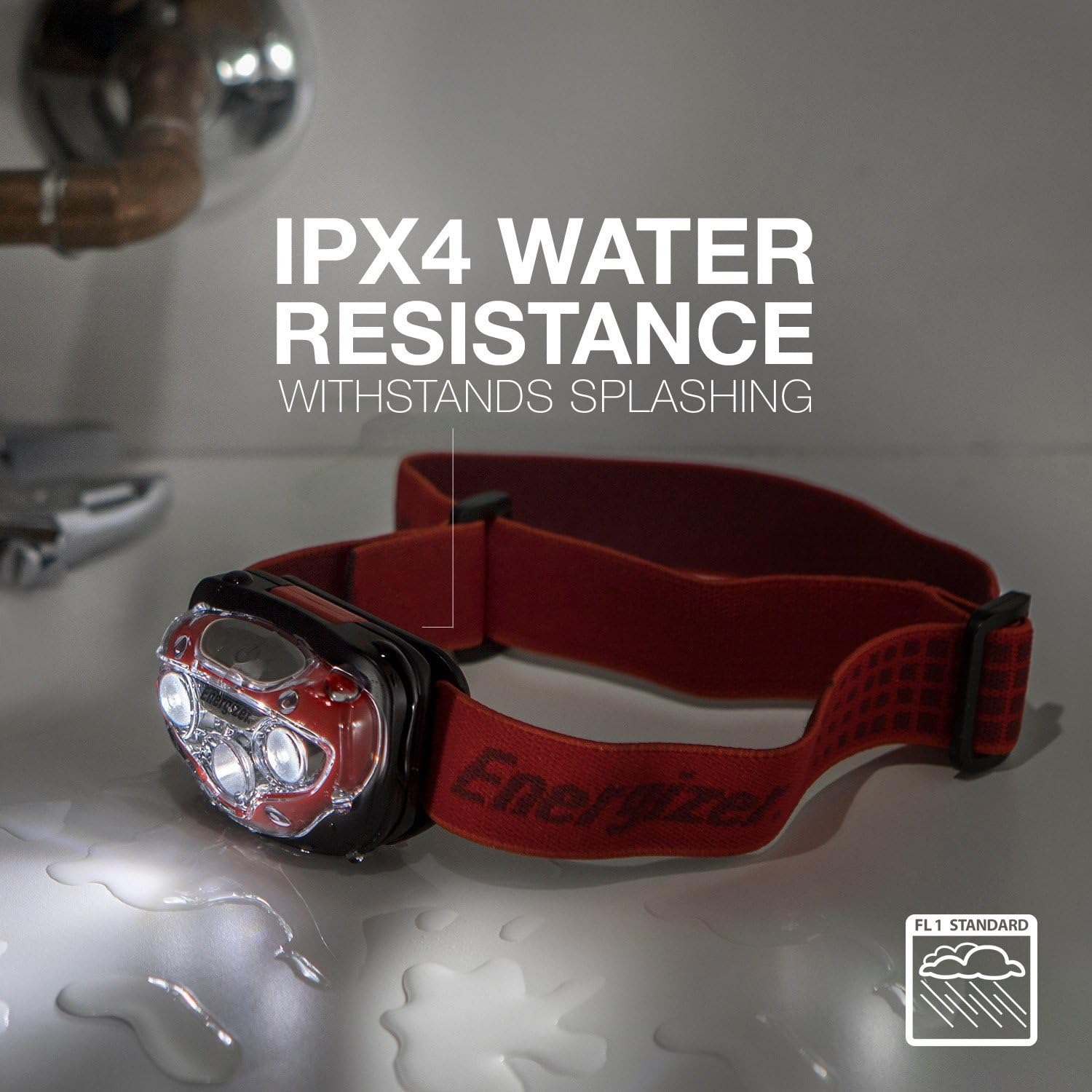
Finally, be honest about conditions. The supplier data for this item reports water resistance inconsistently, so we do not claim a rating for it. If you expect to be out in steady rain or around water regularly, look for a model with a clearly stated IP rating and buy that instead. For dry camping, indoor work, the garage and emergency use, this one is well suited.
Getting the most out of it
Fit the band so it is snug but not tight. A band that digs in will give you a headache after an hour, and one that is too loose will slip every time you look down. Adjust it over a beanie in winter and you will need to loosen it again in summer.
Angle matters more than people expect. Tilt the beam slightly downward when walking so you light the ground in front of your feet rather than the horizon. That keeps your eyes adjusted and stops you dazzling the person walking toward you.
On that note, basic head torch manners go a long way around a campsite. Look at people's chests rather than their faces when you talk to them, or just tilt the light down. A 150 lumen beam straight in the eyes ruins someone's night vision for several minutes.
Carry a spare set of AAA batteries. It costs very little, weighs almost nothing, and turns a dead torch from a disaster into a thirty second job.
Care and storage
Care is simple with a torch like this. Wipe the lens and housing with a dry cloth when it gets dusty or muddy. Avoid soaking it, since no confirmed water rating exists for this model. Keep the battery contacts clean.
The one habit worth building is removing the batteries during long storage. Alkaline cells can leak as they age, and leaked electrolyte will corrode contacts and kill a perfectly good torch. If the head torch is going into a box for the off season, take the batteries out and tape them together nearby.
Keep it somewhere you can reach in the dark. The best emergency torch is the one you can put your hand on without turning on a light that is not working.
The short version
This is a light, straightforward LED head torch from a brand that has made portable lighting for a very long time. You get 150 lumens, an 18 metre beam, four hours of stated runtime, and three AAA alkaline batteries in the box. The plastic body weighs sixty grams.
It is a good fit for camping, hiking, running, DIY, car work and power cuts. It is not a long-throw search light, and because the water resistance data is unclear we would not recommend it for wet-weather work. For everything else on that list, it does the one job that matters most. It puts light where you are looking and gives you your hands back.